
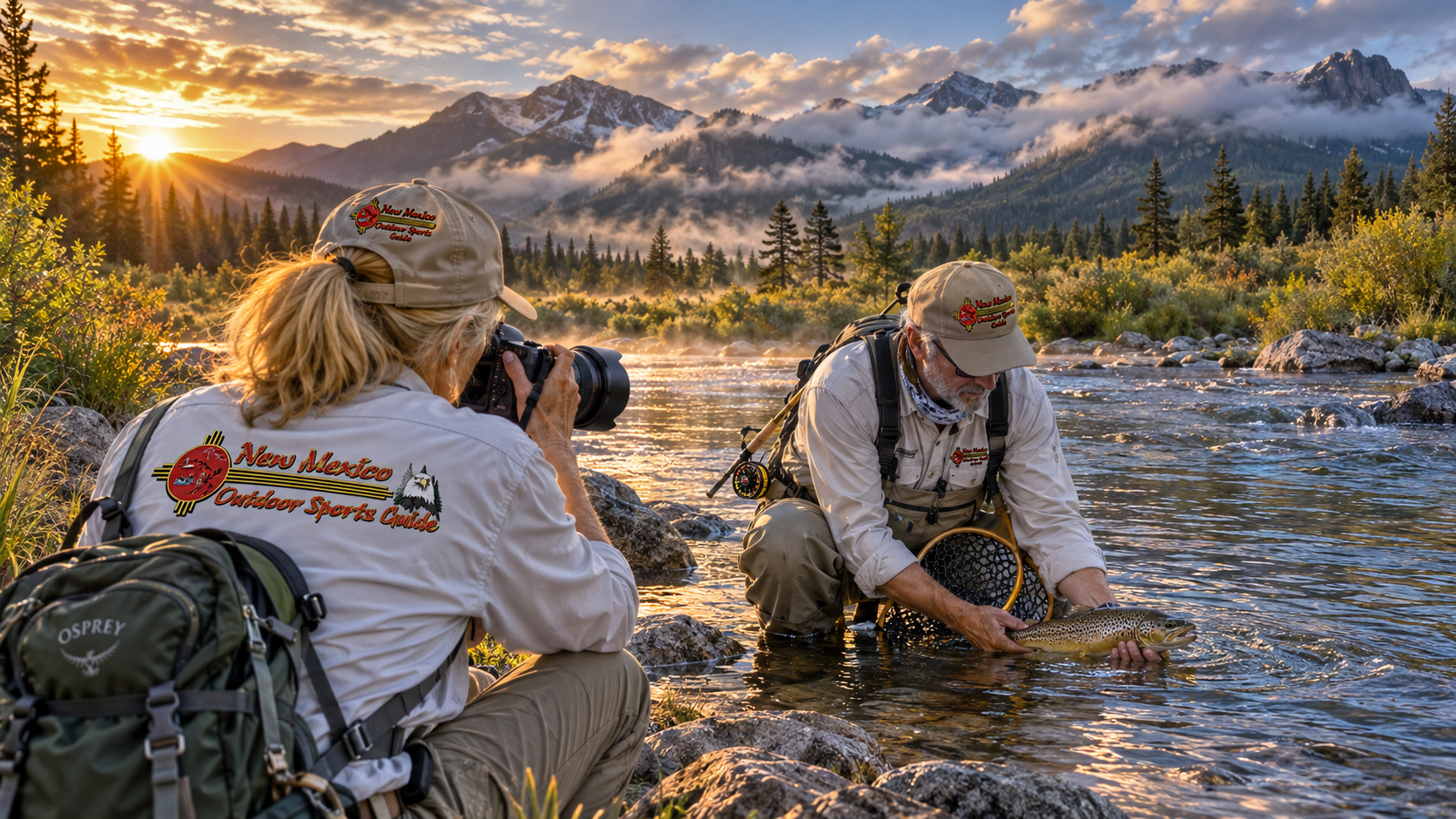
Access Note: Rancho del Oso Pardo is private property, and fishing access is believed to be restricted to members, owners, guests, or others specifically authorized by ranch management. This article describes the Rio Chama fishery and the ranch from a historical and informational perspective and should not be interpreted as an invitation to enter or fish the property. Anglers should obtain current permission directly from Rancho del Oso Pardo before attempting access.
Seven Miles of Wild Water in the Mountains Above Chama, New Mexico
By Pat McCarty
There are trout streams you remember because you caught a big fish.
There are others you remember because you caught a lot of fish.
And then there are those rare stretches of water where, years later, you discover that the trout have become almost secondary to the memory of the place itself.
Rio Chama Private Water Trout Fly Fishing at Rancho del Oso Pardo belongs in that last category.
The Rio Chama up near the Colorado border isn't yet the broad river most New Mexicans recognize farther downstream. It hasn't passed through El Vado. It hasn't carved its way toward Abiquiú. It hasn't gathered the personality it carries through the canyon country.
Up here it is still a mountain river.
Young.
Cold.
Clear.
And wild.
It winds through high meadows bordered by timber, beneath mountains where elk travel ancient routes and where a fisherman can sometimes spend more time watching wildlife than watching his strike indicator.
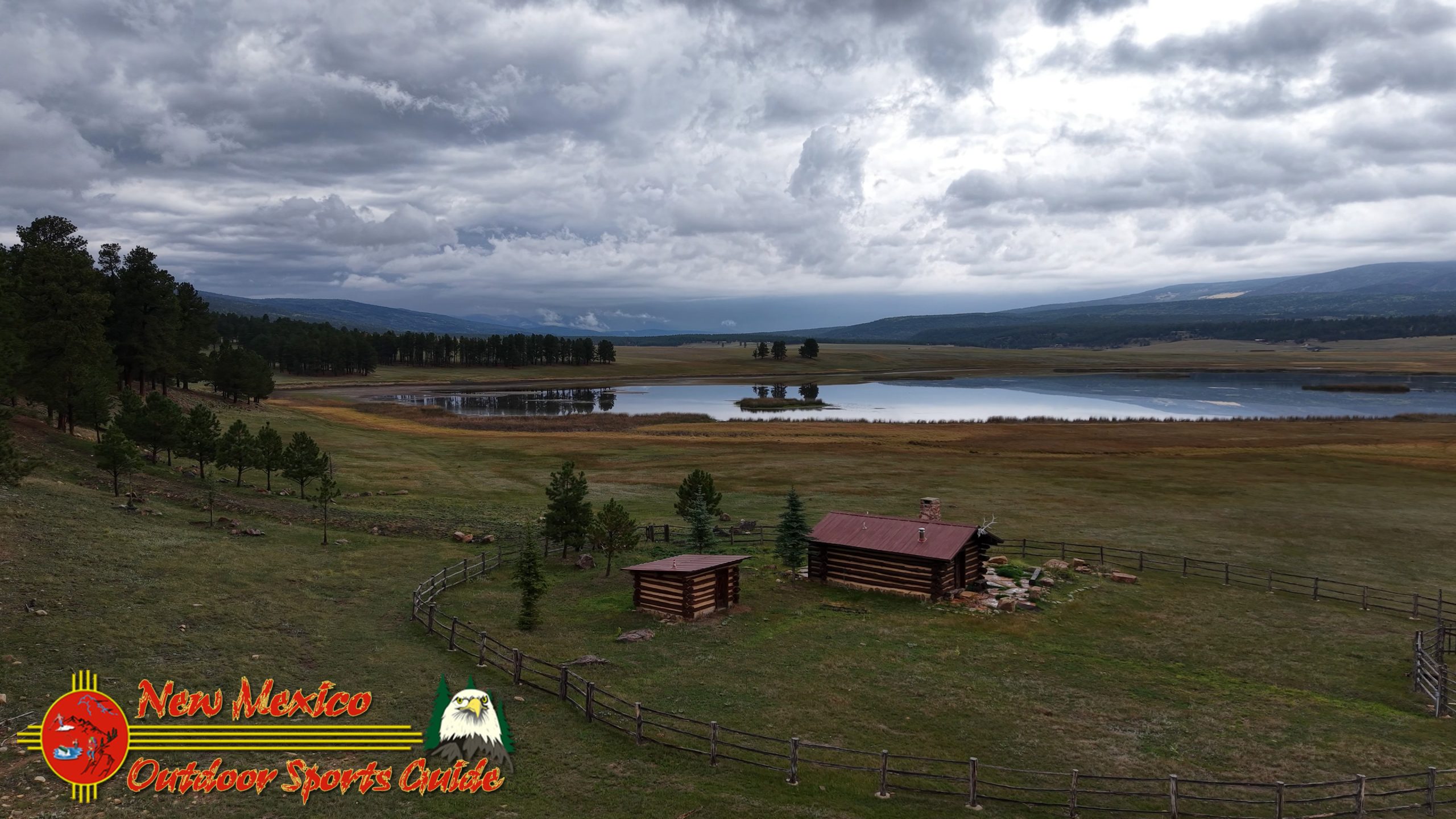
Rancho del Oso Pardo occupies an extraordinary piece of that country.
The ranch has historically been described as encompassing both banks along approximately seven miles of the Rio Chama along with 11 alpine lakes. Its landscape is a mixture of sweeping meadows, timbered slopes, high-country vistas and wildlife habitat.
Even the name seems appropriate.
Rancho del Oso Pardo.
Ranch of the Brown Bear.
That's a name that belongs in the mountains.
And so does this place.
Where the Rio Chama Is Still Young
The Rio Chama begins high in the San Juan Mountains of southern Colorado.
Near its headwaters, water born from snow, springs and high-elevation drainages tumbles through spruce and fir country before eventually crossing into northern New Mexico.
By the time it reaches the country around Chama, it has become one of New Mexico's great trout rivers.
But the Chama isn't one river in the fishing sense.
It has several personalities.
There's the little freestone river of the upper basin.
There's the river around Chama.
There's the water associated with Heron and El Vado.
Then there's the famous tailwater and canyon country farther downstream.
That's one reason I've always considered the Chama such an interesting fishery.
If one section is high, muddy, warm or otherwise difficult, another section may be completely different.
A fisherman could spend years learning this watershed and still discover something new.
For a look at the river near its beginnings, my earlier story about Rio Chama Basin Headwaters Trout Fishing follows Paulette and me into that beautiful upper country.
Rancho del Oso Pardo
The ranch occupies private land near Chama along the upper Rio Chama corridor.
One thing that impressed me while researching the property again was discovering that its connection with trout goes deeper than simply having a river running through it.
Conservation work has taken place on Upper Nabor Creek, a tributary on the ranch. In 2021, Rio Grande Return constructed beaver-dam analog structures there to reconnect floodplain habitat, create pools and backwaters, improve aquatic habitat and benefit a genetically pure population of Rio Grande cutthroat trout. (Rio Grande Return)
That's serious fisheries habitat work.
Rancho del Oso Pardo's manager, Aaron Jones, has also been identified by the Chama Peak Land Alliance as having university training in both wildlife science and fisheries management and managing approximately 28,000 acres in northern New Mexico and southern Colorado. (Chama Peak Land Alliance)
That helps explain why the landscape has long been associated not merely with fishing, but with wildlife management and conservation.
And what wildlife country it is.
Elk move through this part of northern New Mexico in substantial numbers. Mule deer, black bear, beaver, coyotes, raptors and numerous smaller animals occupy the same mosaic of forest, meadow and riparian habitat.
Nearby Edward Sargent Wildlife Management Area encompasses more than 20,000 acres and is specifically managed as important elk and wildlife habitat. The New Mexico Department of Wildlife describes it as a landscape of high aspen meadows, alder-lined streams, oak groves and grassy meadows. (NMDOW)
Put a cold trout river through the middle of country like that and you have something special.
Private Water Means Permission
Here's something I want to make very clear.
Rancho del Oso Pardo is private property.
This article isn't an invitation to cross a fence, follow a two-track onto the ranch or assume that because the Rio Chama contains public water somewhere upstream or downstream, you can enter private property wherever you please.
You cannot.
New Mexico's stream-access history has been complicated and litigated, including litigation involving Rancho del Oso Pardo itself. That's another reason I don't want to reduce the issue to a catchy sentence in a fishing story. (Justia Law)
For practical purposes, my advice to an angler couldn't be simpler:
Never enter Rancho del Oso Pardo or fish from its private land without explicit current authorization from the landowner or authorized representative.
And don't rely upon an old website, old fishing report or something somebody remembers doing twenty years ago.
Policies change.
Ownership can change.
Access arrangements change.
Get permission first.
That's both good manners and good outdoor ethics.
The Public-Water Alternative
Fortunately, an angler doesn't need access to a private ranch to experience the upper Rio Chama.
Nearby public opportunities include the Chama Basin high country and Edward Sargent Wildlife Management Area.
Sargent contains public fishing access, although anglers need to understand its special regulations and seasonal access restrictions. Current New Mexico regulations designate waters within or adjacent to Sargent, including the Rio Chama, Rio Chamita and Sixto Creek, as Green Chile Special Trout Water.
That means artificial fly or lure, a single barbless hook, and a two-trout bag limit. (NMDOW)
Sargent also has special access provisions during elk-calving periods and published hunts, so anglers should check current conditions before visiting. (NMDOW)
That's a wonderful companion experience to private-water fishing.
My article on Rio Chama Basin Trout Fishing Public Access covers those opportunities in greater detail, while the upper-basin story above explores the headwaters.
Private and public water are different experiences.
Both deserve respect.
Rio Chama Brown Trout
Now let's talk trout.
If I had to choose one fish that seems to belong to the Chama, it would be the brown.
A good brown trout looks as though somebody painted him specifically for autumn in the Rocky Mountains.
Gold.
Olive.
Black spots.
Red-orange spots surrounded by pale halos.
And an attitude considerably larger than the fish.
Browns particularly like structure.
Look for them around:
-
Undercut banks
-
Root wads
-
Fallen timber
-
Boulder pockets
-
Deep bends
-
Pool tails
-
Current seams
-
Shaded banks
Big browns don't become big by behaving foolishly.
They learn where to sit.
They learn when to feed.
And they learn that a poorly presented artificial fly is something best allowed to float harmlessly downstream.
The Chama has demonstrated just how large a brown trout can become.
New Mexico's official state-record brown trout remains a remarkable 20 pounds, 4 ounces and 34½ inches, caught from the Rio Chama in 1946. (NMDOW)
That's not a trout.
That's a small submarine with spots.
Rio Chama Rainbow Trout
Rainbow trout provide the other principal attraction.
Rainbows generally seem a little more willing to occupy faster water than mature browns.
I look for them around:
-
Riffle edges
-
Pool heads
-
Current tongues
-
Pocket water
-
Gravel runs
-
Oxygen-rich seams
A wild rainbow hooked in moving water can make a modest trout rod feel wonderfully inadequate.
He'll run.
Jump.
Change direction.
Use the current against you.
And occasionally throw your carefully selected fly back in your face.
That's fishing.
If we caught every trout we hooked, we'd probably find another hobby.
Fly Fishing Rancho del Oso Pardo
If I were permitted to fish this stretch today and could carry only one outfit, I'd take a 4-weight or 5-weight fly rod.
A nine-foot 5-weight is probably the most versatile choice.
It has enough backbone for a better brown, handles weighted nymph rigs and small streamers, yet remains light enough to enjoy smaller rainbows.
On tighter stretches, a shorter 3- or 4-weight would be delightful.
Fly Reel
I don't need an expensive piece of jewelry hanging beneath the rod.
I want:
-
Smooth drag
-
Dependable construction
-
Enough capacity for backing
-
Proper balance with the rod
That's it.
A trout doesn't care what your reel cost.
Fly Line
For most upper Chama situations I'd begin with a weight-forward floating line.
Add a 9-foot leader tapered to 4X or 5X.
When the water is exceptionally clear or fish are selective, 5X or 6X tippet can help.
For streamers or deeper pools, a sink-tip system can be useful.
Dry Flies for Rio Chama Trout
Nothing in trout fishing quite equals seeing the take.
A trout rises.
The surface opens.
Your fly disappears.
And for one dangerous fraction of a second, every nerve in your body screams:
SET THE HOOK!
Usually about half a second too early.
I've done it enough times to qualify as an expert.
Patterns I'd carry include:
-
Elk Hair Caddis
-
Parachute Adams
-
Blue-Winged Olive
-
Stimulator
-
Royal Wulff
-
Pale Morning Dun patterns
-
Small terrestrials
-
Grasshopper patterns during summer
Match the insects you're actually seeing rather than relying entirely upon somebody else's favorite-fly list.
The trout are the judges.
Nymphs for the Chama
Most trout feed below the surface most of the time.
That's why a good nymph box is indispensable.
I'd carry:
-
Pheasant Tail
-
Hare's Ear
-
Prince Nymph
-
Copper John
-
Zebra Midge
-
Stonefly patterns
-
Caddis larvae
-
Perdigon-style nymphs
Fish them through current seams, pocket water and pool heads.
The objective isn't to make the nymph dance.
It's to make it drift naturally.
Drag is the enemy.
Streamers for Big Browns
When I'm looking specifically for a substantial brown, I become less delicate.
That's when the streamer box comes out.
Woolly Buggers in black, olive and brown are old standbys.
Small sculpin and minnow patterns can also be productive.
Work them along:
-
Cut banks
-
Deep pools
-
Woody cover
-
Boulder edges
-
Dark water beneath vegetation
Cloudy weather can make streamer fishing particularly interesting.
So can the hour before sunset.
A big brown may spend most of the day behaving like a suspicious old rancher watching strangers from the porch.
Then the light fades.
He comes out to eat.
Spinning Tackle on the Rio Chama
Although this article focuses on fly fishing, I'm not going to pretend everybody has to wave a fly rod to enjoy trout fishing.
I've caught plenty of trout on spinning tackle.
For general waters where legal and where permitted by the property owner, I'd choose:
Rod: 5½- to 6½-foot ultralight or light-action spinning rod.
Reel: 1000- to 2000-size spinning reel.
Line: 4-pound monofilament, or light braid with a 4- to 6-pound fluorocarbon leader.
Good artificial lures include small Panther Martins, Mepps, Rooster Tails, Kastmasters and other compact spoons.
Gold, silver, black and natural trout colors all deserve space in the box.
Tiny minnow-style crankbaits can be deadly around brown-trout cover.
What About Spinning Bait?
Where regulations and private-property rules allow it, worms, salmon eggs and prepared trout baits can catch trout.
But this is where anglers must pay attention.
Some Rio Chama public sections are Special Trout Waters where bait is prohibited. Rancho del Oso Pardo, being privately controlled land, may impose rules more restrictive than statewide regulations.
Always follow both current state regulations and the landowner's rules.
If either says artificial flies only, the jar of salmon eggs stays in the truck.
Simple.
Check That Fishing License
Before leaving home, check your fishing license.
Don't wait until you're standing beside the river.
For the current 2026–27 season, New Mexico fishing licenses run from April 1 through March 31. Anglers age 12 and older generally must possess a valid New Mexico fishing license or game-hunting and fishing license, subject to the state's listed exceptions. (NMDOW)
New Mexico residents age 70 and older can obtain a free annual fishing license. The Department notes that this free license still needs to be obtained, even though there is no license fee. (NMDOW)
The authoritative place to check before fishing is the New Mexico Department of Wildlife fishing licenses and permits page.
Private access doesn't automatically erase state fishing-license requirements.
Check before you cast.
Best Water Temperature
Trout are creatures of cold water.
For active fishing, I particularly like water from about 50°F into the low 60s.
That's comfortable trout country.
As temperatures climb through the middle 60s, I start paying much closer attention.
At roughly 68°F and above, catch-and-release mortality becomes an increasing concern, particularly after a long fight.
On a warm summer afternoon, carry a stream thermometer.
If the river becomes too warm, quit.
There's no shame in trading the fly rod for a camera.
The mountains provide plenty to photograph.
Best Time of Day
Spring
Cold mornings can make midday productive.
As the water warms a little, insects and trout become more active.
Runoff can complicate matters, so conditions matter more than the clock.
Summer
Start early.
Sunrise through midmorning is wonderful.
Evening can be excellent after the heat begins leaving the valley.
Fall
This may be my favorite season.
Cool water extends productive fishing through more of the day, and brown trout become increasingly aggressive as autumn progresses.
The aspens don't hurt the scenery either.
Winter
Winter fishing becomes a slow, deliberate affair.
Think deeper pools.
Small nymphs.
Longer pauses.
Shorter days.
And gloves.
Definitely gloves.
Safe Catch and Release
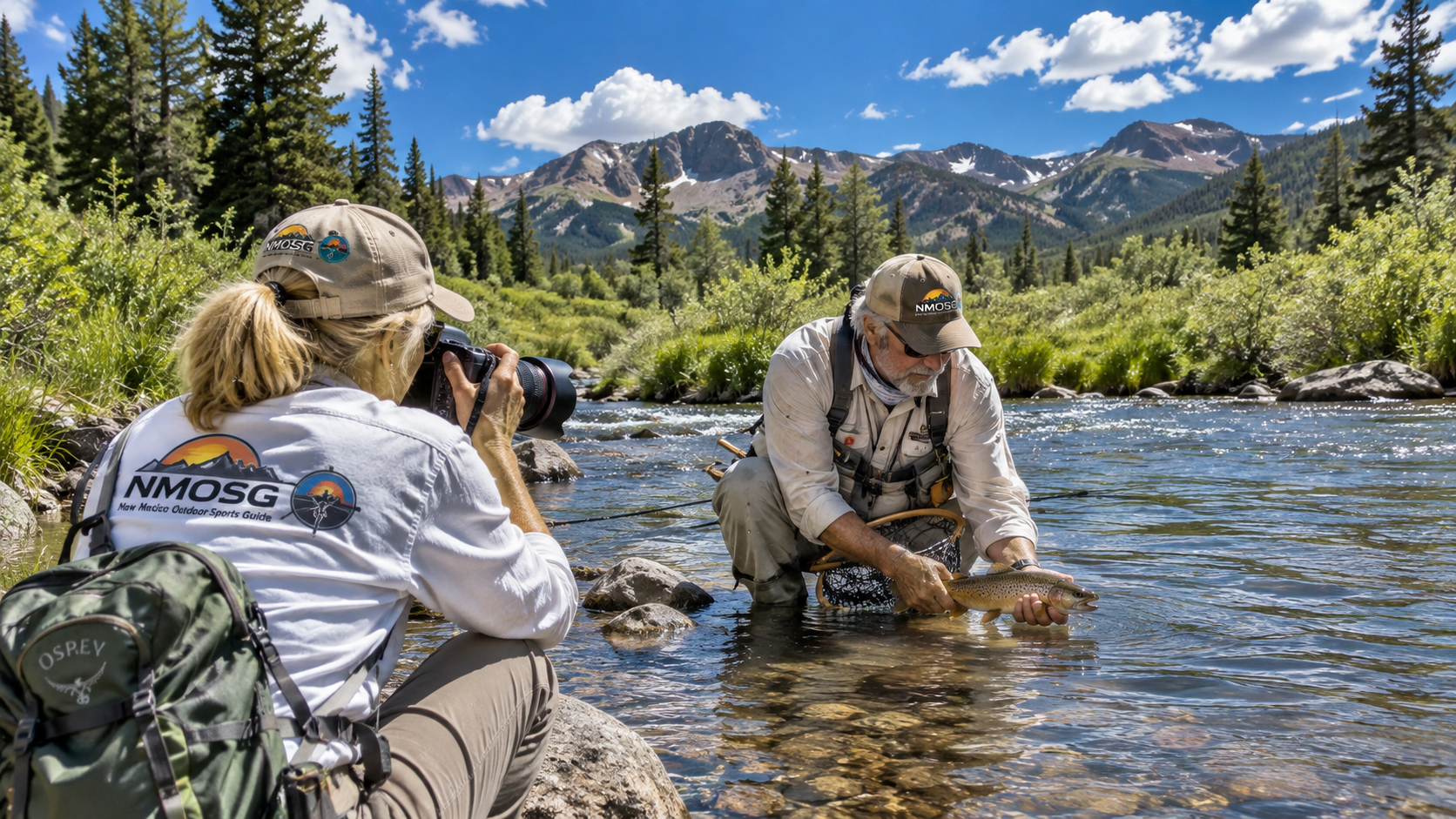
A wild trout is worth more in the river than in a photograph that took three minutes to arrange.
I use a few simple rules.
Wet your hands before touching the fish.
Use a rubber landing net.
Keep the trout submerged while removing the hook.
Use barbless hooks whenever practical and wherever required.
Don't squeeze the fish.
Have the camera ready before lifting it.
Keep air exposure extremely brief.
Then support the trout gently in the current until it swims away under its own power.
The best part of a catch-and-release photograph isn't the photograph.
It's the empty water afterward.
Wildlife at Rancho del Oso Pardo
The Chama country is wildlife country.
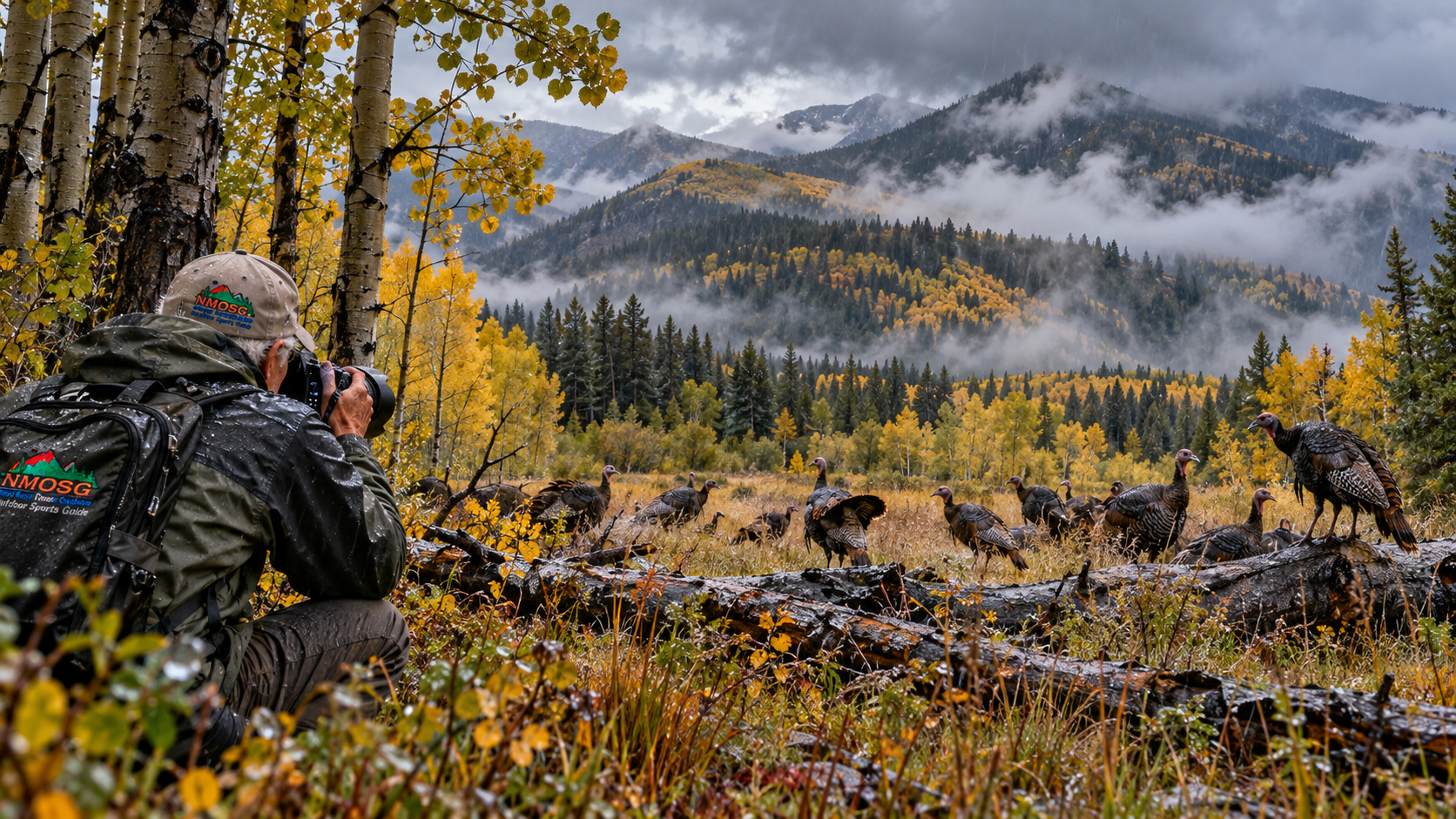
Elk are perhaps the stars of the show.
The ranch has long been associated with seasonal elk movement, and the adjoining public landscape demonstrates just how important this region is to those animals. NMDOW describes Sargent as habitat for one of the state's significant elk herds and notes that dawn and dusk are particularly good wildlife-viewing periods. (NMDOW)
I'd also watch for:
-
Mule deer
-
Black bear
-
Beaver
-
Coyotes
-
Wild turkey
-
Hawks and eagles
-
Waterfowl
-
Songbirds
One of the joys of fly fishing is that you're standing quietly in wildlife habitat.
Sometimes the fisherman who stops casting sees more than the fisherman who doesn't.
Camping Around the Chama Country
Because Rancho del Oso Pardo is private, do not assume camping is permitted there.
Any lodging, camping or overnight access on the ranch must be specifically arranged with the property owner or authorized representative.
Public alternatives exist nearby.
Edward Sargent Wildlife Management Area lists primitive camping among its facilities and activities, although current closures and access rules should always be checked. (NMDOW)
The Chama Basin and surrounding National Forest country also provide public outdoor opportunities.
For another nearby destination, my story about Heron Lake Trout Fishing explores one of northern New Mexico's quietest lake experiences.
Farther down the watershed, El Vado Lake Trout Fishing follows the Chama into an entirely different kind of country.
And downstream again, my Rio Chama Big Eddy Trout Fishing story explores the river after it has grown considerably larger.
Finally, Abiquiú Lake Fishing follows the watershed into the magnificent red-rock country closer to Santa Fe.
Those five destinations together tell quite a story about one river.
Weather in Chama Country
Spring
Expect everything.
Sun.
Wind.
Mud.
Snow.
Cold rain.
Sometimes in the same afternoon.
Snowmelt can raise the river and reduce clarity.
Summer
Summer mornings are glorious.
Afternoon thunderstorms are common enough that I plan around them.
If lightning begins building over the mountains, get away from exposed ridges and open meadows.
Fall
Cool mornings, brilliant aspens and aggressive trout make autumn special.
But mountain weather changes rapidly.
Bring layers.
Winter
Chama knows winter.
Snow can become deep, roads can become difficult, and backcountry access changes dramatically.
Treat the mountains with respect.
They were here long before four-wheel drive.
Getting There: Chama, New Mexico
Chama is the natural gateway to this country.
The village sits in northern Rio Arriba County near the Colorado border and makes an excellent base for exploring the upper Rio Chama watershed.
US 84/64 provides the principal approach from the south, while NM 17 heads northeast from Chama toward the Colorado line and the high country.
For Rancho del Oso Pardo itself, however, I intentionally won't provide turn-by-turn directions onto private property.
Access should come from the ranch's authorized representative as part of whatever current permission or arrangement exists.
That's the right way to visit private land.
Let the owner tell you where to enter, where to park, where you're permitted to fish and what ranch rules apply.
A River Worth Taking Care Of
I spent a good part of my younger years guiding fishermen.
That experience taught me something.
Anybody can recognize good fishing.
The harder lesson is recognizing what creates good fishing.
Cold water.
Healthy banks.
Insects.
Woody debris.
Deep pools.
Clean spawning gravel.
Shade.
Floodplain connectivity.
And people willing to protect all of it.
The habitat work documented on Upper Nabor Creek at Rancho del Oso Pardo is a reminder that private land stewardship can play an important role in protecting entire watersheds. The beaver-dam analog project there was designed to increase pools, reconnect floodplain habitat and improve conditions for Rio Grande cutthroat trout and other aquatic life. (Rio Grande Return)
A trout doesn't understand property lines.
Water flows downstream.
Good stewardship does too.
Final Thoughts on Rio Chama Private Water Trout Fly Fishing at Rancho del Oso Pardo
After all these years, I've become less interested in counting fish.
I remember when numbers mattered.
Five fish.
Ten fish.
Twenty fish.
Biggest fish.
Most fish.
That's what fishermen do when we're young.
Eventually something changes.
Nowadays I'd rather remember one beautiful brown trout rising beneath an undercut bank.
I'd rather remember elk stepping into a meadow at dusk.
I'd rather remember Paulette standing behind a camera while evening light settles across the San Juan Mountains.
I'd rather remember cold water around my boots and the sound of the Rio Chama running past me toward places I've already known.
Rio Chama Private Water Trout Fly Fishing at Rancho del Oso Pardo represents something increasingly precious in the modern West.
Wild trout.
Healthy habitat.
Big country.
And solitude.
But private land carries an obligation from the visitor as surely as ownership carries responsibility for the steward.
Ask permission.
Honor the rules.
Respect the fish.
Respect the wildlife.
Leave the gate the way you found it.
And if you're fortunate enough to stand beside that upper Rio Chama someday, don't be in too much of a hurry to make the next cast.
Put the rod down for a minute.
Listen.
The river began somewhere high in those mountains long before we arrived.
It will keep flowing long after we've gone.
We're only visitors.
And I've come to believe that's one of the finest things a river can teach an old fisherman.
0 Comments