
Following a Young River Through the High Country North of Chama
By Pat McCarty
There is something special about fishing a river near its beginning.
Downstream, a river has acquired a history. It has gathered tributaries, passed beneath bridges, filled reservoirs, irrigated fields, carved canyons and carried generations of people along its banks.
But near its source, a river is still young.
Cold.
Clear.
Restless.
And sometimes just wide enough that an old fisherman can step across it without getting his boots wet.
That's the Rio Chama I love in the high country north of Chama, New Mexico.
Most New Mexicans know the Rio Chama farther downstream. We know the beautiful water around El Vado and Heron reservoirs, the famous canyon country below El Vado Dam, the Big Eddy, Abiquiú Lake and eventually the river's meeting with the Rio Grande.
But follow the Chama north, toward the Colorado line and into the San Juan Mountains, and you discover an entirely different river.
This is the country I think about when someone asks me about Rio Chama Basin Trout Fishing Public Access.
It's a country of spruce and fir, alpine meadows, beaver ponds, cold mountain creeks, elk tracks, wild trout and Forest Service roads that eventually become trails.
And for an old fisherman who still believes half the pleasure of catching a trout is the country you have to travel through to find him, that's pretty close to heaven.
Where the Rio Chama Begins
The upper Rio Chama is born high in the San Juan Mountains of southern Colorado.
Its East and West Forks originate in high mountain country near 12,000 feet before tumbling downhill through an extraordinary basin of alpine meadows, spruce-fir forest and rugged mountain slopes.
The forks eventually join to form the main stem of the Rio Chama.
From there, the young river begins its long journey south into New Mexico.
I've always enjoyed thinking about rivers that way.
That little stream slipping beneath a log in the mountains doesn't know that someday it will become a substantial river flowing beneath towering sandstone walls.
It doesn't know about El Vado Lake.
It doesn't know about Heron.
It doesn't know about Abiquiú.
It certainly doesn't know that one day its water will join the Rio Grande and begin another long journey toward the Gulf.
It's simply going downhill.
Gravity has been running rivers quite successfully without our assistance for a very long time.
Finding Public Water on the Upper Rio Chama
Here's where an angler needs to pay attention.
Not every attractive piece of trout water is public water.
The upper Chama passes through a patchwork of federal and private property, and a fisherman has an obligation to know where he is.
Upstream, portions of the river and its forks lie within the Rio Grande National Forest.
The Chama Basin Trailhead provides an important gateway into this public high country.
Farther downstream, however, the river crosses private property.
That means exactly what the sign says.
Private.
A fishing rod doesn't grant a fellow an easement.
Unless you have permission from the landowner, don't trespass to reach the river.
Fortunately, public opportunity returns in a big way at Sargent Wildlife Management Area in New Mexico.
And that's where Rio Chama Basin Trout Fishing Public Access becomes especially interesting.
Sargent Wildlife Management Area
The Sargent country is one of the treasures of Northern New Mexico.
The wildlife area encompasses roughly 20,000 acres near Chama and protects an impressive mixture of river bottom, mountain forest, meadow and wildlife habitat.
The property was acquired in the 1970s, and its history even includes the remains of an early New Mexico fish hatchery.
For anglers, the important point is simple:
There is publicly accessible trout water here.
The Rio Chama and associated streams within Sargent provide opportunities to fish cold mountain water without asking permission from a private landowner, provided you follow current New Mexico Department of Wildlife access and fishing regulations.
This is precisely why publicly protected wildlife lands matter.
They preserve habitat.
But they also preserve opportunity.
A boy or girl with a fishing rod can stand beside the same river as a fellow with a thousand-dollar fly outfit.
The trout don't check anybody's bank account.
I like that.
Special Trout Water Means Special Responsibility
Anglers need to know that Sargent isn't ordinary put-and-take trout water.
Under current New Mexico regulations, waters within or adjacent to Sargent Wildlife Management Area, including the Rio Chama and Rio Chamita, are designated Green Chile Special Trout Water.
That designation currently requires:
Artificial flies or lures only.
A single barbless hook.
Two trout daily bag limit.
That's important because some of the spinning baits I discuss elsewhere in this article may be useful on general-regulation waters but are not legal in the Green Chile Special Trout Water at Sargent.
Always check the current New Mexico fishing proclamation before your trip because regulations can change.
I've fished too many years to resent regulations designed to protect good trout water.
Good fisheries don't happen accidentally.
The Trout of the Rio Chama
The Rio Chama is primarily associated with two familiar trout species:
Brown Trout
Brown trout are perfectly suited to this kind of mountain river.
They love:
-
Undercut banks
-
Deep pools
-
Fallen timber
-
Boulder pockets
-
Root systems
-
Current seams
-
Shaded water
A brown trout is an ambush predator.
Put a lure or streamer close enough to his hiding place and he may strike violently.
Put it three feet too far away and he may watch it go by with complete indifference.
That's brown trout fishing.
Rainbow Trout
Rainbows generally favor somewhat faster water.
Look for:
-
Riffles
-
Runs
-
Pool heads
-
Current seams
-
Oxygenated pocket water
Holdover rainbows can become substantial fish where habitat and food allow them to survive from season to season.
Cutthroat Trout
The broader Sargent drainage also has important native-trout significance.
The Rio Chamita and tributary system has supported cutthroat trout, and New Mexico fisheries managers continue working to protect and restore Rio Grande cutthroat populations where appropriate.
For me, catching a native cutthroat in his ancestral mountain water carries a little extra meaning.
That's not merely catching a fish.
That's shaking hands with New Mexico history.
Chama Basin Trailhead
For anglers interested in seeing the Rio Chama much closer to its beginnings, the Chama Basin Trailhead is the doorway.
The Forest Service identifies it as Trail #738.
The trailhead sits at the beginning of Forest Service property near the end of Forest Development Road 121 and provides access to both the Chama River and Archuleta Creek trail systems.
This isn't drive-up-and-fish country in the usual sense.
You're entering backcountry.
That's part of the attraction.
The Chama River Trail follows the river toward the confluence of the East and West Forks, passing through rolling meadows and magnificent mountain scenery.
The farther you walk, the more civilization seems to fall away behind you.
Eventually there is just trail, river and forest.
Getting to the Chama Basin Trailhead
From Chama, head north on New Mexico Highway 17 toward the Colorado border.
Watch for Chama River Road, Forest Road 121.
Turn onto FR 121 and follow it north toward the Rio Grande National Forest boundary.
Near the upper end, take the appropriate fork toward the Chama Basin Trailhead.
Road conditions can vary dramatically.
A Forest Service road that's pleasant in July can become an entirely different animal after several days of monsoon rain.
Snow can linger surprisingly late.
Mud can turn an innocent-looking road into a wheel-spinning adventure.
Check Forest Service conditions before leaving Chama and don't assume a passenger car can handle every condition simply because the road appears on a map.
That old Subaru Outback of ours earned its keep on more than one Northern New Mexico backroad.
Hiking and Fishing the Upper Chama
The combination of hiking and trout fishing is what makes the Chama Basin particularly appealing.
You aren't simply parking beside a bridge and casting into the nearest hole.
You can walk.
Explore.
Listen.
Watch the water.
That's how I prefer to fish a small mountain river anyway.
Walk quietly upstream and study each section before casting.
Look for the places where trout can feed without spending too much energy.
A seam beside fast current.
The cushion behind a boulder.
A dark slot beneath an undercut bank.
The tail of a pool.
A shaded pocket beneath spruce branches.
Trout are wonderfully efficient creatures.
They generally don't fight heavy current all day when they can sit beside it and let lunch come to them.
My Spinning Tackle for Rio Chama Trout
I've been fishing since the 1970s and have accumulated enough tackle over the years to open a small sporting-goods department.
Yet mountain trout fishing usually brings me back to simple equipment.
Spinning Rod
I'd carry a:
5½- to 6½-foot ultralight or light-action spinning rod.
A shorter rod is easier to maneuver beneath overhanging trees.
Spinning Reel
A quality:
1000- to 2000-size spinning reel
is plenty.
You don't need a reel capable of stopping a tarpon.
Smooth drag matters far more than size.
Spinning Line
I like:
4-pound monofilament
or
6-pound braid with a 4- to 6-pound fluorocarbon leader.
Clear mountain water makes trout cautious.
Light line helps.
Best Spinning Lures for Rio Chama Trout
For general-regulation sections where legal, my tackle box would contain:
Inline Spinners
-
Panther Martin
-
Mepps Aglia
-
Rooster Tail
Small sizes usually work best.
Colors I favor include:
-
Gold
-
Silver
-
Black
-
Brown
-
Yellow-and-black combinations
Gold often shines in slightly stained water or under cloudy skies.
Silver can be excellent under bright conditions.
Small Spoons
A little Kastmaster or Thomas-style spoon can cover deeper pools.
Again, keep them small.
Tiny Crankbaits
Small minnow imitations can be excellent for browns.
Work them beside structure rather than simply casting down the middle of the river.
A Regulation Reminder
On Sargent's Green Chile Special Trout Water, whatever artificial lure you choose must comply with the single barbless hook requirement.
Check your lure before fishing.
Don't wait until a conservation officer checks it for you.
What About Bait?
On general-regulation trout water where bait is permitted, traditional offerings can include worms, salmon eggs and prepared trout bait.
But remember:
Bait is not legal on Sargent Wildlife Management Area's Green Chile Special Trout Water.
There, stick with legal artificial flies and lures.
Fly Fishing the Rio Chama
If ever a river looked designed for a fly rod, the upper Chama does.
I'd choose:
Fly Rod
A 3- to 5-weight rod, approximately 8½ to 9 feet.
For tighter headwater sections, a shorter 3-weight can be delightful.
For the larger water around Sargent, a 4- or 5-weight provides greater versatility.
Fly Reel
Nothing elaborate is necessary.
Choose a dependable reel with a smooth drag.
Fly Line
A weight-forward floating line covers most situations.
Carry a 9-foot tapered leader and several sizes of tippet, generally 4X through 6X.
Productive Dry Flies
My fly box would include:
-
Elk Hair Caddis
-
Parachute Adams
-
Royal Wulff
-
Stimulator
-
Blue-Winged Olive patterns
-
Small terrestrial patterns
Summer grasshopper season can make terrestrial fishing particularly entertaining.
There is something wonderfully uncomplicated about watching a trout rise to a dry fly.
No electronics.
No sonar.
No complicated machinery.
Just water, fish, feathers and anticipation.
Best Nymphs
When trout aren't looking upward, go downstairs.
I'd carry:
-
Pheasant Tail
-
Hare's Ear
-
Prince Nymph
-
Copper John
-
Zebra Midge
-
Stonefly nymphs
Fish them naturally through seams and deeper runs.
A small strike indicator can help, but in pocket water I often prefer watching the leader.
Streamers for Brown Trout
If I'm specifically looking for a better brown trout, I'll tie on a small Woolly Bugger or similar streamer.
Black.
Olive.
Brown.
Cast toward structure and retrieve across the current.
Browns often strike from places where you least want to lose a fly.
That's probably why they're there.
Productive Water Temperatures
Trout are cold-water fish.
As a practical fishing range, I particularly like water in roughly the 50- to low-60-degree Fahrenheit range.
Fish tend to be active and well oxygenated.
Once mountain streams warm into the upper 60s, I become increasingly cautious about catch-and-release fishing.
Warm water holds less oxygen and trout become stressed more easily.
If water temperatures approach 68°F, especially during summer afternoons, I prefer putting the rod away and finding something else to photograph.
There will always be another fishing morning.
There may not always be another trout.
Best Time of Day
Spring
Midday can be productive because sunlight warms cold water.
Summer
Dawn through midmorning is my favorite.
Evenings can also be excellent.
Fall
Fishing can remain productive throughout much of the day as water temperatures cool.
Summer afternoon thunderstorms provide another good reason to start early.
High-country lightning is nothing to fool with.
A graphite fishing rod makes a poor lightning rod but a remarkably good imitation of one.
Camping at Chama Basin
Dispersed camping is allowed in the Chama Basin Trailhead area according to Forest Service guidance.
For anglers, that opens wonderful possibilities.
Arrive in the afternoon.
Set camp.
Cook supper beneath the spruce.
Listen to the river after dark.
Wake before sunrise.
Drink coffee while the first light reaches the mountains.
Then walk to the water while the trout are feeding.
That's my definition of a pretty successful motel.
Of course, dispersed camping means bringing what you need and leaving nothing behind.
Pack out your trash.
Protect water sources.
Be careful with fire.
Store food appropriately in bear country.
Leave the campsite looking as though you were never there.
Weather in the Rio Chama Basin
Mountain weather deserves respect.
Spring
Expect cold nights, lingering snow and runoff.
Road access may remain difficult.
Summer
This is prime hiking and fishing season.
Mornings can be beautifully cool.
Afternoons often bring monsoon thunderstorms.
Carry rain gear even beneath a blue morning sky.
Fall
My favorite season.
Aspens turn gold.
Temperatures fall.
Trout become aggressive.
And the mountains acquire that unmistakable autumn smell of cold earth and drying leaves.
Winter
Snow transforms the basin.
Backcountry access can become difficult or impossible by ordinary vehicle.
Don't underestimate winter in the San Juans.
Wildlife Along the Upper Rio Chama
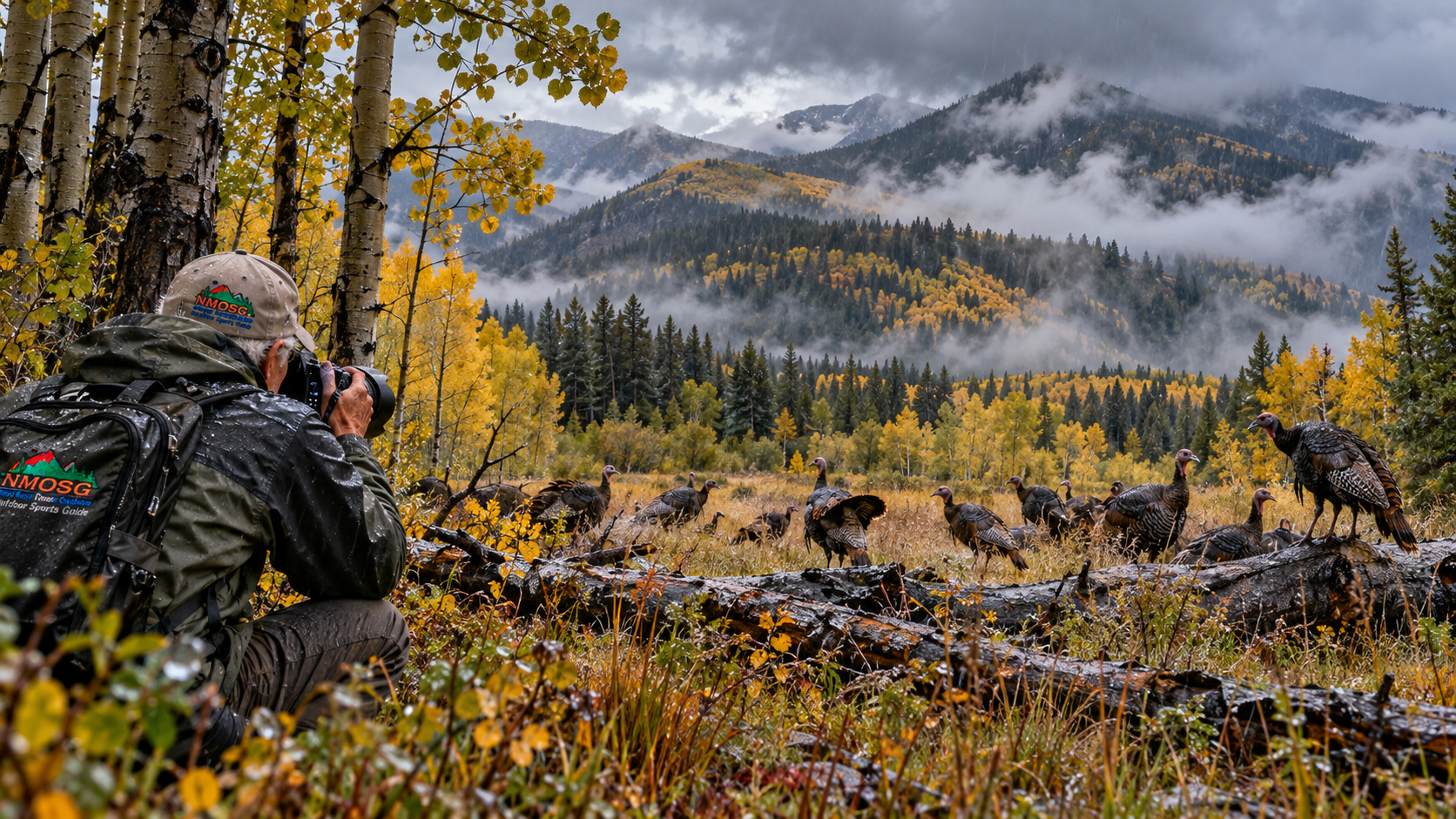
Fishing isn't the only reason I carry a camera into this country.
The Chama region supports a tremendous variety of wildlife.
Elk are especially important around Sargent Wildlife Management Area.
You may also encounter mule deer, black bear, coyote, beaver, raptors and countless smaller mountain residents.
Beaver activity can be especially interesting to trout anglers.
Their dams create deeper pools, slow current, collect food and provide winter refuge for fish.
A beaver pond in high country deserves a few careful casts.
Chama, New Mexico: The Perfect Base Camp
I have always liked Chama.
It still feels like a mountain town rather than a town pretending to be one.
The historic Cumbres & Toltec Scenic Railroad gives the place a character unlike anywhere else.
Steam locomotives still whistle.
Smoke drifts above the rail yard.
Old buildings stand beside modern businesses.
Hunters, fishermen, railroad enthusiasts, ranchers and travelers share the streets.
Chama makes an excellent headquarters for exploring this entire watershed.
From town you can reach the upper Chama, Sargent Wildlife Management Area, Heron Lake, El Vado Lake and numerous mountain streams.
For additional fishing ideas, my New Mexico Outdoors stories on Rio Chama Basin Headwaters Trout Fishing, Heron Lake Trout Fishing, El Vado Lake Trout Fishing, Rio Chama Big Eddy Trout Fishing, and Trujillo Meadows Reservoir Trout Fishing continue the journey through this remarkable corner of Northern New Mexico.
Public Access Is Something Worth Protecting
I've spent enough years outdoors to appreciate public land more with every passing season.
When I was younger, I probably took it for granted.
I don't anymore.
Public access means an ordinary family can take their children fishing.
It means a retired fellow can walk a riverbank without belonging to an exclusive club.
It means wildlife habitat can remain intact while responsible people enjoy it.
But public access survives only when we treat it properly.
Respect private property boundaries.
Close gates.
Don't litter.
Don't cut fences.
Obey seasonal closures.
Follow fishing regulations.
Give wildlife room.
And leave a clean campsite.
Access lost through careless behavior is difficult to regain.
Handling Rio Chama Trout With Care
I practice catch and release much of the time, particularly with wild trout.
A few simple habits make a difference:
Use barbless hooks where required and consider them elsewhere.
Wet your hands before touching a trout.
Keep the fish in the water whenever possible.
Use a rubber landing net.
Don't squeeze the fish.
Remove the hook quickly.
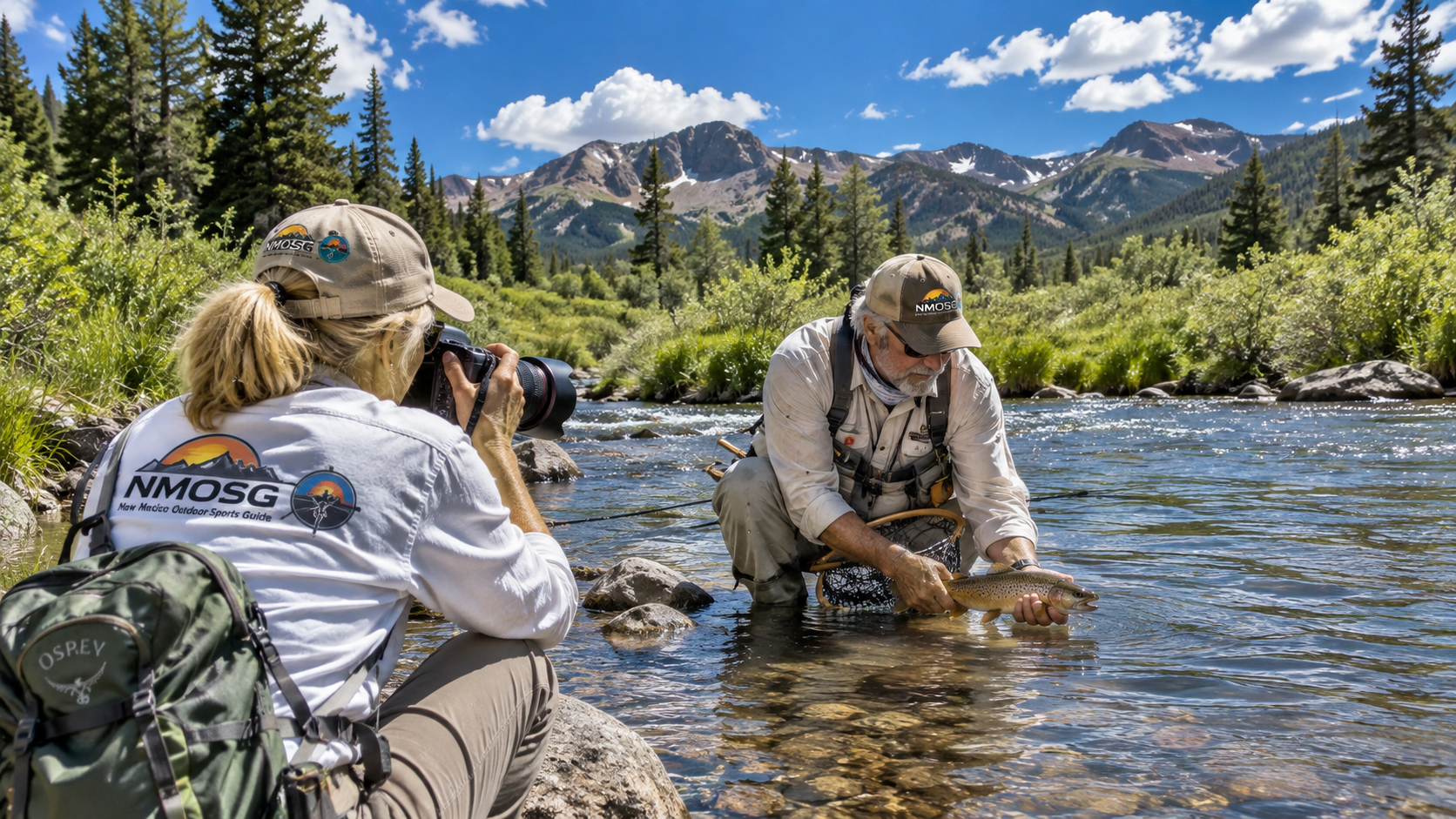
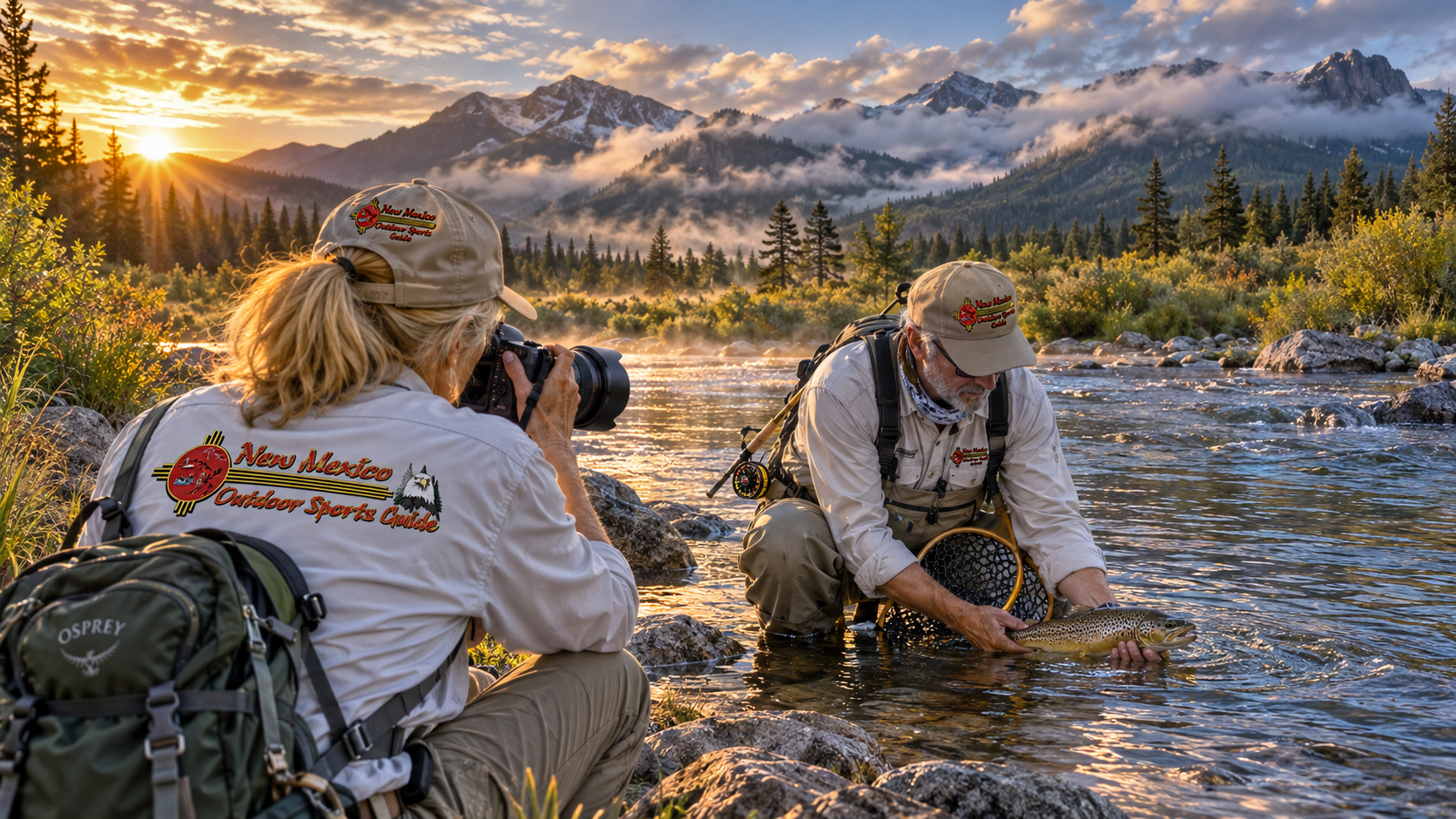
If you want a photograph, have the camera ready before lifting the trout.
Then let him go.
Watching a trout disappear back into clear mountain water still gives me more satisfaction than putting one on a stringer.
The River Keeps Going
Eventually every fishing day ends.
The sun drops behind the mountains.
Shadows stretch across the meadow.
The temperature falls.
You break down the rod and begin walking back toward the truck.
Behind you, the Rio Chama continues downstream.
Past spruce trees.
Past beaver ponds.
Past Sargent.
Toward Chama.
Toward El Vado.
Toward Abiquiú.
Toward the Rio Grande.
The fisherman leaves.
The river doesn't.
Final Thoughts on Rio Chama Basin Trout Fishing Public Access
When people ask me what makes Rio Chama Basin Trout Fishing Public Access special, I could talk about brown trout.
I could mention rainbows.
I could talk about dry flies drifting through mountain riffles or a little spinner flashing beneath an undercut bank.
I could describe the Chama Basin Trailhead, the high meadows, the San Juan Mountains or the wonderful public fishing opportunities around Sargent Wildlife Management Area.
But ultimately, it's something simpler.
Freedom.
The freedom to shoulder a fishing pack and walk toward a cold mountain river.
The freedom to camp beneath spruce trees.
The freedom to hear elk bugling somewhere beyond the ridge.
The freedom to stand knee-deep in clear water while a trout rises beneath a Western sky.
I've been fortunate enough to spend a lifetime outdoors.
From the Kansas Flint Hills of my boyhood to Texas bass lakes, from our mountain home at Angel Fire to the rivers and deserts of New Mexico, I've learned that the places I remember most aren't necessarily where I caught the biggest fish.
They're the places where I felt fortunate simply to be there.
The upper Rio Chama is one of those places.
Cold water.
Wild trout.
Public land.
Mountain air.
And another trail disappearing around the bend.
At my age, I've learned that's more than enough reason to keep walking.
0 Comments