
Ute Lake New Mexico Bass Fishing: Largemouth, Smallmouth and a Lifetime of Lessons from the Water
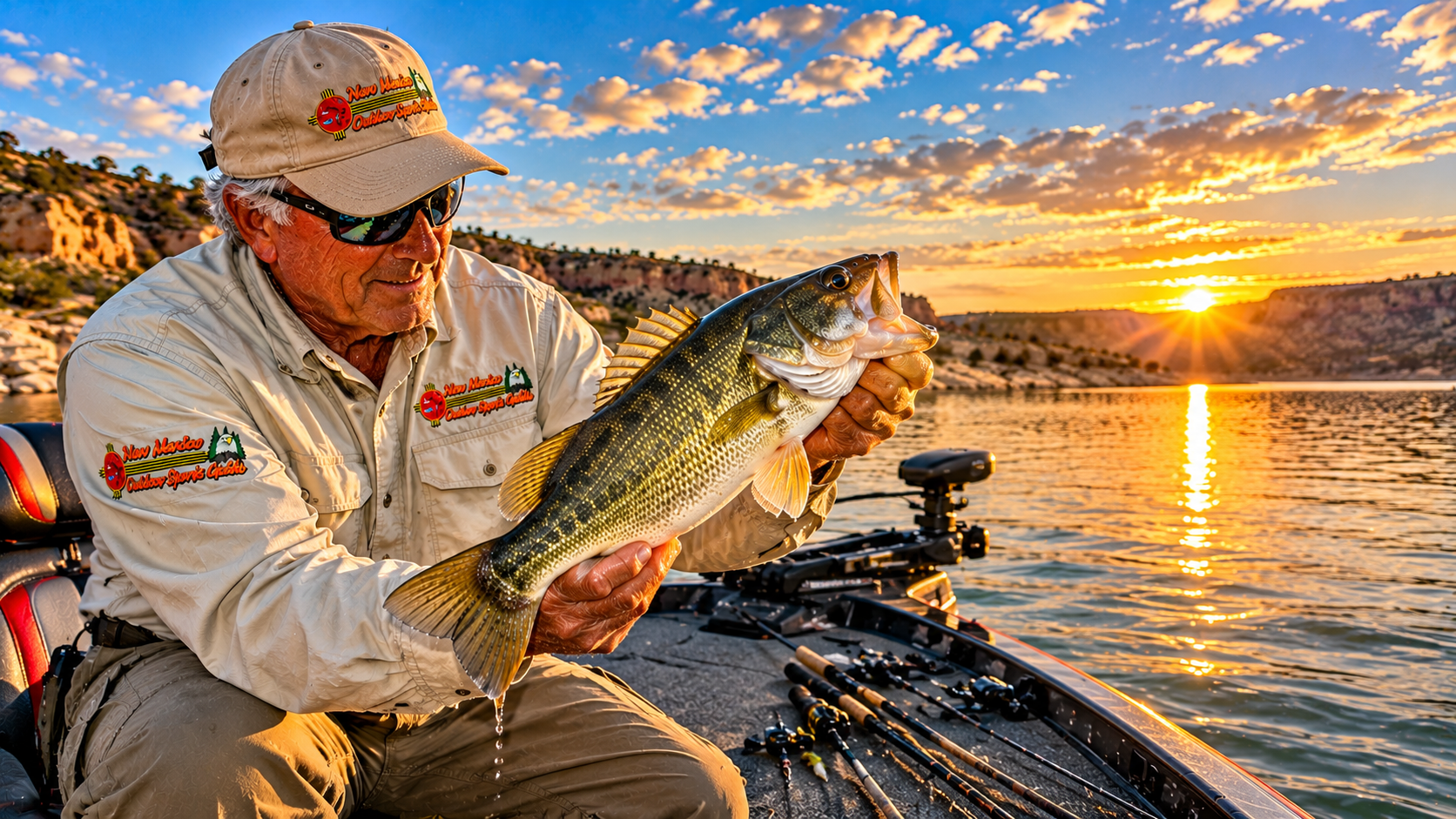
A first-person New Mexico Outdoor Sports Guide fishing adventureThere is something about a bass boat easing away from the shoreline at first light that still makes me feel like a youngster.The gentle rumble of an outboard warming up. The smell of the water. A few scattered clouds catching the first sunlight. And somewhere beneath that quiet surface, a largemouth or smallmouth bass going about its business, completely unaware that an old fisherman has arrived with a tackle box full of ideas.After more than eight decades of living and a good many of those years spent fishing, guiding and competing in bass tournaments, I've learned that every lake has its own personality.Some lakes are generous. Others are downright contrary.And a few seem determined to remind you that no matter how much you think you know about bass fishing, you've still got plenty to learn.Ute Lake New Mexico Bass Fishing promises just that sort of challenge.Located near Logan in northeastern New Mexico, Ute Lake offers rocky points, submerged channels, open-water structure and protected coves where both largemouth and smallmouth bass can find comfortable homes.It's quite a different setting from the mountain streams and alpine lakes Paulette and I enjoyed during our seventeen years at Casa Oso, our log home overlooking the Moreno Valley above Angel Fire.Out there, the mountains rise above the valley, elk wander through the forests and the mornings often carry the cool fragrance of pine.At Ute Lake, the landscape opens into broad grasslands, sandstone bluffs and rolling hills beneath an enormous New Mexico sky.The water is warmer.The country is drier.And the fishing calls for a different collection of rods, reels and lures.But the basic challenge remains the same.Find the fish.Figure out what they're eating.And convince one that your offering deserves a closer inspection.I spent enough years guiding bass fishermen on Lake Conroe and Sam Rayburn, and fishing tournaments on Toledo Bend, Texoma, Amistad and other reservoirs, to appreciate a lake that rewards observation and patience.Ute Lake certainly looks like that kind of water.And with both largemouth and smallmouth bass swimming beneath its surface, it offers an opportunity to enjoy two distinctly different styles of bass fishing in one beautiful northeastern New Mexico setting.
Where Is Ute Lake, New Mexico?
Ute Lake lies near the Village of Logan in Quay County, approximately 25 miles northeast of Tucumcari.The reservoir occupies a section of the Canadian River valley and is surrounded by the wide-open landscape of northeastern New Mexico.Ute Lake State Park provides public access to the water, camping, boating, fishing and other outdoor recreation.The lake extends along the Canadian River valley for roughly thirteen miles, although its surface area and shoreline configuration vary with water levels.This is important because reservoirs are constantly changing.Rainfall, drought, inflows and water management can alter the lake's elevation, expose submerged structure and change access conditions.A shoreline that was covered with water last spring may be high and dry this year.A submerged point that once required a depth finder to locate may suddenly become visible.And a productive fishing spot can change character dramatically when the water drops several feet.I learned that lesson years ago on Texas reservoirs.You can remember where the fish were last season, but you'd better pay attention to where the water is today.
How Was Ute Lake Created?
Ute Lake was formed by the construction of Ute Dam on the Canadian River in the early 1960s.The reservoir was developed for water storage and has become an important recreational destination for northeastern New Mexico.Its waters support several warmwater fish species, including largemouth bass, smallmouth bass, walleye, crappie, catfish and sunfish.For bass fishermen, the lake's most interesting feature is its variety of underwater habitat.Rocky points extend into deeper water.The original Canadian River channel winds through the reservoir.Smaller tributaries create coves and drainage channels.And changes in bottom composition provide different environments for largemouth and smallmouth bass.Those differences matter.Largemouth bass frequently favor protected water, cover and ambush locations.Smallmouth bass often prefer rockier structure, firmer bottom and open-water feeding opportunities.There is plenty of overlap, of course.A largemouth doesn't refuse to eat simply because it's sitting beside a boulder.And a smallmouth won't ignore a school of baitfish because it's swimming through a cove.But understanding their general preferences gives a fisherman a useful place to begin.
What Does New Mexico Game and Fish Report About Ute Lake Bass?
The New Mexico Department of Wildlife provides some particularly encouraging information for smallmouth fishermen.Its warmwater fisheries guidance identifies Ute Lake, Conchas Lake and Navajo Lake as important smallmouth bass fisheries. It specifically notes that Ute and Conchas contain good numbers of larger smallmouth bass and recommends concentrating on rocky areas and ledges.
That's precisely the kind of information I'd want before planning a trip.There is also a more recent indication of fisheries management at Ute Lake.According to the Department's June 18, 2026 stocking report, 17,498 juvenile largemouth bass were stocked into Ute Lake on June 17, 2026. Those fish averaged approximately 1.1 inches in length.
That's an investment in the future of the fishery, not an indication that thousands of catchable bass were suddenly added to the lake.Those little fish have a long journey ahead of them.They must find food, avoid predators, survive changing conditions and eventually grow large enough to interest fishermen.Some will make it.Many won't.That's the way nature works.For current fishing conditions, I recommend checking the Department's weekly fishing reports and fishing conditions and trip planner.The fishing techniques in this article are based on Department guidance and my general reservoir-fishing experience. They shouldn't be mistaken for a firsthand report of a recent Ute Lake trip.
Where Would I Look for Largemouth Bass at Ute Lake?
Largemouth bass are ambush predators.They often prefer locations where they can remain relatively comfortable while waiting for something edible to wander past.At Ute Lake, I'd begin by examining protected coves, secondary points, flooded vegetation when water levels permit, and shoreline transitions.
Protected coves and pockets
During spring, largemouth bass often move into protected areas as water temperatures approach spawning conditions.I'd search for coves with gradual banks, firm bottom and nearby deeper water.A cove doesn't have to be enormous.Sometimes a small pocket along a larger shoreline provides everything a bass needs.I'd begin by fishing its entrance, then work progressively toward the back.If the water were clear, I'd stay farther from the bank and make longer casts.If it were stained, I'd move closer and use presentations that create more vibration.
Flooded brush and shoreline cover
When reservoir levels rise, newly flooded vegetation can become excellent largemouth habitat.Brush provides shade, ambush cover and places where smaller fish can hide.I'd work a Texas-rigged plastic worm or creature bait through the available openings.A spinnerbait could help locate more active fish.And if the cover were especially dense, a compact jig would be one of my first choices.
Secondary points and channel swings
I learned long ago that bass often use secondary points as stopping places during seasonal movements.Where a secondary point approaches a creek channel, I'd pay particular attention.Those locations provide access to different depths without requiring fish to travel very far.They can be useful during prespawn, postspawn and fall feeding periods.
Where Would I Look for Smallmouth Bass at Ute Lake?
Now we're talking about one of my favorite freshwater fish.Smallmouth bass have a personality all their own.They're powerful, stubborn and remarkably athletic.A good smallmouth can turn a perfectly respectable fishing rod into something resembling a bent willow branch.And unlike largemouth, which often bury themselves in vegetation or wood, smallmouth frequently relate to rock, gravel and underwater structure.The Department's recommendations for Ute Lake fit that pattern.
Rocky main-lake points
I'd start with rocky points extending into deeper water.A point with scattered boulders, broken rock and a noticeable drop-off would be particularly interesting.I'd make casts at different angles to determine where the fish were holding.Sometimes bass concentrate on the tip.Sometimes they're on the shaded side.Sometimes they hold along the deeper edge.And sometimes they're feeding halfway down the point, nowhere near the location where I expected them.That's why I never fish only the most obvious part of a structure.
Gravel banks and rock transitions
Smallmouth frequently use areas where bottom composition changes.A gravel bank transitioning into larger rock can provide feeding opportunities and nearby shelter.I'd work a tube jig, Ned rig or small swimbait slowly across those transitions.If the water were exceptionally clear, I'd use lighter line and longer casts.
Underwater ledges and channel edges
During summer, smallmouth may use deeper ledges and structural breaks.I'd search those areas with electronics, paying particular attention to schools of forage.A drop-shot rig can be extremely effective when fish are holding near bottom.A small jig or football-head jig is another good option.But I wouldn't overlook suspended fish.If baitfish are suspended above the structure, the bass may be there too.And dragging a lure along the bottom beneath them might accomplish very little.
What Baitcasting Rods and Reels Would I Use?
After years of bass guiding and tournament fishing, I still appreciate the accuracy and control of a good baitcasting outfit.For Ute Lake, I'd carry several combinations rather than trying to make one rod do everything.
Medium-heavy baitcasting outfit
My primary rod would be a 7-foot to 7-foot-3-inch medium-heavy, fast-action graphite rod.I'd pair it with a low-profile baitcasting reel having approximately a 7.1:1 gear ratio.For most Texas rigs and jigs, I'd use 14- to 17-pound fluorocarbon.Around heavier cover, I might increase the line strength.This would be my primary largemouth outfit.
Medium-power crankbait outfit
For crankbaits and other moving lures, I'd carry a 7-foot medium-power rod with a moderate action.A reel in the 6.3:1 range would provide comfortable control.I'd use approximately 10- to 14-pound fluorocarbon, adjusting according to lure depth and structure.The softer rod action helps keep treble hooks from tearing free during a fight.
Heavy-cover outfit
If flooded brush or other dense cover were available, I'd bring a 7-foot-3-inch to 7-foot-6-inch heavy-power rod.I'd pair it with a fast baitcasting reel and 40- to 50-pound braided line.This wouldn't be my everyday Ute Lake combination.But when a largemouth buries itself in heavy cover, there's no substitute for equipment capable of moving the fish.
What Are the Best Baitcasting Lures for Ute Lake Bass?
Texas-rigged plastic worms
A Texas-rigged worm has probably accounted for more memorable moments in my bass-fishing life than I could count.I'd carry 6- to 8-inch straight-tail and ribbon-tail worms.Green pumpkin, watermelon, black-blue and junebug would be among my preferred colors.For clear water, I'd begin with natural shades.For stained water, I'd try darker silhouettes.I'd fish them around brush, rocky transitions and secondary points.
Football-head jigs
For rocky smallmouth habitat, I'd carry 3/8- and 1/2-ounce football-head jigs.Green pumpkin, brown and crawfish patterns would be my starting colors.I'd drag them slowly along the bottom, occasionally lifting them over rock.The important thing is maintaining contact with the structure without constantly snagging.
Spinnerbaits
A 3/8- or 1/2-ounce spinnerbait can be an excellent search lure.I'd favor white, chartreuse-white and natural shad patterns.Willowleaf blades work well for faster retrieves.Colorado blades provide additional vibration, particularly useful in stained water.I'd fish spinnerbaits around windblown points, shoreline cover and transitions.
Crankbaits
I'd carry shallow-, medium- and deeper-diving crankbaits.For rocky banks, squarebill crankbaits are particularly useful.For deeper points, a diving crankbait that reaches the fish's depth can be productive.Shad, crawfish and natural baitfish colors would dominate my selection.
Topwater lures
Few things in freshwater fishing compare with a bass striking a surface lure.I'd carry walking baits, poppers and perhaps a buzzbait.Early morning and late evening would be my preferred times.During summer, I'd also investigate any visible surface feeding activity.But I'd resist the temptation to fish topwater all day simply because I enjoy it.Sometimes the fish have other ideas.
What Spinning Rods and Reels Are Best for Ute Lake Bass?
For smallmouth bass, spinning tackle would occupy a prominent place on my boat.I'd use a 6-foot-10-inch to 7-foot medium-light, fast-action graphite spinning rod paired with a 2500-size reel.My preferred line would be 10-pound braid with a 6- to 8-pound fluorocarbon leader.That combination provides sensitivity, excellent casting distance and a smooth connection to lighter lures.For slightly heavier presentations, I'd use a 7-foot medium-power rod with a 3000-size spinning reel.A reliable drag is essential.Smallmouth bass have an annoying habit of making powerful runs at exactly the moment you think you've gained control.I'd also carry a lighter outfit for particularly subtle presentations.But I wouldn't go so light that landing a fish becomes unnecessarily difficult.The goal is finesse, not helplessness.
Which Spinning Lures and Baits Would I Choose?
Tube jigs
A 3- to 4-inch tube jig is one of my favorite smallmouth presentations.I'd carry green pumpkin, smoke, watermelon and crawfish colors.I'd fish tubes around rocky points, gravel banks and submerged ledges.A short drag, slight hop and pause can imitate a crayfish moving along the bottom.
Ned rigs
A small mushroom-head jig with a 2- to 3-inch soft-plastic bait can be remarkably effective.I'd use light jigheads where possible and allow the lure to maintain occasional bottom contact.The presentation is subtle.And sometimes subtle is exactly what a smallmouth wants.
Drop-shot rigs
A drop-shot rig allows the bait to remain above the bottom while the weight maintains contact with the structure.I'd use 3- to 5-inch finesse worms or small baitfish imitations.For deeper smallmouth, this would be one of my most important techniques.
Small paddletail swimbaits
A 3- to 4-inch paddletail swimbait on a light jighead can imitate the forage bass are feeding upon.I'd carry pearl, silver, white and natural shad colors.A steady retrieve can be productive when bass are actively chasing baitfish.
Live bait
Nightcrawlers can catch bass, and legally permitted minnows may also be effective.However, New Mexico has specific baitfish regulations.I'd consult the Department's warmwater fishing regulations before purchasing or transporting live bait.For my own bass fishing, artificial lures remain my preference.There's something especially satisfying about figuring out which presentation will convince a bass to strike.
What Water Temperatures Are Most Productive for Bass?
Water temperature helps me decide where to begin looking and how quickly to retrieve a lure.The Department's seasonal bass guidance identifies warming spring water, summer conditions above approximately 65°F, and cooler fall and winter conditions as important influences on bass location and behavior.
For practical fishing, I'd use the following approximate ranges.
| Water temperatureLargemouth bass approachSmallmouth bass approach | Below 45°FSlow jigs and finesse plastics near deeper structureSlow tubes, blade baits and deep rocky ledges45–55°FPrespawn points and channel transitionsRocky points, gravel and slow jerkbaits55–65°FSpawning and postspawn habitat, depending on conditionsGravel, rock and nearby feeding areas65–75°FActive feeding around cover and structural breaksPoints, rock transitions and swimbaits75–85°FShade, cover, deeper water and low-light feedingDeeper rocky structure and baitfish concentrationsAbove 85°FSeek comfortable temperatures and adequate oxygenDeeper, oxygenated water and suitable forage |
|---|
These are fishing guidelines, not guarantees.Spawning temperatures vary with species, weather and local conditions.I'd also remember that water temperature at the surface may differ considerably from the temperature where fish are holding.Electronics, observations and actual strikes should guide the final decision.
What Is the Best Time of Day to Catch Bass at Ute Lake?
For summer largemouth bass, I'd begin before sunrise.That first hour of daylight can be especially productive around shoreline cover and points.I'd have a topwater lure ready, along with a spinnerbait or soft-plastic presentation.For smallmouth, early morning can also be excellent, particularly where baitfish are concentrated along rocky shorelines.But I wouldn't overlook midday fishing.Smallmouth may remain active in deeper water throughout the day.And largemouth can be caught around shaded cover or structural breaks even under bright sunshine.Cloud cover and moderate wind can extend feeding opportunities.The Department's guidance also notes that summer bass frequently feed near the surface before dawn and after dusk, while deeper presentations become important as the water warms.
Personally, I prefer early mornings.Not simply because of the fishing.There's something special about being on the water before the rest of the world gets busy.
How Does Bass Fishing Change Through the Seasons?
Spring: March through May
Spring is one of the most interesting seasons.Largemouth and smallmouth begin moving toward suitable spawning habitat as temperatures rise.I'd start on points near protected coves, then investigate gravel banks and shallow structure.Spinnerbaits, jerkbaits, jigs and Texas-rigged worms would all be useful.I'd avoid disturbing actively spawning fish unnecessarily.Spring winds can be strong in northeastern New Mexico, so I'd plan around safe boating conditions.
Summer: June through August
Summer often calls for a split approach.I'd fish shallow early, concentrating on topwater opportunities and shoreline cover.As the sun climbed, I'd move toward deeper points, channel edges and shaded structure.For smallmouth, I'd favor tubes, drop-shot rigs and swimbaits.For largemouth, I'd consider Texas rigs, jigs and crankbaits.Afternoon thunderstorms are a serious consideration.I'd be off the water well before lightning became a threat.
Fall: September through November
Fall can offer excellent bass fishing as water temperatures cool and baitfish movements change.I'd search windblown points, creek mouths and rocky banks.Spinnerbaits, crankbaits and swimbaits would be useful for locating active fish.If the fish were reluctant, I'd slow down with jigs or finesse plastics.Fall is also one of my favorite seasons for photography.The light softens, the air becomes more comfortable and the countryside takes on a quieter personality.
Winter: December through February
Winter bass fishing demands patience.I'd concentrate on deeper structure and slow presentations.For smallmouth, I'd use blade baits, tubes and finesse rigs.For largemouth, I'd try jigs and small plastics around deeper points and channel transitions.The Department recommends very slow presentations in deeper water during winter.
I'd also take cold-water safety seriously.A pleasant afternoon temperature doesn't make an accidental swim harmless.
What Are the Bass Fishing Regulations at Ute Lake?
The New Mexico Department of Wildlife's current warmwater regulations establish a combined daily limit of five black bass.The minimum length for largemouth bass is 14 inches.Importantly, Ute Lake has a special 14-inch minimum length for smallmouth bass, rather than the general statewide 12-inch smallmouth minimum.
That distinction is worth remembering.I'd measure any fish I intended to retain and check the current regulations before fishing.New Mexico residents aged 70 and older can obtain a free fishing license, but still need to have it issued.For the latest requirements, visit the New Mexico Department of Wildlife fishing website.I also encourage anglers to practice careful catch-and-release techniques.Use a rubber landing net when appropriate.Wet your hands before handling a fish.Avoid prolonged exposure to hot air.And return released bass to the water promptly.
What Are the Record Largemouth and Smallmouth Bass at Ute Lake?
Here's where Ute Lake has a particularly distinguished place in New Mexico fishing history.OFFICIAL NEW MEXICO SMALLMOUTH BASS RECORD
7 lb 3 oz
Caught by Cale Sanders at Ute Lake in 2006. The fish measured 24 inches.That's right.Ute Lake produced New Mexico's state-record smallmouth bass.
For somebody who appreciates smallmouth fishing, that's an impressive credential.The official New Mexico largemouth bass record is 15 pounds, 13 ounces, caught by Steve
That is a statewide record, not a Ute Lake largemouth record.I couldn't independently verify an authoritative lake-specific largemouth record for Ute, so I won't assign one without documentation.You can review the official records through the New Mexico Record Fish program.And while most of us will never catch a state-record fish, I can assure you that a spirited three-pound smallmouth can provide enough excitement to make a fishing trip memorable.
Where Can the Public Access Ute Lake?
Ute Lake State Park provides numerous public access and camping areas.The official park information identifies Yucca, Zia, Roadrunner, Logan Park, Eagle Point, Cottonwood, Oldham and Beaver Cove among its developed recreation and camping areas.Primitive camping opportunities include Rogers, the South Side and Mine Canyon.
Not every recreation area has the same shoreline access, facilities or launching opportunities.I'd consult the official park map and contact the park before choosing a destination.For bank fishing, I'd look for legal public shoreline access near rocky points and banks with deeper water nearby.For boat fishing, I'd study the lake's main channel, secondary points and rocky ledges.
Ute Lake State Park
Physical address: 1800 540 Loop, Logan, NM 88426Mailing address: PO Box 52, Logan, NM 88426Telephone: 575-487-2284Email: Laken.Humble@emnrd.nm.govWebsite: Ute Lake State ParkThe State Parks Division currently cautions boaters that the lake may be used as a firefighting water source and advises watching for aircraft. Check current alerts, ramp conditions and restrictions before launching.
Ute Lake Marina
The marina offers boat slips, fuel, boating supplies and other services, subject to seasonal availability.Address: 100 Marina Lane, Ute Lake State Park, Logan, NM 88426Telephone: 575-487-3474Email: playonutelake@gmail.comWebsite: Ute Lake MarinaThe park identifies the marina as generally closed from October through April, so I'd telephone before depending on its services.
Where Can You Camp at Ute Lake?
Ute Lake offers a variety of developed and primitive camping opportunities.Yucca Campground includes electrical hookups suitable for RVs.Zia also offers sites with electrical service.Roadrunner, Cottonwood and other areas provide different levels of facilities, while designated primitive areas offer a less developed camping experience.The park lists restrooms, showers, picnic facilities and an RV dump station.
sFor a bass fisherman, staying close to the lake has obvious advantages.You can fish the evening bite, return to camp for supper and be ready again before sunrise.I'd bring plenty of drinking water, sunscreen, warm clothing and equipment secured against the wind.I'd also check current fire restrictions before planning a campfire.For reservations, use New Mexico State Parks camping reservations.
Where Can You Stay Near Ute Lake?
Logan is the most convenient community for anglers who prefer a motel or rental accommodation.Tucumcari provides additional lodging, restaurants and services.I'd reserve a room ahead of time, particularly during summer weekends and fishing events.
The Lodge at Ute Lake, Logan
Located along US Highway 54, the Lodge offers comfortable accommodations and parking suitable for travelers visiting the lake.Address: 401 North US Highway 54, Logan, NM 88426Telephone: 575-487-2272Email: jackie@lodgeutelake.comWebsite: The Lodge at Ute LakeThe property lists additional contact numbers on its website.
Old Country Inn, Logan
This locally operated motel offers renovated accommodations and advertises boat parking with electrical outlets, an especially useful convenience for fishermen charging trolling-motor batteries.Address: 501 South US Highway 54, Logan, NM 88426Telephone: 575-487-2929Email: Countryinn.logan@gmail.comWebsite: Old Country InnThe telephone number above comes from the property's own website; the Village of Logan directory lists a different contact number, so I'd confirm directly when making reservations.
Historic Route 66 Motel, Tucumcari
For travelers who enjoy a little nostalgia, this restored Route 66 property provides an alternative approximately 25 miles southwest of Logan.Address: 1620 East Route 66 Boulevard, Tucumcari, NM 88401Telephone: 575-461-1212Email: rte66motel@rte66motel.comWebsite: Historic Route 66 MotelThe motel offers a midcentury roadside atmosphere with modern accommodations.
Before booking anywhere, I'd ask about boat-trailer parking, electrical outlets, check-in hours and any arrangements for early-morning departures.Those details can make a fishing trip considerably more pleasant.
What Is Special About Tucumcari, New Mexico?
Tucumcari has been welcoming travelers for generations.Its history is closely tied to Route 66, the legendary highway that carried motorists across the American Southwest long before the interstate system changed the way we traveled.The town became known for its roadside motels, neon signs, restaurants and service stations.Even today, historic Route 66 remains part of Tucumcari's identity.I've always enjoyed towns like that.Perhaps it's because I've spent so much of my life traveling.There were years when I flew a Beechcraft Baron across the country for business, and others when I towed a bass boat from one tournament lake to another.I learned to appreciate a town where you could find a good meal, a comfortable room and somebody willing to talk fishing.Tucumcari offers that atmosphere along with practical services for anglers visiting Ute Lake.Fuel, restaurants, supplies and additional lodging make it a useful stopping point.And after a day of fishing, there's something satisfying about driving past those old Route 66 signs as evening settles over the plains.
What Wildlife Can You See Around Ute Lake?
Ute Lake's combination of open water, rocky shorelines, grasslands and scattered vegetation provides opportunities for wildlife watching.The State Parks Division lists birding and wildlife viewing among the park's recreational activities.
Depending on season and habitat, visitors may encounter waterfowl, shorebirds and raptors.The surrounding countryside also supports wildlife adapted to northeastern New Mexico's relatively dry environment.I'd bring binoculars and a telephoto lens.Early morning is especially attractive for photography.The light is softer, the lake may be quieter and birds are often actively feeding.Paulette and I learned during our years at Casa Oso that some of the finest wildlife photographs happen when you stop trying to hurry nature along.Find a promising place.Remain quiet.Watch.And allow the animals to continue their ordinary activities.Those moments can be every bit as rewarding as catching another bass.
What Is the Weather Like at Ute Lake?
At approximately 3,762 feet in elevation, Ute Lake experiences the seasonal weather of northeastern New Mexico's high plains.
Spring often brings pleasant temperatures mixed with strong winds and sudden weather changes.Summer can be hot, with bright sunshine and the possibility of afternoon thunderstorms.Fall generally offers comfortable daytime temperatures, cooler nights and attractive fishing conditions.Winter can bring freezing temperatures, strong winds and occasional snow or ice.For boaters, wind deserves special attention.A reservoir with long stretches of open water can develop uncomfortable waves surprisingly quickly.I'd check the forecast before launching and remain alert to changing conditions.After experiencing some memorable rough-water bass tournaments during my younger years, I've developed a healthy respect for weather.There comes a time when discretion becomes considerably more attractive than proving you can handle another rough ride.
How Do You Get to Ute Lake from Albuquerque, Santa Fe, Taos and Chama?
Ute Lake State Park is reached through Logan, on US Highway 54 northeast of Tucumcari.The following are approximate planning distances and driving times. Actual mileage depends on your starting address, selected route and park entrance.
| Starting locationApproximate distanceDriving time | Albuquerque190–215 miles3.5–4 hoursSanta Fe170–195 miles3–3.5 hoursTaos180–205 miles3.5–4 hoursChama275–305 miles5–6 hoursTucumcari25–30 miles30–40 minutes |
|---|
From Albuquerque
I'd take Interstate 40 east toward Tucumcari, then US Highway 54 northeast toward Logan.From Logan, follow NM 540 Loop toward Ute Lake State Park.This is a straightforward approach for travelers coming from central New Mexico.
From Santa Fe
One option is Interstate 25 toward Las Vegas, then NM 104 east toward Tucumcari.From there, follow US Highway 54 northeast to Logan.I'd compare that route with current navigation alternatives before leaving, especially when towing a boat.
From Taos
I'd consider US Highway 64 east through Cimarron and Springer, then Interstate 25 south toward Las Vegas.Continue east on NM 104 toward Tucumcari and northeast on US 54 to Logan.The drive passes through several different landscapes, from mountain country to open plains.
From Chama
I'd travel south on US Highway 84 toward Española and Santa Fe, then continue toward Las Vegas and northeastern New Mexico.Because of the distance, I'd plan an overnight stay rather than attempting a full fishing day and return drive.
From Tucumcari
Follow US Highway 54 northeast toward Logan, then NM 540 Loop west toward the park.Before traveling, check NMRoads for current highway conditions.
Where Else Can You Enjoy Bass Fishing and Outdoor Adventures in New Mexico?
One of the pleasures of living in New Mexico is the variety of waters available.Ute Lake offers warmwater bass fishing among rocky points and open plains.Nearby Conchas Lake provides another northeastern New Mexico reservoir where largemouth and smallmouth bass share the water with walleye, crappie and catfish.For additional information, my article about Conchas Lake State Park fishing and camping explores the reservoir's recreational opportunities.My guide to bass fishing in New Mexico examines warmwater fishing across the state.Farther north, Eagle Nest Lake State Park fishing and camping provides a completely different high-country experience.The mountain streams of Cimarron Canyon State Park trout fishing offer another contrast.And my guide to drivable New Mexico alpine lakes explores more of the state's remarkable mountain waters.Those five related articles provide opportunities to discover just how varied New Mexico's fishing and outdoor recreation can be. Their exact current URLs should be checked against the sitemap before publication.
Why Ute Lake New Mexico Bass Fishing Appeals to Me
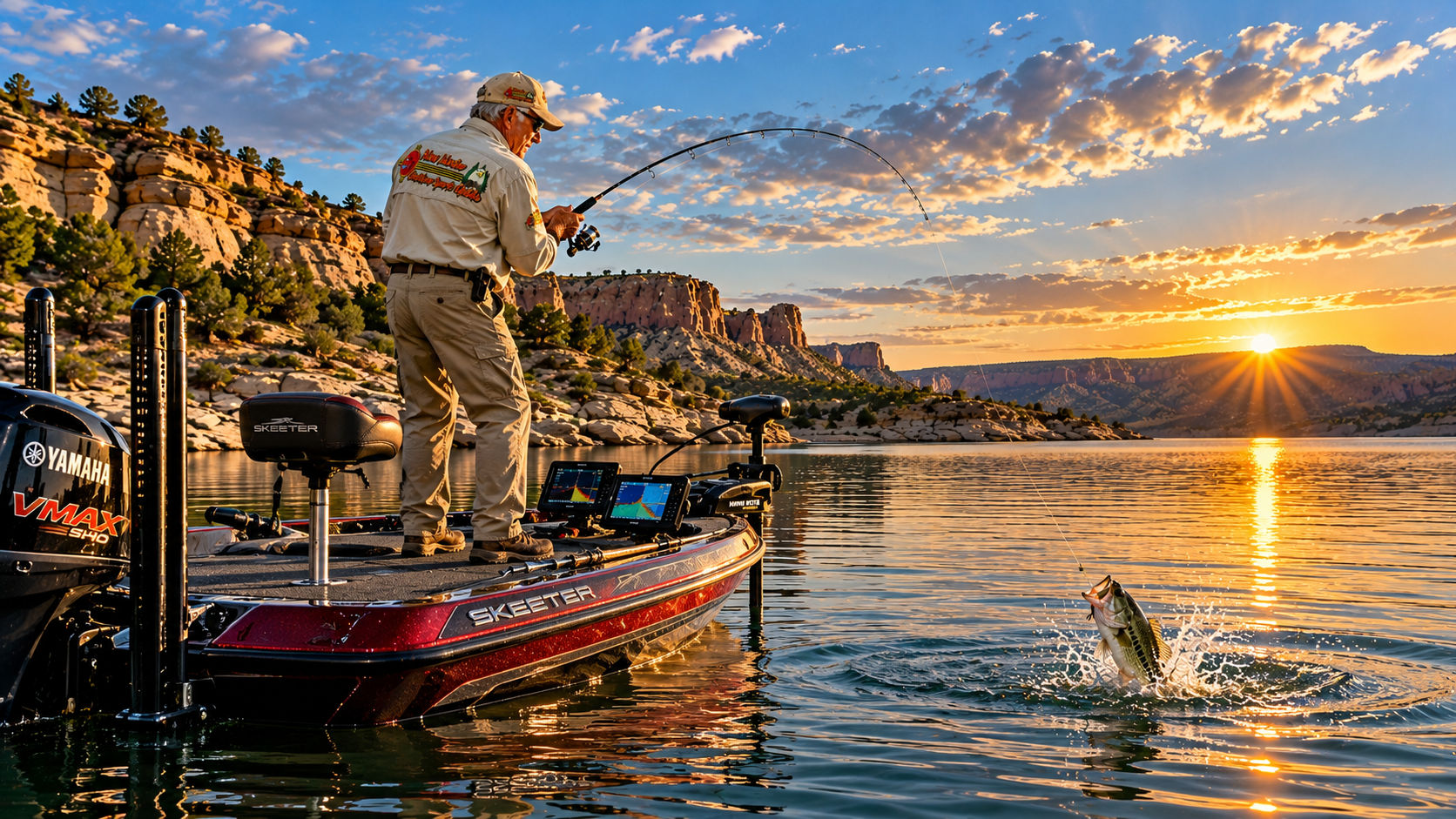
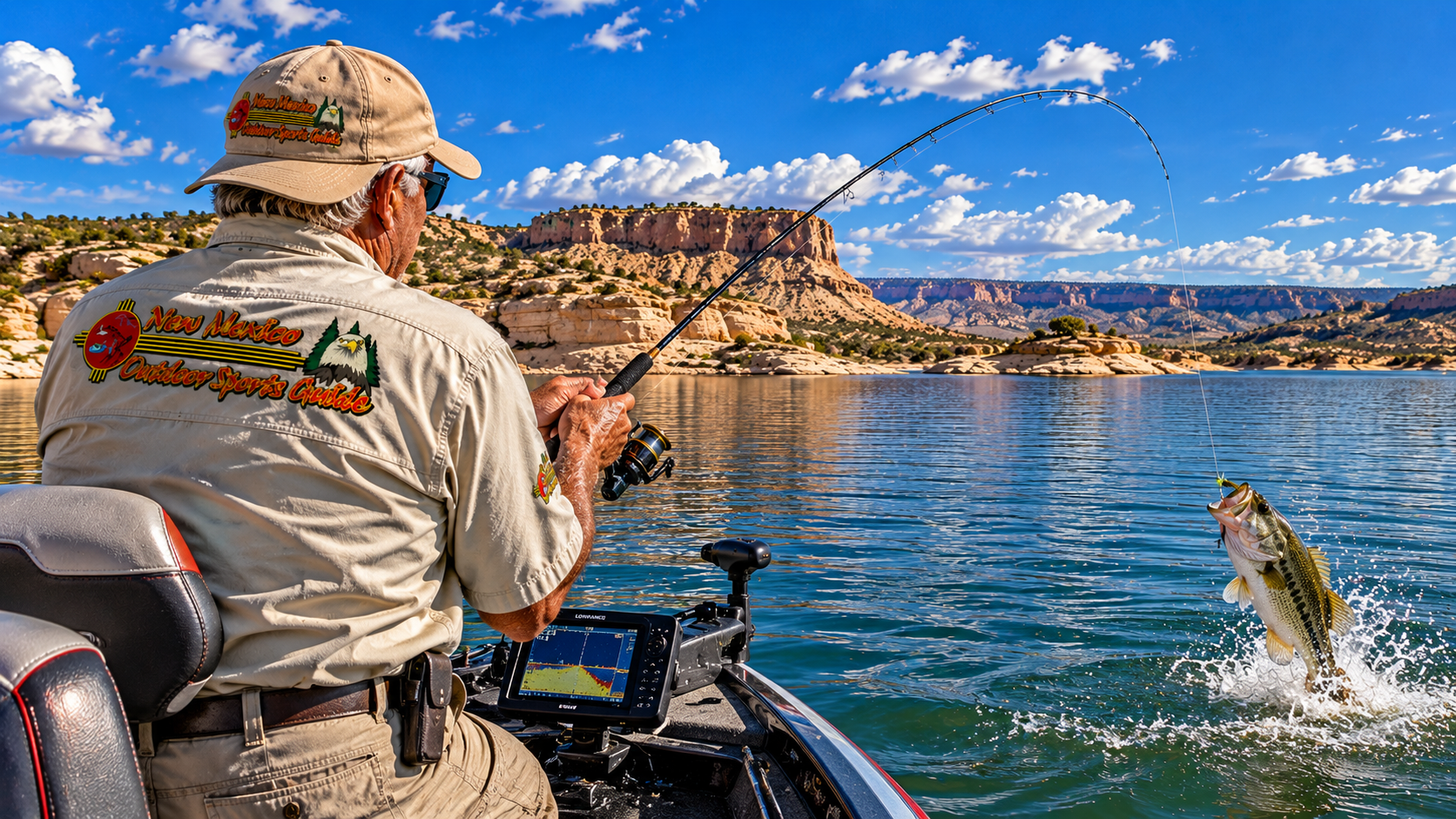
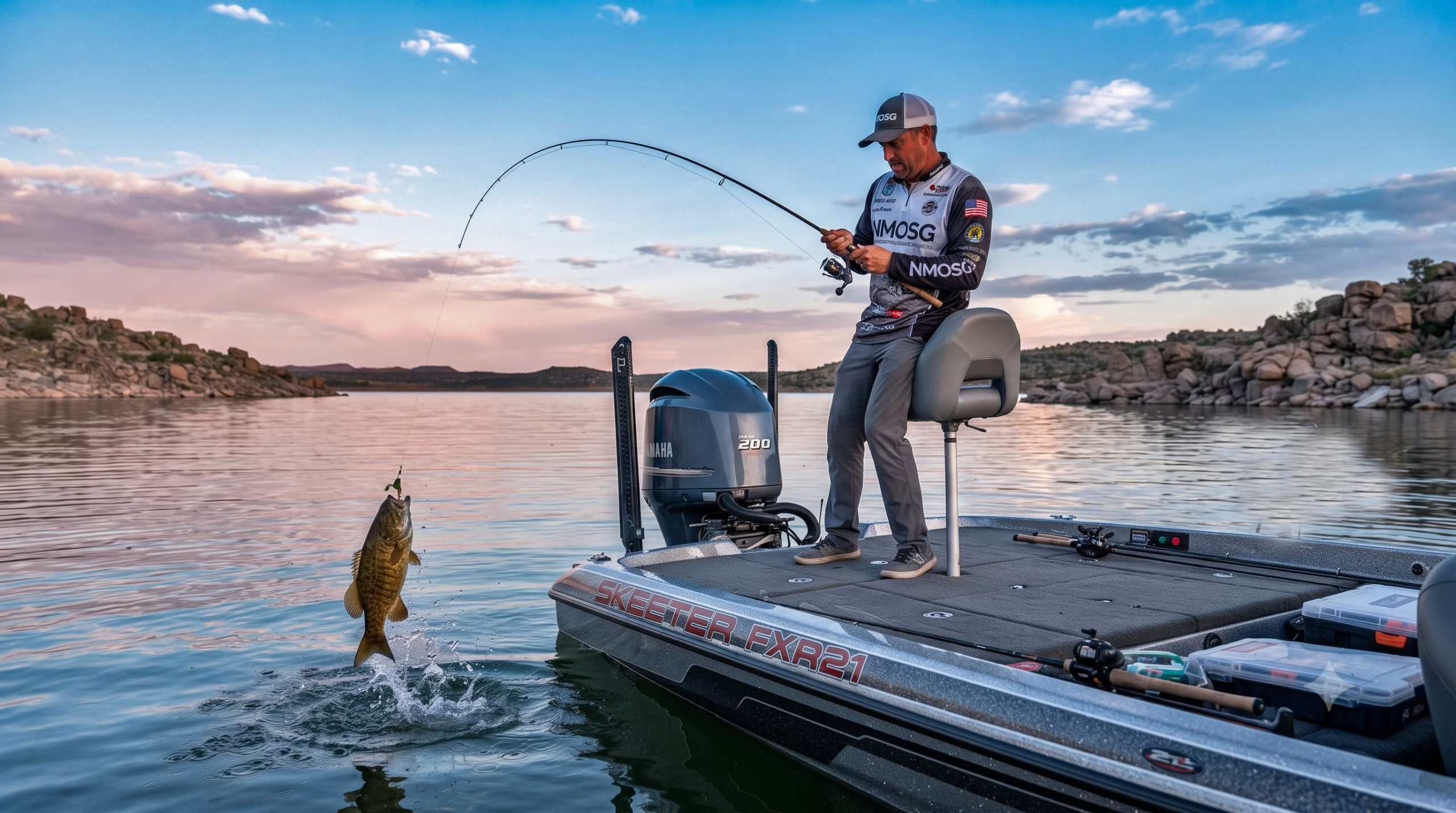
I've spent a good portion of my life with a fishing rod in my hands.There were years when I knew the underwater structure of Lake Conroe almost as well as I knew the roads around our house.I learned the seasonal movements of bass on Sam Rayburn.I competed in tournaments on reservoirs scattered across Texas.And I discovered that the most interesting part of fishing wasn't necessarily catching the biggest fish.It was understanding why the fish were where they were.A submerged point.A channel bend.A school of baitfish.A change in water temperature.Each was another clue.And Ute Lake offers plenty of clues.I can picture a beautiful spring morning there.The sky is bright blue, with scattered white clouds drifting above the sandstone cliffs.A gentle breeze moves across the water.I've positioned the boat along a rocky point that drops toward the Canadian River channel.A green-pumpkin tube jig hangs beneath the tip of my spinning rod.I make a cast.Let the lure settle.Then begin working it slowly along the rocks.A little lift.A pause.Another lift.And suddenly the line moves sideways.I raise the rod.The tip bends sharply.And somewhere beneath the boat, a smallmouth bass decides that whatever has happened to its breakfast is entirely unacceptable.The fish surges toward deeper water.The reel's drag begins to sing.And for a few wonderful moments, the years disappear.That's the magic of bass fishing.It doesn't matter whether you're twenty-five or eighty-five.When a good fish takes your lure, you're simply a fisherman again.And when the excitement is over, there's still the remarkable scenery of northeastern New Mexico waiting to be enjoyed.The sandstone bluffs.The open water.The quiet coves.And perhaps a beautiful sunset before heading back toward Logan or Tucumcari.Ute Lake New Mexico Bass Fishing offers the combination I've appreciated for more than half a century.Interesting water.Challenging fish.Beautiful country.And the promise that the next cast might be the one worth remembering.That's more than enough reason for me.
0 Comments