
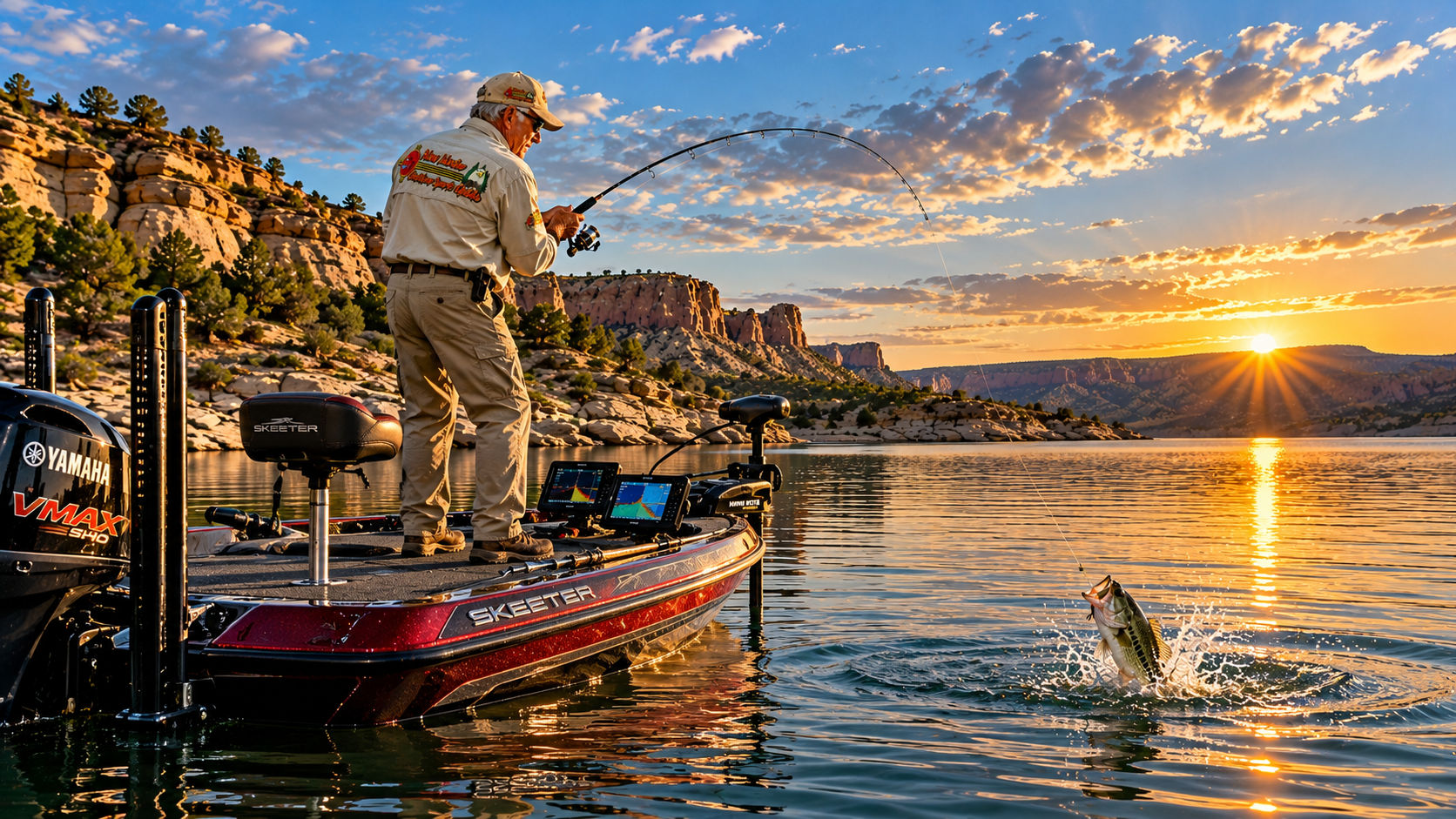
Conchas Lake New Mexico Bass Fishing: Largemouth, Smallmouth, Rocky Points and Desert Reservoir Adventures
There is something about a rocky point disappearing into deep blue water that still gets my attention.
After all these years, I can look across a reservoir, spot a promising stretch of shoreline and almost feel the strike before I've made the first cast.
A few scattered boulders.
A submerged ledge.
A little wind pushing baitfish toward the bank.
And somewhere beneath the surface, perhaps a largemouth bass waiting to ambush its next meal.
That's the kind of fishing country I think about when someone mentions Conchas Lake New Mexico Bass Fishing.
Conchas Lake, tucked into the rugged plains of northeastern New Mexico northwest of Tucumcari, offers a combination of rocky shorelines, sheltered coves, river channels and open-water structure that makes bass fishing an interesting proposition.
It also brings back memories of my earlier life in Texas.
For nearly two decades, I guided bass fishermen on Lake Conroe and Sam Rayburn, with occasional trips to Toledo Bend and other Texas reservoirs. I spent countless hours competing in bass tournaments, learning how largemouth and smallmouth bass responded to changing weather, seasonal movements, water temperatures and fishing pressure.
Those experiences taught me that catching bass consistently requires considerably more than knowing which lure is popular this week.
You need to understand the lake.
You need to understand the fish.
And occasionally, you need to admit that the fish understand the situation better than you do.
Conchas Lake presents the sort of puzzle I have always enjoyed.
It's also a wonderful example of how different the fishing can be across New Mexico.
Paulette and I spent seventeen years at Casa Oso, our log home above Angel Fire, surrounded by ponderosa pine, aspen, elk, wild turkeys and the cool mountain waters of the Moreno Valley.
But travel east toward Tucumcari and the landscape changes dramatically.
The mountains fall away.
The sky grows enormous.
Sandstone cliffs and juniper-covered hills replace alpine forests.
And warmwater bass fishing becomes the attraction.
That's a side of New Mexico well worth exploring.
Where Is Conchas Lake, New Mexico?
Conchas Lake is in San Miguel County in northeastern New Mexico, near the small community of Conchas Dam.
The lake lies northwest of Tucumcari, generally reached by New Mexico Highway 104.
It's a reservoir rather than a natural lake, created by Conchas Dam, which was completed in 1939 as part of a federal flood-control and water-conservation project.
The reservoir is managed as part of the Canadian River watershed, while recreational facilities are provided through Conchas Lake State Park and associated public lands.
Conchas is not an alpine lake surrounded by towering mountains.
Its beauty is different.
Broad expanses of blue water reach into rocky canyons and river valleys. Sandstone cliffs rise above the shoreline. Grasslands, juniper and scattered trees cover the surrounding country.
On a sunny morning, with a few scattered clouds drifting across that brilliant New Mexico sky, it's a beautiful place to be in a bass boat.
And if the bass are cooperating, so much the better.
Which Rivers Feed Conchas Lake?
Two major rivers shape the reservoir.
The Canadian River is the principal waterway, flowing through northeastern New Mexico and eventually joining the Arkansas River system farther east.
The Conchas River joins the Canadian River in the reservoir area.
These two river systems create different types of bass habitat.
The main-lake areas offer rocky points, steeper banks and deeper structural features.
The river arms provide channels, secondary points, protected coves and locations influenced by seasonal runoff.
That distinction matters.
Heavy rains upstream can introduce muddy water, change water temperatures and alter baitfish movements.
A sheltered cove that produced largemouth bass yesterday may become less productive after a sudden change in water clarity.
Meanwhile, a rocky point near clearer water may continue producing smallmouth.
I learned years ago that a reservoir isn't simply one body of water.
It's a collection of smaller environments connected together.
The successful fisherman figures out which environment the fish prefer today.
Why Is Conchas Lake Interesting for Bass Fishing?
Conchas supports both largemouth and smallmouth bass.
That's an appealing combination because the two species frequently favor somewhat different habitat.
Largemouth bass often seek protected cover, sheltered coves and places where they can ambush prey.
Smallmouth bass are especially associated with rock, gravel, points and deeper structural transitions.
There's considerable overlap, of course.
I've caught largemouth on rocky points and smallmouth in places that looked perfect for largemouth.
Fish don't read our fishing magazines.
Still, understanding their general preferences gives us a starting point.
And at Conchas, I'd plan my fishing around three things:
-
The current water level.
-
Water temperature and seasonal fish movements.
-
The relationship between shoreline structure, deeper water and baitfish.
Get those three reasonably close, and lure selection becomes a much easier decision.
How Would I Fish Conchas Lake for Largemouth Bass?
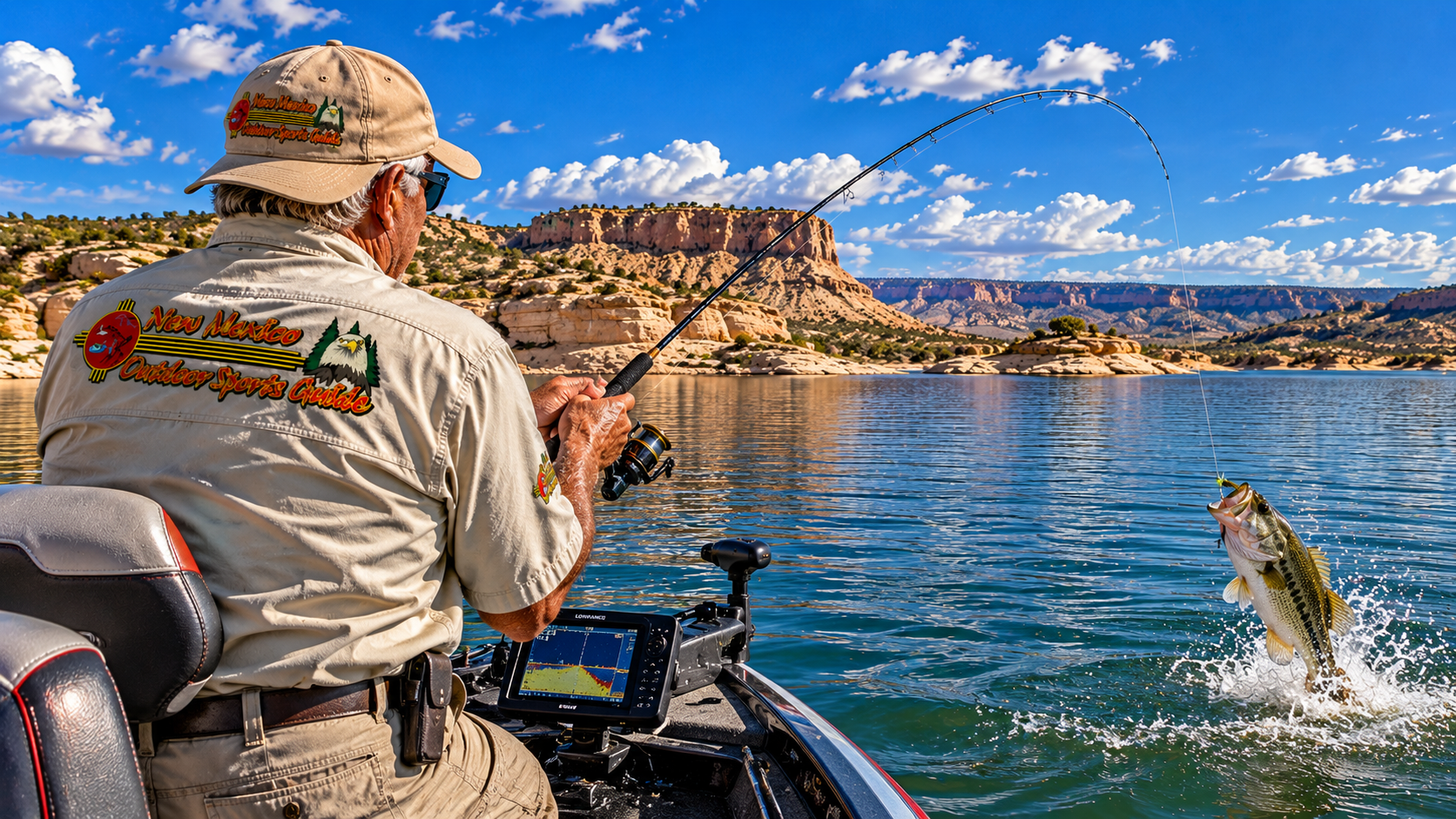
If I were launching my bass boat on a spring morning at Conchas, I'd begin by looking for protected coves with nearby deeper water.
That's an old habit from my Texas guiding days.
Largemouth bass generally want access to food, suitable water temperatures and cover that allows them to ambush prey.
At Conchas, I'd pay particular attention to secondary points, rocky banks, submerged brush, channel swings and the transitions between shallow coves and deeper water.
The current reservoir elevation would influence my decisions.
When water rises into previously dry brush, bass may move into that new cover.
When it falls, those same fish may retreat toward rock, deeper banks and remaining submerged structure.
Which baitcasting rods and reels work best for largemouth?
I would carry two primary baitcasting outfits.
My first would be a 7-foot medium-heavy, fast-action graphite rod with a low-profile baitcasting reel in the 7.1:1 gear-ratio range. I'd spool it with 14- to 17-pound fluorocarbon.
That would handle Texas-rigged worms, jigs, spinnerbaits and many moving presentations.
My second outfit would be a 7-foot to 7-foot-4-inch medium-heavy rod with a slightly slower action and a 6.3:1 baitcasting reel.
I'd use that for crankbaits and other lures where a more forgiving rod helps keep a fish hooked.
For fishing heavier brush, I'd consider 30- to 40-pound braided line and a stronger rod.
There's no reason to take a delicate finesse outfit into a situation where a good largemouth can wrap you around a submerged tree before you've finished setting the hook.
What baitcasting lures would I use?

Texas-rigged worms
Four- to seven-inch worms in green pumpkin, watermelon or black-and-blue. I'd work them slowly around brush, rock transitions and channel edges.

Football jigs and casting jigs
Three-eighths- to three-quarter-ounce jigs with craw trailers. Ideal for dragging across rocky points and deeper structural breaks.

Spinnerbaits
Three-eighths- and half-ounce spinnerbaits in white, chartreuse-and-white or natural shad colors. Particularly useful when wind breaks up the surface.

Crankbaits
Shallow squarebills for shoreline rock and deeper-diving models for offshore points. I'd select running depth to keep the lure contacting the structure.

Topwater lures
Walking baits and poppers during favorable early-morning or evening conditions, particularly around active baitfish.
My first choice would depend on the conditions.
If I found stained water and wind pushing into a rocky bank, I'd probably begin with a spinnerbait.
If the water were clear and calm, I'd be more inclined to use a soft plastic or jig.
If fish were feeding on the surface, I wouldn't waste much time trying to convince them to eat something on the bottom.
Sometimes the bass are kind enough to tell us exactly what they're doing.
How Would I Fish for Smallmouth Bass?
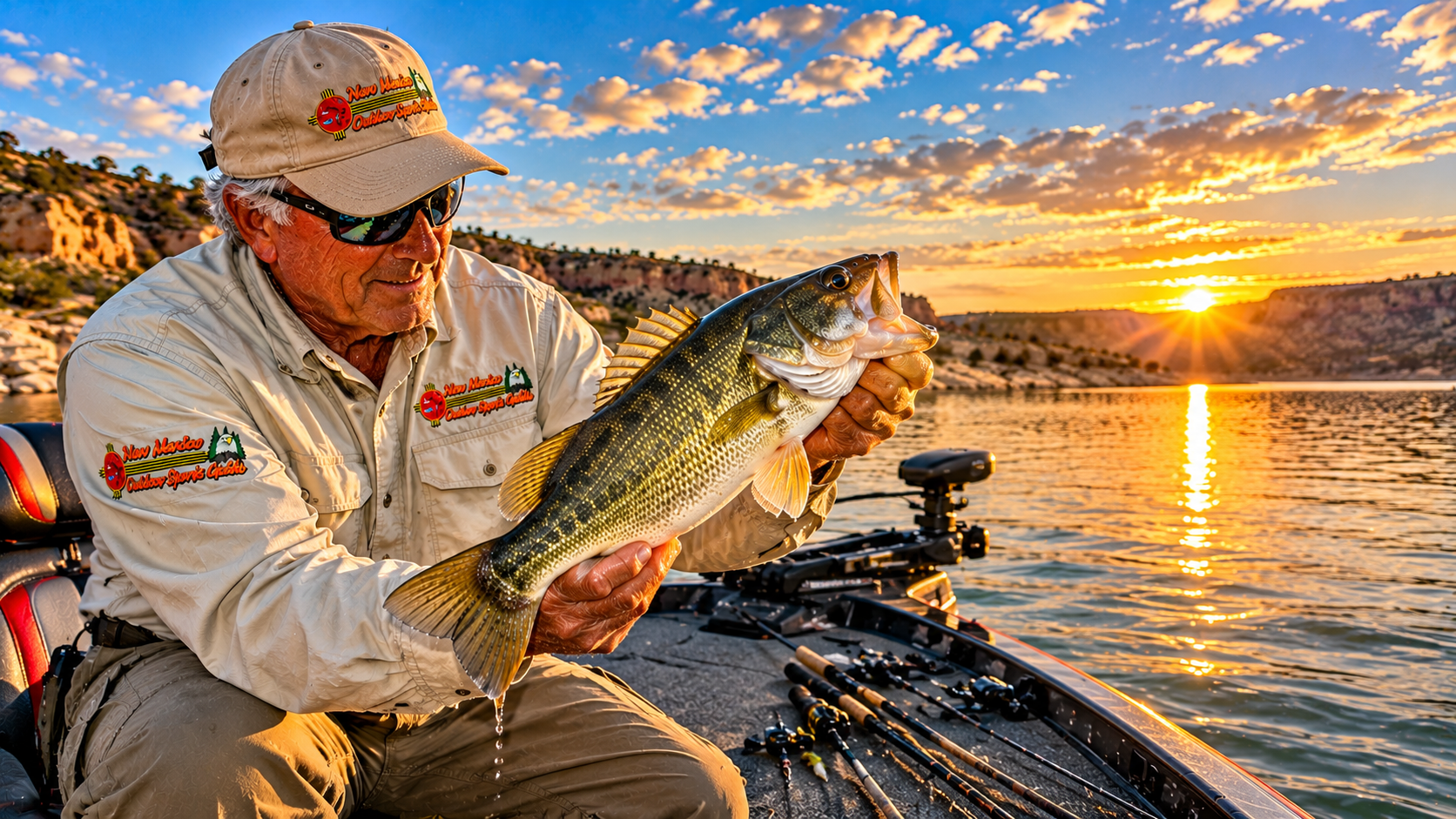
Smallmouth bass are among my favorite freshwater fish.
They may not have the enormous mouths of their largemouth cousins, but they make up for it with determination.
A good smallmouth hooked on light tackle can turn a quiet afternoon into a memorable one in a hurry.
Conchas has the rocky habitat that makes smallmouth fishing attractive.
I'd concentrate on main-lake points, gravel banks, submerged boulders, rocky humps and places where shallow rock drops into deeper water.
The key is finding rock that also holds forage.
A beautiful rocky point without baitfish may be little more than attractive scenery.
Which spinning rods and reels would I use for smallmouth?
My preferred finesse outfit would be a 6-foot-10-inch to 7-foot medium-light, fast-action spinning rod paired with a 2500-size reel.
I'd spool the reel with 10-pound braid and use a 6- to 8-pound fluorocarbon leader.
That combination gives excellent casting distance and sensitivity while allowing a smallmouth to show off its fighting ability.
I'd also carry a medium-power spinning rod for slightly heavier swimbaits and shaky-head presentations.
What spinning lures work for smallmouth?

Tube jigs
Two-and-a-half- to three-and-a-half-inch tubes in green pumpkin, smoke, brown or crawfish colors. I'd drag them slowly over rock and occasionally hop them.

Drop-shot rigs
Three- to four-inch finesse worms in natural colors, suspended above a small weight. Excellent for holding a lure near fish in deeper water.

Small swimbaits
Two-and-a-half- to four-inch paddletails in pearl, smoke or shad patterns. I'd retrieve them steadily near baitfish and structural breaks.

Suspending jerkbaits
Particularly useful in cooler water. A twitch-twitch-pause retrieve can trigger smallmouth that won't chase a faster bait.
When I'm smallmouth fishing, I pay close attention to the bottom.
If the lure is supposed to imitate a crawfish, I want it moving where a crawfish would actually be.
A few inches off the bottom may be perfect.
Five feet above it probably isn't.
Unless, of course, the fish are chasing baitfish.
That's when I change the plan.
Can You Catch Both Species on Baitcasting and Spinning Tackle?
Absolutely.
I wouldn't divide my tackle into rigid largemouth and smallmouth categories.
Both species can be caught on both types of outfits.
The real distinction is the presentation.
Baitcasting equipment generally gives me greater control when throwing heavier lures, working cover or making repeated accurate casts.
Spinning equipment excels with lighter lures, finesse techniques and situations where thin line and long casts are useful.
For Conchas, I'd carry at least one of each.
A medium-heavy baitcasting rod for jigs, worms and moving baits.
A medium-light spinning rod for tubes, finesse worms and drop-shot rigs.
That combination covers an enormous range of bass-fishing situations.
What Water Temperatures Are Best for Bass Fishing?
Water temperature is one of my favorite pieces of fishing information.
It doesn't tell the whole story, but it gives you a good starting point.
|
Water temperature |
Largemouth bass pattern |
Smallmouth bass pattern |
|---|---|---|
|
Below 45°F |
Slower presentations around deeper structure |
Slow bottom presentations and deeper rocky areas |
|
45–55°F |
Prespawn movement begins during warming trends |
Increasing activity around deeper points and transitions |
|
55–65°F |
Prespawn and spawning movements |
Strong spring movement toward spawning habitat |
|
65–75°F |
Spawning, postspawn and active feeding |
Postspawn and feeding activity |
|
75–85°F |
Early, late, shaded or deeper feeding areas |
Deeper rock, baitfish and comfortable water |
|
Above 85°F |
Focus on oxygen, shade, depth and cooler periods |
Locate cooler, oxygenated water and deeper forage |
These are general bass-fishing guidelines, not Conchas-specific temperature measurements or official predictions.
Local weather, water clarity, forage, dissolved oxygen and spawning conditions can shift the patterns.
I also distinguish between surface temperature and the temperature at the depth where fish are holding.
A surface reading of 82°F doesn't mean every bass is sitting in 82-degree water.
Find the depth they're using.
Then choose a presentation that stays there.
When Is the Best Time of Day to Catch Bass at Conchas Lake?
If I could choose only one period, I'd take the first two or three hours after sunrise.
That's partly because I love being on the water at daylight.
But it's also practical.
During warm weather, bass often feed more actively in shallow areas during low-light periods.
Topwater lures, spinnerbaits and shallow swimbaits can be excellent choices when baitfish are active.
Late afternoon and evening can be equally productive.
During spring and fall, however, I wouldn't automatically abandon midday fishing.
A warm afternoon after several cool days may improve shallow-water activity.
Wind and cloud cover can also encourage fish to feed.
I've caught plenty of bass in the middle of the day when the conditions were right.
The important thing is understanding what the fish are doing, not following a rigid schedule.
What Do New Mexico's Fishing Reports Say About Conchas Lake?
The New Mexico Department of Wildlife recognizes Conchas Lake as an important warmwater fishery. Its New Mexico Bass Challenge specifically highlights bass-fishing opportunities at Conchas alongside other New Mexico reservoirs.
There's also a useful recent example of fisheries management.
On June 17, 2026, the Department stocked 23,580 juvenile largemouth bass into Conchas Lake. Those fish averaged approximately 1.1 inches in length. This is evidence of active stocking, not evidence that thousands of catchable bass were added to the lake.
The Department's weekly fishing and stocking reports provide the best starting point for recent angler observations. The latest report listed on the page I checked was dated October 1, 2026.
I couldn't verify a specific Conchas bass catch pattern from that report, so I wouldn't claim the fish are currently biting on a particular lure or in a particular cove.
The techniques I've described are seasonal recommendations based on bass behavior and my fishing experience, not invented reports of recent catches.
What Are the Bass Fishing Regulations at Conchas Lake?
New Mexico's current regulations contain an important special rule for Conchas.
The daily limit for black bass is five fish combined.
Largemouth bass must be at least 14 inches long to keep.
And smallmouth bass at Conchas Lake must also measure at least 14 inches.
That's important because the general statewide minimum for smallmouth is 12 inches. Conchas has a more restrictive rule.
I recommend checking the 2026–2027 New Mexico Fishing Rules and Information before traveling.
Anglers aged 12 and older generally need a valid fishing license, subject to applicable exemptions.
Residents aged 70 and older may obtain a free fishing license, but it still needs to be issued.
I also recommend handling released bass carefully.
Wet your hands.
Support larger fish properly.
Minimize time out of the water.
And return fish promptly, particularly during hot weather.
If we're fortunate enough to enjoy a good bass fishery, we ought to leave it in good condition for the next generation.
What Are the Largemouth and Smallmouth Bass Records?
I couldn't verify an official, comprehensive Conchas Lake-specific record list for largemouth and smallmouth bass.
Rather than publish unverified local trophy weights, here are the New Mexico statewide records documented by the Department of Wildlife.
|
Species |
State record |
Location |
Year |
|---|---|---|---|
|
Largemouth bass |
15 lb 13 oz |
Bill Evans Lake |
1995 |
|
Smallmouth bass |
7 lb 3 oz |
Ute Lake |
2006 |
These are statewide records, not fish documented as having been caught at Conchas.
The Department maintains the official New Mexico record fish list and explains how anglers can submit qualifying catches.
I enjoy a trophy bass as much as anyone.
But after a lifetime of fishing, I have learned that the fish I remember best aren't always the biggest.
Sometimes they're the ones that taught me something.
Where Can You Launch a Boat or Fish From Shore?
Conchas Lake State Park includes the North Area, Cove Recreation Area, Central Recreation Area and Bell Point Campground, along with access associated with the U.S. Army Corps of Engineers.
The park's facilities include boat ramps, shoreline camping, picnic areas, restrooms and other recreation amenities.
For shore fishing, I'd look for accessible rocky banks near designated public areas.
A point with deeper water nearby would be particularly interesting.
For boat fishing, I'd study the lake map before launching, identify the river arms and select several potential areas based on weather and wind direction.
Important boat-ramp conditions for October 2026
The park's detailed alerts report that both north high-water ramps are closed because of low water.
The same alert page describes an open ramp in the North Area and another on the south side, but also says trailered boats must use the south ramp. A broader statewide update dated October 5 says Conchas ramps are operable without restrictions.
Those notices conflict.
Before towing a bass boat to Conchas, call 575-868-2270 and confirm which ramp is currently suitable for your trailer and boat.
That's particularly important when water levels are low and previously submerged rocks may be exposed.
Conchas Lake State Park
501 Bell Ranch Road, Conchas Dam, NM 88416
Phone: 575-868-2270
Email: ricarlos.glenn@emnrd.nm.gov
Website: Official Conchas Lake State Park page
Park alerts: Current boating and park conditions
Where Can You Buy Bait and Tackle?
New Mexico's Department of Wildlife publishes a list of licensed bait dealers.
Two nearby options listed in its May 2026 update are:
Cunico's Bait and Tackle, 223 Conchas Drive, Conchas Dam, NM 88416. Phone: 505-617-1722.
Minnows Plus & More, 112 East Main Street, Tucumcari, NM 88401. Phone: 575-282-1165.
Call before visiting to confirm hours, current inventory and availability of any particular bait.
For bass fishing, I'd usually bring my own artificial lures.
But having a nearby tackle supplier can be useful when a reel breaks, you run short of terminal tackle or you suddenly discover that the fish prefer something you left at home.
Is Camping Available at Conchas Lake?
Yes.
Conchas Lake State Park offers developed camping with various water and electrical hookups, as well as primitive camping in designated shoreline areas.
The official park listing includes showers, restrooms, a dump station and both reservable and non-reservable campsites.
Camping is particularly appealing for bass fishermen because it puts you close to the water.
Fish the evening bite.
Return to camp.
Enjoy supper beneath the stars.
Then launch again at sunrise.
That's my idea of a pretty good weekend.
The park currently lists Stage II fire restrictions affecting campfires and charcoal fires. Check the rules before planning outdoor cooking.
Where Can You Stay Near Conchas Lake and Tucumcari?
Conchas Dam is a small community, so I would arrange lodging before leaving home.
Tucumcari offers a wider choice of conventional motel accommodations.
Conchas Lake Adobe Belle Resort
This historic property near Conchas Dam offers furnished casita-style accommodations.
Address: 500 Captain Kramer Lane, Conchas Dam, NM 88416
Phone: 575-868-0300
Email: adobebelleresort@gmail.com
Website and tourism listing: Conchas Lake Adobe Belle Resort
The New Mexico Tourism Department describes the property as a private, gated historic complex with furnished two-bedroom casitas. Confirm rental availability directly.
Historic Route 66 Motel, Tucumcari
For a little Route 66 nostalgia, this motel offers a traditional roadside experience.
Address: 1620 East Route 66 Boulevard, Tucumcari, NM 88401
Phone: 575-461-1212
Email: rte66motel@rte66motel.com
Website: Historic Route 66 Motel
The motel advertises traditional rooms and suites in a midcentury-inspired setting.
Conchas Lake State Park Campgrounds
Address: 501 Bell Ranch Road, Conchas Dam, NM 88416
Phone: 575-868-2270
Email: ricarlos.glenn@emnrd.nm.gov
Website: Camping and reservations
I'd choose the campground for convenience, Adobe Belle for staying close to the reservoir without camping, and Tucumcari for a wider selection of restaurants and services.
What Is the Weather Like During the Four Bass Fishing Seasons?
Conchas Lake sits at approximately 4,253 feet in elevation, substantially lower than the mountain country around Angel Fire.
That makes a difference in both climate and fishing patterns.
Spring: March through May
Spring would be my first choice for a serious bass-fishing trip.
As water temperatures climb, largemouth and smallmouth begin moving toward spawning habitat.
I'd work secondary points, rocky banks, sheltered coves and staging areas near deeper water.
But spring also brings wind.
And wind can turn a pleasant day into a difficult one on a broad reservoir.
I'd plan around the forecast and always leave myself a safe route back to the ramp.
Summer: June through August
Summer means warm water, bright sunshine and occasional afternoon thunderstorms.
I'd concentrate on early morning, evening and deeper structure during the hottest part of the day.
Topwater lures can be exciting at sunrise.
During midday, I'd try deeper points, shaded rock, submerged cover and areas holding baitfish.
Lightning is a serious hazard.
I wouldn't wait for the first nearby strike before returning to shore.
Fall: September through November
Fall can be a wonderful time to fish Conchas.
Cooling water may bring bass into more active feeding patterns.
I'd watch for baitfish gathering along points and shoreline transitions.
Spinnerbaits, swimbaits, crankbaits and finesse jigs would all have a place in my tackle selection.
Fall also offers some of the most comfortable weather for spending an entire day on the lake.
Winter: December through February
Winter requires patience.
I'd slow down, fish deeper structure and concentrate on periods of stable weather.
A jig, blade bait, suspending jerkbait or finesse worm can be useful when bass are less inclined to chase fast-moving lures.
I'd also dress carefully.
Cold water is dangerous, even on a sunny afternoon.
What Wildlife Can You See Around Conchas Lake?
The reservoir and surrounding plains provide habitat for birds and other wildlife.
The State Parks Division identifies birdwatching and wildlife viewing among the park's recreational activities.
Depending on season, visitors may see ducks and other waterfowl, shorebirds, raptors and smaller birds using shoreline vegetation.
The surrounding grasslands and juniper country also support wildlife adapted to northeastern New Mexico's relatively dry environment.
For photography, I'd favor early morning.
That's when the light is soft, the wind may be calmer and wildlife is often active.
Paulette and I spent enough years watching animals around Casa Oso to learn that patience is usually more productive than pursuit.
I don't need to get close enough to disturb an animal.
That's why somebody invented telephoto lenses.
How Do You Get to Conchas Lake from Albuquerque, Santa Fe, Taos and Chama?
Conchas Lake is northwest of Tucumcari and accessible from NM 104.
The following are approximate planning distances and travel times, not live navigation measurements. Mileage varies depending on the starting point and the particular recreation area.
|
Starting city |
Approximate distance |
Estimated driving time |
|---|---|---|
|
Albuquerque |
185–205 miles |
3–3.5 hours |
|
Santa Fe |
135–155 miles |
2.5–3 hours |
|
Taos |
160–180 miles |
3–3.5 hours |
|
Chama |
255–285 miles |
4.5–5.5 hours |
From Albuquerque
I'd generally take Interstate 40 east toward Santa Rosa, then connect with US 84 north and NM 104 east toward Conchas Dam.
Depending on traffic and road conditions, a route through Las Vegas may also be practical.
From Santa Fe
Take Interstate 25 toward Las Vegas, then NM 104 east toward Conchas Dam.
The drive offers a striking transition from the mountains around Santa Fe to the open northeastern plains.
From Taos
A scenic option is US 64 east toward Cimarron and Springer, Interstate 25 south toward Las Vegas, then NM 104 east.
From Chama
Take US 84 south toward Española and Santa Fe, then Interstate 25 toward Las Vegas and NM 104 east.
Because of the distance, I'd consider staying overnight.
From Tucumcari
Follow NM 104 northwest toward Conchas Dam and the appropriate recreation-area entrance.
For road conditions, check NMRoads before leaving.
What Should I Pack for a Conchas Lake Bass Fishing Trip?
I'd carry two baitcasting outfits and two spinning outfits.
That would cover most of the fishing I expect to encounter.
The baitcasters would handle Texas-rigged worms, jigs, spinnerbaits and crankbaits.
The spinning outfits would handle tube jigs, finesse worms, drop-shot rigs and small swimbaits.
I'd also bring polarized sunglasses, a landing net, needle-nose pliers, a fish ruler, sunscreen, plenty of drinking water and a properly fitted life jacket.
A good contour map and fish finder would be especially valuable.
And naturally, I'd bring a camera.
After all these years, I've learned that some of the best memories from a fishing trip have nothing to do with the number of bass caught.
A spectacular sunrise.
A hawk hunting the shoreline.
A thunderstorm building over the distant mesas.
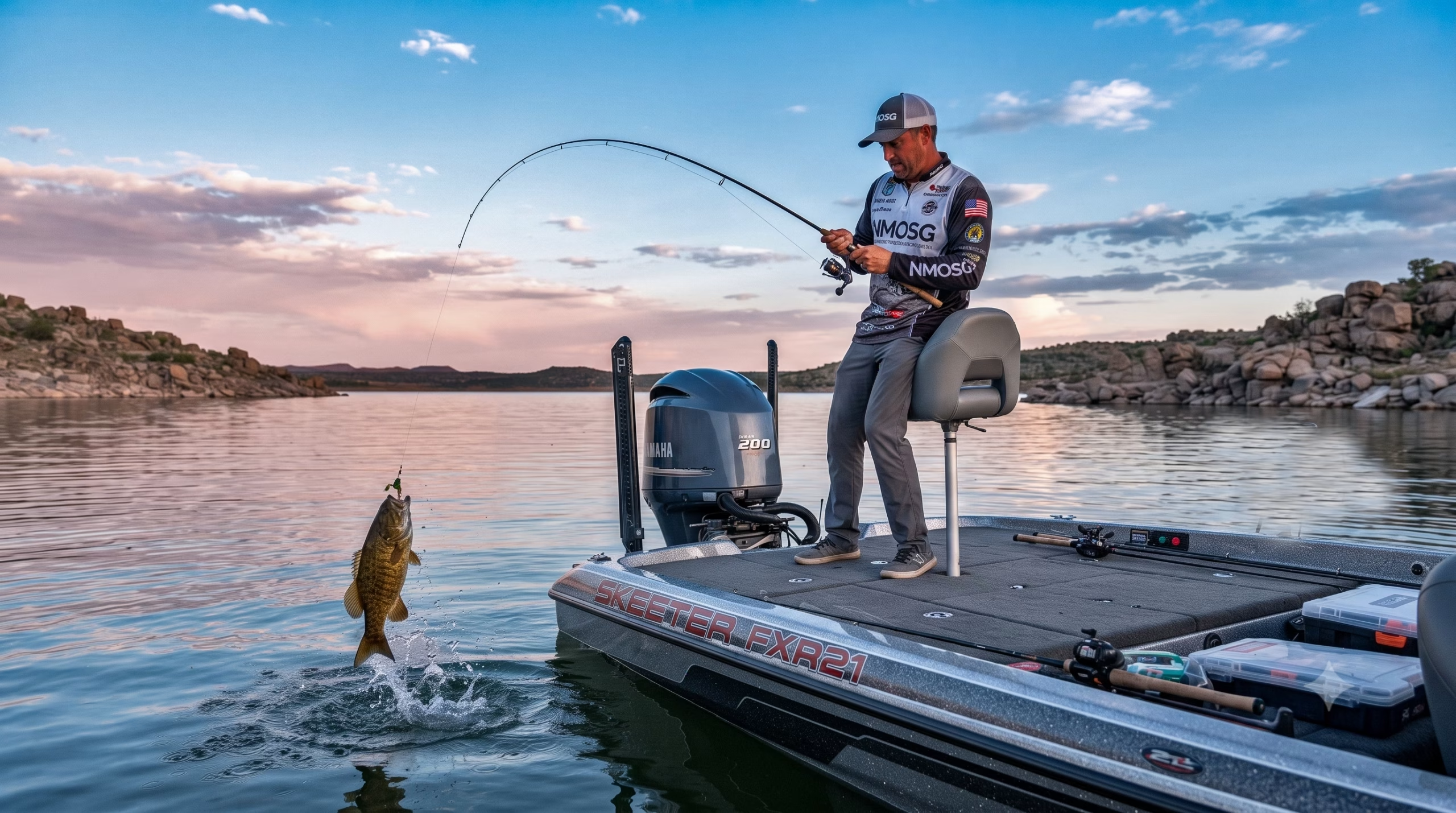
Or the sight of a bass boat sitting quietly in a sheltered cove beneath a brilliant New Mexico sky.
Those are the moments worth keeping.
How Does Conchas Compare With Other New Mexico Fishing Waters?
Conchas occupies a special place in New Mexico's warmwater fishing landscape.
For readers who enjoy comparing fishing techniques, the New Mexico Outdoor Sports Guide article on bass fishing in New Mexico provides a broader introduction to largemouth and smallmouth bass around the state.
My recently published guide to Conchas Lake State Park fishing and camping also covers the reservoir's other sport fish and recreation opportunities.
For a completely different experience, there's Eagle Nest Lake State Park fishing in the Moreno Valley.
And the cold mountain streams of Cimarron Canyon State Park trout fishing offer another side of New Mexico angling.
My guide to drivable New Mexico alpine lakes explores still more high-country fishing destinations.
Those are five relevant internal articles to help readers explore the state's fishing opportunities beyond Conchas.
Why Conchas Lake New Mexico Bass Fishing Still Appeals to an Old Bass Guide
I suppose the appeal is simple.
Bass fishing has been part of my life for so long that I can't look at a reservoir without wondering what's happening beneath the surface.
A rocky point isn't merely a rocky point.
It's a possible feeding station.
A channel bend isn't simply a depression in the bottom.
It's a travel route.
A submerged tree isn't just a navigation hazard.
It's a place where a largemouth bass might be waiting.
I learned to think that way while guiding fishermen on Lake Conroe and Sam Rayburn.
Tournament fishing sharpened those instincts.
And the years haven't entirely erased them.
Conchas Lake offers the kind of structure and seasonal variety that makes those old lessons useful.
It also offers something else.
The remarkable landscape of northeastern New Mexico.
The wide-open plains.
The sandstone cliffs.
The changing weather.
And the quiet satisfaction of being outdoors.
I can imagine spending a beautiful fall afternoon working a rocky point with a tube jig.
The water is clear enough to see the first few feet of submerged rock.
The wind has settled.
A few clouds drift across the sky.
I make a long cast, let the jig fall and begin working it slowly along the bottom.
A little hop.
A pause.
Another hop.
Then comes that unmistakable tap.
I lift the rod.
The line tightens.
And somewhere beneath the boat, a smallmouth bass decides it has absolutely no intention of cooperating.
After more than half a century of fishing, that feeling hasn't lost its appeal.
Not one little bit.
That's why Conchas Lake New Mexico Bass Fishing deserves a place on the calendar of anyone who enjoys chasing largemouth and smallmouth bass.
Not because every cast will produce a fish.
Not because the lake promises a trophy.
But because it offers the combination that has kept me fishing all these years.
Interesting water.
Beautiful country.
And the possibility that the very next cast might be the one you remember.
0 Comments