
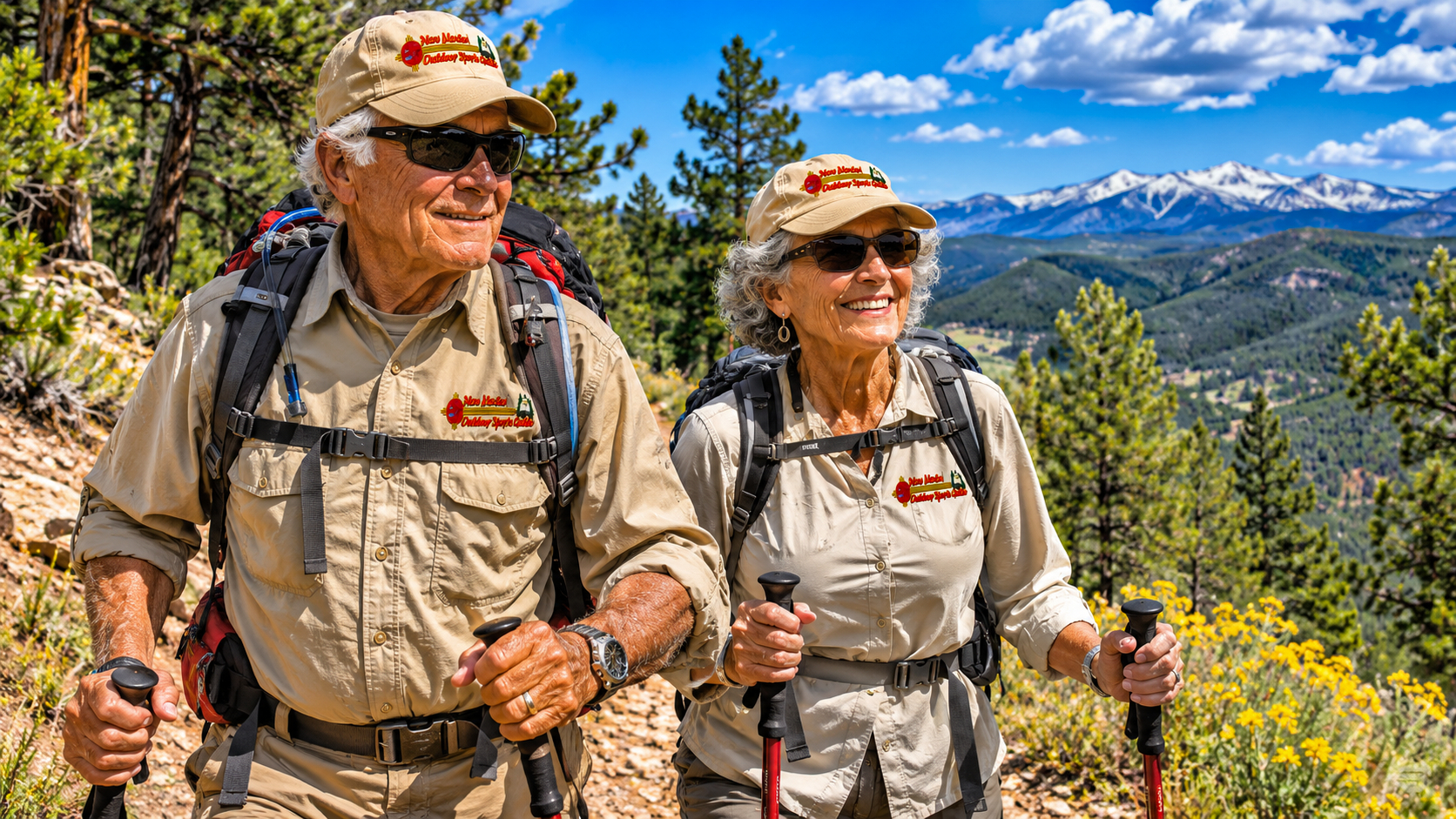
Hiking in Your 80s: Staying Active, Staying Safe and Enjoying New Mexico's Great Outdoors
An Old Hiker's Thoughts on Growing Older Without Growing Still
There's something rather amusing about reaching your eighties.When I was twenty, I figured anybody over sixty probably belonged in a rocking chair. By the time I reached sixty, I began reconsidering that opinion. And now that I'm an octogenarian, I've decided the rocking chair can wait.I've got trails to hike.Not necessarily the steepest trails. Not always the longest ones. And certainly not the sort of trail where a fellow has to scramble over boulders just to prove he can still do it.But trails nonetheless.Hiking in Your 80s is a little different from hiking in your thirties, forties or even sixties.The knees sometimes have opinions of their own. The back may offer unsolicited advice. And occasionally the brain writes a check that the legs would rather not cash.But I've discovered that growing older doesn't have to mean giving up the outdoors.It means learning to enjoy it differently.Paulette and I spent seventeen wonderful years living at Casa Oso, our log home high above Angel Fire in New Mexico's Moreno Valley.At approximately 9,500 feet, we were surrounded by the Sangre de Cristo Mountains, alpine forests, wildlife and some of the finest hiking country in the Southwest.We hiked mountain trails, explored alpine lakes, photographed wildlife and enjoyed the changing seasons.Later, when we moved to Santa Fe, we discovered another wonderful collection of trails.The Santa Fe Rail Trail became part of our regular routine.Four miles of walking beneath the New Mexico sky, with views of distant mountains, rolling hills, piñon and juniper country.Nothing particularly dramatic.Just steady exercise, fresh air and the pleasure of being outdoors together.And at our age, that's a pretty fine way to spend part of the day.
Why Is Hiking in Your 80s So Important?
I've never been particularly interested in sitting around waiting to grow old.Growing old seems perfectly capable of handling that job without my assistance.What interests me is maintaining enough strength, endurance and mobility to continue doing the things I enjoy.Hiking helps.Walking regularly can support cardiovascular fitness, muscular endurance, balance, mood and independence.Weight-bearing exercise can also help maintain bone health, although people with osteoporosis or other medical concerns should discuss suitable activities with their healthcare professionals.For me, the benefits extend beyond the physical.There's something about walking outdoors that clears the mind.The rhythm of footsteps.The movement of clouds.The sound of wind passing through the trees.And the occasional wildlife encounter that turns an ordinary walk into something worth remembering.After spending much of my working life managing businesses, flying airplanes, programming computers and guiding fishermen, I've developed an appreciation for activities that don't require a schedule.A trail doesn't care whether I'm early or late.It doesn't ask for a progress report.And it certainly doesn't expect me to answer the telephone.I rather like that arrangement.
How Much Hiking Should Someone in Their 80s Attempt?
The answer depends on the individual.Some people in their eighties remain capable of strenuous mountain hiking.Others may find a half-mile walk challenging.Both can benefit from appropriate activity.The important thing is choosing a distance and level of difficulty that match your current abilities.Paulette and I have enjoyed regular four-mile walks along the Santa Fe Rail Trail.But I wouldn't suggest that someone who has been relatively inactive should suddenly attempt four miles.I'd begin with something manageable.Perhaps ten or fifteen minutes on level ground.Then gradually increase the distance as endurance improves.The general federal physical activity recommendation for older adults is 150 minutes of moderate aerobic activity each week, along with muscle-strengthening and balance activities.That's a goal, not a requirement to overexert yourself.If medical conditions, medications, recent surgery or balance problems complicate matters, get individualized advice before increasing activity.And remember that even shorter walks are worthwhile.I would much rather see someone enjoy a comfortable half-mile walk three or four times a week than attempt an ambitious mountain hike, become exhausted and decide hiking isn't for them.Consistency is more important than heroics.
What Have I Learned About Hiking Safely in My 80s?
After more than eight decades, I've learned that experience is valuable.Unfortunately, experience doesn't always prevent a person from doing something foolish.Sometimes it simply helps us recognize the foolishness afterward.These days, I try to think through a hike before leaving home.
Choose the Right Trail
The first consideration is trail difficulty.Distance alone doesn't tell the whole story.A three-mile trail with a thousand feet of elevation gain can be considerably more demanding than a four-mile walk over gently rolling terrain.I'd consider:
-
Total distance and elevation gain.Trail surface and steepness.Exposure to cliffs or unstable footing.Availability of shade and water.Distance from the nearest road or trailhead.Weather conditions.Cellphone coverage and emergency access.
I also consider the return trip.A downhill hike can feel wonderfully easy until it's time to climb back to the vehicle.And descending steep terrain can be especially hard on aging knees.
Tell Someone Where You're Going
Even on familiar trails, it's wise to let somebody know your destination and expected return time.Paulette and I often hike together, which provides an additional measure of safety.For solo outings, I'd leave a route description with someone I trust.I'd also carry a fully charged telephone.But I wouldn't assume cellular service will be available in the mountains.For more remote hiking, a satellite emergency communicator can be worth considering.
Turn Around Before You're Exhausted
This may be one of the most important lessons.Don't wait until you're completely tired before heading back.Remember that the return trip requires energy too.I try to turn around while I'm still feeling reasonably strong.There's no shame in shortening a hike.The mountain will still be there another day.And I'd like to be there too.
What Hiking Equipment Do I Carry?
My equipment has changed over the years.When I was younger, I sometimes headed into the mountains with little more than a canteen and a pocketknife.These days, I prefer a little more preparation.Not because I'm frightened of the outdoors.Because I respect it.
Hiking Boots and Shoes
Good footwear is essential.I prefer comfortable, well-fitting hiking shoes or boots with dependable traction.For relatively smooth trails, lightweight hiking shoes may be sufficient.For rocky mountain trails, boots with additional support and protection can be helpful.The most important consideration is fit.A pair of expensive boots that causes blisters is no bargain.I'd break in new footwear before taking it on a long hike.And I'd choose moisture-wicking socks that help prevent rubbing.
Trekking Poles
Trekking poles can be particularly useful for older hikers.They provide additional points of contact with the ground, help maintain rhythm and can improve stability on uneven terrain.They may also reduce some of the effort required during climbs and descents.But they require practice.A pole placed poorly can become a tripping hazard.I recommend adjusting them properly and learning to use them on easy terrain before heading into rough country.
A Comfortable Day Pack
Paulette and I have long appreciated good-quality day packs.For an ordinary day hike, I prefer something large enough to carry the essentials without becoming unnecessarily heavy.My pack generally includes water, snacks, a light insulating layer, rain protection, basic first-aid supplies, a map and a few emergency items.And, more often than not, a camera.A comfortable hip belt and properly adjusted shoulder straps can make a considerable difference.
Water and Food
Dehydration can sneak up on a person in New Mexico's dry climate.Even when the weather feels cool, moisture is lost through breathing and perspiration.I'd carry enough water for the distance, temperature, altitude and anticipated hiking time, with a reserve for delays.For a moderate outing, I often plan around approximately half a liter per hour as a starting estimate, increasing that amount when conditions demand it.Individual needs vary, especially for people with heart, kidney or other medical conditions.A few snacks can also be useful.Fruit, nuts, trail mix or an energy bar provide convenient fuel.And I never depend on finding drinkable water along a trail.Even clear mountain streams can contain organisms capable of making a person very sick.
Why Is Balance Especially Important for Older Hikers?
Falls become a more serious concern as we age.A stumble that would have produced a bruised knee at forty can cause a significant injury at eighty.That's one reason I pay particular attention to footing.Loose gravel.Wet rocks.Exposed roots.Uneven steps.And steep downhill sections all deserve respect.I try to keep my eyes moving between the trail immediately ahead and the country farther down the path.If I want to admire the scenery or photograph wildlife, I stop walking first.That sounds obvious.But it's surprisingly easy to become distracted by a beautiful view.I'd also encourage older hikers to practice balance and strength exercises away from the trail.Simple activities recommended by a physical therapist or qualified instructor can help maintain stability.Strong legs and good balance are valuable equipment.And unlike a new pair of hiking boots, you can't simply purchase them at the sporting goods store.
How Does Altitude Affect Hiking in Your 80s?
New Mexico offers some magnificent high-country hiking.But altitude changes the equation.Santa Fe sits at roughly 7,000 feet above sea level.Eagle Nest Lake is around 8,200 feet.And many trails in the Sangre de Cristo Mountains climb considerably higher.At higher elevations, the air contains less oxygen per breath.A person arriving from near sea level may experience shortness of breath, fatigue, headache or difficulty sleeping.Older hikers aren't automatically unable to tolerate altitude, but underlying heart and lung conditions can make the adjustment more complicated.I'd recommend beginning with shorter, easier hikes and allowing time to acclimatize.Drink appropriately, avoid overexertion and pay attention to unusual symptoms.A persistent headache with nausea, dizziness or unusual fatigue may indicate altitude illness.Confusion, difficulty walking straight or breathlessness at rest are serious warning signs requiring prompt descent and medical attention.There's no prize for pushing through a dangerous situation.I've spent enough time in airplanes to appreciate what altitude does to the human body.And the mountains don't offer oxygen masks that drop conveniently from an overhead compartment.
Where Do Paulette and I Enjoy Hiking Around Santa Fe?
One of the great pleasures of living in Santa Fe is the variety of trails available within a relatively short drive.Some are gentle.Others climb into the mountains.And a few provide enough exercise to remind me that I haven't entirely escaped the consequences of getting older.
Santa Fe Rail Trail
The Santa Fe Rail Trail has become part of our everyday life.Its old railroad corridor passes through a wonderful mixture of urban, suburban and rural landscapes.Near our home, the trail offers open views of the surrounding countryside.We can see distant mountain ranges, ranch properties, piñon-covered hills and the broad New Mexico sky.Four miles of steady walking provides an excellent workout without requiring a difficult mountain climb.One of my favorite memories is described in our April 2026 Santa Fe Rail Trail hike, when Paulette and I enjoyed a beautiful afternoon walk and watched the Sky Railway passing through the countryside.That kind of ordinary adventure has become increasingly valuable to me.
Dale Ball Trails
The Dale Ball Trail System offers another excellent collection of hiking opportunities in the foothills above Santa Fe.The trails range from relatively manageable walks to more strenuous climbs.One of our memorable outings took us from the Sierra del Norte trailhead toward an overlook with sweeping views across Santa Fe and the Rio Grande Valley.The scenery was magnificent.But the climbing required more effort than our regular Rail Trail walks.That's an important distinction.I'd recommend selecting a short route and studying its elevation profile before beginning.Our article about hiking the Sierra del Norte Dale Ball Trail provides additional information about the trail system and its remarkable views.For older hikers, the ability to choose different routes makes Dale Ball particularly attractive.Just don't mistake a short distance for an easy hike.
What Are Some Good High-Country Hiking Destinations?
During our years at Casa Oso, Paulette and I enjoyed exploring the mountains surrounding Angel Fire.We were fortunate to have beautiful country practically outside our front door.And some of those places remain among my favorites.
Eagle Nest Lake State Park
Eagle Nest Lake sits in the Moreno Valley beneath Wheeler Peak and the surrounding Sangre de Cristo Mountains.The park provides opportunities for hiking, wildlife watching, fishing and photography.New Mexico State Parks lists approximately 7.78 miles of trails within the park.For older hikers, the open scenery can be particularly enjoyable.There are places where you can walk, observe wildlife and enjoy the mountains without undertaking a strenuous summit climb.But don't underestimate the elevation.At approximately 8,200 feet, even a relatively modest walk can feel more demanding than one at lower elevations.Our Eagle Nest Lake State Park hiking and camping guide explores the lake and the surrounding Moreno Valley.
Cimarron Canyon State Park
Cimarron Canyon has always been special to Paulette and me.We visited frequently while living in Angel Fire.The Cimarron River flows through a narrow forested canyon beneath rocky slopes and ponderosa pines.Some days I carried a fly rod.Other days we brought cameras.And sometimes we simply walked beside the river and enjoyed the scenery.The park offers hiking, camping, fishing and wildlife viewing.However, some trails extend into the Colin Neblett Wildlife Management Area, where seasonal restrictions protect wildlife and accommodate hunting.Current park alerts indicate that some backcountry trails close during designated big-game hunts.The Clear Creek Trail has its own seasonal access rules.I'd check the latest restrictions before planning a hike.Our Cimarron Canyon State Park hiking and wildlife guide provides more information about this beautiful mountain canyon.
Drivable Alpine Lakes
One of the pleasures of growing older is learning that you don't have to hike ten miles to enjoy a magnificent mountain lake.New Mexico has numerous high-country waters accessible by road or relatively short walks.Some require high-clearance vehicles.Others are reached by ordinary passenger cars during favorable weather.And many provide wonderful opportunities for photography, picnicking and gentle exploration.Our guide to drivable New Mexico alpine lakes explores several of these destinations.I particularly appreciate places where we can enjoy mountain scenery without turning the outing into an endurance contest.
What Wildlife Might I Encounter While Hiking?
Wildlife photography has become one of my favorite activities.And New Mexico offers a remarkable variety of animals.Depending on the habitat and season, hikers may encounter mule deer, elk, wild turkeys, black bears, coyotes, rabbits, squirrels and numerous bird species.The New Mexico Department of Wildlife encourages people to observe wildlife from a safe distance.That's advice I take seriously.A wild animal doesn't understand that you're simply trying to get a good photograph.And getting too close can create unnecessary stress or danger.
Elk and Mule Deer
During our years in the Moreno Valley, elk were a familiar part of the landscape.Watching a herd move through a meadow is a wonderful experience.But elk are large, powerful animals.During the fall rut, bulls can become especially aggressive.Cow elk protecting calves can also be dangerous.I'd never approach closely or attempt to move an animal for a better photograph.A telephoto lens is a much better solution.Mule deer are generally less intimidating, but they deserve the same respect.
Black Bears
The New Mexico Department of Wildlife reported increased bear encounters during 2026, associated partly with hot, dry conditions and reduced natural food availability.Its advice is straightforward.Make noise when hiking in bear country.Travel with companions when practical.Keep food and scented items secured.Never feed a bear.And never get between a mother and her cubs.If you encounter a black bear, remain calm, don't run, give it an escape route and slowly back away while facing it.If a black bear attacks, the Department advises fighting back.I've seen enough wildlife over the years to know that keeping a respectful distance usually produces a much better outcome for everyone involved.
Mountain Lions
Mountain lions inhabit portions of New Mexico's mountain country.Encounters are uncommon, but hikers should know how to respond.Don't run.Remain upright.Make yourself appear larger.Speak firmly and back away slowly when safe.Keep children and pets close.If a mountain lion attacks, fight back.For current guidance, consult the New Mexico Department of Wildlife's wildlife safety information.
Snakes
Rattlesnakes occur in parts of New Mexico, particularly in warmer, lower-elevation habitats.I'd watch where I place my hands and feet.Avoid reaching blindly into rock crevices.Give snakes plenty of room.And never attempt to handle one.If bitten, seek emergency medical care promptly.Don't cut the wound, apply a tourniquet or attempt to suck out venom.
How Do New Mexico's Seasons Affect Hiking in Your 80s?
Spring: March Through May
Spring can be wonderful for hiking around Santa Fe and the lower elevations.Temperatures begin warming.Wildflowers appear.And the countryside gradually awakens from winter.But spring is also known for strong winds.High-country trails may remain covered with snow or ice.I'd choose lower-elevation routes early in the season and carry a windproof layer.Dust and blowing sand can also be unpleasant.On especially windy days, I'd rather shorten the hike than spend several hours being sandblasted.
Summer: June Through August
Summer provides excellent opportunities in New Mexico's mountains.The higher elevations offer welcome relief from the heat.But afternoon thunderstorms can develop rapidly.Lightning is a serious hazard above timberline and on exposed ridges.I'd begin early, monitor the forecast and plan to be below exposed terrain well before storms develop.Summer heat at lower elevations also deserves respect.I'd carry extra water and avoid strenuous hiking during the hottest hours.
Fall: September Through November
Fall may be my favorite hiking season.The air becomes cooler.The light softens.Aspens turn gold.And the mountains take on a beauty that's difficult to describe.Paulette and I have enjoyed many wonderful autumn outings around Angel Fire, Taos Canyon and the Sangre de Cristo Mountains.But fall weather can change quickly.Snow is possible at higher elevations.Days become shorter.And hunting seasons may affect access to certain wildlife management areas.I'd check current closures and wear highly visible clothing where appropriate.
Winter: December Through February
Winter hiking requires additional preparation.Snow, ice and freezing temperatures can turn an easy summer trail into a hazardous route.I'd carry appropriate traction devices when conditions warrant, along with warm layers and emergency supplies.For deeper snow, snowshoes may be necessary.But I wouldn't venture into avalanche terrain without proper training and equipment.At our age, I believe there's considerable wisdom in choosing a sunny lower-elevation trail when the mountains are buried beneath snow.The high country will still be waiting when spring arrives.
What Should I Do If the Weather Changes Suddenly?
New Mexico weather has a talent for changing the subject without warning.A beautiful morning can become a windy afternoon.A few harmless-looking clouds can grow into a thunderstorm.And a comfortable mountain temperature can drop sharply when rain begins.I'd always carry a lightweight rain shell and an insulating layer.If thunder is audible, I'd leave exposed ridges, summits and open terrain promptly.Avoid isolated trees and other obvious lightning hazards.No outdoor location is completely safe during a thunderstorm; a substantial building or hard-topped vehicle is the preferred shelter.If a storm is approaching, the best decision is usually to turn around early.And if conditions become dangerous, forget about reaching the planned destination.A successful hike is one that ends with everyone returning safely.
What About Hiking Alone in Your 80s?
I've enjoyed plenty of solitary time outdoors over the years.There's something peaceful about being alone with the landscape.But solo hiking carries additional risks.A fall, sudden illness or navigation mistake can become much more serious when nobody is nearby.For remote trails, I prefer having a companion.Paulette and I have shared countless wonderful outings, and I value that companionship more with every passing year.When hiking alone, I'd choose familiar trails, carry emergency communication equipment and make certain somebody knows my plans.I'd also be conservative about distance and terrain.Independence is a wonderful thing.But independence and good judgment should travel together.
How Do I Keep Hiking Enjoyable Instead of Turning It Into Work?
One of the biggest changes I've noticed with age is that I no longer feel compelled to accomplish something spectacular every time I go outdoors.When I was younger, I often measured a successful outing by the distance traveled, the fish caught or the summit reached.These days, I'm perfectly content with a beautiful view, a comfortable walk and a few good photographs.Sometimes Paulette and I stop to watch birds.Sometimes we admire the clouds.Sometimes we simply sit for a while.And occasionally we find ourselves laughing about something that probably wouldn't amuse anybody else.That's part of the pleasure.I don't believe hiking should become another obligation.It's an opportunity.And the ability to enjoy that opportunity in our eighties is something worth appreciating.
Travel, Driving Directions and Lodging for New Mexico Hiking
The following sections complete the article with practical information for readers traveling from Albuquerque, Santa Fe, Taos and Chama. Driving distances are approximate and depend on the specific trailhead.
How Do I Reach the Santa Fe Hiking Trails?
Santa Fe makes an excellent base for exploring the Rail Trail, Dale Ball Trails and the foothills of the Sangre de Cristo Mountains.
|
Starting cityApproximate distance to Santa FeTypical drive |
Albuquerque65 miles1–1¼ hoursSanta FeLocal10–30 minutes to many trailheadsTaos70 miles1½–2 hoursChama110–120 miles2–2½ hours |
|---|
From Albuquerque: Take Interstate 25 north to Santa Fe. The Rail Trail can be accessed at several locations, including the Railyard area and points farther south. For the Dale Ball Trails, continue toward the eastern foothills.From Santa Fe: The Rail Trail and Dale Ball system are accessible from several city neighborhoods. For Sierra del Norte, follow Hyde Park Road and Sierra del Norte Road toward the designated trailhead.From Taos: Follow NM 68 south through the Rio Grande Valley toward Española, then US 84/285 south into Santa Fe.From Chama: Take US 84 south through Abiquiú and Española, continuing toward Santa Fe.I'd always confirm the particular trailhead's parking arrangements before leaving.
How Do I Reach Eagle Nest Lake and Cimarron Canyon?
For mountain hiking, Eagle Nest and Cimarron Canyon are wonderful destinations.
|
Starting cityApproximate distance to Eagle NestTypical drive |
Albuquerque150–165 miles3–3½ hoursSanta Fe100–115 miles2–2½ hoursTaos30 miles45–60 minutesChama115–135 miles2½–3½ hours |
|---|
From Albuquerque: Travel north through Santa Fe and Española toward Taos, then take US 64 east through the mountains toward Angel Fire and Eagle Nest.From Santa Fe: Follow US 84/285 north toward Española, continue toward Taos, then take US 64 east through Taos Canyon and the Moreno Valley.From Taos: Take US 64 east directly toward Eagle Nest.From Chama: Travel south toward Española, continue toward Taos, and follow US 64 east to Eagle Nest. Depending on weather and road conditions, alternative northern routes may be practical.Cimarron Canyon State Park lies east of Eagle Nest along US 64. Its park office is at 28869 Highway 64, Eagle Nest, NM 87718.Before traveling, I'd check NMRoads for highway conditions and the New Mexico State Parks closure notices.As of November 2026, Eagle Nest Lake's campground has closed for winter, with reopening scheduled for April 1, 2027. Cimarron Canyon also has trail restrictions associated with wildlife management and hunting seasons.Closures+1
Where Can Older Hikers Stay Overnight?
I prefer comfortable lodging near the trails rather than spending several hours driving after a long hike. The following properties have published contact details.El Rey Court, Santa FeA historic Route 66 motor court providing a convenient base for exploring Santa Fe's trails and attractions.Address: 1862 Cerrillos Road, Santa Fe, NM 87505
Telephone: 505-982-1931
Email: info@elreycourt.com
Website: https://elreycourt.com/El Rey Court HotelEl Pueblo Lodge, TaosA convenient choice for visiting Taos, the Rio Grande Gorge and the Enchanted Circle.Address: 412 Paseo del Pueblo Norte, Taos, NM 87571
Telephone: 575-758-8700
Email: elpueblo@newmex.com
Website: https://elpueblolodge.com/El Pueblo LodgeMountain Dawn Lodge, Eagle NestLocated in the Moreno Valley near Eagle Nest Lake, with access to the surrounding mountain recreation areas.Address: 28209 Highway 64, Eagle Nest, NM 87718
Telephone: 575-613-0616
Email: mtdawnlodge@gmail.com
Website: https://www.mountaindawnlodge.com/Mountain Dawn LodgeChama Trails Motel, ChamaA practical base for exploring the Chama Valley and the Southern San Juan Mountains.Address: 2362 NM Highway 17, Chama, NM 87520
Telephone: 575-756-2156
Email: chamatrails@turquoiseantler.com
Website: https://chamatrailsmotel.com/Chama Trails Motel+1I'd contact each property before traveling to confirm current availability, accessibility features, ground-floor rooms and parking arrangements.
What Makes a Hiking Trip Comfortable in Your 80s?
After a long day outdoors, I appreciate a comfortable bed, a hot shower and a good meal.I'd also look for lodging with easy parking and minimal stairs.If mobility is a concern, ask about accessible rooms rather than assuming every ground-floor room is suitable.For a multiday hiking trip, I would alternate more demanding outings with easier walks or sightseeing.There's no requirement to hike every single day.Sometimes a leisurely drive around the Enchanted Circle, lunch in a mountain village and an afternoon of wildlife photography make a perfectly satisfactory vacation.
My Final Thoughts on Hiking in Your 80s
I sometimes think back to those years when I was a young fellow growing up on Kansas ranches.Back then, walking was simply part of everyday life.We walked because there was work to be done.Later, I walked airport ramps, construction sites and boat docks.Then came the mountains of New Mexico.And somewhere along the way, walking became something more than transportation.It became a way of enjoying life.Now, in my eighties, I appreciate those miles more than ever.Paulette and I don't need to conquer another mountain to have a wonderful day.We can walk the Santa Fe Rail Trail.Explore a familiar path in Cimarron Canyon.Watch elk grazing in the Moreno Valley.Or simply find a quiet place beneath the piñons and enjoy the view.The important thing isn't how far we travel.It's that we're still able to travel.And that we continue finding reasons to get outdoors.Hiking in Your 80s isn't about proving how young you are. It's about enjoying the years you've been given, maintaining your independence and appreciating the extraordinary world around you.I'll keep walking as long as these old legs are willing.And when they finally insist on slowing down, I'll find a comfortable place beside the trail, pour a cup of coffee and watch the mountains.After all, there's no rule that says every adventure has to be measured in miles.Sometimes the best ones are measured in moments.
0 Comments