
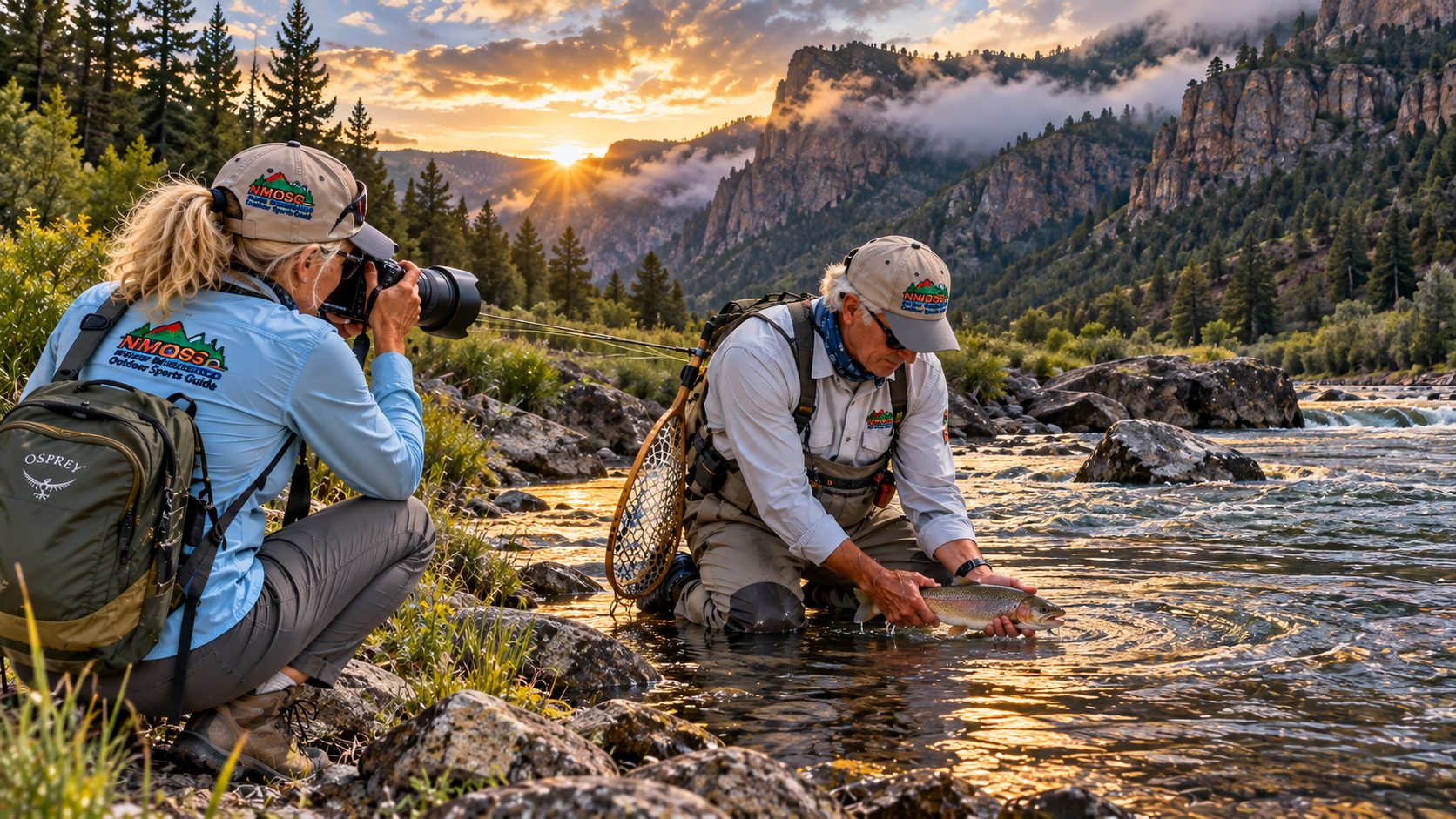
Cimarron Canyon State Park: Summer Days Along the Cimarron River
There are some places Paulette and I visited because they were destinations, places that required planning, packing and a fair bit of driving.
Cimarron Canyon State Park wasn't one of them.
During the seventeen years we lived at Casa Oso, our log home high above the Moreno Valley at Angel Fire, Cimarron Canyon was practically in the neighborhood.
On a summer morning we could look out toward Eagle Nest Lake, decide the day was too pretty to spend around the house, gather a couple of day packs, fishing gear and cameras, and be headed toward the canyon without turning the outing into an expedition.
Sometimes I carried a fly rod.
Often Paulette carried a camera.
Usually we carried both.
But fishing wasn't really the reason we kept returning.
We went because we liked being there.
We liked walking beside the Cimarron River, listening to cold mountain water slipping around rocks beneath cottonwoods and ponderosa pines. We liked finding a place for lunch, watching trout rise in a pool even when I wasn't fishing, photographing the canyon walls and keeping an eye open for mule deer.
There was always the possibility of a black bear somewhere in the timber.
And on a hot summer afternoon, when much of New Mexico was baking beneath the sun, Cimarron Canyon could feel like somebody had opened the door to a naturally air-conditioned room.
After all these years, I can still hear that river.
That's the sort of place Cimarron Canyon State Park became for us.
Not somewhere we went once and remembered.
Somewhere we went often enough that remembering it feels a little like remembering home.
Where Is Cimarron Canyon State Park?
Cimarron Canyon State Park lies along U.S. Highway 64 east of Eagle Nest, New Mexico, on the Enchanted Circle Scenic Byway.
The park sits at approximately 7,876 feet elevation, where the Cimarron River flows through a narrow, forested canyon. New Mexico State Parks describes the area as offering fishing, fly fishing, hiking, camping, picnicking, birding and wildlife viewing, with the park occupying the heart of the Colin Neblett Wildlife Management Area. (New Mexico EMNRD)
The park headquarters address is:
Cimarron Canyon State Park
28869 Highway 64
Eagle Nest, NM 87718
575-377-6271
Cimarron Canyon State Park official information
One of the great pleasures of the park is the drive itself.
Coming from Eagle Nest, US 64 leaves the open Moreno Valley and begins descending eastward. The landscape tightens around you. Broad grasslands give way to forest, rock and running water.
Before long the Cimarron River is traveling alongside the highway.
You have entered another world.
Why Did Paulette and I Visit Cimarron Canyon So Often?
Convenience certainly helped.
Living at Casa Oso meant the canyon was close enough for an unplanned summer outing.
But convenience alone doesn't make you return to a place year after year.
Cimarron Canyon had variety.
I could fly fish.
Paulette could photograph.
We could hike.
We could picnic.
We could sit beside the river and do absolutely nothing productive.
I've become increasingly fond of that last activity.
When I was younger, every outdoor trip seemed to require a mission.
Catch fish.
Reach a summit.
Cover miles.
Photograph something spectacular.
As I've grown older, I've learned that a good day outdoors doesn't need to produce anything.
Sometimes Paulette and I would walk along the Cimarron River and stop wherever the country invited us.
Maybe there was a pool worth watching.
Maybe sunlight was falling through the trees just right.
Maybe we found a comfortable place beside the water.
The river supplied the entertainment.
No batteries required.
How Does the Cimarron River Shape the Park?
The Cimarron River begins at Eagle Nest Lake and flows east through the canyon toward the community of Cimarron.
That makes it a tailwater below Eagle Nest Dam, although much of the stream looks and behaves like a small mountain river.
It has riffles, runs, pocket water, pools, undercut banks and little seams where faster current slides beside slower water.
For a trout fisherman, every bend asks a question.
Is there one under that bank?
What about behind that rock?
Surely there's a brown trout sitting at the head of that pool.
Sometimes there is.
Sometimes the trout has apparently read the same fishing book you have and declines to cooperate.
That's fishing.
New Mexico's fisheries management plan calls for stocking catchable triploid rainbow trout in the Cimarron system while managing brown trout as a wild fishery. It also designates a section within the canyon for special trout management. (NMDOW)
The stocking program remains active. As one recent example, the Department stocked 2,426 triploid rainbow trout averaging 10 inches into the Cimarron River west of Cimarron on May 12, 2026. (NMDOW)
For anglers wanting more detail on exactly where they can legally reach the river, I've already put together a separate guide to public access to Cimarron River trout fishing.
That is one of the great attractions here.
You can actually get to the water.
Where Is the Public Access in Cimarron Canyon State Park?
The state park corridor provides numerous opportunities to reach the Cimarron River from established public areas along US 64.
That doesn't mean every attractive piece of river in northern New Mexico is automatically public.
Pay attention to signs, use established access points and respect private property.
Within the park you'll find campgrounds, day-use areas and fishing access along the river. Palisades Day Use Area, for example, provides picnic facilities across from the dramatic Palisades cliffs, while other access areas place you close to fishing water and trailheads. (New Mexico EMNRD)
This is another reason Cimarron Canyon worked so well for our summer outings.
We didn't have to turn fishing into a wilderness expedition.
Park.
Walk.
Fish.
Or don't fish.
That last option was surprisingly common for us.
What Trout Live in the Cimarron River?
The two fish most anglers associate with the Cimarron are brown trout and rainbow trout.
The rainbows benefit from New Mexico's stocking program.
The brown trout reproduce naturally and represent the wild side of the fishery. NMDOW's management plan specifically describes the brown trout component as wild while the triploid rainbow fishery is maintained through put-and-take stocking. (NMDOW)
Brown trout are one reason I enjoy small streams.
A decent brown can disappear beneath a bank that looks barely large enough to conceal your boot.
They use structure.
Undercut banks.
Roots.
Boulders.
Dark pockets.
Current breaks.
You learn to fish the river rather than merely cast into it.
Check Your New Mexico Fishing License Before Leaving Home
Before discussing flies, rods or secret little pools, let's handle something more important.
Make sure your New Mexico fishing license is current.
Don't assume it is because you bought one sometime last year.
New Mexico's fishing regulations and licensing requirements should be checked before every season, particularly when you're fishing Special Trout Water.
New Mexico Department of Wildlife fishing information
The current 2026-2027 regulations identify the Cimarron River as Special Trout Water. Most importantly, the section from the east end of Tolby Campground downstream 1.4 miles to the first U.S. Highway 64 bridge is Red Chile Water. (NMDOW)
That means:
Catch and release only.
Artificial fly or lure only.
Single, barbless hook.
NMDOW explains that Special Trout Waters have individually tailored regulations intended to improve trout populations, conserve native fisheries or create particular angling opportunities. (NMDOW)
Don't rely on an old article, including one of mine, when standing beside a current regulation sign.
The sign wins.
For a broader look at this fishery and other northern waters, see my guide to fly fishing the Rio Grande, Rio Costilla and Cimarron River.
What Fly Rod Works Best on the Cimarron River?
This isn't a river where you need artillery.
A 7½- to 9-foot 3-, 4- or 5-weight fly rod will handle most Cimarron situations beautifully.
If I wanted one outfit to cover nearly everything, I'd choose an 8½- or 9-foot 4-weight.
Pair it with a balanced fly reel with a dependable drag.
You don't need a reel capable of stopping a tarpon. Most Cimarron trout aren't going to take you into the backing.
But a smooth drag protects light tippet, and a well-balanced outfit makes a day of casting much more enjoyable.
For fly line, a weight-forward floating line handles most situations.
I'd carry leaders in the 7½- to 9-foot range, sometimes longer when water is low and clear, with tippet adjusted to fly size and conditions.
Fine tippet can make a difference.
So can putting the fly in the right place.
I'll take a good presentation on 5X over a bad presentation on 7X every time.
Which Flies and Nymphs Work on the Cimarron River?
The Cimarron supports the sort of aquatic insect life that makes fly fishermen lose track of time.
Useful patterns include:
-
Elk Hair Caddis
-
Parachute Adams
-
Blue-Winged Olive patterns
-
Pale Morning Dun patterns
-
Stimulators
-
small terrestrial ants and beetles
-
Pheasant Tail nymphs
-
Hare's Ear nymphs
-
Copper Johns
-
Prince Nymphs
-
midge larvae and pupae
-
caddis nymphs and emergers
-
small Woolly Buggers
Golden stoneflies, caddis, mayflies, midges and terrestrials can all matter during the warmer fishing season.
But I wouldn't become so devoted to a hatch chart that I stopped watching the river.
Turn over a loose streamside rock without disturbing habitat.
Watch the surface.
Look for swallows or other insect-feeding birds.
Notice whether trout are rising.
Pay attention to what the fish are actually telling you.
A fly box contains possibilities.
The river provides the answer.
Can I Fish the Cimarron With Spinning Tackle?
Certainly, where the regulations for the particular section permit the tackle you're using.
A 5½- to 7-foot ultralight or light spinning rod matched with a 1000- or 2000-size spinning reel is ideal for this little river.
I'd spool with 4- or 6-pound monofilament or fluorocarbon, or use very light braid with a fluorocarbon leader.
Small presentations are usually best.
Useful spinning lures include small inline spinners, tiny spoons, small single-hook jigs and compact artificial minnow or insect imitations.
Natural bait may be legal in some general-regulation portions of the river, but it is not legal in the Red Chile Special Trout Water, where anglers are restricted to artificial flies or lures with a single barbless hook. (NMDOW)
That's why I wouldn't head into Cimarron Canyon with one blanket tackle recommendation.
Know where you're standing.
Then know the rules that apply there.
What Water Temperature Is Best for Cimarron Trout?
Trout are cold-water fish, and the Cimarron's mountain setting and release from Eagle Nest Lake help keep it productive during periods when lower-elevation streams become uncomfortably warm.
As a practical fishing guideline, trout are generally comfortable and active in water from the upper 40s through the 50s and into the low 60s Fahrenheit.
Once water temperatures begin approaching the upper 60s, especially during low flows, I become increasingly cautious about catch-and-release fishing.
Warm water holds less dissolved oxygen.
Hooking, fighting and releasing a trout adds additional stress.
A little stream thermometer costs almost nothing.
Carry one.
If the water becomes too warm, put away the rod and pick up the camera.
Cimarron Canyon gives you plenty to do.
What Is the Best Time of Day to Fish?
During summer, I favor morning and late afternoon into evening.
Morning gives you cooler water, softer light and often less activity along the highway.
Evening can bring insect activity and rising trout.
But there are no absolute rules.
An overcast afternoon can produce wonderful fishing.
A hatch can turn an apparently lifeless stretch of water into a feeding frenzy.
And tailwater conditions are influenced by releases from Eagle Nest Lake, so flow matters as much as the clock.
Rather than asking only, "What time is it?" ask:
What's the water temperature?
What's the flow doing?
Are insects active?
Are fish rising?
Is the sun putting trout under cover?
That's fishing rather than scheduling.
How Do I Release a Cimarron Trout Safely?
Catch-and-release should be more than watching a trout swim away.
The goal is for it to survive.
I use tackle strong enough to land the fish promptly rather than exhausting it.
Wet your hands before touching a trout.
Use a rubber or fish-friendly landing net.
Keep the fish in the water as much as possible.
Don't squeeze it.
Keep fingers away from the gills.
Use barbless hooks where required, and I often prefer them even where they aren't required.
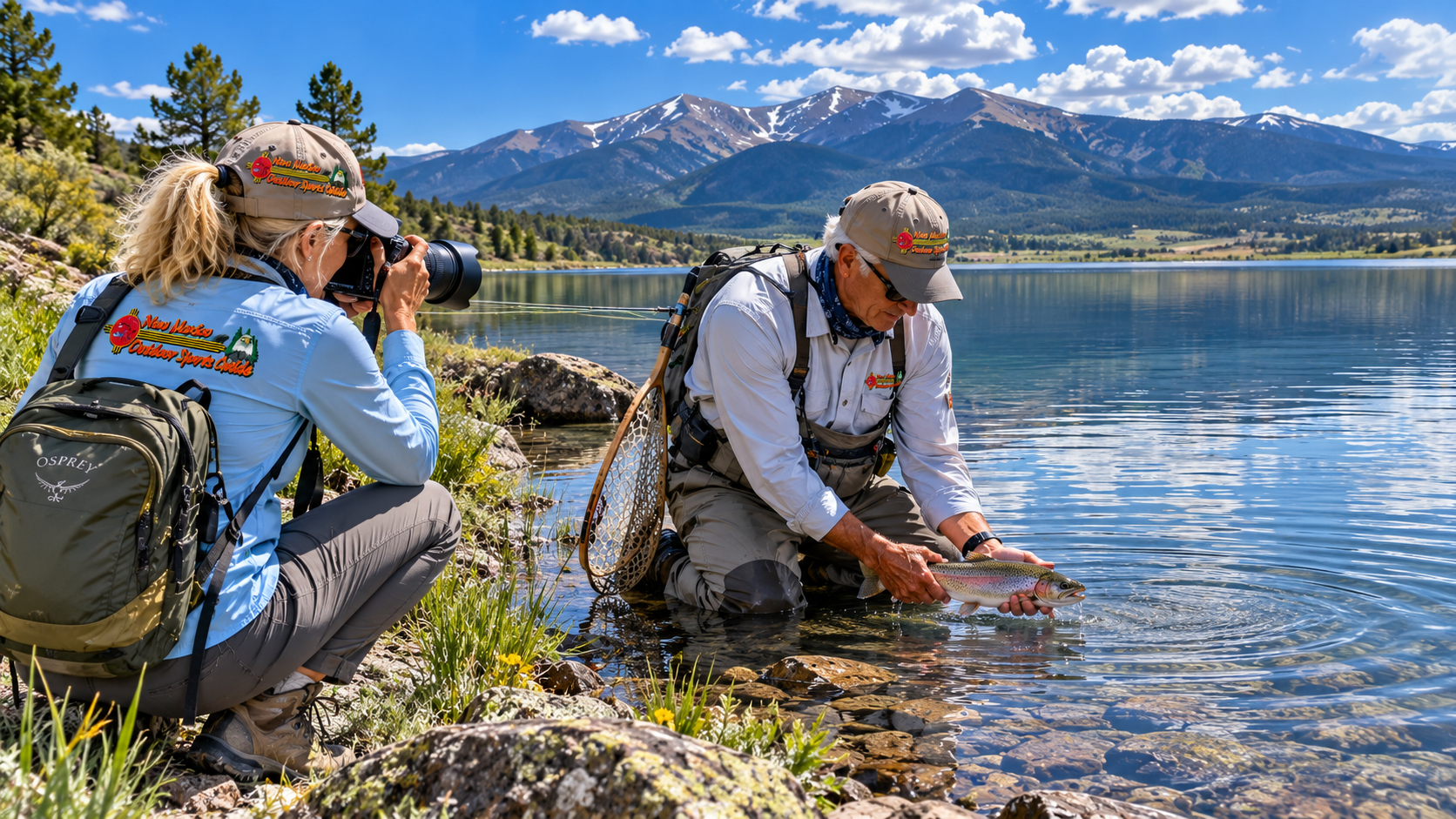
If you're taking a photograph, have the camera ready first.
Lift.
Click.
Release.
Don't hold a trout in the sunshine while somebody searches through a backpack for the camera.
In the Red Chile section, of course, catch-and-release isn't simply good practice. It's the law. (NMDOW)
Hiking in Cimarron Canyon State Park
Fishing may bring many people to the canyon, but Paulette and I often went simply to hike.
Here's an important distinction.
Some trails accessed from Cimarron Canyon State Park actually continue into the surrounding Colin Neblett Wildlife Management Area rather than remaining within State Park boundaries. State Parks specifically notes that park trailheads provide access into the wildlife area. (New Mexico EMNRD)
Tolby and Maverick are among the better-known trail systems.
Maverick follows old logging roads with numerous intersections, and State Parks cautions that these routes are not maintained by the State Parks Division. (New Mexico EMNRD)
There are also seasonal wildlife closures.
As of September 2026, the Colin Neblett backcountry, including Tolby and Maverick trails, is closed to entry May 15 through July 31 for deer fawning and elk calving, while Clear Creek Trail remains open during that period. Additional closures apply during published big-game hunts. (NMED)
That is precisely the kind of regulation worth checking before leaving home.
The mountains don't care that the trail was open the last time you visited.
Mule Deer, Elk and Wildlife Photography
Cimarron Canyon sits inside excellent wildlife country.
NMDOW's Colin Neblett information specifically identifies deer, elk, turkey, grouse and bear among the animals wildlife watchers may encounter, and recommends dawn and dusk for viewing and photography. (NMDOW)
Mule deer are particularly at home in this transition between forest, canyon and meadow.
Sometimes you see them close to the road.
Sometimes just an ear twitch gives away an animal standing almost invisibly among the trees.
And then there are elk.
Anyone who has spent much time around the Moreno Valley knows how deeply elk belong to this landscape.
For photography, Paulette and I have always preferred a long lens and distance.
That's better for the animal and usually better for the photograph.
A relaxed deer behaving naturally makes a far better subject than one staring nervously at a photographer who has crowded too close.
What About Black Bears?
Black bears belong here too.
Seeing one is exciting.
Creating a problem for one isn't.
Never feed bears.
Never leave food where a bear can obtain it.
At camp, store food, trash and scented items securely.
Don't leave a cooler sitting outside because you'll "only be gone ten minutes."
A bear has no understanding of property rights or campground etiquette.
It smells lunch.
The responsibility belongs to us.
If you encounter a black bear while hiking, don't crowd it for a photograph. Give it an escape route, keep your distance and follow current NMDOW bear-safety guidance.
Growing up around livestock taught me something useful about wild animals:
Respecting them is considerably smarter than pretending they're tame.
Photography Along the Cimarron River
Paulette and I could spend hours here with cameras.
Cimarron Canyon is almost designed for photography.
The river gives you reflections and moving water.
Ponderosas provide vertical lines.
Rock walls add texture.
Wildlife can appear without warning.
And the canyon changes character as the sun moves overhead.
Bright midday sun can create harsh contrast between illuminated rock and deep forest shadow.
Morning and late afternoon are gentler.
Overcast days can be wonderful for photographing the river because the soft light reduces glare and makes it easier to capture detail in water, moss, bark and stone.
A polarizing filter is useful for controlling reflections and seeing beneath the surface.
A tripod helps when deliberately slowing the shutter to soften moving water.
But sometimes the best camera is simply the one already hanging around your neck when a mule deer steps from the trees.
Picnicking Beside the River
We enjoyed this every bit as much as fishing.
Palisades Day Use Area is a particularly scenic picnic stop, with facilities opposite the striking Palisades cliffs. State Parks describes the formations there as roughly 300-foot crenelated cliffs. (New Mexico EMNRD)
But a picnic doesn't need much organization.
A couple of sandwiches.
Fruit.
Water.
Coffee in a thermos.
Find a legitimate day-use area and settle down beside the river.
Listen to it.
I'm convinced food tastes better outdoors.
I've conducted no scientific study on this subject, but after eight decades I'm comfortable with my sample size.
Camping at Cimarron Canyon State Park
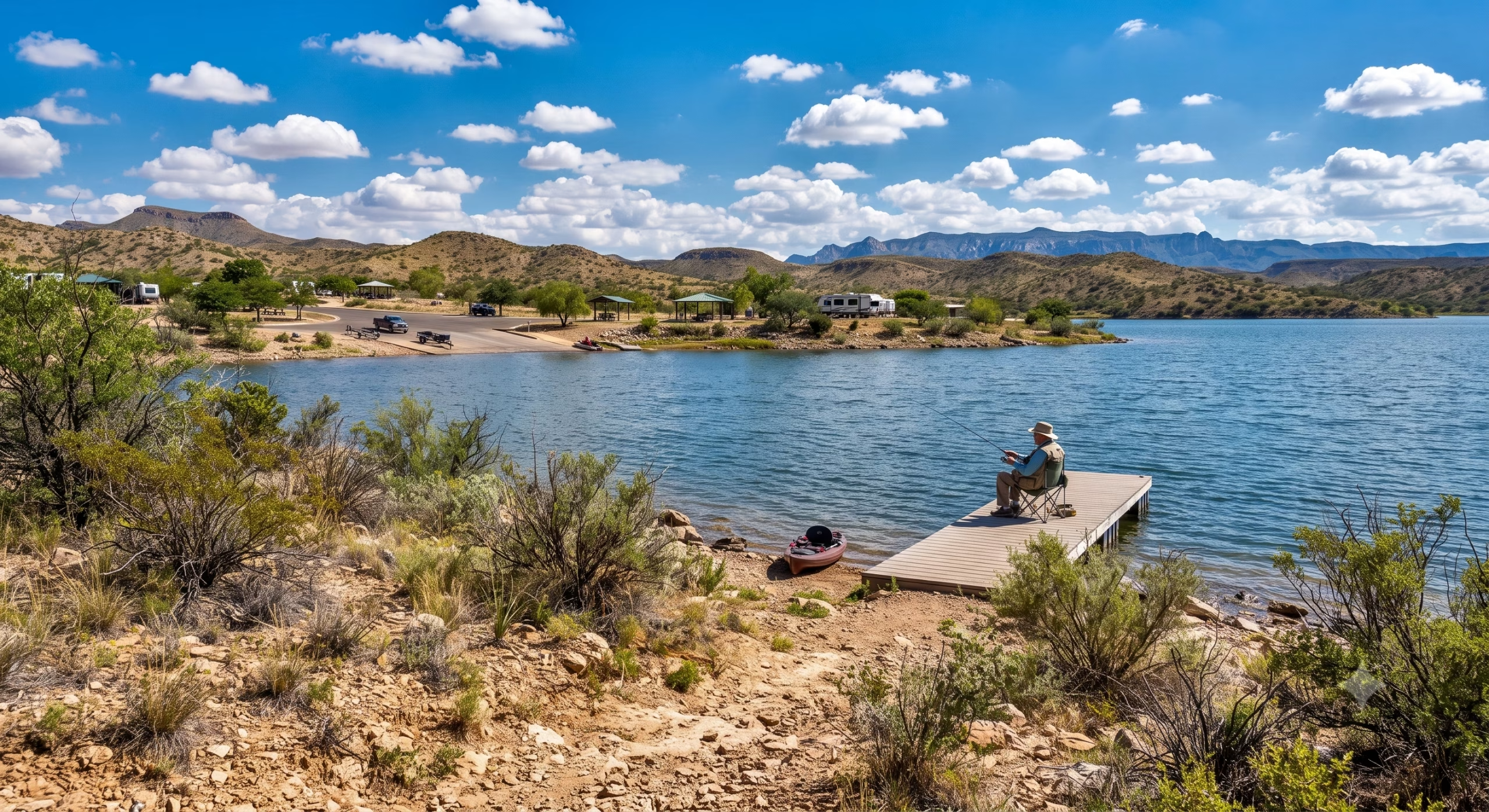
Cimarron Canyon State Park currently lists four campgrounds and 94 developed campsites, with restrooms and vault toilets among the facilities. (New Mexico EMNRD)
Camping here puts you right inside the canyon rather than requiring a drive back to lodging each evening.
But current conditions matter.
As of September 20, 2026, the park reports that Blackjack Tent Camping has closed for the season until May 1, 2027; Maverick Campground and the Gravel Pit Lakes closed September 15 and are scheduled to reopen March 1, 2027; Ponderosa is closed for construction; and Tolby remains open with limited walk-up or first-come sites during construction. (NMED)
Those are current September 2026 conditions, not permanent descriptions of the park.
Check before traveling.
Current Cimarron Canyon State Park alerts and closures
The park is also presently under Stage II fire restrictions, prohibiting campfires, charcoal, coal and wood stoves, while certain controllable liquid-petroleum or LPG devices remain allowed under specified safety conditions. (NMED)
Northern New Mexico has taught us all the price of careless fire.
Treat those restrictions seriously.
Mountain Weather Is Part of the Adventure
Cimarron Canyon may feel wonderfully cool on a summer morning.
Don't mistake pleasant weather for guaranteed weather.
At nearly 8,000 feet, conditions can change quickly.
Summer thunderstorms can build over the mountains with remarkable speed.
Temperatures fall when storms arrive.
Lightning is a serious concern.
Hail isn't impossible.
A sunny morning doesn't mean you should leave rain gear in the car.
For a summer day hike I carry water, a light rain shell, an insulating layer, sun protection and enough gear to deal with an unexpected delay.
In spring and fall, add warmer clothing.
In winter, US 64 through the canyon can become a very different road.
Check the forecast and road conditions before leaving.
Mountain weather isn't something to fear.
It's something to respect.
What Are the Seasons Like at Cimarron Canyon State Park?
Spring
Spring arrives unevenly.
Snow can linger in shaded areas while sunny slopes begin warming. Runoff and dam releases influence the river, and nights remain cold.
Fishing improves as water temperatures climb and insect activity increases.
Summer
Summer was our season.
Green forest.
Cold river.
Wildflowers.
Trout.
Long daylight.
Afternoon thunderstorms.
It was easy to leave Casa Oso after breakfast, spend most of the day in the canyon and still be home before dark.
For another glimpse of the broader mountain country we called home, my story about Balloons Over Angel Fire in the Moreno Valley captures some of that summer atmosphere.
Fall
Fall is magnificent.
Aspens turn gold, cottonwoods brighten along the water, temperatures cool and elk become more active.
Fishing can remain excellent.
So can photography.
Bring warm layers because autumn nights arrive quickly in the canyon.
Winter
Winter strips everything down.
Snow, ice, bare branches and dark water transform the canyon.
The highway remains an important route, but recreation requires considerably more preparation.
This is mountain country.
Winter means it.
Eagle Nest, New Mexico: The Western Gateway
For many visitors, Eagle Nest, New Mexico, serves as the natural western gateway to Cimarron Canyon.
The village sits beside Eagle Nest Lake in the Moreno Valley, with lodging, food, fuel and other basic services.
The lake and canyon make a natural pair.
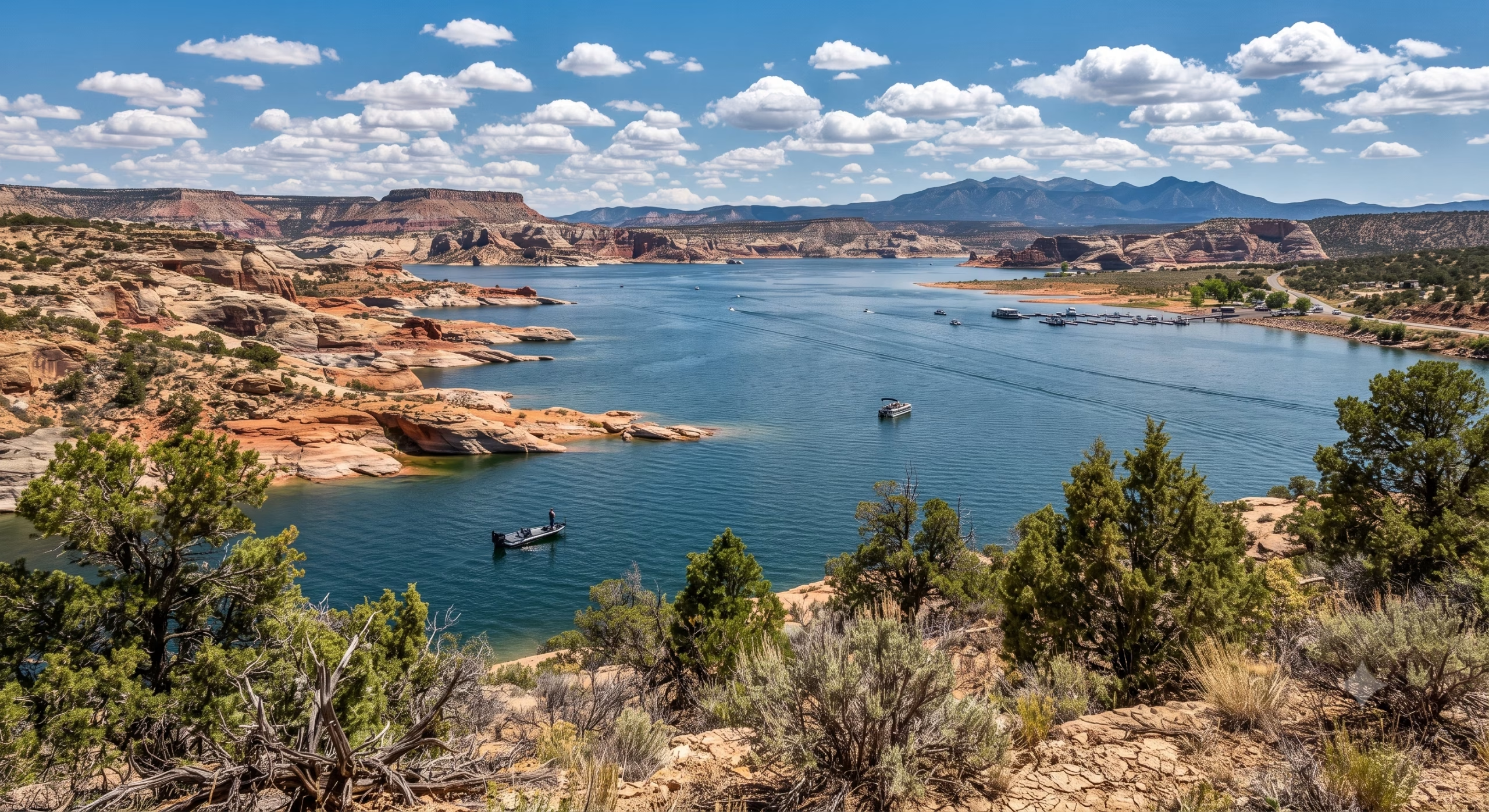
Spend one day beside Eagle Nest Lake.
Spend another along the Cimarron River.
I've written separately about drivable New Mexico alpine lakes, including Eagle Nest and other high-country waters, and that broader tour gives a good sense of how water shapes recreation throughout northern New Mexico.
From Eagle Nest, US 64 follows the river eastward into Cimarron Canyon.
You can't miss it.
And you wouldn't want to.
How Do I Get to Cimarron Canyon State Park?
From Taos
From Taos, take US 64 east through the Sangre de Cristo Mountains toward Angel Fire and Eagle Nest, then continue east from Eagle Nest into Cimarron Canyon.
Depending upon your exact destination within the long park corridor, figure roughly 40 to 50 miles and around an hour in normal summer conditions.
Don't treat that as a stopwatch challenge.
The road is mountainous, scenic and subject to weather.
From Santa Fe
From Santa Fe, a common route heads north through Española toward Taos, then follows US 64 east through the mountains toward Angel Fire and Eagle Nest before entering Cimarron Canyon.
Depending upon the chosen route and your destination in the park, expect approximately 110 to 120 miles and around 2½ hours.
Mountain weather, road work and winter conditions can add considerably to that.
From Albuquerque
From Albuquerque, plan on roughly 170 to 180 miles and around 3½ hours, again depending on route and where within the canyon you're headed.
A straightforward scenic approach is north toward Santa Fe and Española, continue toward Taos, then follow US 64 east through the Enchanted Circle country toward Eagle Nest and Cimarron Canyon.
Another route may be preferable depending upon current road conditions.
Before a long drive, check the current New Mexico road information rather than trusting an old mileage estimate from a fishing article.
Cimarron Canyon Is More Than a Fishing Destination
I've spent a good portion of this article discussing trout because I love fishing.
But I don't want to leave the wrong impression.
If you never make a cast, Cimarron Canyon State Park is still worth your day.
Walk.
Photograph the river.
Watch for mule deer.
Have lunch beneath the trees.
Listen for birds.
Study the cliffs.
Find a quiet spot beside the Cimarron and watch sunlight dance across moving water.
Or use the canyon as one piece of a longer northern New Mexico trip. The Enchanted Circle connects Eagle Nest, Angel Fire, Taos and Red River through some of the finest mountain country in the state. My story about a summer vacation in Red River, New Mexico is a natural companion for anyone planning several days in these mountains.
The mistake is thinking every outdoor place must provide one particular activity.
Cimarron Canyon provides a landscape.
What you do with it is up to you.
Why Do I Remember Those Ordinary Summer Days?
Looking back, I don't remember the weight of every trout.
I don't remember what fly I used on every trip.
I couldn't tell you exactly how many miles Paulette and I hiked in Cimarron Canyon.
What I remember are pieces.
The sound of the river.
The smell of ponderosa pine warmed by summer sun.
Paulette stopping because she'd seen something worth photographing.
A trout rising in the shade beneath an overhanging branch.
Cold water around my waders.
A mule deer disappearing between trees.
Dark clouds building over the mountains in the afternoon.
Lunch beside the river.
And that comfortable feeling of knowing Casa Oso wasn't very far away.
We weren't tourists trying to see everything before vacation ended.
We lived there.
That gave us the luxury of saying, "We'll come back next week."
And we often did.
Final Thoughts on Cimarron Canyon State Park
If you're visiting Cimarron Canyon State Park, bring a fishing rod if you enjoy trout fishing.
But bring hiking shoes too.
Bring a camera.
Bring binoculars.
Bring lunch.
Bring rain gear even if the morning sky is blue.
Check your fishing license.
Check the current trout regulations.
Check trail closures.
Check fire restrictions.
Check campground status.
And then stop checking things for a while.
Put the telephone away.
Walk down to the Cimarron River.
Listen.
If you're fishing, make a careful cast into the seam beside a rock.
If you're photographing, wait for the light.
If you're hiking, don't hurry.
And if you're doing none of those things, find a comfortable place beneath a ponderosa and watch the river go by.
Paulette and I went to Cimarron Canyon many times during those summers at Casa Oso.
Some days I fly fished.
Some days we hiked.
Some days we photographed.
And some days we simply enjoyed being beside the river together.
Those may be the days I remember best.
At this stage of life, I've come to appreciate that the outdoors doesn't always have to give us an adventure.
Sometimes it gives us something better.
A quiet summer afternoon.
Cold mountain water.
A trout rising beneath the trees.
Your wife sitting beside you.
And nowhere else you particularly need to be.
That's Cimarron Canyon State Park as I remember it.
And I wouldn't change a thing.
0 Comments