
Conchas Lake State Park: Bass Fishing, Walleye, Crappie and a Desert Lake Full of Surprises
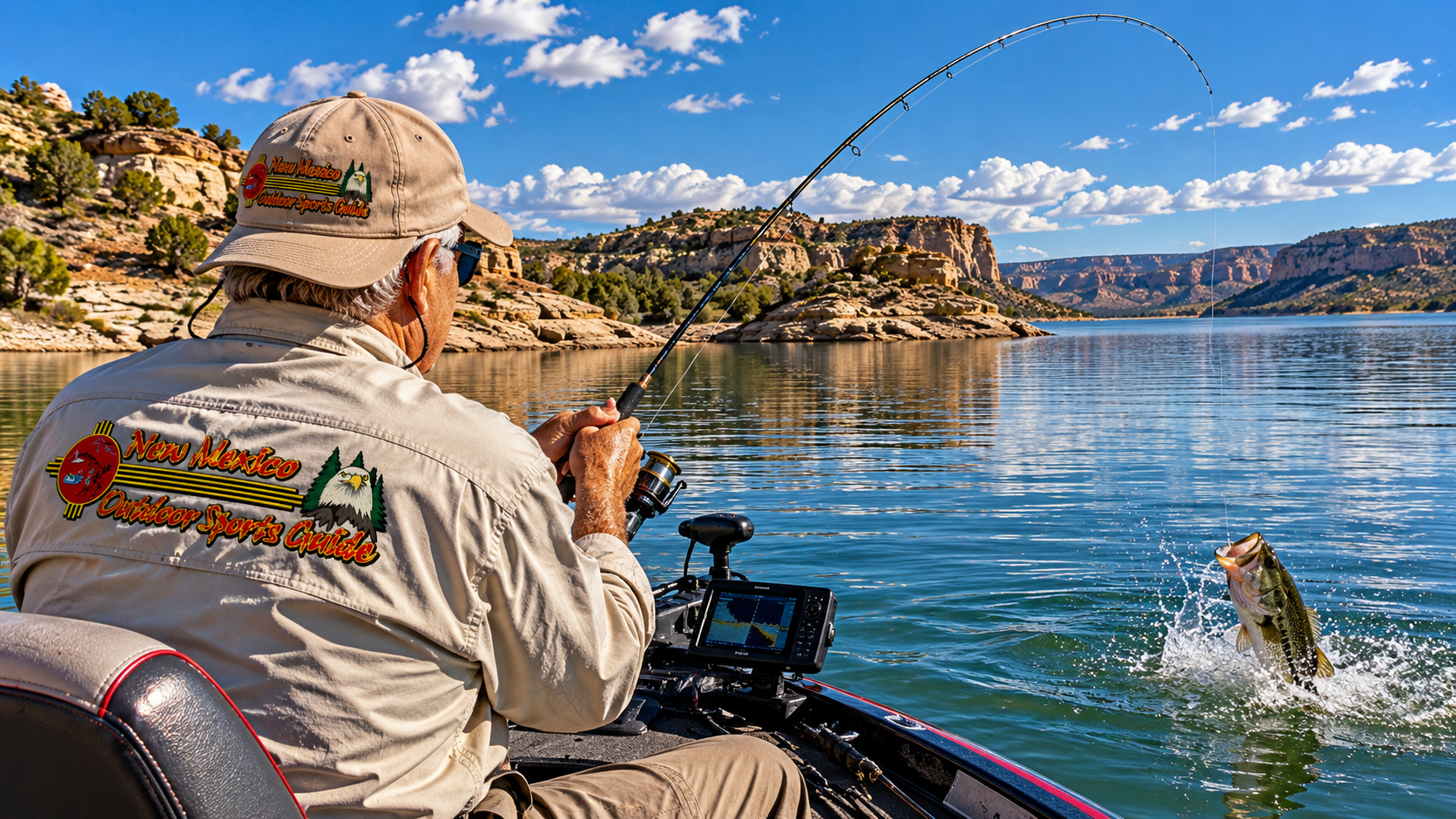
There are places in New Mexico where you can stand beside a mountain stream, listen to trout feeding beneath an overhanging willow, and almost convince yourself that civilization is a hundred miles away.Then there are places where the country opens up, the mountains surrender to rolling plains, and a broad blue reservoir appears among sandstone cliffs, rocky points and desert grasslands.Conchas Lake State Park belongs to that second New Mexico.And I have always had a soft spot for it.After spending much of my life fishing bass tournaments and guiding anglers on Texas reservoirs, I developed an appreciation for lakes that make you think. A good bass lake isn't necessarily one where every cast produces a fish. It's one where the structure, seasonal movements, water temperature and changing conditions create a puzzle worth solving.Conchas Lake offers exactly that kind of fishing.But there's considerably more to it than bass.There are smallmouth bass prowling rocky banks, largemouth bass working sheltered coves, crappie holding around submerged structure and walleye following baitfish along deeper contours.Above the water, the scenery is unmistakably northeastern New Mexico.Wide horizons.Sandstone bluffs.Big skies.And the sort of sunset that can make you forget whether you caught anything that afternoon.For those of us who love both fishing and photography, that's a particularly appealing combination.
Where Is Conchas Lake State Park?
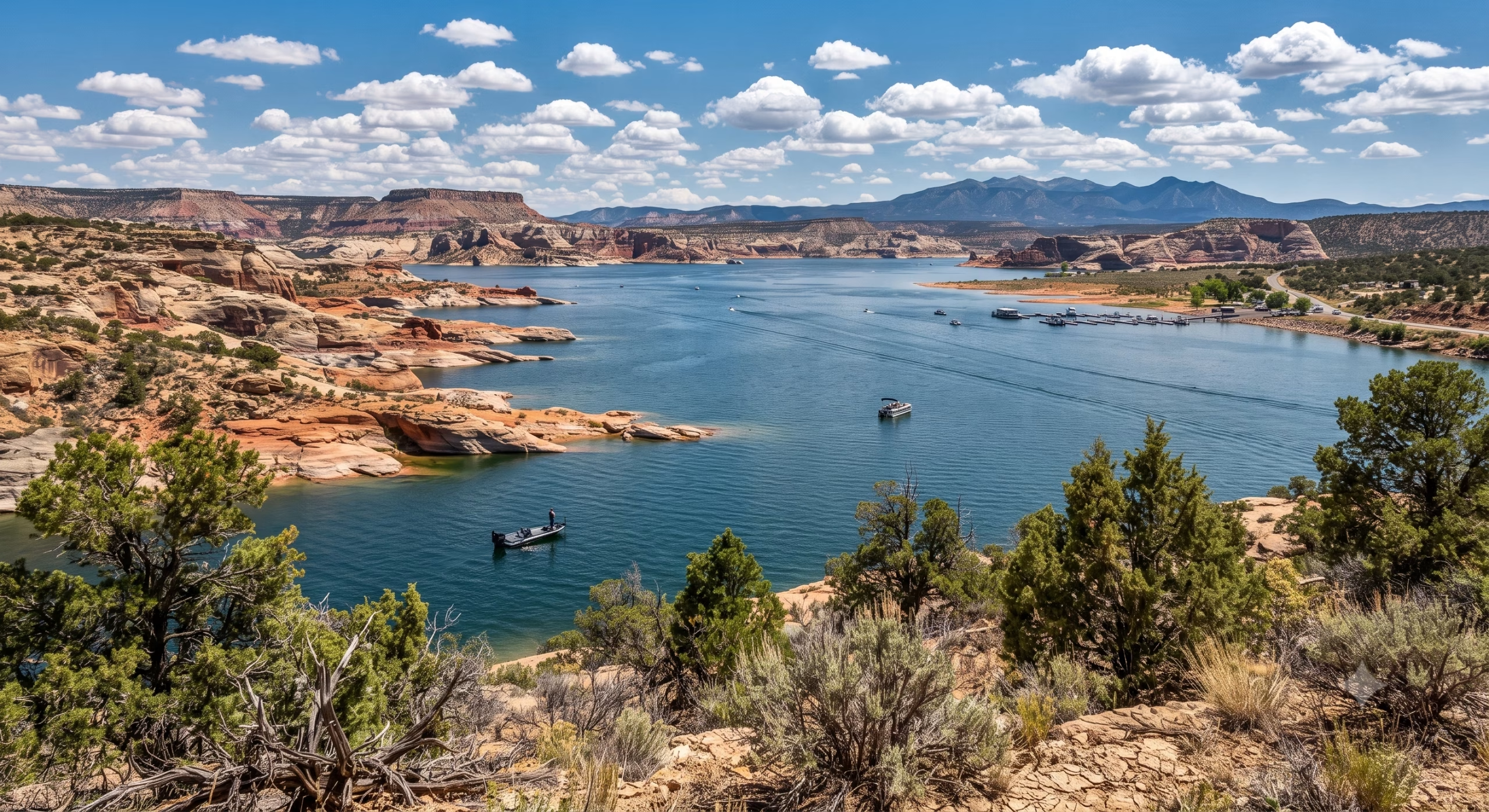
Conchas Lake State Park is located in San Miguel County in northeastern New Mexico, near the small community of Conchas Dam, roughly northwest of Tucumcari.Unlike the alpine lakes around Angel Fire, Eagle Nest and Chama, Conchas sits in lower, warmer country where the landscape is dominated by open plains, rocky mesas, juniper and desert vegetation.The lake was created by the construction of Conchas Dam, a U.S. Army Corps of Engineers flood-control project completed in the late 1930s.The reservoir has since become one of northeastern New Mexico's major destinations for warmwater fishing, boating, camping and lakeside recreation.It's a different sort of outdoor experience from the high country Paulette and I enjoyed during our years at Casa Oso.But that's one of the things I appreciate about New Mexico.You can leave a cool mountain forest and find yourself fishing a sunlit desert reservoir within the same day.
Which Rivers Feed Conchas Lake?
Two principal waterways shape Conchas Lake:
- The Canadian River, one of the major rivers of northeastern New Mexico.The Conchas River, which joins the Canadian River in the reservoir area.
The Canadian River is part of the larger Arkansas River drainage. It travels across northeastern New Mexico before continuing east through Texas and Oklahoma.Conchas Dam impounds water from this system, creating the branching reservoir and the varied fishing habitat associated with its river arms.Those river arms are important to anglers.They influence sediment, water clarity, seasonal inflows, baitfish movements and fish distribution.When runoff enters a reservoir, the upper arms may become stained or muddy while the main-lake water remains clearer.That difference can completely change where I would look for bass, crappie or walleye.And it's one reason I never assume yesterday's successful fishing pattern will work today.
How Big Is Conchas Lake?
Conchas Lake is one of New Mexico's larger reservoirs, although its surface area changes substantially with water levels.At higher elevations, its winding arms reach far into the surrounding country. The State Parks Division describes approximately 11 miles of the Conchas River arm and 14 miles of the South Canadian River arm available for exploration. State ParksLATEST REPORTED LAKE CONDITIONSSeptember 28, 2026Surface area
4,179
acres, approx.Water elevation
4,178.2
feet above sea levelStored water
152,043
acre-feetNew Mexico State Parks' September 28 boating-conditions report. Water levels and usable shoreline change over time.Boating ConditionsThe important fishing implication is that Conchas is not a static lake.As water rises, bass may move into newly flooded cover and shoreline vegetation. When it falls, fish may concentrate around remaining rock structure, channels, humps and deeper banks.Low water can also expose rocks and create boating hazards.Before launching, I would always consult the official Conchas Lake park alerts and call the park office if ramp conditions are unclear.
What Fish Species Live in Conchas Lake?
Conchas Lake supports a varied warmwater fishery.The locally documented species include largemouth bass, smallmouth bass, walleye, crappie, bluegill, channel catfish and bullhead.Conchas Dam, New MexicoFor a visiting angler, that creates several different opportunities.Largemouth bass favor some of the lake's sheltered cover and structural transitions. Smallmouth bass are well suited to its rocky points and steep banks. Crappie gather around cover and suspended baitfish. Walleye provide another rewarding challenge, particularly for anglers willing to work deeper water.Catfish and sunfish offer additional fishing opportunities for families and campers.I wouldn't promise anyone that all these fish will be biting on the same day.But that's one reason I like a multi-species reservoir.When one pattern falls apart, there's another puzzle waiting.
How Would I Fish for Largemouth Bass at Conchas Lake?
I spent enough years guiding bass fishermen on Lake Conroe and Sam Rayburn to learn one thing: bass don't care how far you've driven to catch them.They care about food, temperature, oxygen, cover and security.Conchas largemouth are no exception.If I were launching on a spring morning, I'd begin by looking for protected coves with a combination of shallow feeding water and nearby deeper access.I particularly like secondary points, channel swings, rocky transitions and any submerged brush that provides shade or ambush cover.During the prespawn, largemouth move toward spawning areas as water warms. Stable warming trends can be productive, while a strong cold front may push fish back toward deeper water.When spawning conditions arrive, shallow protected pockets become important.After spawning, fish often redistribute toward points, ledges and deeper cover.Summer usually calls for greater attention to temperature, shade and depth.Fall brings another change as baitfish movement becomes increasingly important.
My preferred spinning tackle for largemouth bass
I'd carry a 6-foot-10-inch to 7-foot-2-inch medium or medium-heavy spinning rod with a 2500 or 3000-size reel.For line, 10- to 15-pound braid with an 8- to 12-pound fluorocarbon leader is a versatile combination. Around abrasive rock, I'd adjust the leader upward.My first lure selections would be a 4- to 5-inch soft-plastic worm, a 3- to 4-inch paddletail swimbait, a finesse jig and a soft-plastic stickbait.Green pumpkin is hard to beat in reasonably clear water.Watermelon and natural baitfish patterns are good alternatives.When the water becomes stained, I often prefer a darker silhouette or a lure with more vibration.I would fish slowly enough to maintain bottom contact around rock and brush.A bass that won't chase a moving bait may still pick up a worm sitting almost motionless beside a submerged boulder.
Where Would I Look for Smallmouth Bass?
Smallmouth are the fish that would probably have me reaching for the spinning rod first.I have a particular affection for them.They are wonderfully aggressive when they're in the mood and remarkably stubborn when they aren't.Conchas offers the kind of rocky habitat that makes smallmouth fishing interesting.I'd begin around main-lake points, gravel banks, submerged rock piles, steep shorelines and places where broken rock meets deeper water.The key is finding a combination of structure and food.Rock by itself isn't enough.Rock with baitfish and access to deeper water is another matter.
Best smallmouth spinning tackle
My choice would be a 6-foot-9-inch to 7-foot medium-light or medium fast-action spinning rod.A smooth 2500-size reel with 10-pound braid and a 6- to 8-pound fluorocarbon leader would cover much of my finesse fishing.I'd carry:
- 2.5- to 3.5-inch tube jigs in green pumpkin, brown and smoke.3- to 4-inch finesse worms on drop-shot rigs.2.5- to 3-inch swimbaits in shad or natural minnow colors.Small suspending jerkbaits.Compact crawfish imitations.
The tube jig is one of my favorites.Drag it.Hop it.Let it settle.Sometimes smallmouth want a bait moving steadily along the bottom. Other times they want it nearly stationary.And occasionally they'll hit it hard enough to make you wonder whether the fish is twice its actual size.
How Do You Catch Crappie at Conchas Lake?
Crappie fishing is a different game.You can spend hours casting beautiful-looking banks without a bite, then locate one school and suddenly discover that fishing is remarkably easy.The trick is finding the school.At Conchas, I would search submerged brush, standing timber where present, deeper coves, channel edges and suspended baitfish.Spring often moves crappie toward protected spawning habitat.Summer and winter can concentrate them in deeper water.Fall may produce excellent fishing around baitfish schools and transitional structure.
My crappie spinning outfit
A 6- to 7-foot light-action spinning rod, 1000- or 2000-size reel and 4- to 6-pound line make a comfortable outfit.I like 1/32- to 1/8-ounce jigheads with small soft-plastic bodies.My starting colors would be pearl, white, chartreuse, black-and-chartreuse and natural shad.A small marabou jig is another dependable choice.When fishing vertically, I'd watch the line closely.Crappie sometimes strike on the fall without the dramatic tug people expect.The line simply stops.Or moves sideways.Or goes slack when it shouldn't.That's your invitation.
How Would I Fish for Walleye at Conchas Lake?
Walleye are one of the reasons I wouldn't visit Conchas carrying only bass tackle.They occupy a different niche and often reward a more methodical approach.I would begin by studying the lake's contour map.Look for points dropping into deeper water, channel edges, submerged humps, gravel-to-rock transitions and areas holding baitfish.Spring walleye may use shallower rocky areas during low-light periods.As temperatures increase, many fish move toward deeper structure.During summer, early morning, evening and nighttime can be productive, although fish may also feed in deeper water during daylight.
Spinning rods, reels and lures for walleye
A 6-foot-6-inch to 7-foot medium-light spinning rod with a sensitive tip is a good starting point.I'd pair it with a 2500-size reel and 8- to 10-pound braid, adding an appropriate fluorocarbon leader.My tackle box would include 1/8- to 3/8-ounce jigheads, depending on depth and wind, along with 3- to 4-inch minnows, paddletails and curly-tail grubs.Pearl, silver, white and natural baitfish colors would be my first choices.Chartreuse can be useful in stained water.I would also carry blade baits and diving crankbaits for covering water along points and breaks.The important thing is to fish the depth where the walleye and baitfish actually are, rather than the depth where you wish they were.A fish finder can save an enormous amount of wasted casting.
What Water Temperatures Are Most Productive?
Water temperature is one of my most useful fishing clues, but I treat it as a guide rather than a commandment.The following ranges are general warmwater-fishing guidelines, not a current New Mexico Department of Wildlife forecast for Conchas.
Fish can certainly be caught outside these ranges.A hot summer day doesn't mean the bass stop eating.It means I need to think about where comfortable water, oxygen and food intersect.A thermometer, contour map and fish finder are often more useful than another twenty expensive lures.
What Is the Best Time of Day to Fish Conchas Lake?
If I could choose only one period, I'd generally take the first few hours after sunrise.The light is softer.The lake is often calmer.Recreational boat traffic may be lighter.And fish frequently move into more accessible feeding positions.For largemouth and smallmouth, early morning can produce excellent shallow-water opportunities.Crappie may feed throughout the day once a school is located.Walleye are especially worth targeting during low-light periods.Late afternoon into evening can also be productive, particularly when wind has pushed baitfish toward a point or shoreline.But I wouldn't leave simply because the clock says noon.Cloud cover, wind, current, seasonal patterns and baitfish location can make midday fishing surprisingly good.Some of my most memorable bass fishing over the years happened when conditions changed unexpectedly.That's why I watch the water more closely than my watch.
What Are the New Mexico Fishing Regulations at Conchas Lake?
Before fishing, I would check the current New Mexico Department of Wildlife weekly fishing report and the warmwater fishing regulations.The 2026–2027 regulations include the following limits:
The 14-inch smallmouth minimum at Conchas is particularly important. It differs from the general statewide smallmouth minimum of 12 inches. The possession limit is generally twice the daily bag limit.NMDOWAnglers aged 12 and older generally need a valid New Mexico fishing license. The current license year runs from April 1, 2026, through March 31, 2027.New Mexico residents aged 70 and older qualify for a free fishing license, but they still need to obtain it.NMDOWLicenses are available through the Department of Wildlife licensing page or by calling 888-248-6866.
What Are the Record Fish for Conchas Lake?
I'd love to tell you about a verified Conchas Lake largemouth that weighed fifteen pounds or a record-breaking smallmouth caught beside some forgotten rocky point.But I haven't found an authoritative, comprehensive lake-specific record list for Conchas, and I won't turn fishing stories into official records.What the New Mexico Department of Wildlife does publish is a statewide record-fish list.Here are the current state records for the four principal species discussed in this article:
| SpeciesNew Mexico recordWater of catchYear | Largemouth bass15 lb 13 ozBill Evans Lake1995Smallmouth bass7 lb 3 ozUte Lake2006Crappie4 lb 9 ozBlack River1983Walleye16 lb 9 ozClayton Lake1989 |
|---|
These are state records, not Conchas Lake records.NMDOWAnd they're a reminder that New Mexico can produce some impressive warmwater fish.For the latest record information and application requirements, see the official New Mexico Record Fish page.
Where Can the Public Access Conchas Lake?
Conchas Lake State Park offers several public recreation areas, although facilities and access can change with water levels.The principal park areas shown on the official map include the North Area, Cove Recreation Area, Central Recreation Area and Bell Point Campground.The broader lake also has facilities associated with the U.S. Army Corps of Engineers.Conchas Lake State Park501 Bell Ranch Road, Conchas Dam, NM 88416575-868-2270ricarlos.glenn@emnrd.nm.govOfficial park websiteOfficial park map (PDF)The park lists developed camping, shoreline camping, boating facilities, fishing, swimming, birding and picnicking.State Parks+1
Important October 2026 boating update
The park's detailed alert page still reports low-water ramp restrictions, including closure of the north high-water ramps. A broader state lake-conditions update dated October 6 reports operable ramps at Conchas.Because these notices are not entirely consistent, call the park at 575-868-2270 before towing a boat to a particular ramp.Park Alerts+1I would also keep a close watch for submerged rocks, exposed shoreline structure and unfamiliar hazards.A low reservoir can be wonderful fishing.It can also be expensive boating.
Is Conchas Lake State Park Good for Camping?
Yes, and camping is one of the reasons I would recommend Conchas for more than a quick fishing trip.The park lists developed campsites with various combinations of water and electrical hookups, primitive shoreline camping, showers, restrooms, a dump station and picnic facilities.Some campsites are reservable while others operate on a non-reservation basis.The park currently lists approximately 500 primitive shoreline camping opportunities, although availability depends on water levels, access and management conditions.State ParksFor an angler, camping near the water has a particular advantage.You can fish the evening bite, return for supper, sleep under the New Mexico sky and be back on the water before sunrise.That's a pretty good arrangement.I'd bring extra drinking water, sun protection, a wind-resistant tent or properly secured RV equipment, and clothing for sudden temperature changes.As of October 2026, the park's detailed alerts also list Stage II fire restrictions affecting campfires, charcoal and other open-flame activities. Check the current notice before cooking outdoors.Park Alerts
Where Can You Stay Near Conchas Lake?
Conchas Dam is a small community, so lodging choices are considerably more limited than around Santa Fe or Taos.For anyone planning several days of fishing, I would arrange accommodations before leaving home rather than assume a room will be waiting.
Conchas Lake Adobe Belle Resort
One documented option is the historic Adobe Belle Resort near the dam.The New Mexico tourism listing describes a private, gated property with furnished two-bedroom casita-style accommodations.Conchas Lake Adobe Belle Resort500 Captain Kramer Lane, Conchas Dam, NM 88416575-868-0300adobebelleresort@gmail.comNew Mexico tourism listing and website contactConfirm current availability and rental arrangements directly.Conchas Dam, NM 88416
Conchas Lake State Park camping
For RV travelers and campers, the state park itself is the most convenient alternative.Address: 501 Bell Ranch Road, Conchas Dam, NM 88416Phone: 575-868-2270Email: ricarlos.glenn@emnrd.nm.govWebsite: Conchas Lake State ParkFor reservations, consult the park's booking information before traveling.I couldn't verify a sufficiently reliable current directory of additional operating Conchas Dam motels, so I would not publish unconfirmed addresses, phone numbers or email contacts as though they were established lodging businesses.Tucumcari, roughly 30 to 35 miles southeast of Conchas Dam, is the logical alternative for travelers who prefer conventional motels and more dining choices.Conchas Dam, New Mexico
What Is the Weather Like at Conchas Lake?
One of the biggest differences between Conchas Lake and the high country around Angel Fire is the climate.Conchas sits at roughly 4,250 feet in the open plains of northeastern New Mexico.Summers are warmer.The sun can be intense.Spring winds can be formidable.And winter brings its own mixture of chilly mornings, occasional snow and comparatively mild afternoons.
Spring: March through May
Spring is one of my favorite seasons for bass fishing.Water temperatures rise, fish move toward spawning habitat, and the lake begins waking from winter.But spring wind can be a serious factor at Conchas.I'd plan fishing around the forecast, particularly when taking a small boat onto open water.
Summer: June through August
Summer offers long days and warm water.Early mornings are particularly attractive.Afternoon thunderstorms can develop, bringing lightning, strong gusts and sudden changes in boating conditions.I would never remain on open water hoping a thunderstorm would pass harmlessly overhead.
Fall: September through November
Fall can be excellent for bass, crappie and walleye.Cooling water encourages seasonal movements, baitfish schools become important and daytime temperatures are often more comfortable for anglers.Wind remains a consideration, but fall can offer some beautiful days on the lake.
Winter: December through February
Winter fishing can reward patient anglers willing to slow their presentations and concentrate on deeper structure.Walleye and crappie can be particularly interesting targets.Dress in layers and remember that falling into cold water is dangerous even when the afternoon air feels pleasant.
What Wildlife Can You See at Conchas Lake State Park?
A lake in the northeastern New Mexico plains attracts far more than fishermen.The shoreline and surrounding grassland, shrubland and rocky terrain provide opportunities for birdwatching and wildlife photography.The State Parks Division specifically lists birding and wildlife viewing among Conchas Lake's recreational activities.State ParksWaterfowl may use the lake during migration and winter.Shorebirds can appear along exposed banks and shallow areas.Raptors patrol the open country, and smaller birds use the surrounding vegetation.For wildlife photography, I'd begin early.A quiet morning along a shoreline can produce interesting reflections and soft light before wind roughens the water.I'd bring binoculars, a telephoto lens and enough patience to let the wildlife approach the area naturally.Paulette and I learned during our years at Casa Oso that the best wildlife photographs often happen when the photographer becomes the least interesting thing in the landscape.That principle works just as well beside a desert reservoir as it does in an alpine forest.
How Do You Get to Conchas Lake State Park?
The lake lies near Conchas Dam, approximately 30 to 35 miles northwest of Tucumcari and about 75 miles southeast of Las Vegas, New Mexico, by the regional road network. Conchas Dam, New MexicoThe following are approximate planning distances and driving times, not live navigation estimates. The precise mileage depends on your starting address and which recreation area you choose.
| Starting pointApproximate distanceAllow | Albuquerque185–205 miles3–3.5 hoursSanta Fe135–155 miles2.5–3 hoursTaos160–180 miles3–3.5 hoursChama255–285 miles4.5–5.5 hours |
|---|
From Albuquerque
I'd generally head east on Interstate 40 toward Santa Rosa, then take US 84 north toward Las Vegas and follow NM 104 east toward Conchas Dam.Depending on your starting point and conditions, alternative approaches through the Las Vegas area may also make sense.
From Santa Fe
Take Interstate 25 toward Las Vegas, then follow the road network connecting with NM 104 east to Conchas Dam.This is a pleasant transition from the mountains around Santa Fe into the open northeastern plains.
From Taos
I'd travel east on US 64 toward the Cimarron and Springer country, then connect with Interstate 25 south toward Las Vegas and NM 104 east.Another route may be preferable depending on road conditions and the exact starting point.
From Chama
A practical approach is US 84 south toward Española and Santa Fe, then Interstate 25 toward Las Vegas and NM 104 to the lake.That's a substantial drive, so I'd be inclined to stay overnight rather than try to squeeze a full day of fishing into a round trip.132Use two fingers to move the mapUse ctrl + scroll to zoom the mapStart hereSanta Fe, NMDrive ~1 hour, 32 minConchas Lake State Park4.6•State parkOpenDrive ~1 hour, 5 minLas Vegas, New MexicoStop 4Santa Rosa, New MexicoDestinationTucumcari, New MexicoBefore leaving, I would check New Mexico road conditions through NMRoads.
What Should You Bring for a Conchas Lake Fishing Trip?
After a lifetime of fishing, I have reached the conclusion that I can carry more tackle than I can possibly use.That hasn't necessarily stopped me.But if I were packing the Outback for Conchas, I would try to exercise some restraint.I'd bring two spinning outfits for bass, a lighter outfit for crappie and a sensitive medium-light rod for walleye.A small collection of soft plastics, tubes, jigs, jerkbaits and swimbaits would cover most of my fishing.I'd also bring a thermometer, fish finder if boating, landing net, pliers, sunscreen, polarized glasses, plenty of water and a camera.The camera is important.Sometimes the most memorable part of a fishing trip has nothing to do with the fish.A sunrise over sandstone.A hawk hunting the shoreline.A thunderstorm building beyond the far end of the lake.A child catching a first crappie.Or an old fisherman sitting quietly beside the water, remembering all the places he's been fortunate enough to fish.
Why Conchas Lake State Park Deserves a Place on a New Mexico Fishing Calendar
When I think about fishing in New Mexico, I don't think only about trout streams.I love those cold mountain waters.I love the sound of a fly line unrolling above a narrow river.I love the smell of ponderosa pine after a summer rain.But there is another side to fishing in this state, and Conchas Lake represents it beautifully.A warmwater reservoir with largemouth bass, smallmouth bass, crappie and walleye gives an angler a completely different set of challenges.Instead of reading a riffle, you're reading a point.Instead of looking for a trout's feeding lane, you're looking for a submerged channel swing.Instead of matching a mayfly hatch, you're matching baitfish.Different water.Different techniques.Same fascination.That variety is part of what makes New Mexico such a remarkable place to live.During our years at Casa Oso, Paulette and I enjoyed the alpine country around Eagle Nest Lake State Park and the cold mountain waters of Cimarron Canyon State Park.For anglers who enjoy comparing New Mexico waters, my articles about drivable New Mexico alpine lakes, public access to Cimarron River trout fishing and the Rio Grande River in New Mexico explore more of the state's remarkable fishing country.Conchas belongs in that larger story.Not because it's another mountain lake.Because it isn't.It's a reminder that New Mexico's outdoor opportunities extend far beyond the Sangre de Cristo Mountains.
One More Cast Before Sundown
I can picture the kind of evening I'd like to spend at Conchas.The afternoon wind has finally settled.The sandstone along the shoreline has taken on that warm reddish color that only the last sunlight can produce.A few small clouds hang above the far end of the lake.I've spent the afternoon working rocky points for smallmouth and perhaps picked up a largemouth from a sheltered cove.Now the light is getting good.I make another cast.The lure settles.I feel it touch bottom.A little movement.A pause.Then that unmistakable tap.There is something wonderfully satisfying about a fish taking a lure you chose because you believed it belonged in that particular place at that particular moment.That's what kept me bass fishing through decades of tournaments and guiding.Not merely catching fish.Understanding why they were there.Conchas Lake State Park offers plenty of opportunities to practice that old obsession.And when the fishing day is over, there are quiet coves, open skies, wildlife and desert sunsets waiting.That's a fine combination.Some New Mexico lakes invite you to admire the mountains. Conchas Lake invites you to explore what's beneath the water.I'd happily spend a few days doing both.
0 Comments