
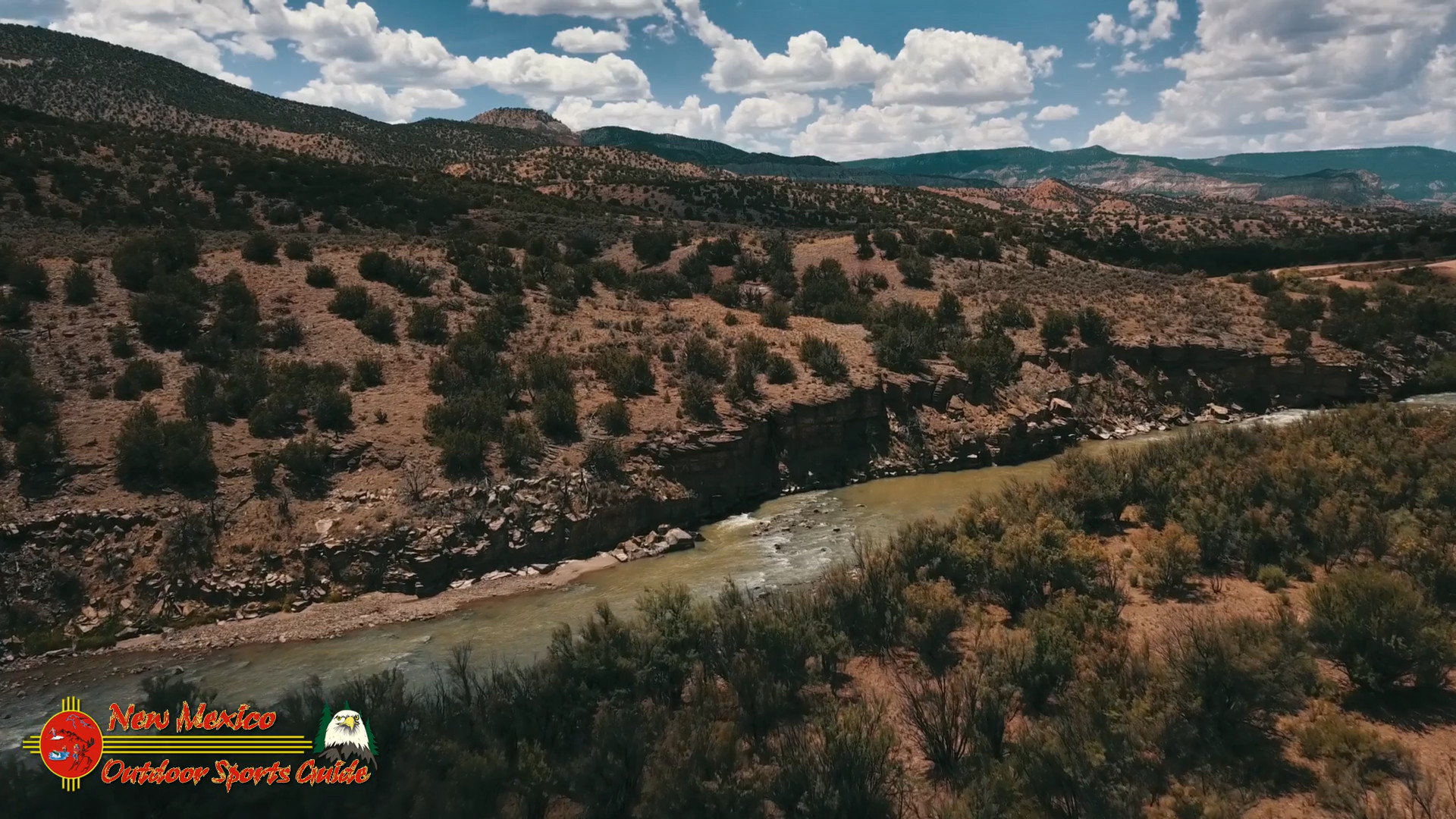
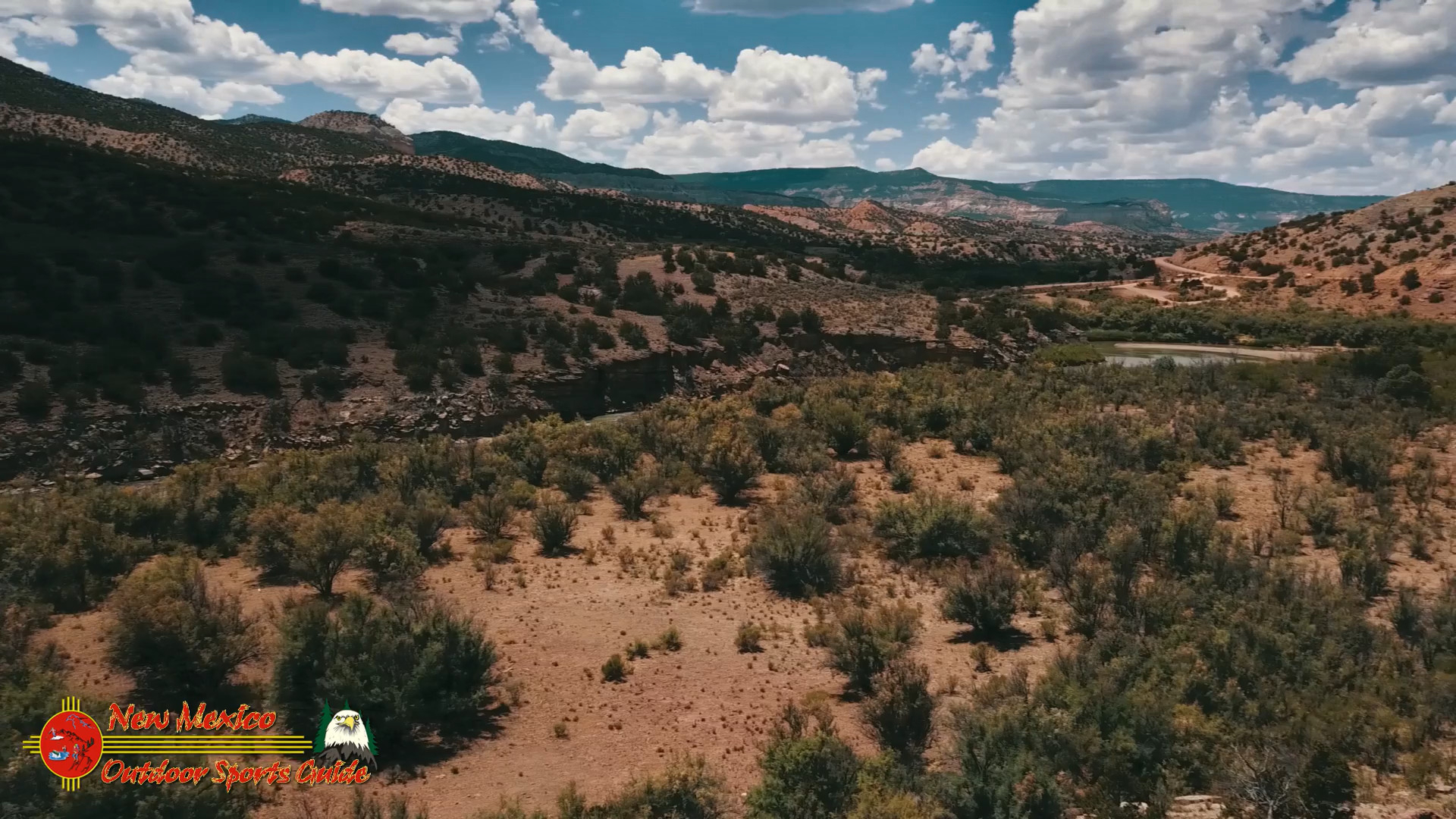
There are places along the Chama River where time doesn’t pass so much as it settles… like dust on an old saddle. You don’t notice it at first. You’re busy watching the current seam along a cutbank, or tracking the glide of a trout in that emerald-green water. Then something shifts. The air quiets. The canyon walls lean in just a little. And before long, you realize you’ve stepped into a place that remembers more than it reveals.
That’s how I found the adobe ruins.
A Trout Scout Turns Into a Time Capsule
I had set out that morning the way I’ve set out on a thousand others—rod in hand, camera over my shoulder, and just enough coffee in me to feel ambitious but not reckless. The plan was simple: scout a stretch of the Chama River above Abiquiu Lake, look for holding water, note access points, and maybe mark a few likely runs for a future day with Paulette or a quiet solo drift.
The Chama River has a way of drawing you in like that. It doesn’t shout. It murmurs. A steady, confident voice slipping through canyon country that has seen more seasons than any man could count.
Upstream from Abiquiu Lake, the river runs cold and clear, especially in those stretches fed from releases out of El Vado. That’s where the browns get thick-backed and wary, and where a man can spend an entire day working a single bend if he’s patient enough.
I wasn’t in a hurry.
And that’s a good thing, because the river had other plans.
The Bluff and the Bones of a Home
It was the bluff that caught my eye first.
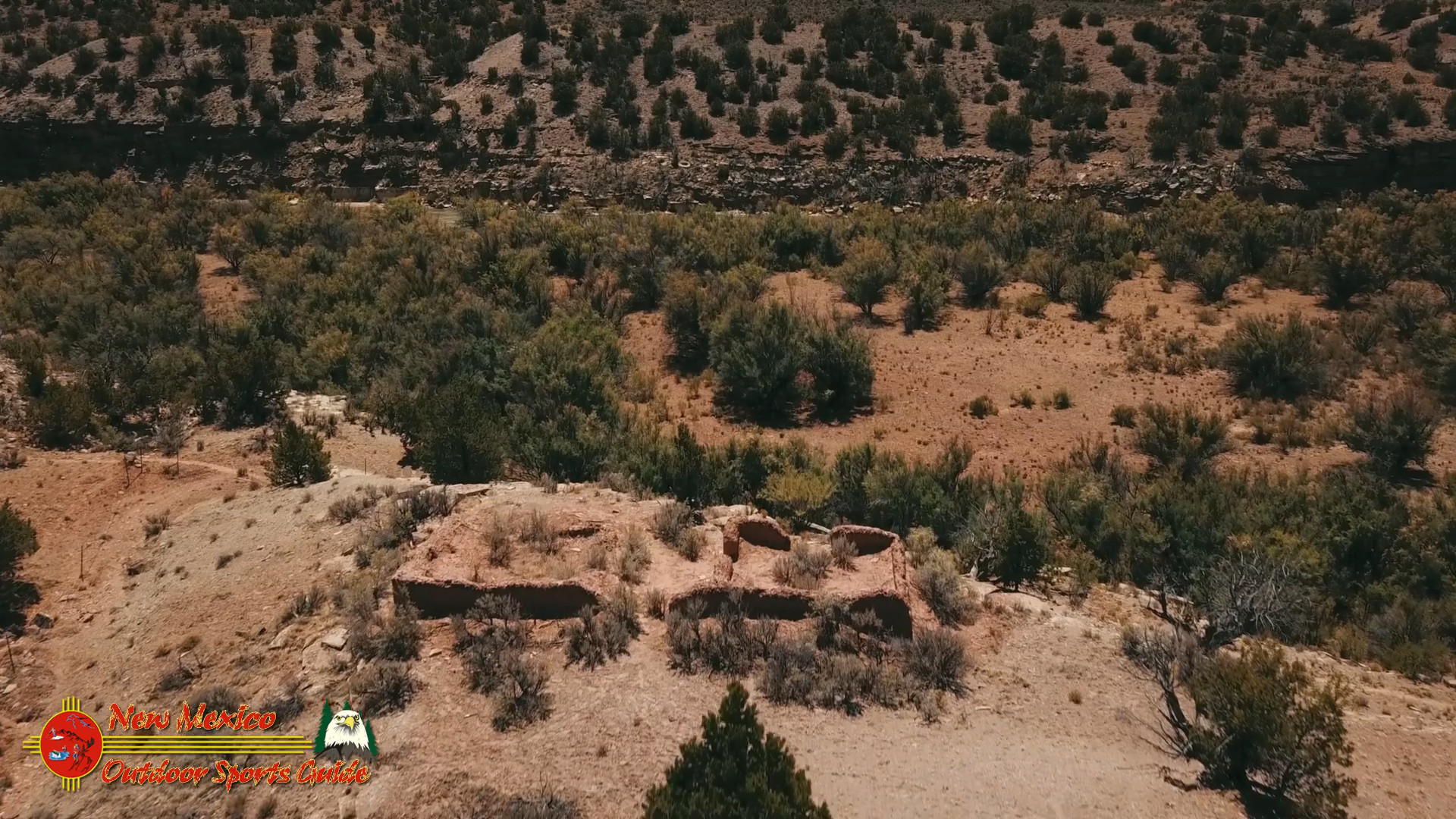
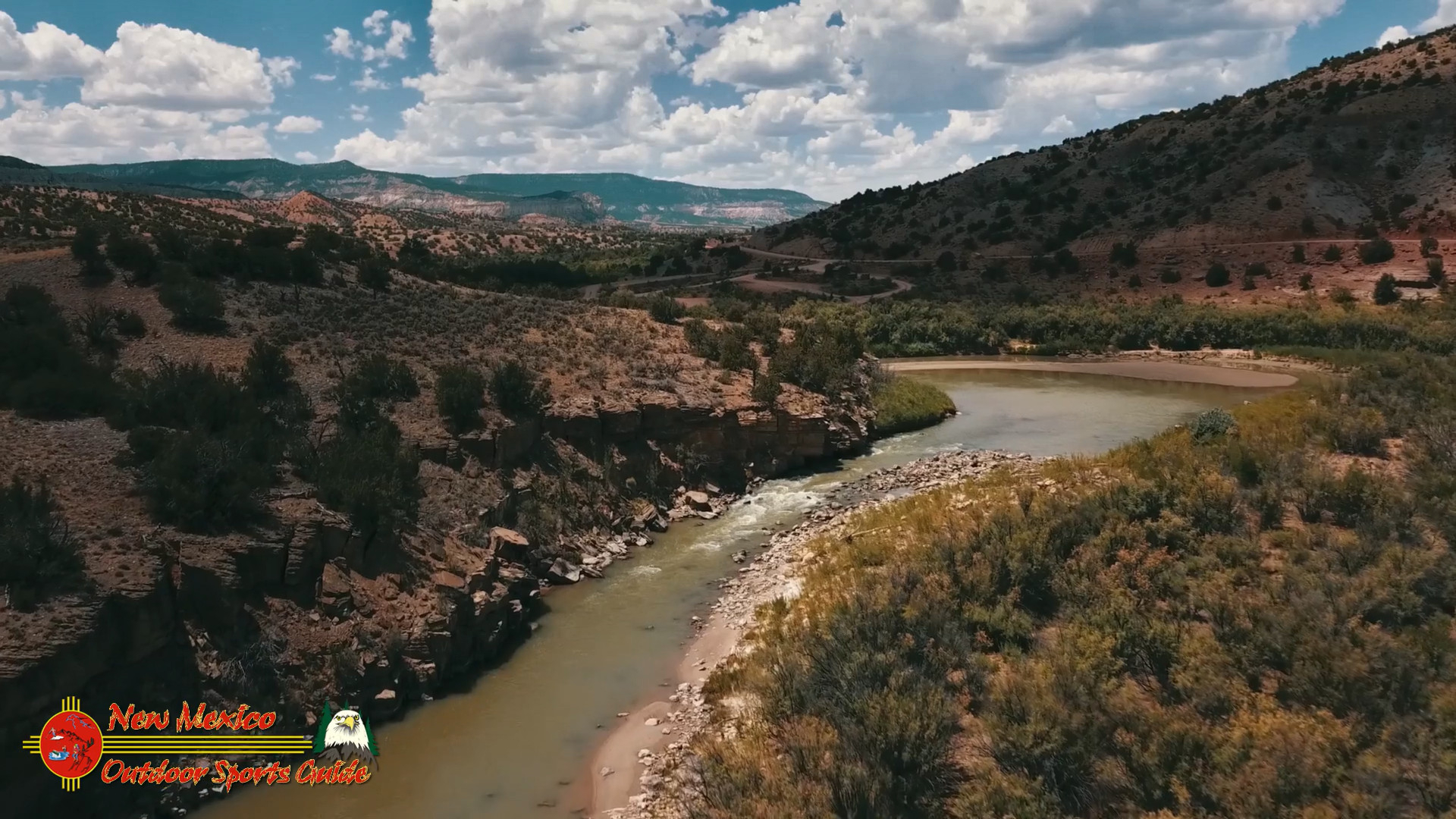
A rise above the river, not dramatic, but purposeful. The kind of place a man might choose if he wanted to keep an eye on water, weather, and anything moving through the canyon. I climbed it slowly, boots finding their way through scrub and sandstone, stopping once or twice to turn and admire the Chama River curling below like a ribbon laid down by a careful hand.
Then I saw them.
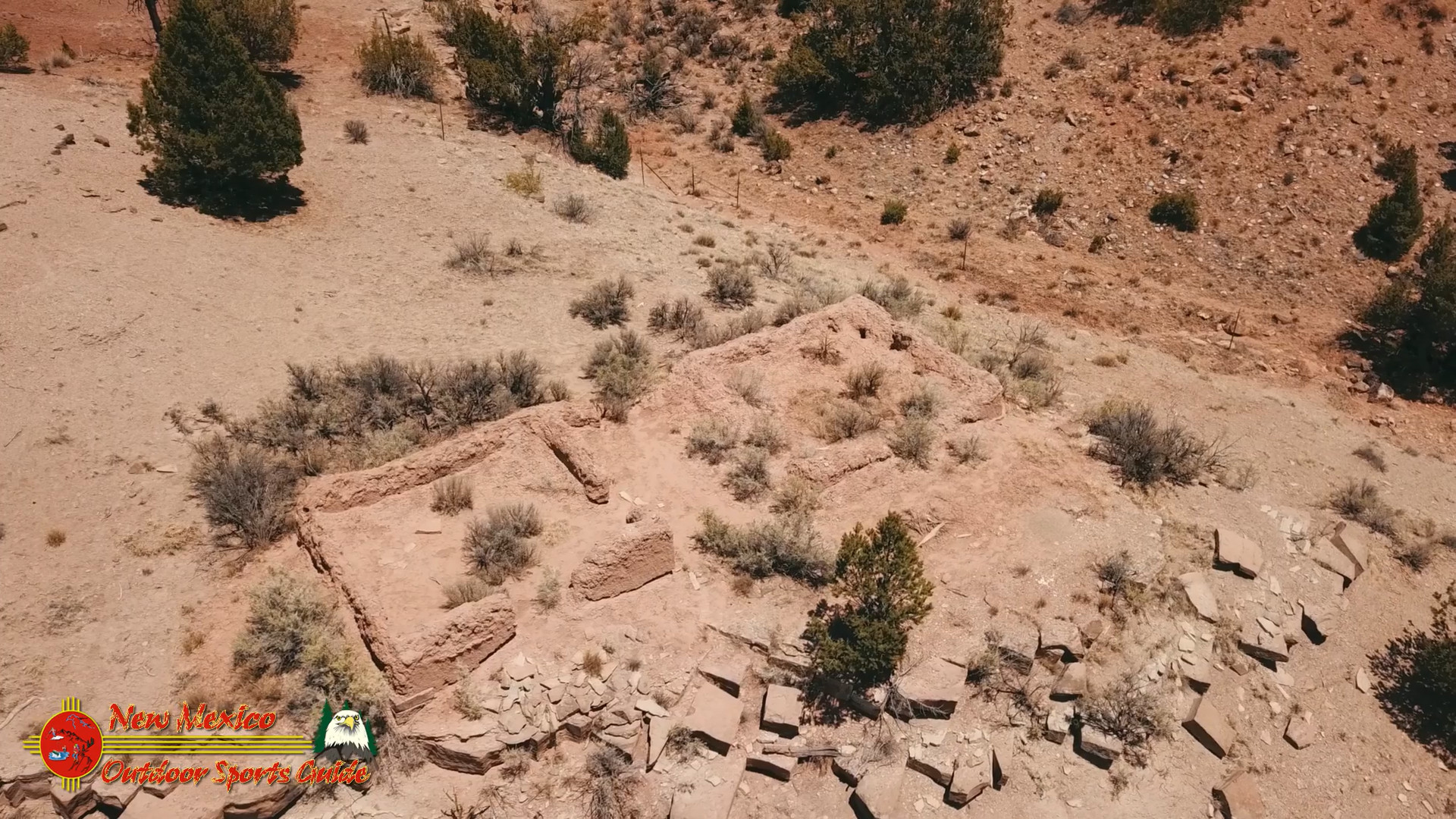
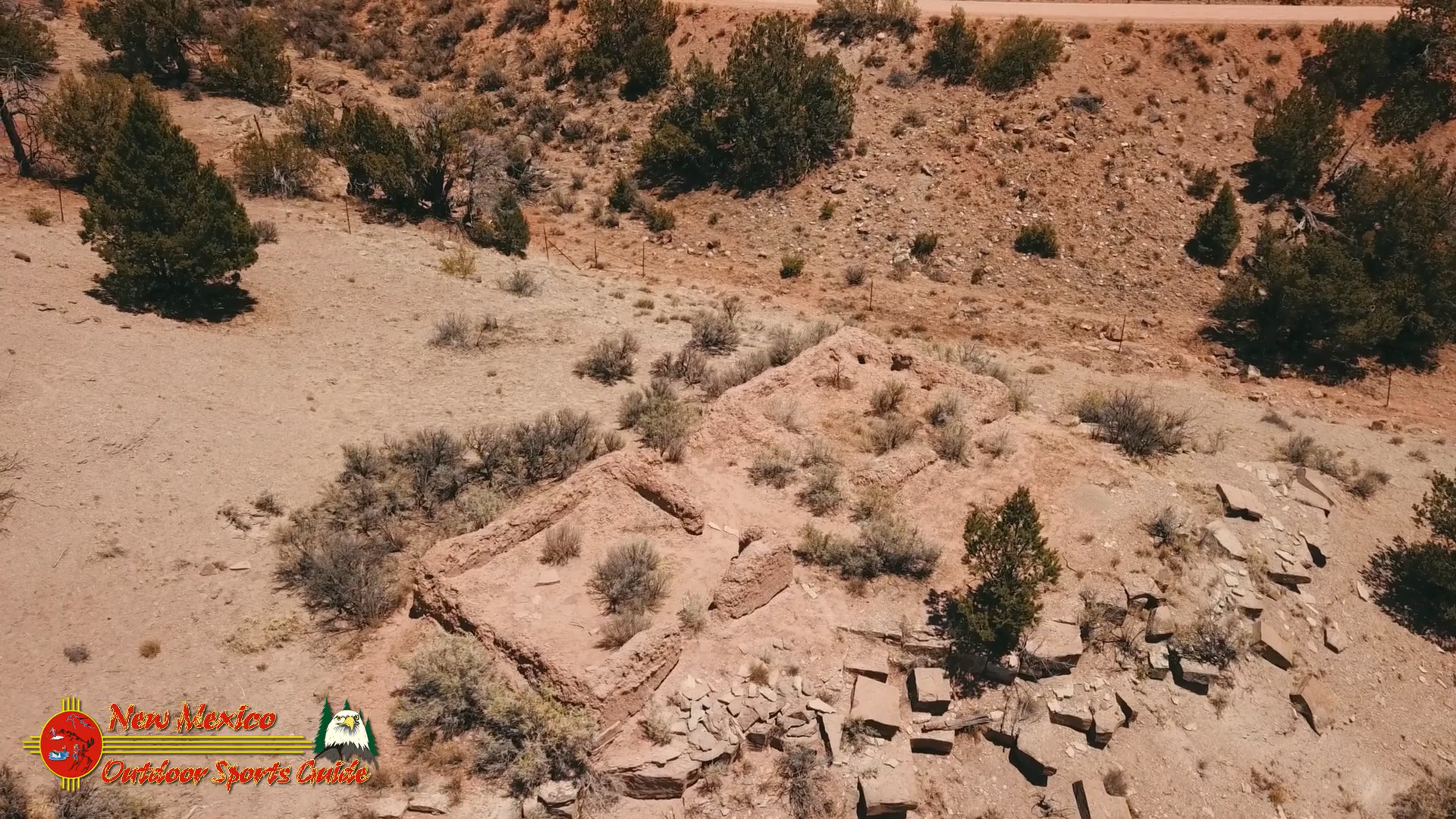
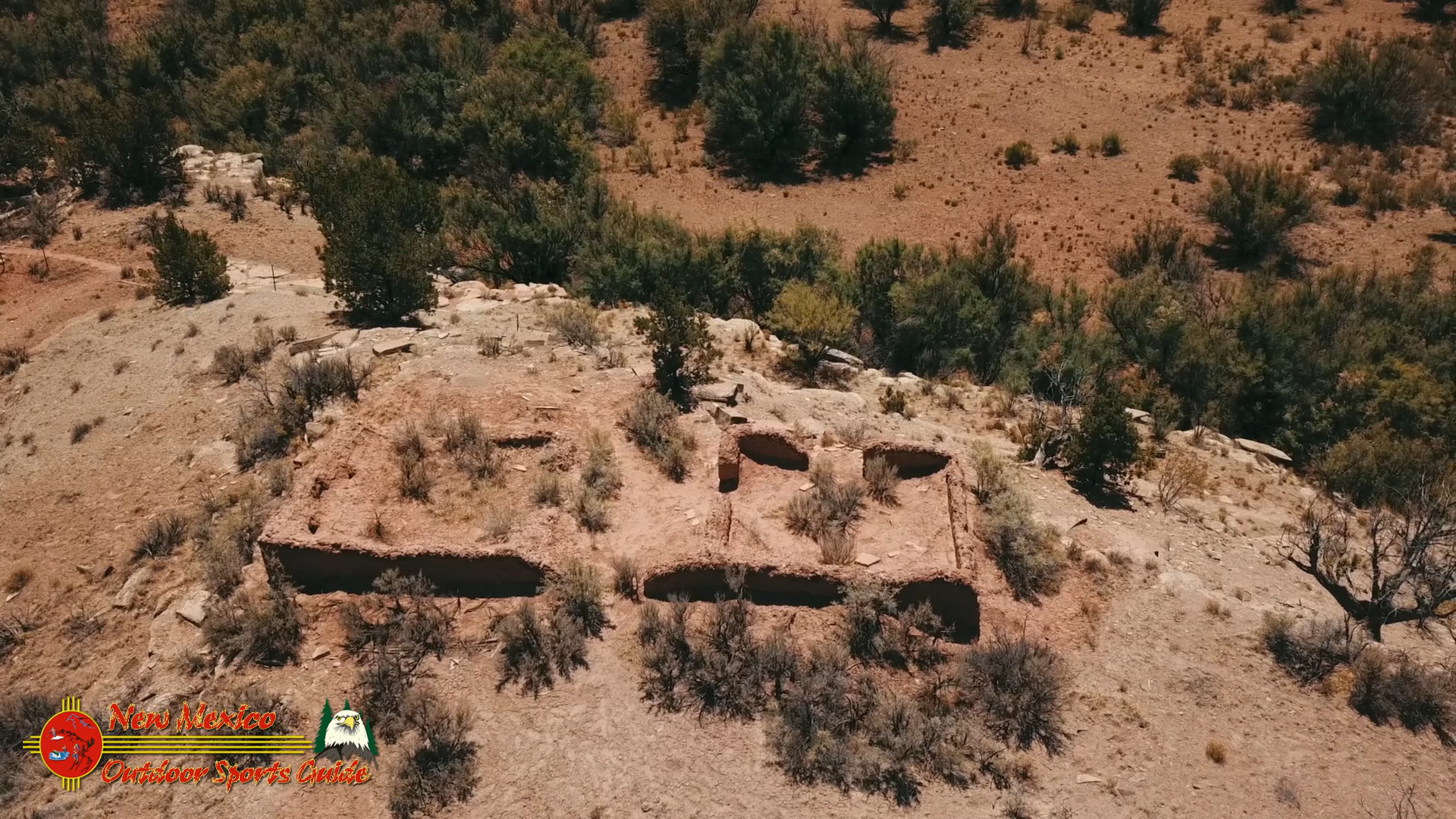
Low, quiet, and almost shy against the earth… the adobe walls.
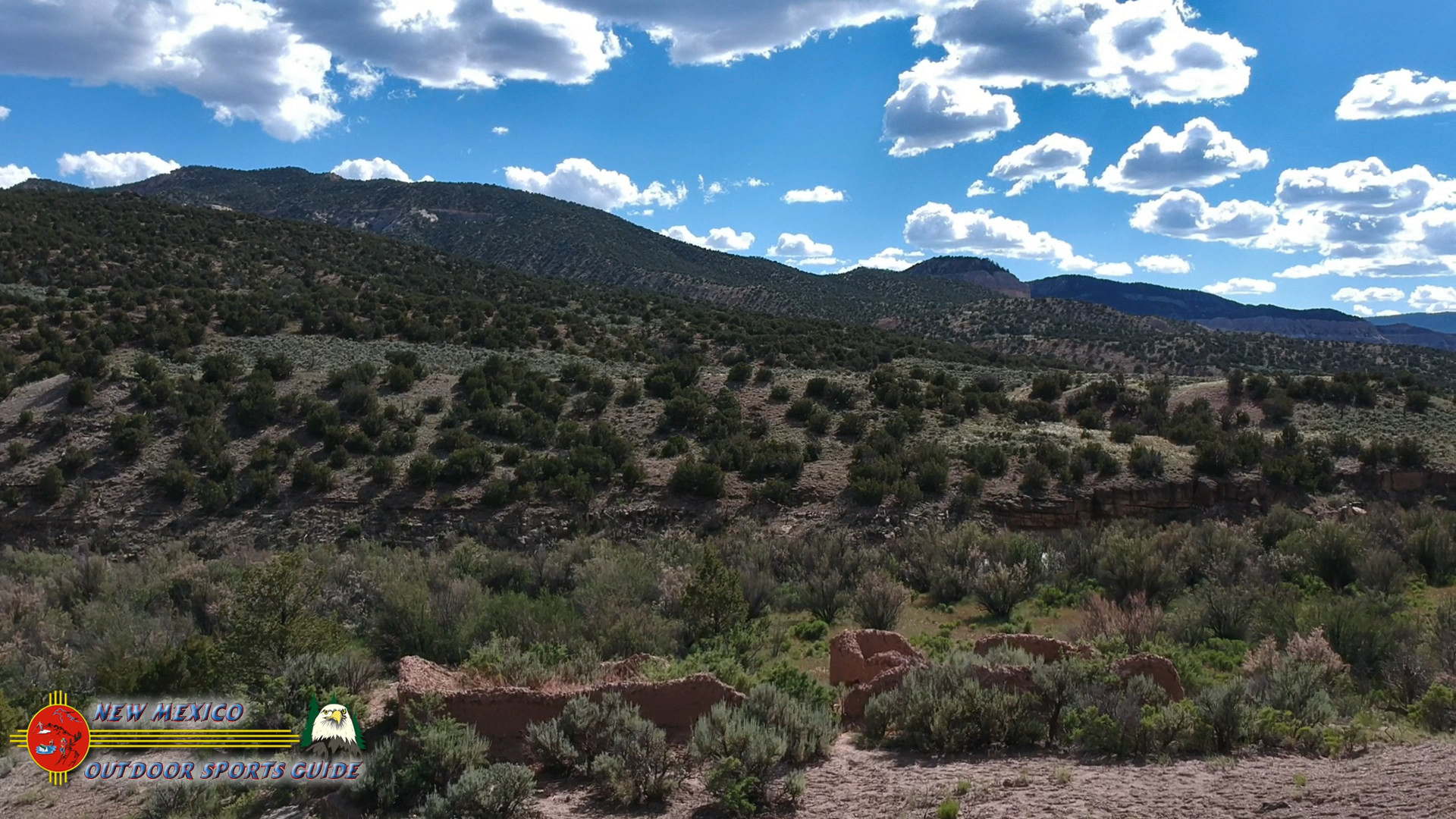
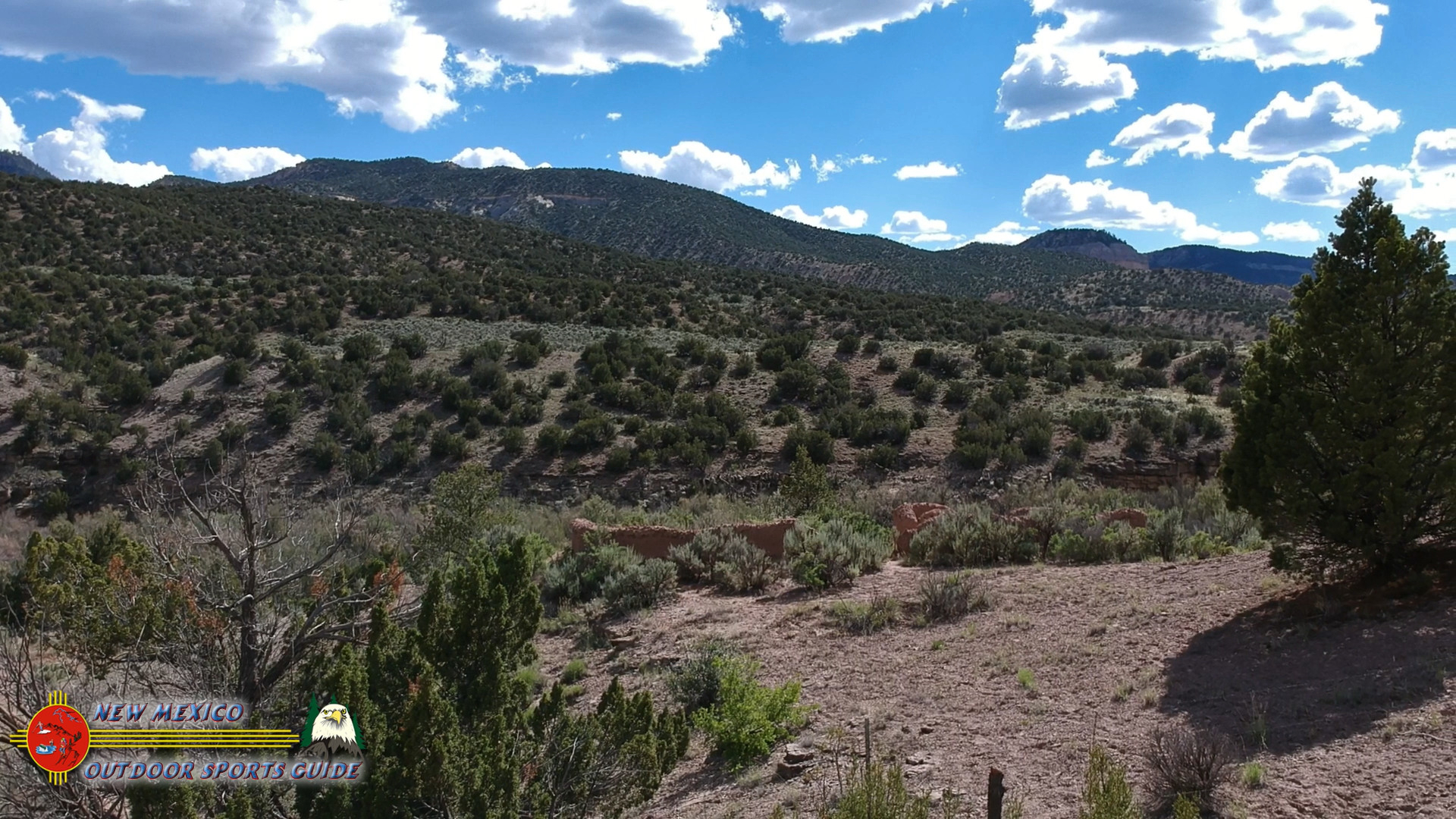
One to two feet tall now, worn down by more than a century of wind, rain, and New Mexico sun. But the outline was still there. Three rooms, maybe. A small structure. Not grand. Not meant to be. Just enough.
Enough for a life.
I stood there for a long time before I even reached for the camera.
Adobe: Built From the Earth Itself
Adobe is about as honest a building material as you’ll ever find.
Earth, water, straw… shaped by hand, dried by sun. No tricks. No shortcuts. Just a man working with what the land gives him. The word itself comes from Spanish—mudbrick—but the idea goes back much farther than that. Civilizations across the world figured it out early: if you understand your land, it will shelter you.
Out here along the Chama River, adobe made sense. Timber is scarce in places. Stone takes time and labor. But earth… well, earth is always right under your boots.
These ruins, weathered as they are, still carry the fingerprints of that thinking. You can see where walls once stood straight and sure. You can trace doorways with your eyes. You can almost feel the cool shade those rooms must have offered on a hot summer afternoon.
Who Lived Here?
That question stayed with me all day.
Was it a homesteader? A trapper turned settler? Maybe a small trading outpost catching travelers moving through the canyon? The mid-1800s saw a steady trickle of folks carving out lives in northern New Mexico, drawn by land, water, and the stubborn belief that they could make something of both.
The Chama River would have been everything to them.
Water for drinking. Fish for the table. A natural corridor through otherwise rugged country. And from that bluff, you could see trouble coming long before it arrived. In those days, that mattered.
I sat there for over an hour, not moving much, just letting the place speak in its own quiet way. The wind brushed through the canyon. A hawk traced lazy circles overhead. Down below, the river kept up its steady conversation with stone.
And in my mind, the place filled in.
A small fire outside one of those rooms. A pot simmering. Maybe a child chasing a stray chicken. A man mending gear or watching the river the same way I was… measuring it, respecting it, depending on it.
It doesn’t take much imagination out here. The land does most of the work for you.
The Chama River: A Living Thread Through Time
The Chama River isn’t just scenery. It’s a lifeline that’s been threading through this country long before any adobe wall was raised.
Flowing out of Colorado and down into northern New Mexico, it gathers itself behind El Vado Dam before slipping south into Chama Canyon. From there, it winds through the Santa Fe National Forest and the designated wilderness that protects some of the finest canyon country in the Southwest.
Along the way, it’s joined by the Rio Cebolla and Rio Gallina, picking up character and volume before easing into Abiquiu Lake.
That stretch below El Vado? That’s something special.
Cold tailwater. Consistent flows. The kind of habitat that grows brown trout thick across the shoulders and smart enough to make you earn every strike. Rainbow trout are there too, along with the occasional kokanee salmon adding a little surprise to the mix.
A 34-mile reach of river, much of it designated Wild and Scenic, where the fishing can be as good as anything in the state if you know how to read the water.
And like those ruins on the bluff, it rewards patience.
Landmarks Along the Way
Spending time along the Chama River, you begin to realize you’re not alone in your appreciation of the place. Folks have been drawn here for generations, each leaving their own kind of footprint.
There’s Monastery of Christ in the Desert, tucked deep in the canyon like a secret kept on purpose. The silence there is something you feel more than hear.
A short drive away stands Echo Amphitheater, where the rock itself seems to hold sound the way a good storyteller holds a crowd.
Then there’s Ghost Ranch, where the land turns painterly in a way that drew Georgia O’Keeffe back again and again. Her home at Georgia O’Keeffe's House still stands as a testament to how deeply this place can get under your skin.
And just down the road, the quiet village of Abiquiu sits as it has for generations, rooted and steady.
All of it tied together by the same river.
A Photographer’s Daydream
I spent the better part of that afternoon working the ruins with both camera and video. The light shifted as the sun moved west, changing the tone of the adobe from pale dust to something warmer, richer… almost alive.
Angles mattered.
From one side, the walls looked like nothing more than broken ground. From another, they rose just enough to tell their story. I shot wide to capture the bluff and the Chama River below, then tight to bring out the texture of the adobe itself—cracked, weathered, but still holding form.
That’s the thing about ruins. They don’t shout their history. They whisper it.
And if you’ve got the patience to listen, they’ll give you more than you expected.
The Weight of Years
At my age, you start to feel time differently.
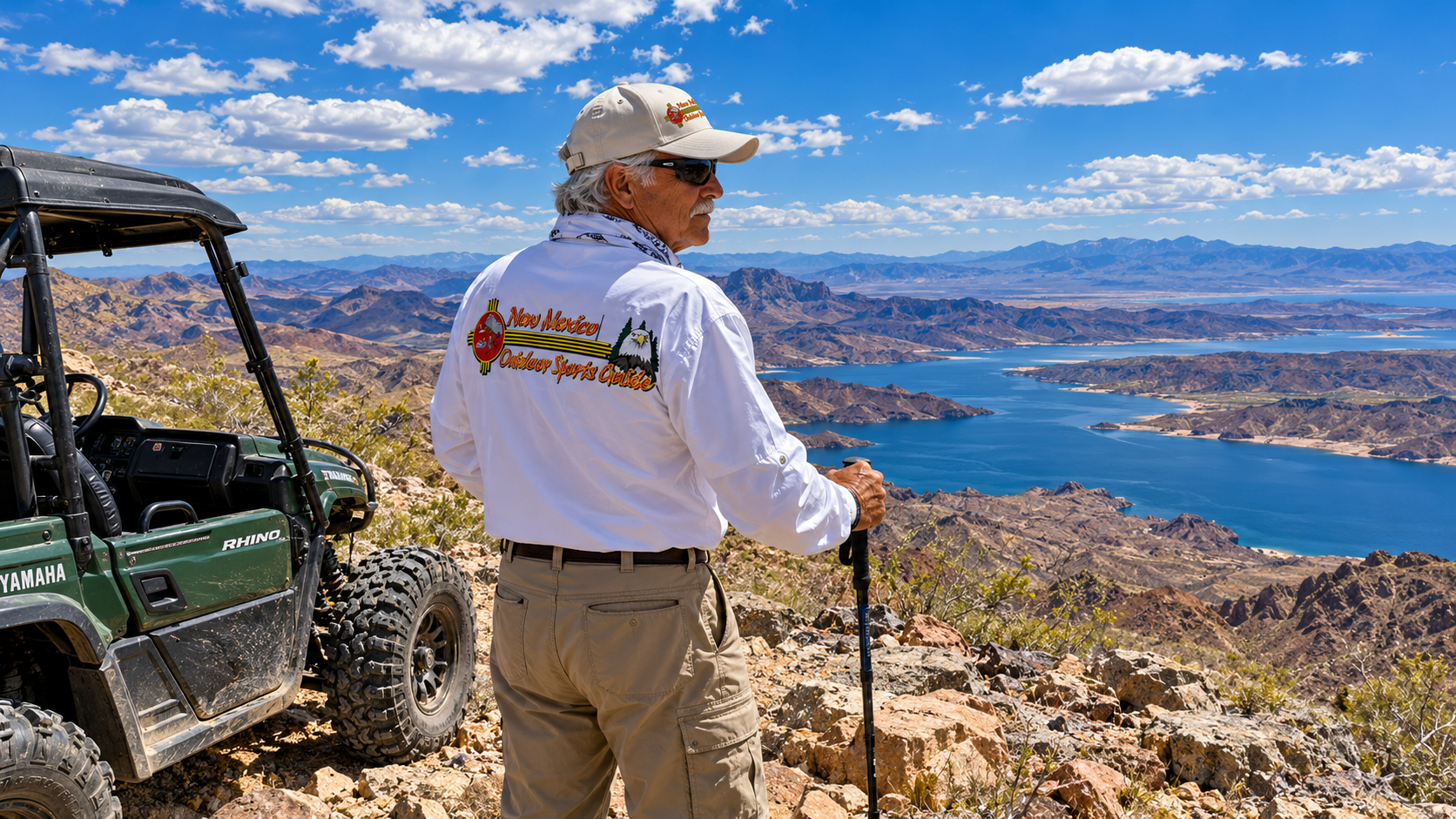
I’ve seen a lot of country. From the Flint Hills of Kansas where I grew up, to the mountains around Angel Fire where Paulette and I built that log home and spent 17 fine years watching the seasons roll across the Moreno Valley. Now in Santa Fe, with winters down at Lake Mohave, I’ve come to appreciate places that hold still long enough for a man to catch his breath.
Those adobe ruins… they’ve been holding still for a long time.
Long enough to outlast the people who built them. Long enough to watch the river carve a little deeper, the canyon walls shift shade by shade, and the world move on without them.
And yet, they’re still there.
Not much to look at if you’re in a hurry. But if you slow down… really slow down… they’ll give you a glimpse into a life that wasn’t so different from our own at its core.
Work. Shelter. Water. Family.
Same as it ever was.
Fishing the Chama River Today
Of course, I didn’t forget why I came.
Before heading back, I worked a stretch of water just below the bluff. A clean run with a gravel bottom, a deeper pocket along the far bank, and just enough current to keep things interesting.
Classic Chama River water.
A well-placed cast, a drift that felt right, and there it was—that subtle hesitation in the line that every angler knows. Not a monster, but a respectable brown, colored up like it belonged exactly where it was.
I eased it in, admired it for a moment, then let it slip back into the current.
Some things are better left right where you found them.
Heading Home With More Than I Brought
The sun was dropping behind the canyon walls when I finally packed up. That golden hour light turned everything soft—the river, the bluff, even those old adobe walls seemed to glow just a little.
I took one last look.
Not to memorize it… you can’t really do that. Places like that don’t fit into memory neat and tidy. They linger. They come back to you later, usually when you’re not expecting it.
Driving back toward Santa Fe, I thought about Paulette and how much she would have enjoyed that quiet hour on the bluff. I’ll take her there one of these days. We’ll sit together, maybe say a few words, maybe not.
That’s the beauty of the Chama River.
It doesn’t ask much of you. Just your time… and your attention.
And if you’re willing to give it both, it might just hand you a piece of the past you didn’t know you were looking for.
Final Thoughts on the Chama River
If you find yourself along the Chama River, take your time.
Fish it, yes. Photograph it. Walk its banks. But every now and then, climb a bluff. Wander a little off the obvious path. Look for the quiet signs—the low walls, the worn ground, the places where someone once stood and decided, this will do.
Because out here, history isn’t locked away in a museum.
It’s still sitting in the sun, waiting for someone to notice.
And on a good day, if you’re lucky, you might just find it.
Pat is a writer, photographer, and videographer documenting the wilderness and wildlife of the American Southwest. His work focuses on the mountains, deserts, rivers, and trails of New Mexico, Arizona, Utah, and Colorado. He and his wife Paulette divide their time between Santa Fe, New Mexico and Lake Mohave, Arizona.
0 Comments