
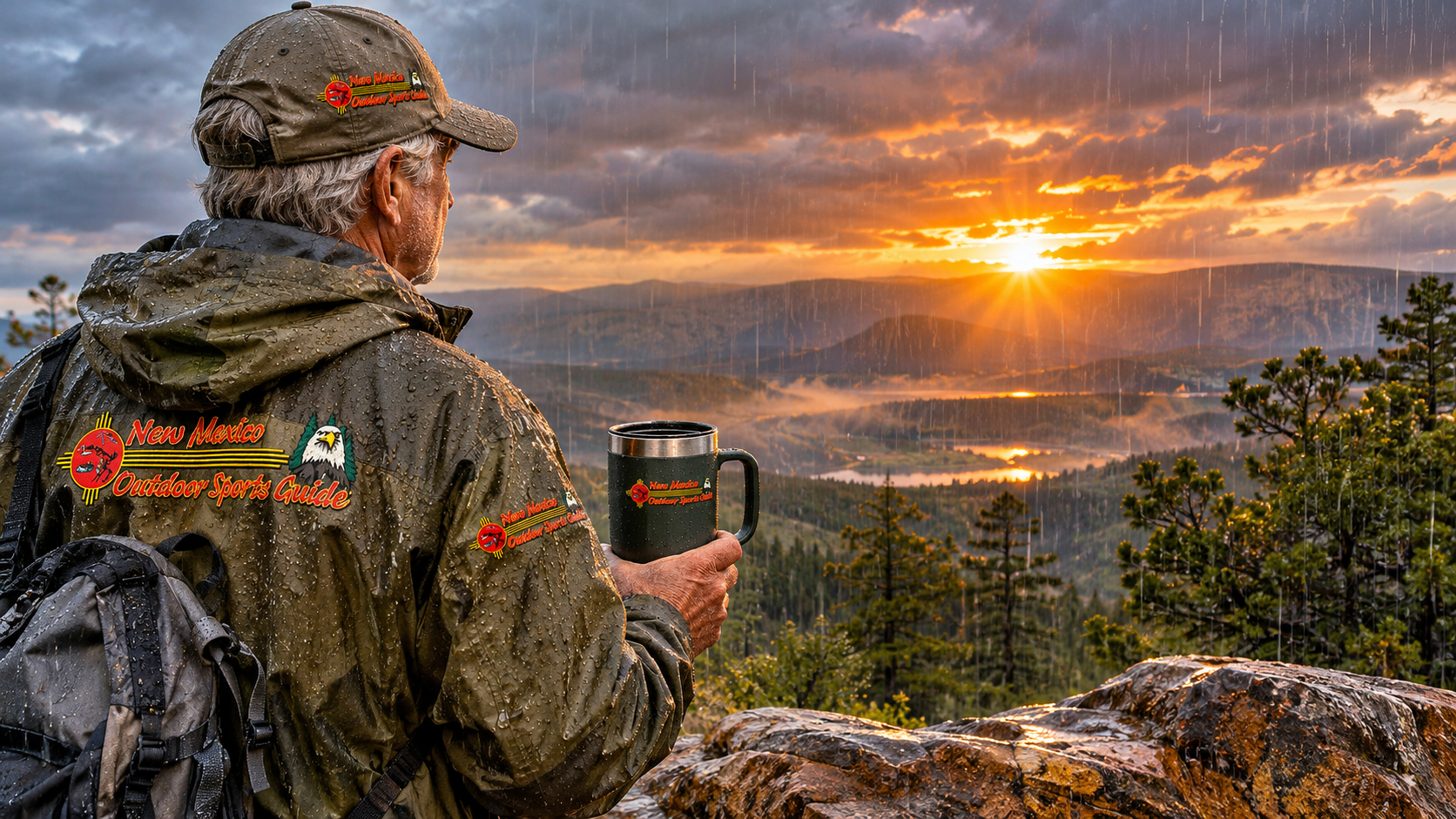
From Mountain Trails to Fishing Lakes, New Mexico's Outdoors Means Business
I have spent a considerable portion of my life outdoors.
Growing up on cattle ranches in the Kansas Flint Hills taught me to appreciate the land long before I understood what an outdoor recreation economy was.
Back then, the outdoors wasn't something we visited on weekends. It was where we lived, worked, learned and occasionally got ourselves into trouble.
Years later, I became a fishing guide on Lake Conroe, competed in bass tournaments across Texas, and eventually settled with Paulette in the mountains of northern New Mexico.
For seventeen wonderful years, our log home at Angel Fire, Casa Oso, overlooked the Moreno Valley and the Sangre de Cristo Mountains.
We hiked mountain trails, explored alpine lakes, photographed wildlife and watched the seasons change from our front porch.
Later, after moving to Santa Fe, we continued exploring New Mexico's remarkable outdoor opportunities.
Along the way, I came to appreciate something that isn't always obvious when you're standing beside a trout stream or watching elk graze in a mountain meadow.
Outdoor recreation isn't simply a pastime. It's a major economic engine.
Every fishing trip, skiing vacation, camping weekend and hiking adventure supports an extensive network of businesses, workers and communities.
The financial impact reaches far beyond the cost of a fishing license or a lift ticket.
It includes restaurants, motels, campgrounds, sporting goods stores, boat dealers, ski shops, outfitters, guides, fuel stations, grocery stores, repair shops and countless other businesses.
And in New Mexico, those dollars are especially important to the smaller communities scattered throughout our mountains, valleys and high desert.
So just how important is the Financial Impact of Outdoor Sports in New Mexico?
The numbers might surprise you.
How Much Money Does Outdoor Recreation Contribute to New Mexico?
According to the U.S. Bureau of Economic Analysis, outdoor recreation contributed approximately $3.6 billion to New Mexico's gross domestic product in 2024.
That represented about 2.5 percent of the state's economy.
The industry supported 31,454 jobs.
Those figures were released in March 2026 and represent the latest annual federal outdoor recreation statistics available as of this article.
For comparison, the previously reported 2023 figures were approximately $3.2 billion and 29,182 jobs.
That's substantial growth for an industry that depends on the natural resources surrounding us.
And those numbers tell only part of the story.
The Bureau of Economic Analysis measures value added, which is the contribution of outdoor recreation activities and related industries to the economy.
That isn't the same thing as total retail sales or every dollar spent by visitors.
For example, when someone purchases a fishing boat, the entire retail price isn't necessarily counted as New Mexico economic value added.
Some components may have been manufactured elsewhere.
Likewise, money spent on gasoline, restaurant meals and motel rooms is distributed among businesses, suppliers, workers and taxes.
Understanding that distinction is important because economic figures are frequently presented in ways that make them sound larger than they really are.
Even without exaggeration, $3.6 billion is an impressive contribution.
And behind that figure are thousands of individual stories.
A fishing guide taking a family onto Elephant Butte Lake.
A ski instructor teaching a youngster at Angel Fire.
A campground operator welcoming travelers to Eagle Nest Lake.
A restaurant owner serving breakfast to hikers headed into the Pecos Wilderness.
And a sporting goods employee helping somebody choose their first fly rod.
Each plays a role in New Mexico's outdoor economy.
Why Are Outdoor Sports Especially Important to Rural New Mexico?
One of the things I've learned from decades of traveling is that small communities often depend on a surprisingly diverse collection of customers.
A town may have ranchers, retirees, construction workers, teachers and government employees.
But when fishing season begins or the ski lifts start operating, visitors bring another source of income.
That additional business can make an enormous difference.
Consider a family traveling from Albuquerque to spend a weekend at Eagle Nest Lake.
They purchase gasoline before leaving.
They stop for lunch along the way.
They rent a cabin or reserve a campsite.
They buy groceries, fishing tackle and perhaps a few forgotten supplies.
They might hire a guide, rent a kayak or purchase souvenirs.
Before returning home, they stop for another meal and fill the fuel tank again.
The money is distributed among several communities and businesses.
And many of those businesses employ local residents.
In rural New Mexico, outdoor recreation can help support jobs that might otherwise be difficult to sustain.
It's not a replacement for ranching, farming or other traditional industries.
It's another way for communities to make a living from the remarkable country surrounding them.
And I believe those different uses of the land can complement one another when managed responsibly.
How Do Food and Lodging Benefit from Outdoor Sports?
Restaurants and lodging businesses are among the most obvious beneficiaries of outdoor recreation.
But their importance goes well beyond providing a bed and a hot meal.
A motel near a fishing lake might depend on anglers during spring and summer.
A mountain lodge may be busiest during ski season.
A campground can attract visitors from early spring through late fall.
And restaurants often benefit from all three.
During my years guiding bass fishermen in Texas, I saw how much business fishing trips generated.
Clients didn't simply pay for a guide.
They stayed in motels.
They purchased meals.
They bought gasoline.
They visited tackle shops.
And many returned with their families.
The same economic pattern applies in New Mexico.
Fishing Communities and Overnight Visitors
Communities around Elephant Butte, Navajo Lake, Conchas Lake, Ute Lake and other reservoirs benefit from anglers who travel significant distances.
Some visitors arrive for a single day.
Others stay for several nights.
A weekend fishing trip might involve motel accommodations, restaurant meals, boat fuel, groceries, ice, bait and tackle.
For a family traveling with children, the spending may also include recreational rentals, snacks, souvenirs and other activities.
That creates business for more than the marina.
It supports the surrounding community.
Ski Resorts and Mountain Lodging
Winter recreation produces a similar effect.
Visitors traveling to Ski Santa Fe, Taos Ski Valley, Angel Fire Resort, Red River, Sipapu and other ski areas often need overnight accommodations.
Some stay in resort hotels.
Others rent cabins, condominiums or vacation homes.
Many purchase restaurant meals, groceries, equipment rentals and transportation services.
The financial impact spreads through the entire mountain community.
And unlike a single-day activity, a skiing vacation may generate spending over several consecutive days.
Why Overnight Visitors Matter
An overnight visitor generally has more opportunities to spend money locally than someone making a short day trip.
That doesn't mean day visitors are unimportant.
They certainly are.
But lodging creates additional demand for housekeeping, maintenance, laundry services, utilities, food suppliers and property management.
A successful outdoor recreation destination can therefore support businesses that have little direct connection to the activity itself.
How Much Do New Mexico State Parks Contribute?
New Mexico State Parks provides one of the clearest examples of outdoor recreation's economic reach.
A study conducted by New Mexico State University's Arrowhead Center examined the economic contributions of the state park system.
For 2024, the study reported approximately:
-
5.29 million state park visits.
-
$320.6 million in visitor spending.
-
$511 million in total economic output associated with state park operations and visitors.
-
$266 million in economic value added.
-
5,120 jobs supported.
-
$162 million in labor income.
-
$40 million in New Mexico state and local taxes.
Those are substantial numbers for a park system that provides access to lakes, rivers, trails, campgrounds and scenic landscapes.
Importantly, the $511 million in economic output and $266 million in value added are different measurements of related economic activity.
They should not be added together.
And because state park recreation is part of New Mexico's broader outdoor economy, its contribution shouldn't simply be added to the statewide $3.6 billion figure either.
The numbers overlap.
But the message is unmistakable.
Our state parks are important economic assets.
They're also important places for families to experience the outdoors without needing expensive private facilities.
That combination of public access and local economic benefit is something worth protecting.
What Is the Financial Impact of Fishing in New Mexico?
Fishing has been part of my life since long before I became a professional guide.
I bought my first bass boat in 1975, and over the years I learned that the fishing industry extends far beyond the fellow standing at the end of a rod.
New Mexico's fishing opportunities range from high-country trout streams to large warmwater reservoirs.
Anglers pursue rainbow trout, brown trout, brook trout, cutthroat trout, largemouth bass, smallmouth bass, walleye, crappie, catfish and other species.
The New Mexico Department of Wildlife manages fisheries, stocking programs, fishing regulations and conservation activities that help sustain those opportunities.
Its weekly fishing reports provide information about conditions and catches at waters across the state.
Those reports are useful for anglers, but they're also an indication of how widespread the fishing economy has become.
The Hidden Costs and Benefits of a Fishing Trip
Consider what happens when someone decides to fish Navajo Lake for a weekend.
They may purchase a fishing license.
They might buy a new spinning reel, line, lures and a tackle box.
They purchase gasoline for their vehicle.
If they own a boat, they may buy marine fuel, lubricants and replacement parts.
They might stay in a campground or motel.
They purchase groceries, ice and restaurant meals.
Perhaps they hire a fishing guide.
Every one of those transactions supports a business.
And some of those businesses support other businesses.
A tackle shop purchases inventory from wholesalers.
A marina employs mechanics.
A fishing guide purchases insurance, equipment and fuel.
A campground hires maintenance workers.
The economic chain extends much farther than the fisherman making the original purchase.
Fishing Licenses and Wildlife Conservation
The New Mexico Department of Wildlife reports that hunting, fishing and related license sales generate approximately $20 million annually.
Those revenues are a major source of funding for the Department's conservation and management work.
The Department states that it receives no funding from New Mexico's General Fund.
Fishing and hunting license revenues help support wildlife management, habitat conservation, fisheries programs and public recreational opportunities.
Federal conservation funding associated with hunting and fishing equipment also plays an important role.
The result is a system in which outdoor recreation participants help finance the resources they enjoy.
That has always struck me as a sensible arrangement.
The people who benefit from healthy fisheries and wildlife populations have a direct interest in maintaining them.
What Is the Economic Impact of Boating?
Boating is one of the more expensive forms of outdoor recreation.
And from an economic standpoint, that makes it particularly significant.
I've owned enough boats over the years to understand that purchasing one is only the beginning.
There's the outboard motor.
The trailer.
The trolling motor.
The batteries.
The electronics.
The insurance.
The maintenance.
And the occasional repair bill that arrives at precisely the wrong moment.
A boat owner also purchases fuel, storage, replacement parts and safety equipment.
Many boats are manufactured outside New Mexico, so not every dollar of a boat purchase stays within the state.
But local dealers, marinas, mechanics and service businesses still benefit.
Major Boating Destinations
Elephant Butte Lake is one of New Mexico's best-known boating destinations.
Navajo Lake attracts anglers and recreational boaters to the northwestern part of the state.
Conchas Lake and Ute Lake serve northeastern New Mexico.
Heron Lake, Abiquiu Lake and other reservoirs provide additional boating opportunities, subject to their current access and operating restrictions.
Each lake supports a different combination of marinas, boat ramps, campgrounds, fuel suppliers and nearby businesses.
For a closer look at northeastern New Mexico's reservoir recreation, my guide to Conchas Lake State Park fishing and camping explores the opportunities available at that beautiful Canadian River reservoir.
Boat Maintenance and Repair
One of the less obvious economic benefits of boating is the demand for skilled mechanical work.
Marine engines require maintenance.
Trailers need tires, bearings and brakes.
Electrical systems need repairs.
Electronics eventually need replacement.
And boats require storage, cleaning and occasional fiberglass work.
Those activities support local service businesses and skilled trades.
They also provide opportunities for young people interested in mechanical and technical careers.
How Important Is Skiing to New Mexico's Economy?
When Paulette and I lived in Angel Fire, winter recreation was part of the rhythm of mountain life.
As the first substantial snows arrived, the Moreno Valley changed character.
The ski slopes became busy.
Vacation homes filled with visitors.
Restaurants welcomed families returning from the mountain.
And the resort community entered one of its most important business seasons.
Skiing and snowboarding are major contributors to New Mexico's outdoor recreation economy.
The Bureau of Economic Analysis identifies snow activities among the state's leading conventional outdoor recreation categories.
The Skiing Revenue Stream
A ski vacation may include lift tickets, season passes, equipment rentals, lessons and lodging.
Visitors also spend money on restaurants, groceries, winter clothing, ski equipment and transportation.
Resorts employ lift operators, instructors, ski patrol personnel, snowmaking technicians, mechanics, groomer operators, maintenance workers, food-service employees and administrative staff.
Nearby businesses benefit from the visitors those resorts attract.
And the financial activity doesn't end when the ski lifts close.
Equipment must be maintained.
Buildings require repairs.
Trails need attention.
And resorts must prepare for the following season.
The Importance of Snowfall
Of course, skiing is particularly vulnerable to weather.
A winter with abundant snowfall can produce strong visitor demand.
A warm, dry winter may create difficulties.
Snowmaking can help where temperatures and water supplies permit, but it cannot eliminate every weather-related challenge.
This is one reason mountain communities benefit from developing year-round recreation.
A resort that attracts skiers in winter, mountain bikers in summer and hikers in fall has more opportunities to sustain employment and local businesses.
What Is the Financial Impact of Camping and RV Travel?
Camping has changed considerably since my younger years.
There was a time when a canvas tent, sleeping bag and camp stove represented just about everything a person needed.
Today, some recreational vehicles contain more conveniences than the first house I lived in.
And those conveniences create a substantial industry.
RVing is identified by the Bureau of Economic Analysis as one of New Mexico's largest outdoor recreation economic activities.
RV Sales and Services
The economic activity includes RV sales, maintenance, storage, parts, accessories and campground services.
Owners purchase tires, batteries, propane, electrical equipment, water-system components and replacement appliances.
They also purchase insurance, fuel and supplies.
Many spend extended periods traveling through New Mexico.
That can be particularly important for communities along major highways and near popular recreation destinations.
Campground Revenue
Campgrounds generate revenue through campsite fees, hookups, reservations and related services.
Private campgrounds may also offer laundry facilities, small stores, propane sales and recreational amenities.
Public campgrounds support nearby businesses through visitor spending.
A family camping at a state park may purchase most of its groceries in the nearest town.
They might also visit a restaurant, buy firewood where permitted, or purchase replacement camping equipment.
All those expenditures contribute to the local economy.
The Value of Affordable Camping
I believe it's important to maintain affordable public camping opportunities.
Not every family can purchase an expensive RV or spend several nights in a resort hotel.
A modest tent and a public campground can still provide a wonderful outdoor experience.
And those visitors contribute economically too.
They buy food, gasoline and equipment.
More importantly, they develop an appreciation for the outdoors that may last a lifetime.
How Does Hiking Support New Mexico's Economy?
Hiking is one of the most accessible outdoor activities.
A person doesn't need a boat, a lift ticket or expensive machinery to enjoy a mountain trail.
A comfortable pair of boots, suitable clothing and a little preparation can open the door to remarkable experiences.
Paulette and I have spent countless enjoyable hours hiking in northern New Mexico.
The Santa Fe Rail Trail, Dale Ball Trails, Cimarron Canyon and the mountains around Angel Fire have provided wonderful opportunities for exercise, photography and wildlife observation.
Our Santa Fe Rail Trail adventures reflect the kind of outdoor recreation that can be enjoyed close to home.
Hiking Equipment Sales
Even an activity as simple as hiking supports sporting goods businesses.
Hikers purchase boots, socks, backpacks, trekking poles, water filters, clothing, navigation equipment and first-aid supplies.
More serious backpackers may purchase tents, sleeping bags, cooking equipment and lightweight camping gear.
Those purchases support retailers, distributors and manufacturers.
Trail Tourism
Popular hiking destinations also attract visitors from outside the local area.
Some stay overnight.
Others purchase meals or hire guides.
Trailheads create demand for parking, maintenance, signage and visitor information.
And scenic trails can become important attractions for communities that might otherwise receive relatively little tourism.
The state's 2024 outdoor recreation data identified climbing, hiking and tent camping as one of the faster-growing activity categories.
That suggests continued opportunities for businesses serving visitors who prefer exploring New Mexico on foot.
What About Hunting and Wildlife Recreation?
Hunting is another important component of New Mexico's outdoor economy.
The state is well known for elk, deer, pronghorn, wild turkey and other game species.
Hunters purchase licenses, permits, firearms, ammunition, clothing, optics, camping equipment and other supplies.
Many also pay for lodging, meals, transportation and guiding services.
The New Mexico Department of Wildlife manages hunting opportunities through its licensing, draw and wildlife management programs.
According to the state's 2024 outdoor recreation statistics, hunting, shooting and trapping activities grew by approximately 5.3 percent from the previous year.
But wildlife recreation isn't limited to hunting.
Wildlife Photography and Birdwatching
Wildlife photography has become one of my favorite activities.
And I can assure you that photography equipment can be every bit as expensive as fishing tackle.
Cameras, telephoto lenses, tripods, binoculars, computers, storage drives and editing software all represent economic activity.
Wildlife photographers also travel.
They purchase gasoline, meals and lodging.
They visit parks and wildlife areas.
And some hire guides to help locate particular species.
Birdwatchers contribute in similar ways.
New Mexico's wetlands, forests, grasslands and desert habitats attract people interested in observing everything from migrating waterfowl to bald eagles.
My article about Cimarron Canyon State Park trout fishing and outdoor recreation explores one of the beautiful places where fishing, hiking and wildlife watching come together.
How Do Sporting Goods Sales Support the Economy?
Sporting goods stores are among the most visible businesses associated with outdoor recreation.
But the category covers a remarkably broad range of products.
Fishing tackle.
Hunting equipment.
Camping supplies.
Ski equipment.
Hiking boots.
Bicycles.
Kayaks.
Paddleboards.
Climbing equipment.
Outdoor clothing.
Navigation electronics.
And countless accessories.
Some products are manufactured in New Mexico.
Others are imported from elsewhere.
In either case, local retailers provide jobs and services.
The Importance of Independent Retailers
I've always had a particular appreciation for independent tackle shops.
During my guiding years, a good tackle shop was more than a place to purchase lures.
It was a source of information.
The fellow behind the counter often knew which lakes were producing fish, what the water looked like and which lures were selling.
That local knowledge had value.
The same is true of independent ski shops, bicycle stores and outdoor outfitters.
Their employees often know the surrounding country because they spend their own time exploring it.
And they help visitors make better decisions.
Online Sales Versus Local Purchases
Online shopping has changed the sporting goods industry.
Consumers can compare prices and order equipment from almost anywhere.
But when purchases are made through local businesses, more of the retail and service activity remains in the community.
Local shops also provide repairs, fitting services, rentals and advice that cannot always be duplicated online.
Supporting those businesses helps preserve the outdoor recreation infrastructure that visitors depend upon.
What Other Revenue Streams Come from Outdoor Recreation?
The financial impact of outdoor sports reaches into some unexpected places.
Fuel and Transportation
Visitors purchase gasoline and diesel fuel for cars, trucks, RVs and boats.
They may also pay for rental vehicles, shuttle services, airport transportation and parking.
Guides and Outfitters
Fishing guides, hunting outfitters, rafting companies, horseback riding operations and outdoor instructors provide specialized services.
These businesses often operate in rural communities where additional employment opportunities are valuable.
Bicycle and Off-Road Recreation
Mountain biking, road cycling and permitted off-highway vehicle recreation support equipment sales, rentals, repairs, tours and lodging.
Trail networks can help attract visitors during seasons when other recreation businesses are less active.
River Rafting and Kayaking
The Rio Grande and Rio Chama provide opportunities for rafting, kayaking and guided river trips, depending on seasonal flows and access.
Commercial operators purchase boats, paddles, safety equipment, trailers and insurance.
They employ guides and support staff.
And their customers frequently purchase meals and lodging nearby.
Construction and Infrastructure
Outdoor recreation also creates demand for construction and maintenance.
Campgrounds need roads and utilities.
Marinas require docks and facilities.
Trails need bridges, drainage improvements and signage.
Ski resorts require lifts, buildings and equipment maintenance.
These activities create opportunities for contractors, engineers, equipment suppliers and skilled trades.
Taxes and Public Revenue
Outdoor recreation generates public revenue through various channels.
Depending on the transaction and jurisdiction, these may include gross receipts taxes, lodging taxes, property taxes, registration fees, permits and other charges.
That revenue can help support public services and infrastructure.
However, tax receipts should not be confused with the industry's total economic contribution.
They're one component of the larger picture.
Why Are Conservation and Wildlife Management Economically Important?
Outdoor recreation depends on the quality of the natural resources people come to enjoy.
A fishing lake with declining water quality is less attractive to anglers.
A mountain landscape damaged by uncontrolled erosion becomes less appealing to hikers.
A wildlife habitat that no longer supports healthy populations offers fewer opportunities for hunters, photographers and birdwatchers.
Conservation therefore has an economic dimension.
The New Mexico Department of Wildlife manages fisheries, wildlife populations and habitat programs that help maintain recreational opportunities.
The Department's fishing reports, stocking information and regulations provide anglers with practical information while supporting responsible resource management.
For a look at how fishing and wildlife recreation fit together in northern New Mexico, my guide to Eagle Nest Lake State Park fishing, hiking and camping explores one of the state's distinctive mountain recreation areas.
Conservation Is an Investment
I don't believe we should look at conservation simply as an expense.
Healthy fisheries attract anglers.
Healthy forests attract hikers.
Healthy wildlife populations attract photographers and hunters.
And well-maintained public lands attract families who want to enjoy the outdoors.
Those visitors support businesses.
But conservation also has value that can't be measured solely in dollars.
Clean water, functioning ecosystems and opportunities for future generations matter in their own right.
The economic benefits strengthen the argument for protecting them.
What Challenges Face New Mexico's Outdoor Recreation Economy?
As encouraging as the economic numbers are, outdoor recreation faces real challenges.
Drought and Water Availability
New Mexico's reservoirs and rivers depend on precipitation, snowpack and water-management decisions.
Extended drought can reduce reservoir levels, limit boat access and affect fish habitat.
That can influence visitation and local business revenue.
Wildfire and Forest Closures
Wildfires can threaten communities, damage recreation infrastructure and temporarily close public lands.
Even areas not directly affected by fire may experience reduced visitation because of smoke or access restrictions.
Rising Costs
Fuel, equipment, lodging and transportation have become more expensive.
That can make outdoor recreation less affordable for families.
Businesses also face higher operating costs.
Seasonal Employment
Many recreation businesses experience strong seasonal demand.
A ski resort may need large numbers of employees in winter.
A marina may be busiest during summer.
Finding ways to extend the recreation season can help stabilize employment.
Balancing Recreation and Resource Protection
Popular destinations can experience overcrowding, litter, habitat damage and conflicts among different users.
Responsible management is essential.
The goal should be to provide opportunities for people to enjoy the outdoors without destroying the qualities that attracted them in the first place.
How Can New Mexico Strengthen Its Outdoor Recreation Economy?
I believe the best opportunities begin with taking care of what we already have.
Maintain public access.
Protect water quality.
Improve trails and campgrounds.
Support responsible wildlife management.
And encourage local businesses that provide useful services to visitors.
The New Mexico Outdoor Recreation Division has invested in trails, infrastructure and programs intended to expand access.
According to the state's March 2026 announcement, the division had invested $33.9 million in trails and outdoor infrastructure projects and awarded $8.7 million through the Outdoor Equity Fund since its creation.
Those programs can help improve recreation opportunities while supporting communities.
But investments should be evaluated carefully.
A new trail or facility should serve a real need.
Maintenance funding matters just as much as ribbon-cutting ceremonies.
And local communities should have a meaningful voice in decisions affecting their land and businesses.
After spending much of my working life operating businesses, I've learned that sustainable success usually comes from doing the fundamentals well.
Provide a useful service.
Treat customers fairly.
Maintain your facilities.
And take care of the resources that make your business possible.
The outdoor recreation industry is no different.
Why the Financial Impact of Outdoor Sports in New Mexico Matters to Me
When I think about the financial impact of outdoor recreation, I don't begin with billions of dollars.
I begin with people.
I remember the families I guided on Lake Conroe.
I remember youngsters catching their first bass.
I remember the small-town restaurants where fishermen gathered before daylight.
And I remember the people who made their living selling tackle, repairing boats and operating marinas.
Later, when Paulette and I moved to Angel Fire, I saw another side of the same industry.
Ski instructors.
Lodge employees.
Restaurant owners.
Construction workers.
Outdoor guides.
And families who depended on the visitors coming to enjoy the mountains.
Now, after years of exploring New Mexico's rivers, lakes, forests and high-country trails, I appreciate how closely outdoor recreation is connected to the state's economy.
A fisherman launching at Conchas Lake.
A skier riding the lift at Angel Fire.
A family camping beside Eagle Nest Lake.
A hiker following the Santa Fe Rail Trail.
A photographer waiting quietly for an elk to step into a mountain meadow.
Each is participating in something larger than a single day's recreation.
They're helping sustain businesses, jobs and communities.
And they're enjoying natural resources that generations before us worked to preserve.
I hope future generations will have the same opportunities.
Because the true value of New Mexico's outdoors isn't measured only in dollars.
It's measured in memories.
In healthy wildlife populations.
In clean rivers and beautiful mountains.
In families spending time together.
And in the satisfaction of knowing that a life spent enjoying the outdoors can also help support the people and communities who make those adventures possible.
The Financial Impact of Outdoor Sports in New Mexico is measured in billions of dollars, but its greatest value is found in the lives it enriches.
And from where I stand, that's an investment well worth making.
0 Comments