
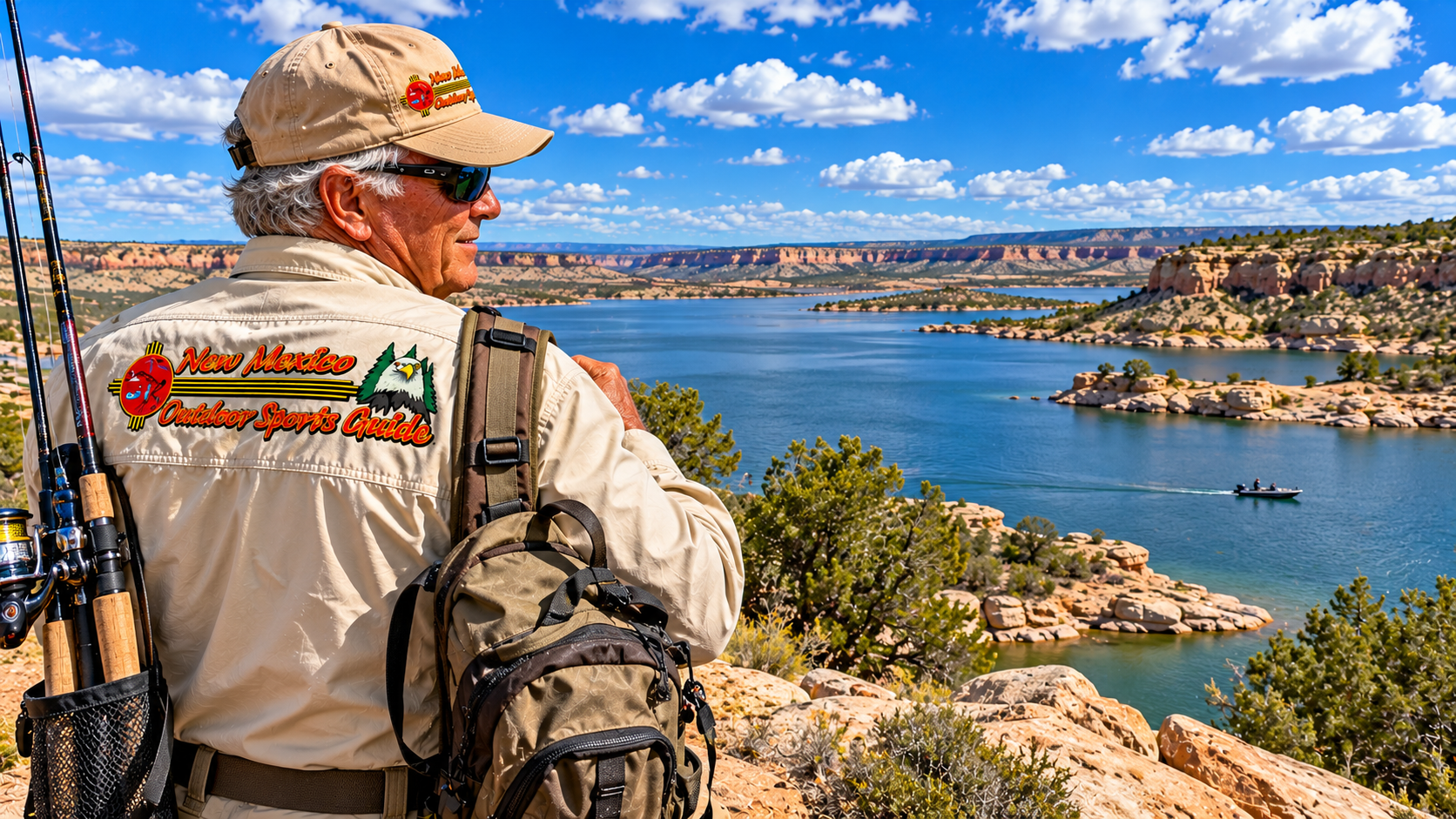
Ute Lake New Mexico: Fishing, Camping, Wildlife and Outdoor Adventures on the Canadian River
There is something about a lake at sunrise that can make an old fisherman forget how many birthdays he has celebrated.
The water lies quiet beneath a broad New Mexico sky. A few scattered clouds catch the first sunlight, a gentle breeze brushes the shoreline, and somewhere out beyond a rocky point, a school of baitfish is probably having a rather nervous breakfast.
And I find myself wondering what might be swimming beneath them.
A largemouth bass?
A hard-fighting smallmouth?
Perhaps a walleye with those remarkable golden eyes?
Or a school of crappie suspended around submerged brush, waiting for somebody with a little patience and a small jig?
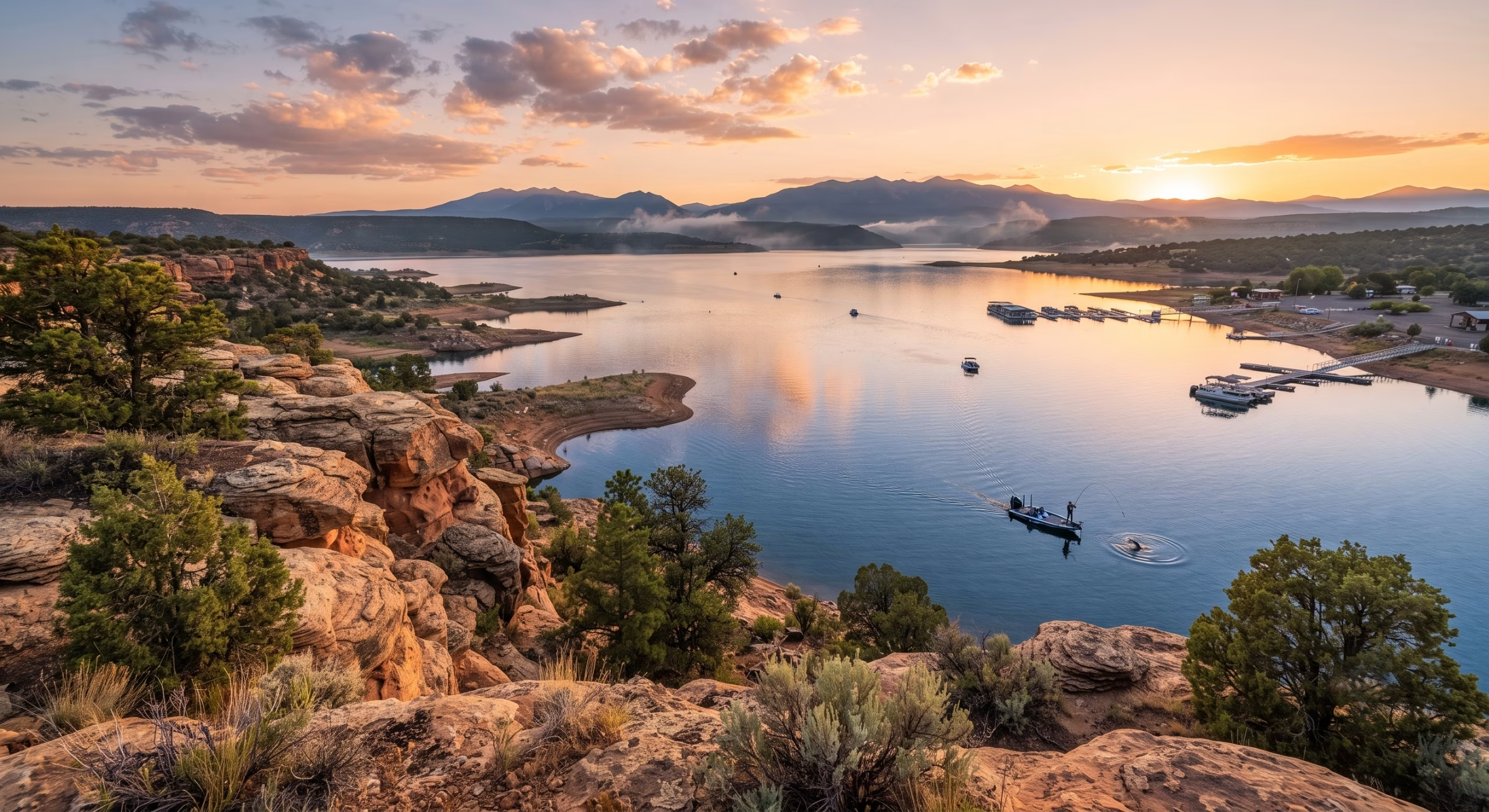
That's the attraction of Ute Lake New Mexico, a beautiful warmwater reservoir near Logan and Tucumcari in the northeastern corner of our state.
After spending much of my life guiding bass fishermen on Lake Conroe and Sam Rayburn, competing in tournaments across Texas, and exploring the waters of the Southwest, I've learned that a good fishing lake is much more than a collection of fish.
It's a landscape.
A history.
A collection of underwater mysteries.
And an invitation to spend another day trying to understand the natural world.
Ute Lake offers all of that.
During our seventeen years at Casa Oso, our log home above Angel Fire, Paulette and I became accustomed to the cool mountain air of the Moreno Valley, the sight of elk moving through the timber, and the magnificent Sangre de Cristo Mountains rising around us.
Travel east toward Tucumcari, however, and New Mexico changes its personality.
The forests thin.
The grasslands stretch toward the horizon.
The sandstone hills become more prominent.
And the lakes hold an entirely different collection of fish.
Instead of mountain trout, we're talking about largemouth bass, smallmouth bass, walleye, crappie, white bass, catfish and sunfish.
That's one of the things I've always loved about New Mexico.
You can spend a morning surrounded by alpine scenery and, after a drive across the state, find yourself exploring warmwater fishing country beneath an enormous blue sky.
Where Is Ute Lake New Mexico?
Ute Lake is located in Quay County near the Village of Logan, approximately 25 miles northeast of Tucumcari.
The reservoir lies along the Canadian River and forms the centerpiece of Ute Lake State Park.
At nearly thirteen miles long, it's one of New Mexico's longer reservoirs, with rocky shorelines, protected coves, submerged points, open-water areas and stretches of river-influenced habitat.
The surrounding countryside has a character all its own.
Sandstone bluffs rise above portions of the shoreline.
Juniper and other drought-tolerant vegetation cover the hills.
Open grasslands extend into the distance.
And the sky seems to occupy considerably more territory than it does in the mountains.
The lake sits at approximately 3,762 feet above sea level.
That elevation gives it a different climate from the high mountain lakes around Angel Fire and Chama.
Summers are warmer.
Spring winds can be strong.
And winter temperatures, while sometimes mild during the afternoon, can become quite cold after sunset.
For visitors, the lake offers fishing, boating, camping, swimming, wildlife viewing and opportunities simply to enjoy the outdoors.
For fishermen, the attraction begins beneath the surface.
How Was Ute Lake Created?
Ute Lake was formed by the construction of Ute Dam on the Canadian River during the early 1960s.
The reservoir was developed for water storage and has since become an important recreational destination.
Like other reservoirs in the Southwest, Ute Lake changes with rainfall, drought, river inflows and water-management operations.
Those changes affect fishing.
When water levels rise, previously dry shorelines may become flooded habitat.
When levels fall, submerged rocks and points can become exposed.
Creek channels may change their relationship to nearby flats.
And boat-launching conditions can vary from one season to another.
I learned long ago that understanding a reservoir begins with understanding its water level.
A fisherman can have a boat full of expensive equipment and still spend the entire day fishing places where the fish aren't.
The best lure in the world doesn't accomplish much if you're presenting it in the wrong neighborhood.
Which Major Rivers Feed Ute Lake?
The Canadian River is the principal river associated with Ute Lake.
Its headwaters lie in the mountains of northeastern New Mexico, and the river travels eastward through the plains before continuing into Texas and Oklahoma.
Ute Creek is another important tributary of the reservoir.
Smaller drainages contribute runoff during wet weather.
These inflows influence water clarity, sediment, nutrients, water temperature and fish movement.
For anglers, river and creek channels are particularly interesting.
The original Canadian River channel provides a natural structural feature beneath the reservoir.
Where that channel approaches a rocky point, submerged hump or secondary creek channel, I'd spend extra time studying the bottom with my fish finder.
Those intersections can concentrate baitfish.
And where there are baitfish, predators are seldom far away.
But I'd never assume that every channel bend holds fish.
The important thing is finding the combination of structure, suitable water conditions and forage that fish are using on that particular day.
What Fish Species Live in Ute Lake?
Ute Lake supports a diverse warmwater fishery.
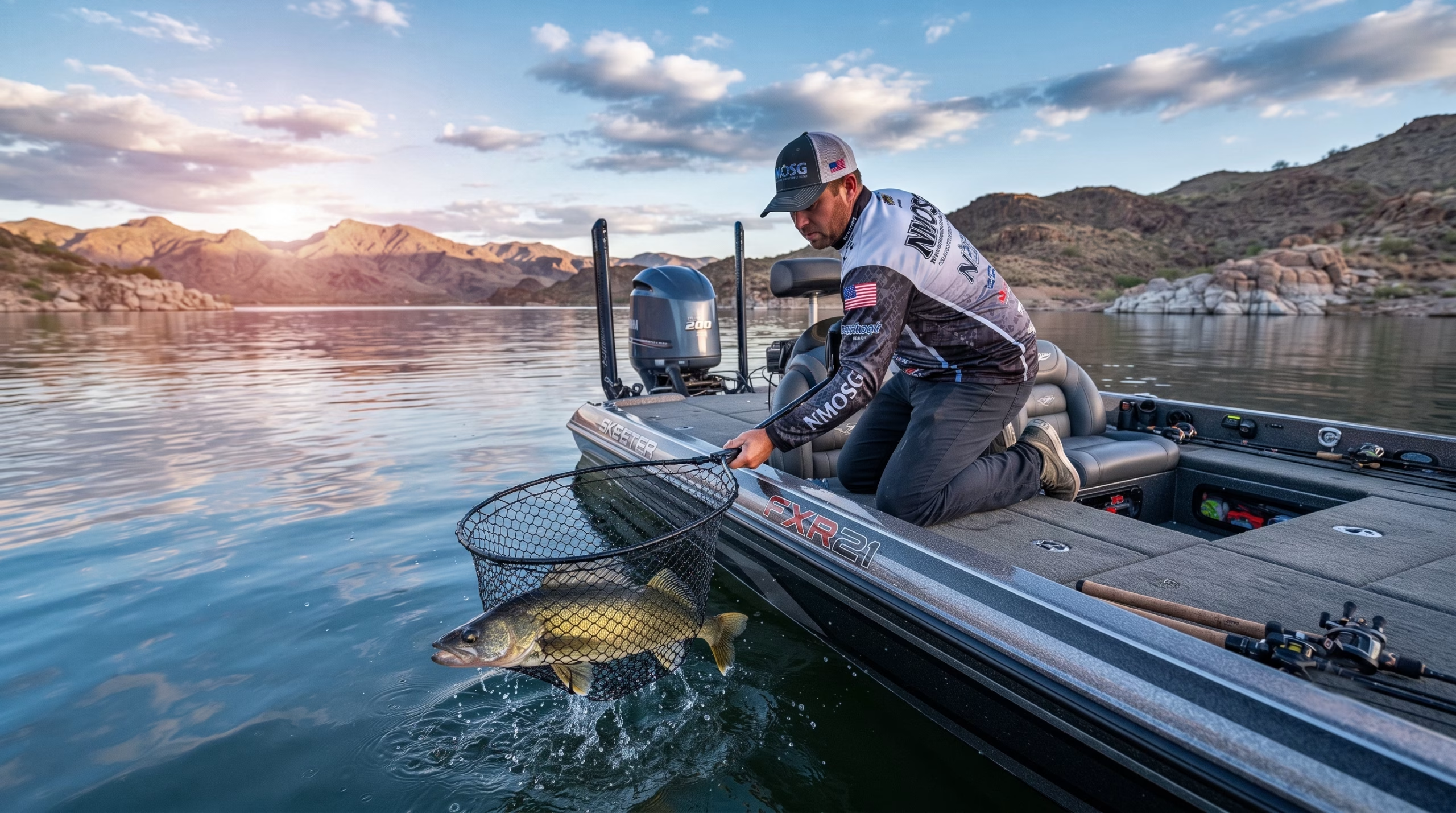
The principal sportfish include largemouth bass, smallmouth bass, walleye, white crappie, white bass, channel catfish and sunfish such as bluegill.
The New Mexico Department of Wildlife identifies Ute as one of the state's important black bass reservoirs and specifically includes the lake among its white crappie and walleye waters.
The Department also recognizes Ute as a notable smallmouth bass fishery.
Each species provides a different fishing experience.
Largemouth bass favor ambush opportunities around cover and structural breaks.
Smallmouth bass frequently relate to rocky underwater habitat.
Crappie often gather around submerged structure or suspend in schools.
Walleye take advantage of low-light conditions and changes in depth.
White bass roam in search of baitfish.
Catfish offer another enjoyable opportunity for anglers who prefer fishing bait near the bottom.
That's a remarkable variety for one lake.
And it means that a fishing trip doesn't have to be devoted entirely to one species.
If the bass refuse to cooperate, the crappie might be more accommodating.
And if the crappie have disappeared, perhaps it's time to look for walleye along a deeper point.
A little flexibility can turn an otherwise disappointing day into a memorable one.
Where Would I Look for Largemouth Bass at Ute Lake?
Largemouth bass are creatures of opportunity.
They favor places where they can remain relatively comfortable while waiting for something edible to come within striking distance.
At Ute Lake, I'd investigate protected coves, secondary points, submerged brush when available, and shoreline transitions.
During spring, I'd look for protected areas with suitable spawning habitat and nearby deeper water.
A small cove with gravel bottom and scattered rock could be worth investigating.
I'd begin near the entrance and work gradually toward the back.
If the water were clear, I'd stay farther from the bank and make longer casts.
If it were stained, I'd use lures that create more vibration.
For my spinning tackle, I'd carry a seven-foot medium-power rod with a 2500-size reel, ten-pound braided line and an eight-pound fluorocarbon leader.
A Texas-rigged finesse worm, small paddletail swimbait or weightless soft-plastic stickbait would be among my first choices.
Green pumpkin, watermelon, pearl and natural shad patterns would dominate my tackle selection.
For heavier cover, I'd switch to baitcasting equipment with stronger line.
Years of guiding on Lake Conroe taught me that largemouth bass can make surprisingly effective use of even a modest amount of cover.
A submerged bush, a rocky corner or a shaded bank can provide all the concealment a hungry bass needs.
Where Would I Look for Smallmouth Bass at Ute Lake?
Now we're talking about a fish that has always commanded my respect.
Smallmouth bass are stubborn, powerful and remarkably athletic.
They have a way of turning an ordinary fishing rod into a very interesting piece of equipment.
The New Mexico Department of Wildlife identifies Ute Lake as one of the state's better smallmouth reservoirs, with good numbers of larger fish.
That's a strong recommendation.
I'd begin around rocky main-lake points, gravel banks, underwater ledges and submerged humps.
Smallmouth often relate to firm bottom and broken rock.
A point extending toward the original river channel would receive particular attention.
I'd make casts from several directions, rather than fishing only the tip.
Sometimes bass concentrate on the deeper side.
Sometimes they're holding on the shallow crown.
And sometimes they're suspended near baitfish just beyond the structure.
My preferred spinning outfit would be a seven-foot medium-light, fast-action rod paired with a 2500-size reel.
I'd use ten-pound braid and a six- to eight-pound fluorocarbon leader.
A three-inch tube jig in green pumpkin or smoke would be one of my first lures.
I'd also carry Ned rigs, small swimbaits and drop-shot rigs.
A tube dragged slowly across broken rock can imitate a crayfish.
A drop-shot rig allows a small soft-plastic bait to remain above the bottom.
And a paddletail swimbait can be excellent when smallmouth are feeding on baitfish.
I particularly enjoy the challenge of smallmouth fishing because the fish often reward precise presentations.
Sometimes moving a lure just a little differently makes all the difference.
How Do You Catch Crappie at Ute Lake?
Crappie fishing offers a different sort of pleasure.
After spending years fishing bass tournaments, I developed a healthy appreciation for the quieter side of fishing.
There are mornings when I'd rather sit near submerged structure with a light spinning rod than spend the day running from one point to another.
Ute Lake's white crappie population makes that a worthwhile possibility.
Crappie frequently use submerged brush, standing timber where available, dock structure, channel edges and other locations that provide shelter and access to food.
They may also suspend in open water.
That's why electronics can be so useful.
I'd look for schools near structure, then determine their depth before choosing a presentation.
A crappie holding twelve feet below the surface may completely ignore a jig passing three feet overhead.
For tackle, I'd choose a six-and-a-half- to seven-foot light-action spinning rod with a 1000- or 2000-size reel.
Four- to six-pound monofilament would work well, although light braid with a fluorocarbon leader is another option.
My lure selection would include one-sixteenth- and one-thirty-second-ounce jigs tipped with small curly-tail grubs, tube bodies or miniature paddletails.
White, chartreuse, pearl, black-chartreuse and natural shad colors would cover most situations.
In spring, I'd search shallower protected areas as crappie move toward spawning habitat.
During summer, I'd investigate deeper structure and suspended schools.
In fall, I'd follow baitfish movements.
And during winter, I'd slow my presentation considerably.
Crappie can be surprisingly particular about retrieve speed.
Sometimes a nearly motionless jig is more effective than one constantly being bounced.
Where Would I Look for Walleye at Ute Lake?
Walleye are fascinating fish.
Their large, light-sensitive eyes make them particularly effective predators in low-light conditions.
Dawn, dusk, cloudy weather and deeper water can all provide favorable feeding opportunities.
Ute Lake is one of New Mexico's historically important walleye waters.
The Department of Wildlife identifies spring, particularly April and May following spawning, as a promising period.
I'd begin around rocky points, gravel transitions, channel edges and submerged humps.
The key would be locating baitfish and suitable depth.
For spinning tackle, I'd use a six-foot-ten-inch to seven-foot medium-light, fast-action rod with a 2500-size reel.
Ten-pound braided line and an eight-pound fluorocarbon leader would provide sensitivity without sacrificing much strength.
My first lure would probably be a quarter-ounce lead-head jig with a yellow curly-tail grub, a presentation recommended by the Department.
I'd also carry small swimbaits, blade baits and suspending jerkbaits.
During cooler conditions, I'd retrieve slowly and allow plenty of pauses.
During summer, I'd use electronics to search deeper points and channel edges.
Walleye can strike with remarkable subtlety.
Sometimes the only indication is a slight increase in weight.
That's when a sensitive spinning rod becomes particularly valuable.
And I'd remember that walleye don't necessarily stay on the bottom.
If baitfish are suspended, the walleye may be suspended with them.
What Spinning Rods and Reels Should I Bring to Ute Lake?
One of the conveniences of modern spinning equipment is its versatility.
A fisherman can cover much of Ute Lake's fishing with three carefully chosen outfits.
My light outfit would be a seven-foot light-power rod with a 1000- or 2000-size reel.
I'd use it for crappie, sunfish and small finesse presentations.
My medium-light outfit would be a seven-foot fast-action rod with a 2500-size reel.
That would be my primary smallmouth and walleye combination.
My medium-power outfit would be a seven-foot rod with a 3000-size reel.
I'd use it for heavier swimbaits, larger jigs and general-purpose bass fishing.
For line, I'd generally favor light braid with a fluorocarbon leader, adjusting the strength according to the species and structure.
The most important feature of any spinning reel is a dependable drag.
A good smallmouth can make a powerful run.
And a large walleye can put enough pressure on light tackle to expose weaknesses in the reel.
I'd rather discover those weaknesses in the tackle shop than on the lake.
Which Spinning Baits and Lures Work Best?
For largemouth bass, I'd carry finesse worms, soft-plastic stickbaits, small swimbaits and lightweight Texas rigs.
For smallmouth, I'd concentrate on tube jigs, Ned rigs, drop-shot worms and baitfish imitations.
For crappie, small jigs and miniature soft plastics would be my primary choices.
For walleye, I'd carry lead-head jigs, curly-tail grubs, paddletail swimbaits, blade baits and suspending jerkbaits.
Nightcrawlers can also be useful for several warmwater species.
Minnows may be effective where their use is permitted.
However, New Mexico regulates baitfish by drainage and restricts the transportation of live aquatic organisms.
I'd always check the current regulations before purchasing or transporting live bait.
Artificial lures remain my personal preference for most fishing.
There's something satisfying about selecting a presentation, finding the right water and convincing a fish that a piece of plastic or metal is worth eating.
What Water Temperatures Are Best for Fishing Ute Lake?
Water temperature influences fish activity, spawning behavior and seasonal movements.
The New Mexico Department of Wildlife's bass guidance identifies approximately 50–60°F as important prespawn water temperatures, with bass becoming more active as the water warms.
Its guidance also describes bass spawning activity around 63°F.
For practical fishing, I'd use the following general ranges.
|
Species |
Productive temperature range |
Fishing approach |
|---|---|---|
|
Largemouth bass |
Approximately 55–75°F |
Cover, secondary points, soft plastics and moving lures |
|
Smallmouth bass |
Approximately 50–70°F |
Rocky points, tubes, Ned rigs and swimbaits |
|
Crappie |
Approximately 50–70°F |
Spring shallows, brush, channel edges and suspended schools |
|
Walleye |
Approximately 45–65°F |
Jigs, rocky structure, channel edges and low-light feeding |
These are approximate fishing guidelines, not fixed limits or current lake measurements.
Fish can be caught outside these ranges.
And the surface temperature may differ substantially from conditions farther down the water column.
I'd use temperature as one clue among several.
The fish finder, weather, baitfish and actual strikes would determine what I did next.
What Is the Best Time of Day to Fish Ute Lake?
For largemouth bass during summer, I'd begin before sunrise.
The first hour of daylight can provide excellent topwater opportunities around shoreline cover and points.
Smallmouth may also feed actively during early morning, particularly where baitfish are concentrated.
For walleye, dawn and dusk are especially attractive because of their low-light feeding adaptations.
Crappie can be caught throughout the day when their location and depth are known.
Cloud cover and moderate wind may extend productive feeding periods for several species.
But I wouldn't abandon midday fishing.
Bass, walleye and crappie can all feed in deeper water during bright sunshine.
Sometimes the best fishing happens after you've located a school of fish that other anglers have overlooked.
Personally, I enjoy early mornings for reasons that go beyond catching fish.
The light is beautiful.
The air is cooler.
And the lake often seems to belong entirely to whoever was willing to get out of bed before sunrise.
How Does Fishing Change Through the Seasons?
Spring: March Through May
Spring is one of my favorite fishing seasons.
Largemouth and smallmouth bass move toward suitable spawning areas as water temperatures rise.
Crappie also become more accessible in shallower water.
Walleye may offer productive postspawn fishing opportunities.
I'd concentrate on protected coves, gravel banks, rocky points and nearby channel structure.
Spinnerbaits, jigs, soft plastics and small swimbaits would be among my first choices.
Spring winds can be strong, so I'd plan carefully.
Summer: June Through August
Summer brings warmer water, bright sunshine and greater recreational boating activity.
I'd fish shallow early, then investigate deeper structure as the day warms.
For largemouth, shaded cover and channel transitions would be important.
For smallmouth, I'd search rocky points and ledges.
For crappie, I'd locate submerged structure and suspended schools.
For walleye, I'd rely heavily on electronics and deeper presentations.
Afternoon thunderstorms are another concern.
I'd leave the water well before lightning became a threat.
Fall: September Through November
Fall can be a beautiful time at Ute Lake.
Cooling water may encourage fish to follow baitfish into more accessible feeding areas.
I'd search rocky points, creek mouths and structural transitions.
Small swimbaits, crankbaits and jigs could all be productive.
The weather can be comfortable, and the softer light is wonderful for photography.
Winter: December Through February
Winter fishing requires patience.
I'd concentrate on deeper structure, slow presentations and stable weather.
Smallmouth may respond to tubes, blade baits and finesse rigs.
Walleye may be found along deeper points and channel edges.
Crappie may gather in schools near deeper structure.
I'd also take cold-water safety seriously.
A sunny afternoon doesn't make an accidental fall into winter water harmless.
What Are the Fishing Records at Ute Lake?
Ute Lake has an especially distinguished place in New Mexico fishing history.
In 2006, Cale Sanders caught a 7-pound, 3-ounce smallmouth bass measuring 24 inches at Ute Lake.
That fish remains the official New Mexico state-record smallmouth bass.
For somebody who appreciates the fighting ability of a good smallmouth, that's a remarkable accomplishment.
The Department's other statewide records include:
|
Species |
New Mexico state record |
Record water |
|---|---|---|
|
Smallmouth bass |
7 lb 3 oz |
Ute Lake, 2006 |
|
Largemouth bass |
15 lb 13 oz |
Bill Evans Lake, 1995 |
|
Crappie |
4 lb 9 oz |
Black River, 1983 |
|
Walleye |
16 lb 9 oz |
Clayton Lake, 1989 |
These are statewide records, not four separate Ute Lake records.
I couldn't verify authoritative Ute Lake-specific records for largemouth bass, crappie or walleye.
And I wouldn't want to invent them.
For current records and applications, visit the New Mexico Record Fish program.
What Fishing Regulations Apply at Ute Lake?
New Mexico's warmwater regulations establish a combined daily bag limit of five black bass.
Largemouth bass must be at least 14 inches long to keep.
Ute Lake also has a special 14-inch minimum length for smallmouth bass.
That's important because the general statewide smallmouth minimum is different.
Crappie and walleye have separate daily limits, so anglers should consult the current 2026–2027 fishing regulations before keeping fish.
The Department's current rules list a daily limit of 20 crappie and five walleye.
I'd also check the current fish-consumption advisories before keeping fish for the table, particularly larger predatory species.
New Mexico residents aged 70 and older can obtain a free fishing license, but still need to have it issued.
For the latest information, visit the New Mexico Department of Wildlife fishing website.
Where Can the Public Access Ute Lake?
Ute Lake State Park provides numerous public recreation areas.
Developed camping and recreation locations include Yucca, Zia, Roadrunner, Logan Park, Eagle Point, Cottonwood, Oldham and Beaver Cove.
Primitive camping areas include Rogers, the South Side and Mine Canyon.
Not every area offers the same facilities, shoreline access or launching opportunities.
I'd consult the official park map and telephone the park before choosing a destination.
For bank fishing, I'd look for designated public shorelines with rocky points or deeper water nearby.
For boat fishing, I'd explore the main-lake points, original river channel and submerged structure.
The State Parks Division's October 6, 2026 lake-conditions update indicated that Ute Lake's boat ramps were open and expected to remain accessible through the fall.
However, Windy Point remains closed, and local alerts can change.
I'd confirm conditions before towing a boat.
Ute Lake State Park Contact Information
Address: 1800 540 Loop, Logan, NM 88426
Mailing address: PO Box 52, Logan, NM 88426
Telephone: 575-487-2284
Email: Laken.Humble@emnrd.nm.gov
Website: Ute Lake State Park
Where Is Ute Lake Marina?
Ute Lake Marina provides services for boaters and anglers.
The marina advertises boat slips, marine fuel, boating supplies, fishing tackle, snacks and boat-rental services.
Ute Lake Marina Contact Information
Address: 100 Marina Lane, Ute Lake State Park, Logan, NM 88426
Telephone: 575-487-3474
Email: playonutelake@gmail.com
Website: Ute Lake Marina
The State Parks Division lists the marina as generally closed from October through April.
I'd telephone before depending on fuel, rentals or other services during the off-season.
Where Can You Camp at Ute Lake?
Camping is one of the lake's principal attractions.
Yucca Campground offers developed RV sites with electrical hookups.
Zia provides additional electrical sites.
Roadrunner offers campsites without electrical hookups but with water nearby.
Other developed and primitive camping areas provide a range of experiences.
The park lists restrooms, showers, picnic facilities, a dump station and boat-launch amenities.
For fishermen, camping close to the water has obvious advantages.
You can fish the evening bite, return to camp for supper, sleep beneath the stars and be ready again before daylight.
I'd bring plenty of drinking water, sunscreen, warm clothing and equipment secured against the wind.
And I'd check current fire restrictions before planning a campfire.
Camping reservations can be made through New Mexico State Parks reservations.
Where Can You Stay Near Ute Lake?
Logan is the most convenient community for anglers who prefer a motel or rental accommodation.
Tucumcari offers additional lodging, restaurants and services.
I'd make reservations ahead of time, especially during summer weekends and fishing events.
The Lodge at Ute Lake, Logan
The Lodge offers motel rooms and cabins along US Highway 54, approximately three miles from the state park.
Its website advertises boat-friendly parking, outdoor electrical outlets and a fish-cleaning area.
Address: 401 North US Highway 54, Logan, NM 88426
Telephone: 575-487-2272
Email: jackie@lodgeutelake.com
Website: The Lodge at Ute Lake
Old Country Inn, Logan
Old Country Inn offers renovated motel accommodations and advertises boat parking with electrical outlets.
Address: 501 South US Highway 54, Logan, NM 88426
Telephone: 575-487-2929
Email: Countryinn.logan@gmail.com
Website: Old Country Inn
Historic Route 66 Motel, Tucumcari
For visitors who enjoy a little roadside nostalgia, this restored motel offers an alternative in Tucumcari.
Address: 1620 East Route 66 Boulevard, Tucumcari, NM 88401
Telephone: 575-461-1212
Email: rte66motel@rte66motel.com
Website: Historic Route 66 Motel
Before making reservations, I'd ask about boat-trailer parking, electrical outlets, check-in hours and arrangements for early departures.
Those details can make a fishing trip considerably more pleasant.
What Is Special About Tucumcari, New Mexico?
Tucumcari has been welcoming travelers for generations.
Its history is closely tied to Route 66, the legendary highway that carried motorists across the American Southwest long before the interstate system changed the way we traveled.
The town became known for roadside motels, neon signs, restaurants and service stations.
Even today, historic Route 66 remains part of Tucumcari's identity.
I've always enjoyed towns like that.
Perhaps it's because I've spent so much of my life traveling.
There were years when I flew a Beechcraft Baron across the country for business, and others when I towed a bass boat from one tournament lake to another.
I learned to appreciate a town where you could find a good meal, a comfortable room and somebody willing to talk fishing.
Tucumcari offers that atmosphere along with practical services for visitors to Ute Lake.
Fuel, restaurants, supplies and additional lodging make it a useful stopping point.
And after a day of fishing, there's something satisfying about driving past those old Route 66 signs as evening settles over the plains.
What Wildlife Can You See Around Ute Lake?
Ute Lake's combination of open water, rocky shorelines, grasslands and scattered vegetation provides opportunities for wildlife watching.
The State Parks Division identifies birding and wildlife viewing among the park's recreational activities.
Depending on season and habitat, visitors may encounter waterfowl, shorebirds and raptors.
The surrounding countryside supports wildlife adapted to northeastern New Mexico's relatively dry environment.
I'd bring binoculars and a telephoto lens.
Early morning is especially attractive for photography.
The light is softer, the lake may be quieter and birds are often actively feeding.
Paulette and I learned during our years at Casa Oso that some of the finest wildlife photographs happen when you stop trying to hurry nature along.
Find a promising place.
Remain quiet.
Watch.
And allow the animals to continue their ordinary activities.
Those moments can be every bit as rewarding as catching another fish.
What Is the Weather Like at Ute Lake?
Ute Lake experiences the seasonal weather of northeastern New Mexico's high plains.
Spring often brings pleasant temperatures mixed with strong winds and sudden weather changes.
Summer can be hot, with bright sunshine and afternoon thunderstorms.
Fall generally offers comfortable daytime temperatures, cooler nights and attractive fishing conditions.
Winter can bring freezing temperatures, strong winds and occasional snow or ice.
For boaters, wind deserves special attention.
A reservoir with long stretches of open water can develop uncomfortable waves surprisingly quickly.
I'd check the forecast before launching and remain alert to changing conditions.
After experiencing some memorable rough-water bass tournaments during my younger years, I've developed a healthy respect for weather.
There comes a time when discretion becomes considerably more attractive than proving you can handle another rough ride.
How Do You Get to Ute Lake from Albuquerque, Santa Fe, Taos and Chama?
Ute Lake State Park is reached through Logan, on US Highway 54 northeast of Tucumcari.
The following are approximate planning distances and driving times. Actual mileage depends on your starting address, selected route and park entrance.
|
Starting location |
Approximate distance |
Driving time |
|---|---|---|
|
Albuquerque |
190–215 miles |
3.5–4 hours |
|
Santa Fe |
170–195 miles |
3–3.5 hours |
|
Taos |
180–205 miles |
3.5–4 hours |
|
Chama |
275–305 miles |
5–6 hours |
|
Tucumcari |
25–30 miles |
30–40 minutes |
From Albuquerque
I'd take Interstate 40 east toward Tucumcari, then US Highway 54 northeast toward Logan.
From Logan, follow NM 540 Loop toward Ute Lake State Park.
From Santa Fe
One option is Interstate 25 toward Las Vegas, then NM 104 east toward Tucumcari.
From there, follow US Highway 54 northeast to Logan.
I'd compare that route with current navigation alternatives before leaving, especially when towing a boat.
From Taos
I'd consider US Highway 64 east through Cimarron and Springer, then Interstate 25 south toward Las Vegas.
Continue east on NM 104 toward Tucumcari and northeast on US 54 to Logan.
The drive passes through several different landscapes, from mountain country to open plains.
From Chama
I'd travel south on US Highway 84 toward Española and Santa Fe, then continue toward Las Vegas and northeastern New Mexico.
Because of the distance, I'd plan an overnight stay rather than attempting a full fishing day and return drive.
From Tucumcari
Follow US Highway 54 northeast toward Logan, then NM 540 Loop west toward the park.
Before traveling, check NMRoads for current highway conditions.
Where Else Can You Enjoy Fishing and Outdoor Adventures in New Mexico?
One of the pleasures of living in New Mexico is the variety of waters available.
Ute Lake offers warmwater fishing among rocky points and open plains.
Nearby Conchas Lake provides another northeastern New Mexico reservoir where bass, walleye, crappie and catfish share the water.
For additional information, my article about Conchas Lake State Park fishing and camping explores the reservoir's recreational opportunities.
My guide to bass fishing in New Mexico examines warmwater fishing across the state.
Farther north, Eagle Nest Lake State Park fishing and camping provides a completely different high-country experience.
The mountain streams of Cimarron Canyon State Park trout fishing offer another contrast.
And my guide to drivable New Mexico alpine lakes explores more of the state's remarkable mountain waters.
Those five related articles provide opportunities to discover just how varied New Mexico's fishing and outdoor recreation can be.
Why Ute Lake New Mexico Appeals to Me
I've spent a good portion of my life with a fishing rod in my hands.
There were years when I knew the underwater structure of Lake Conroe almost as well as I knew the roads around our house.
I learned the seasonal movements of bass on Sam Rayburn.
I competed in tournaments on reservoirs scattered across Texas.
And I discovered that the most interesting part of fishing wasn't necessarily catching the biggest fish.
It was understanding why the fish were where they were.
A submerged point.
A channel bend.
A school of baitfish.
A change in water temperature.
Each was another clue.
And Ute Lake offers plenty of clues.
I can picture a beautiful spring morning there.
The sky is bright blue, with scattered white clouds drifting above the sandstone cliffs.
A gentle breeze moves across the water.
I've positioned the boat along a rocky point that drops toward the Canadian River channel.
A green-pumpkin tube jig hangs beneath the tip of my spinning rod.
I make a cast.
Let the lure settle.
Then begin working it slowly along the rocks.
A little lift.
A pause.
Another lift.
And suddenly the line moves sideways.
I raise the rod.
The tip bends sharply.
And somewhere beneath the boat, a smallmouth bass decides that whatever has happened to its breakfast is entirely unacceptable.
The fish surges toward deeper water.
The reel's drag begins to sing.
And for a few wonderful moments, the years disappear.
That's the magic of fishing.
It doesn't matter whether you're twenty-five or eighty-five.
When a good fish takes your lure, you're simply a fisherman again.
And when the excitement is over, there's still the remarkable scenery of northeastern New Mexico waiting to be enjoyed.
The sandstone bluffs.
The open water.
The quiet coves.
And perhaps a beautiful sunset before heading back toward Logan or Tucumcari.
Ute Lake New Mexico offers the combination I've appreciated for more than half a century.
Interesting water.
Challenging fish.
Beautiful country.
And the promise that the next cast might be the one worth remembering.
That's more than enough reason for me.
0 Comments