
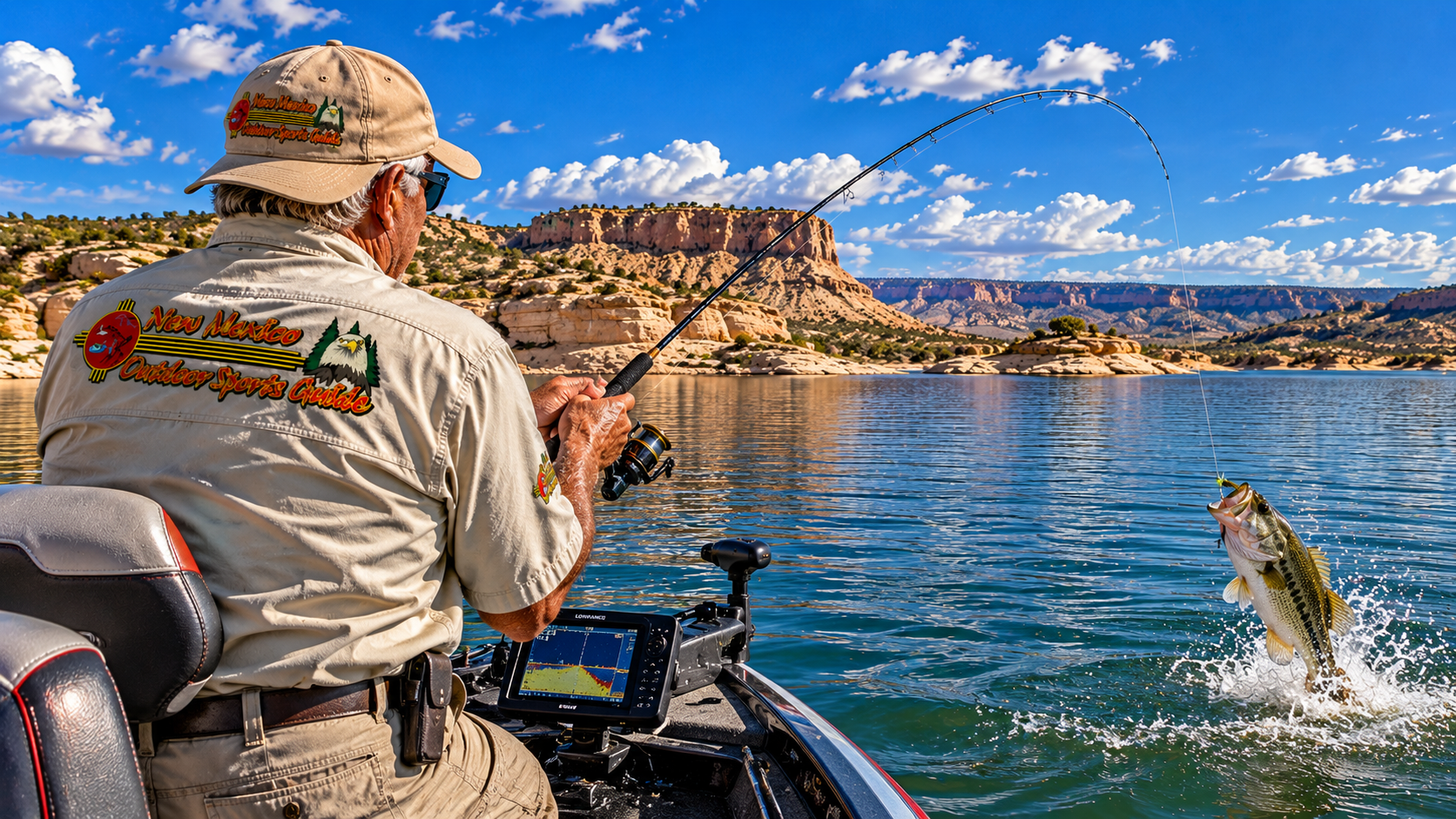
Conchas Lake New Mexico: Bass Fishing, Walleye, Crappie and the Wide-Open Country Near Tucumcari
There's something about a big reservoir in the middle of northeastern New Mexico that brings back memories of my years guiding bass fishermen and competing in tournaments across Texas.A rocky point dropping into deep water.A submerged channel winding through a sheltered cove.A morning breeze putting just enough ripple on the surface to make a smallmouth bass forget his manners.And somewhere beneath that water, a largemouth bass waiting beside a rock pile for an easy meal.That's the sort of country I think about when somebody mentions Conchas Lake New Mexico.Conchas isn't one of those little alpine lakes tucked beneath snow-covered peaks in the Sangre de Cristo Mountains. It's a sprawling warmwater reservoir surrounded by sandstone bluffs, rolling grasslands, juniper-covered hills and the enormous skies of northeastern New Mexico.It's also one of those places that reminds me how wonderfully diverse our adopted home state really is.Paulette and I spent seventeen years living at Casa Oso, our log home above Angel Fire. We became accustomed to elk wandering through the forest, summer thunderstorms building over Wheeler Peak and mornings when the mountain air was cool enough to make you reach for a jacket in July.Drive east toward Tucumcari, however, and New Mexico changes its personality.The mountains gradually give way to plains.Ponderosa forests surrender to grassland and juniper.And the fishing changes from trout to largemouth bass, smallmouth bass, crappie, walleye and catfish.That's what makes Conchas Lake so interesting.It offers the sort of warmwater fishing I spent much of my life enjoying, surrounded by scenery that is unmistakably New Mexican.
Where Is Conchas Lake New Mexico?
Conchas Lake is located in San Miguel County in northeastern New Mexico, approximately 30 to 35 miles northwest of Tucumcari by road.The reservoir lies near the small community of Conchas Dam, where Conchas Dam impounds the Canadian River system.The surrounding landscape is open, rugged and surprisingly beautiful.Rocky shorelines alternate with protected coves. Sandstone cliffs rise above the water. Broad stretches of open reservoir lead into winding river arms where the scenery becomes increasingly remote.It's a landscape that invites exploration.The reservoir is associated with Conchas Lake State Park, which provides public camping, boating, fishing and other recreational opportunities.Unlike a small mountain lake that you can walk around in an afternoon, Conchas is large enough that anglers need to think carefully about which areas to fish and how to navigate between them.And with fluctuating water levels, the lake can change dramatically from one season to another.
How Did Conchas Lake Come to Exist?
Conchas Lake is a man-made reservoir created by Conchas Dam, a major federal water-control project constructed during the 1930s.The dam was completed in 1939 by the U.S. Army Corps of Engineers.Its original purposes included flood control and water conservation, with the stored water later supporting irrigation and other regional needs.Today, recreation is one of the lake's most visible benefits.But Conchas remains a working reservoir.That distinction matters.Water levels respond to inflows, drought, flood-control operations and water-management requirements. The shoreline you fish one year may look quite different the next.I learned long ago that fluctuating reservoirs can create both opportunities and headaches for bass fishermen.Rising water may flood brush and vegetation, giving largemouth bass new feeding cover.Falling water may expose that same cover and concentrate fish around remaining structural features.And occasionally a favorite fishing spot ends up several feet above the water.The fish don't complain.They simply move.It's our job to figure out where they went.
Which Major Rivers Feed Conchas Lake?
Two rivers define the reservoir's geography.The Canadian River is the major waterway, flowing eastward through northeastern New Mexico before eventually joining the Arkansas River system farther downstream.The Conchas River joins the Canadian River in the reservoir area.Together, these waterways create the branching lake system that anglers explore today.Their influence extends well beyond the shape of the shoreline.River inflows affect water temperature, sediment, nutrients, current and clarity.After heavy rain upstream, portions of the reservoir may become muddy while other sections remain relatively clear.That can change fishing patterns overnight.A largemouth bass that was feeding along a clear rocky bank yesterday may move into slightly stained water where baitfish have gathered.Smallmouth bass may remain around rocky structure but change feeding depth.Crappie may relocate with schools of baitfish.Walleye may follow current and forage toward points, channel edges and deeper breaks.That's why I like having a good lake map.A map doesn't tell you where the fish are.But it gives you a much better idea where they might be.
How Large Is Conchas Lake?
Conchas Lake is one of New Mexico's substantial warmwater reservoirs, although its surface area varies with water level.The reservoir has historically covered thousands of acres, with long arms extending into the Canadian and Conchas river valleys.For fishing purposes, the important point isn't a single advertised acreage.It's the current water level.A reservoir that has lost a substantial amount of water may have fewer accessible coves, different shoreline structure and limited boat-ramp availability.That affects everything from where you launch to how you approach your favorite fishing spots.Before visiting, I recommend checking current reservoir conditions and the official Conchas Lake State Park information.I would also contact the park directly before towing a boat to the lake.A few minutes on the telephone can save a long drive to a closed ramp.
What Is Special About Tucumcari, New Mexico?
Tucumcari is one of those towns that has been greeting travelers for generations.Long before Interstate 40 carried motorists across eastern New Mexico, historic Route 66 brought families, truckers, salesmen and vacationers through town.And Tucumcari learned how to welcome them.Colorful motel signs.Neon lights.Roadside diners.Service stations.The promise of a comfortable bed after a long day behind the wheel.Even today, the old Route 66 corridor remains one of Tucumcari's most distinctive attractions.I have always enjoyed places where a little of America's motoring history survives.Maybe that's because I've spent so much of my life traveling.Whether flying a Beechcraft Baron across the country, pulling a bass boat toward a tournament or loading the Outback for another photographic excursion with Paulette, I've always appreciated the freedom of seeing what lies beyond the next horizon.Tucumcari has that same traveling spirit.
Why Is Tucumcari a Good Base for Conchas Lake?
Tucumcari offers more conventional lodging, restaurants, fuel and supplies than the small community around Conchas Dam.For anglers who prefer a motel room over a tent or RV, it's a practical place to stay.You can spend the day fishing Conchas, return to town for supper and enjoy a little Route 66 nostalgia before heading out again the next morning.The drive between Tucumcari and the lake is roughly 30 to 35 miles, depending on your destination around the reservoir.That makes an early departure worthwhile.I'd rather be launching at first light than watching the sunrise through the windshield while wishing I'd left half an hour earlier.
What Fish Species Can You Catch at Conchas Lake New Mexico?
The principal sport fish include largemouth bass, smallmouth bass, crappie, walleye, channel catfish, bullhead and sunfish.New Mexico's Department of Wildlife recognizes Conchas as an important bass-fishing destination. Its New Mexico Bass Challenge specifically includes Conchas among the state's established bass fisheries.NMDOWThat variety makes Conchas particularly attractive to anglers who enjoy experimenting with different techniques.I could happily spend the morning casting for smallmouth, devote the afternoon to locating crappie and finish the day working a rocky point for walleye.Of course, the fish might have other plans.They frequently do.That's why they call it fishing rather than collecting.
Where and How Would I Catch Largemouth Bass?
Largemouth bass are structure-oriented predators, and Conchas offers plenty of structure.I'd begin by looking for sheltered coves, rocky transitions, channel bends and submerged brush.Spring is particularly interesting.As water temperatures begin climbing through the 50s, largemouth generally become more active and start moving toward spawning habitat.Protected coves with suitable bottom and nearby deeper water deserve attention.When the water reaches the 60s, spawning activity may occur, depending on weather and local conditions.During summer, I'd concentrate on shaded cover, deeper points and places where bass can move between feeding areas and comfortable water.Fall is a wonderful time to follow baitfish movements.As water cools, bass may become increasingly willing to chase smaller forage.
My preferred largemouth spinning outfit
For general largemouth fishing, I'd carry a 7-foot medium or medium-heavy spinning rod with a 2500- or 3000-size reel.Ten- to 15-pound braided line with an 8- to 12-pound fluorocarbon leader would cover most finesse applications.I'd pack 4- to 6-inch soft-plastic worms, 3- to 4-inch paddletail swimbaits, finesse jigs, stickbaits and a few suspending jerkbaits.Green pumpkin is a dependable soft-plastic color.Watermelon, brown and natural baitfish patterns are excellent alternatives.In stained water, I might switch to black-and-blue or a brighter swimbait.My favorite presentation would depend on the cover.Around rock, I'd drag a finesse worm or jig slowly along the bottom.Around submerged brush, I'd use a weedless rig and let the bait settle beside the cover.Along a windblown point, I'd try a swimbait before slowing down.A bass sometimes tells you exactly what it wants.The challenge is listening.
How Would I Catch Smallmouth Bass at Conchas Lake?
Smallmouth bass have always held a special place in my fishing memories.They are magnificent fighters.Put a three-pound smallmouth on light spinning tackle and you'll quickly understand why so many anglers become devoted to them.Conchas offers the rocky shorelines, points and structural breaks that smallmouth frequently favor.I'd start with main-lake points and steep banks where rock extends into deeper water.Then I'd look for gravel-to-boulder transitions, submerged humps and areas where baitfish gather.Spring can bring smallmouth into relatively shallow water.Summer often requires fishing deeper, particularly during bright conditions.Fall may offer excellent opportunities around baitfish schools and rocky feeding areas.
Best spinning lures for Conchas smallmouth
A 6-foot-9-inch to 7-foot medium-light spinning rod with a sensitive tip would be my first choice.I'd pair it with a 2500-size reel, 10-pound braid and a 6- to 8-pound fluorocarbon leader.My lure selections would include 2.5- to 3.5-inch tube jigs, finesse worms, small swimbaits, drop-shot rigs and compact crawfish imitations.A green-pumpkin tube dragged across a rocky point is one of my favorite smallmouth presentations.I'd also carry a small suspending jerkbait for cooler water.When smallmouth are actively feeding, they can be wonderfully aggressive.When they're not, the difference between catching fish and simply enjoying the scenery may be a slower retrieve and a smaller lure.
Where Can You Find Crappie at Conchas Lake?
Crappie are schooling fish, and that makes locating them the most important part of the job.I'd search sheltered coves, submerged brush, channel edges, standing timber where present and deeper structure near baitfish.During spring, crappie commonly move toward shallower spawning habitat.After spawning, they may return to deeper structure.Summer and winter fishing often involves locating suspended schools rather than simply casting along the shoreline.That's where electronics become particularly useful.
My crappie spinning tackle
A 6- to 7-foot light-action spinning rod, a 1000- or 2000-size reel and 4- to 6-pound line would be ideal.I'd carry small jigheads ranging from 1/32 to 1/8 ounce.Soft-plastic bodies between 1.5 and 2.5 inches would cover most situations.Pearl, white, chartreuse, black-and-chartreuse and natural shad colors would be my starting selections.A small marabou jig can also be deadly when worked slowly around cover.One thing I've learned about crappie is that they sometimes strike so gently you barely feel anything.Watch your line.If it stops falling before the jig reaches bottom, you may already have a fish.
How Do You Catch Walleye at Conchas Lake New Mexico?
Walleye add another dimension to Conchas fishing.They often favor rocky structure, channel edges, submerged humps and deeper areas where baitfish are available.They also tend to be particularly interesting targets during low-light periods.I'd start by studying a contour map and identifying main-lake points with access to deeper water.During spring, walleye may move toward shallower rocky habitat.As water warms, deeper breaks become increasingly important.In summer, I'd search for baitfish schools and fish along adjacent structural edges.Fall cooling can improve fishing as walleye follow forage.
My walleye spinning outfit
I'd choose a 6-foot-6-inch to 7-foot medium-light spinning rod with a sensitive tip and a smooth 2500-size reel.Eight- to 10-pound braid with an appropriate fluorocarbon leader provides good sensitivity.My tackle box would include 1/8- to 3/8-ounce jigs, 3- to 4-inch minnow imitations, paddletail swimbaits, blade baits and diving crankbaits.Pearl, white, silver and natural shad patterns would be my first choices.I'd also experiment with chartreuse when the water becomes stained.Walleye can be frustrating because they're often concentrated at a particular depth.Find that depth and the fishing may improve dramatically.Miss it and you can spend the day casting over fish that never even notice your lure.
What Water Temperatures Produce the Best Fishing?
Water temperature is one of the most useful clues an angler can have.I wouldn't treat these ranges as absolute rules, but they provide a good starting point for planning.
| SpeciesGenerally productive temperaturesSeasonal emphasis | Largemouth bass55–75°FSpring through fallSmallmouth bass50–70°FSpring and fallCrappie55–70°FSpring spawning movementsWalleye45–65°FCooler water and low-light feeding |
|---|
These are general fishing guidelines, not current measured Conchas Lake temperatures or predictions from New Mexico's fisheries biologists.Fish can be caught well outside these ranges.During summer, depth, oxygen and forage may become more important than the temperature measured at the surface.I always prefer to combine a thermometer with observation.Find the baitfish.Study the structure.Watch the weather.Then let the fish tell you whether your theory is correct.
What Is the Best Time of Day to Fish Conchas Lake?
For most of my fishing, I'd favor early morning.There's something wonderful about launching before sunrise.The water is often calmer.The shoreline is quiet.The first light begins touching the sandstone.And somewhere nearby, a bass may already be feeding.Largemouth and smallmouth can be active early and late, particularly during warm weather.Walleye often reward fishing during dawn, dusk and other low-light conditions.Crappie may feed throughout the day once a school has been located.Cloud cover and wind can change those patterns.A windy point at midday may produce better bass fishing than a calm cove at sunrise.That's why I never let the clock make all my fishing decisions.
What Do New Mexico Game and Fish Reports Say About Conchas Lake?
The New Mexico Department of Wildlife publishes weekly fishing reports and maintains the state's fishing regulations, species information and fishing programs.Its New Mexico Bass Challenge identifies Conchas Lake as part of the state's important bass-fishing opportunities.NMDOWFor current fishing reports, I recommend the New Mexico Department of Wildlife fishing information.Reports can be especially useful for identifying recent catches, seasonal changes and noteworthy fishing conditions.However, a weekly report is only a snapshot.It may describe a few successful anglers rather than provide a comprehensive survey of the entire lake.For that reason, the specific fishing methods in this article are my general warmwater-fishing recommendations. They should not be mistaken for confirmed catch reports from this week.
What Are the Fishing Limits at Conchas Lake?
New Mexico's 2026–2027 fishing regulations govern the lake.Anglers should verify the latest rules before fishing, particularly because special regulations may differ from general statewide limits.The published limits relevant to Conchas include:
| SpeciesDaily bag limitMinimum length | Largemouth bass5 black bass combined14 inchesSmallmouth bassIncluded in 5 black bass14 inches at ConchasCrappie20No general minimumWalleye514 inchesChannel catfish15No general minimum |
|---|
The Conchas-specific 14-inch minimum for smallmouth bass is worth remembering.Anglers aged 12 and older generally need a valid New Mexico fishing license, subject to applicable exemptions.New Mexico residents aged 70 and older can obtain a free annual fishing license, but they must still acquire it.The license year runs from April 1 through March 31.I recommend checking the official fishing regulations and licensing information before your trip.
What Are the Record Fish Caught at Conchas Lake?
Lake-specific records are a tricky subject.I've heard enough fishing stories over the years to know that a big bass can gain a pound every time somebody tells the story.For Conchas Lake, I could not verify an authoritative, comprehensive list of official lake records for largemouth bass, smallmouth bass, crappie and walleye.Rather than invent weights or repeat unverified claims, here are the published New Mexico state-record benchmarks:
| SpeciesNew Mexico state recordLocationYear | Largemouth bass15 lb 13 ozBill Evans Lake1995Smallmouth bass7 lb 3 ozUte Lake2006Crappie4 lb 9 ozBlack River1983Walleye16 lb 9 ozClayton Lake1989 |
|---|
These are state records, not Conchas Lake records.For updates, consult the Department of Wildlife's Record Fish Award information.Personally, I've always believed the fish you remember most isn't necessarily the heaviest.Sometimes it's the one that hit beside a beautiful rocky point just as the sun was setting.Or the one you caught with somebody special sitting beside you in the boat.Those fish don't need an official record book.
Where Can the Public Access Conchas Lake?
Conchas Lake State Park provides several public recreation areas around the reservoir.The principal areas include the North Area, Central Recreation Area, Cove Recreation Area and Bell Point Campground. Facilities differ among them, and not every shoreline is suitable for launching a boat.The official park lists boat ramps, developed campsites, primitive camping, picnic areas, restrooms, showers and boating opportunities.State ParksFor shore anglers, accessible banks near designated recreation areas are the natural starting point.I'd look for rocky banks with a gradual drop into deeper water, especially around points where fish can move between feeding areas and cover.For boat anglers, the river arms and main-lake points provide much more territory to explore.
Current public-access warning, October 2026
The detailed park alert page reports low-water restrictions, including closure of both north high-water ramps. It also identifies access at the State Park North Area and an Army Corps of Engineers south-side ramp, while warning boaters about low lake levels. A separate statewide update describes ramps as operable. Because those notices are not completely consistent, confirm the exact usable ramp and trailer-launch arrangements directly with the park before traveling.Park Alerts+1Conchas Lake State Park contact information
- Address: 501 Bell Ranch Road, Conchas Dam, NM 88416Telephone: 575-868-2270Email: ricarlos.glenn@emnrd.nm.govWebsite: Conchas Lake State ParkCurrent conditions: Park alerts and boating conditions
Is Camping Available at Conchas Lake?
Camping is one of the great attractions of Conchas.The park lists developed sites with electrical and water connections, additional developed sites with nearby water, primitive shoreline camping, restrooms, showers and an RV dump station.State ParksFor a fisherman, camping near the water is particularly convenient.There's no need to drive back to town after the evening bite.You can return to camp, cook supper, sit beneath the stars and be ready to launch again at daylight.I'd bring plenty of drinking water, sun protection, a good hat, rain gear and something warm for the evening.Northeastern New Mexico can surprise visitors with how quickly temperatures change.As of October 2026, the park also lists Stage II fire restrictions prohibiting campfires and charcoal fires, with limited exceptions for properly used controllable gas-fueled equipment. Verify restrictions before cooking.Restrictions
Where Can You Stay Near Conchas Lake and Tucumcari?
For anglers who prefer a real bed and a hot shower, there are several possibilities.The immediate Conchas Dam area has limited lodging, while Tucumcari provides a wider selection of motels and services.
Conchas Lake Adobe Belle Resort
This historic property near Conchas Dam offers furnished casita-style accommodations overlooking the lake and dam area.Address: 500 Captain Kramer Lane, Conchas Dam, NM 88416Telephone: 575-868-0300Email: adobebelleresort@gmail.comWebsite/listing: Conchas Lake Adobe Belle ResortThe New Mexico Tourism Department describes a gated historic complex with furnished two-bedroom casitas. Confirm current rentals and availability directly.Conchas Dam, NM 88416
Historic Route 66 Motel, Tucumcari
For a little old-fashioned Route 66 atmosphere, the Historic Route 66 Motel offers traditional roadside lodging.Address: 1620 East Route 66 Boulevard, Tucumcari, NM 88401Telephone: 575-461-1212Email: rte66motel@rte66motel.comWebsite: Historic Route 66 MotelThe motel advertises updated accommodations while retaining its midcentury character.rte66motel.com
Conchas Lake State Park Campgrounds
For RV camping and tent camping, the state park is the closest practical choice.Address: 501 Bell Ranch Road, Conchas Dam, NM 88416Telephone: 575-868-2270Email: ricarlos.glenn@emnrd.nm.govWebsite: Conchas Lake State Park camping informationReservations and campsite availability should be checked through the park's official reservation system.
What Is the Weather Like at Conchas Lake New Mexico?
Conchas sits at approximately 4,253 feet above sea level, considerably lower than the mountain country around Angel Fire.State ParksThat elevation makes a noticeable difference.Summers are hot.Winters are generally milder than in the high mountains, although cold weather certainly occurs.And the wind can become a major consideration.
Spring
Spring is an excellent time to consider bass and crappie fishing as water temperatures rise.But it can also be windy.I'd check the forecast carefully before taking a small boat onto the open lake.
Summer
Summer brings warm water, long days and afternoon thunderstorms.Early morning is usually my favorite fishing period.I'd also be prepared to leave the water quickly if thunderstorms develop.Lightning and open water are a dangerous combination.
Fall
Fall can be especially enjoyable.Cooling water often improves fishing opportunities, particularly for anglers following baitfish movements.The air becomes more comfortable.The sunlight softens.And the lake's sandstone scenery takes on a wonderful warmth late in the day.
Winter
Winter fishing requires patience and careful attention to weather.Walleye and crappie can remain worthwhile targets.I'd fish more slowly, pay attention to deeper structure and dress for cold wind.Cold-water boating deserves particular respect, even when the air temperature seems pleasant.
What Wildlife Can You Photograph Around Conchas Lake?
The lake's combination of open water, rocky shoreline, grassland and shrubland creates opportunities for birdwatching and wildlife photography.The New Mexico State Parks Division specifically identifies birding and wildlife viewing as activities at Conchas.State ParksDepending on season, visitors may encounter waterfowl, shorebirds, raptors and smaller birds using the surrounding vegetation.The nearby plains and canyon country also provide habitat for mammals adapted to northeastern New Mexico's relatively dry environment.For wildlife photography, I'd favor early morning or late afternoon.A long telephoto lens is useful for photographing birds without disturbing them.I'd also bring binoculars.During our years at Casa Oso, Paulette and I learned that wildlife photography is often less about approaching animals than allowing them to continue their ordinary activities undisturbed.That philosophy works anywhere.Even at a busy recreation lake.
How Do You Get to Conchas Lake from Albuquerque, Santa Fe, Taos and Chama?
The following distances and times are approximate planning estimates. Exact mileage depends on your starting address, selected route and destination within the park.
| Starting cityApproximate driving distanceEstimated time | Albuquerque185–205 miles3–3.5 hoursSanta Fe135–155 miles2.5–3 hoursTaos160–180 miles3–3.5 hoursChama255–285 miles4.5–5.5 hours |
|---|
From Albuquerque
One approach is Interstate 40 east toward Santa Rosa, US 84 north toward Las Vegas, then NM 104 east toward Conchas Dam.I'd check the route before leaving, since other approaches may be preferable depending on road conditions.
From Santa Fe
Take Interstate 25 toward Las Vegas, then follow NM 104 east toward Conchas Dam.It's a pleasant drive that gradually leaves the mountains behind and opens into the northeastern plains.
From Taos
A route through US 64 east toward Cimarron and Springer, followed by Interstate 25 south toward Las Vegas and NM 104 east, is one option.For a traveler who enjoys scenery, that drive provides a wonderful transition from the Sangre de Cristo Mountains into the open plains.
From Chama
I'd travel south on US 84 toward Española and Santa Fe, then continue toward Las Vegas and NM 104.Because of the distance, I'd strongly consider an overnight stay rather than attempting a full day of fishing and the return drive.
From Tucumcari
Take NM 104 northwest toward Conchas Dam, then follow the appropriate park or recreation-area signs.Tucumcari's official visitor information describes the NM 104 corridor as a scenic route passing Conchas Lake between Tucumcari and Las Vegas.Visit TucumcariFor current road closures and conditions, check NMRoads.
Why Conchas Lake New Mexico Belongs on an Angler's Bucket List
When I think back over my fishing life, I remember an astonishing variety of water.Lake Conroe.Sam Rayburn.Toledo Bend.Lake Texoma.Amistad.Falcon.And plenty of others.Each had its own personality.Each demanded different techniques.And each taught me something.Conchas Lake reminds me of the things I loved about those years.Reading structure.Finding baitfish.Understanding seasonal movements.Choosing the right lure.Making one more cast because something about that rocky point just looks right.But Conchas also has something those Texas lakes couldn't provide.It's surrounded by the wide-open country of northeastern New Mexico.That's a special combination.For readers who enjoy comparing the state's very different fishing environments, my articles about Eagle Nest Lake State Park and Cimarron Canyon State Park trout fishing explore the high-country side of New Mexico.My guide to drivable New Mexico alpine lakes offers more mountain-water destinations, while public access to Cimarron River trout fishing explores a very different fishing experience.And for readers wanting to explore another of New Mexico's major river systems, there's my article about the Rio Grande River in New Mexico.Different water.Different fish.Different landscapes.All part of the same remarkable state.
One More Cast Before Heading Back to Tucumcari
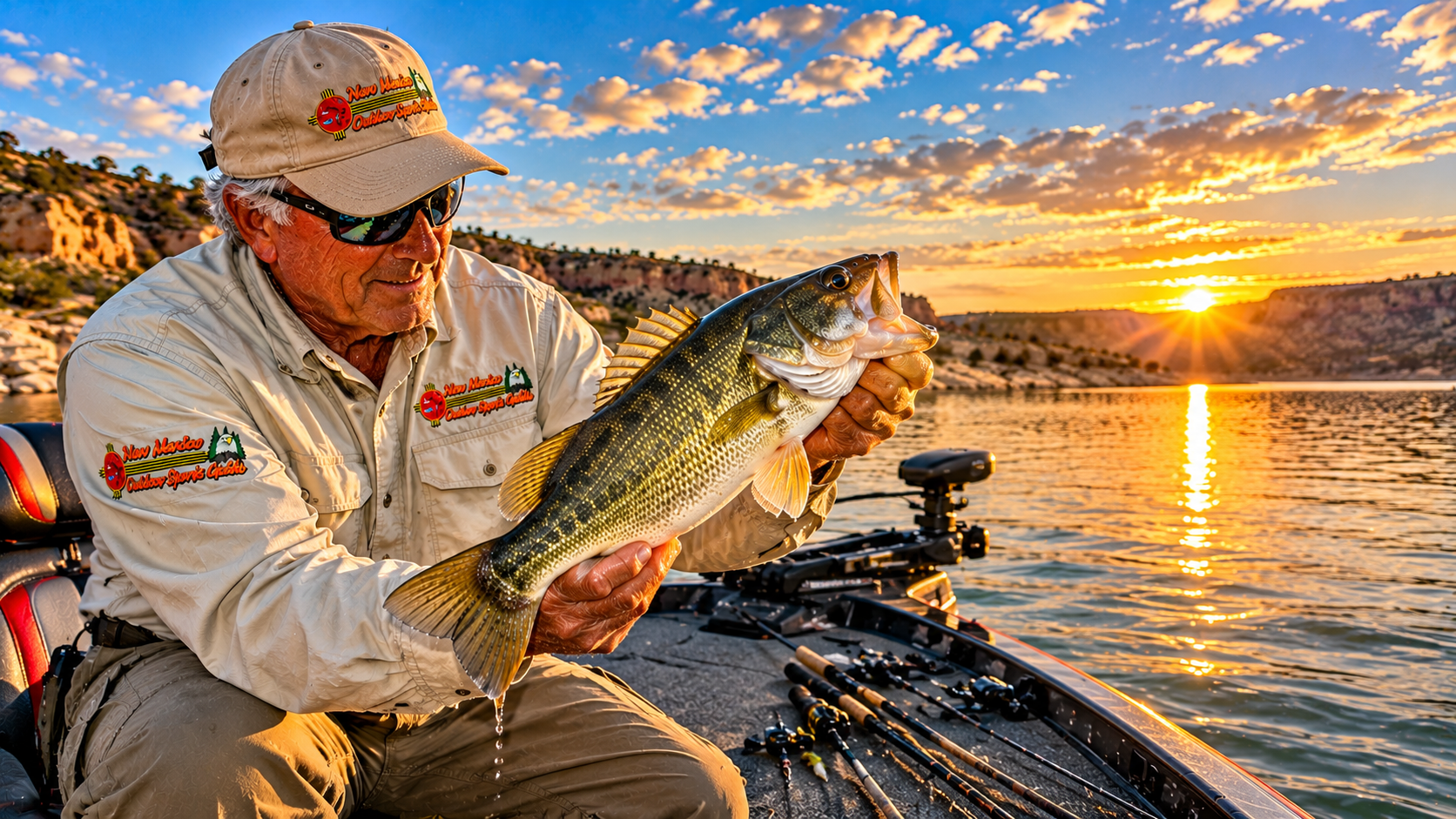
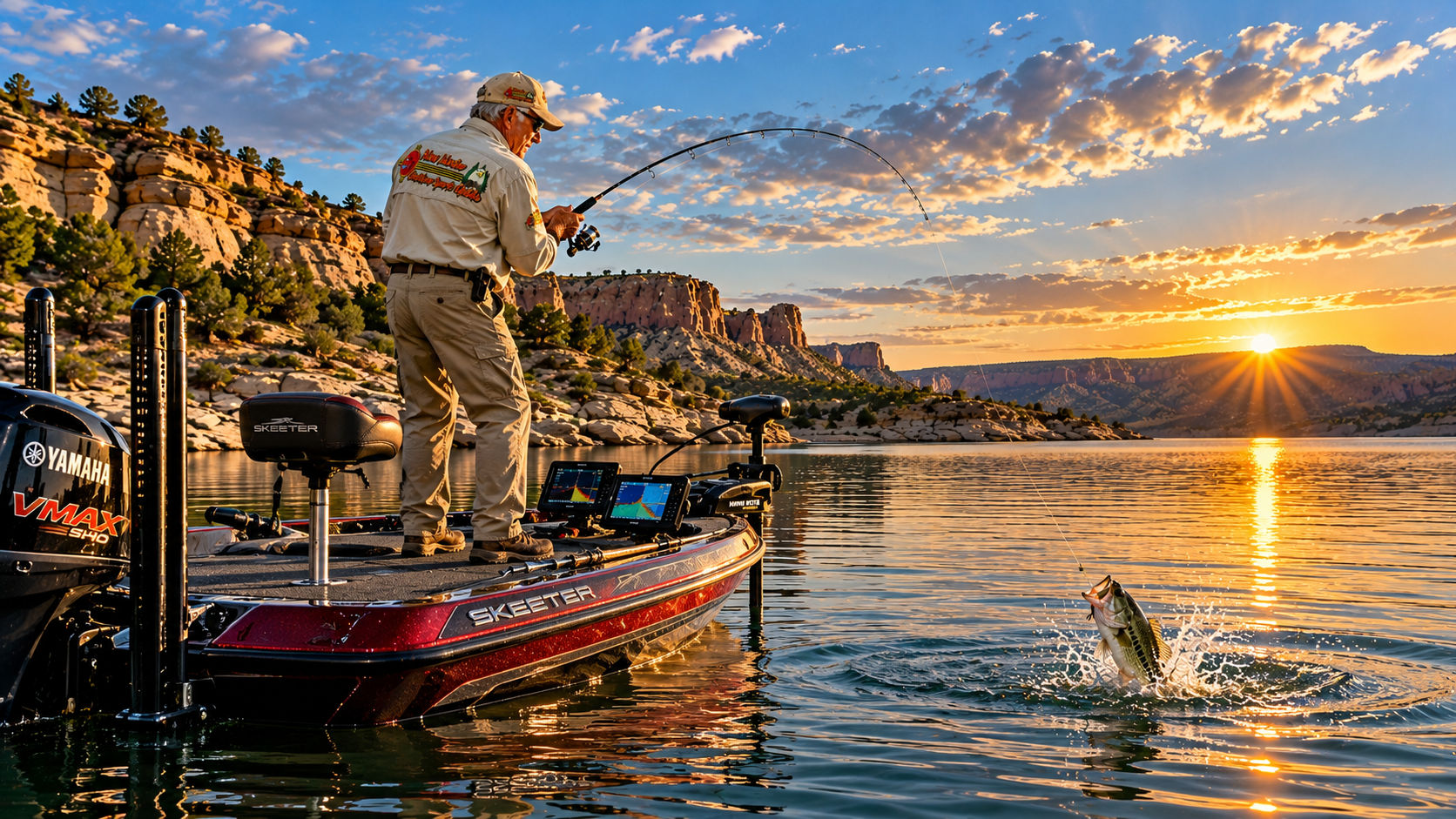
I can picture the sort of evening I'd enjoy at Conchas Lake.The wind has finally settled.The sun is getting low.The sandstone cliffs have begun turning warm shades of red and gold.A few clouds hang over the distant shoreline.I've spent the afternoon working rocky points with a tube jig, perhaps catching a smallmouth or two.Now I'm making one last cast before heading back to the ramp.The lure settles to the bottom.I lift the rod tip.Let it fall.Pause.Then comes that unmistakable tap.After all these years, I still don't know a fisherman who ever gets tired of that feeling.Maybe it's a bass.Maybe it's a walleye.Maybe it's nothing more than a rock pretending to be interesting.That's fishing.And I wouldn't have it any other way.Back in Tucumcari, the old Route 66 signs are beginning to glow.There's supper waiting somewhere.Perhaps a comfortable motel room.And tomorrow morning, if the weather cooperates, there will be another sunrise over Conchas Lake.Another rocky point.Another opportunity to learn something.That's why I never tire of exploring new water.Conchas Lake New Mexico isn't simply a place to catch fish. It's another wonderful reason to get out and enjoy the country.And after a lifetime of chasing bass across the Southwest, I still believe that's reason enough.
0 Comments