

There is a specific kind of magic that happens when you drive south from Santa Fe and the jagged peaks of the Sangre de Cristo Mountains begin to soften into the rolling, golden expanse of the Galisteo Basin. It isn’t just a change in elevation; it’s a shift in time. The air feels older here. The light hits the red-rimmed mesas with a cinematic intensity that has drawn everyone from Paleo-Indian hunters to Hollywood directors.
Spanning nearly 470,000 acres, the Galisteo Basin is a vast geologic bowl that has served as a crossroads of human history for millennia. It is a landscape of "super pueblos," volcanic "frozen plumbing," and ghost towns turned artist havens. Whether you're here to hike the dusty trails of a former movie ranch or to stand in the silent shadow of a 700-year-old ruin, the Basin doesn't just show you New Mexico—it tells you its story.
A Geologic Masterpiece: Volcanos and the Garden of the Gods
To understand the beauty of the Galisteo Basin, you have to look beneath the sagebrush. The geology here is a violent, million-year-old drama.
The Frozen Plumbing of the Earth
About 30 to 34 million years ago, the earth here was a literal hotbed of activity. Magma pushed upward from deep within the crust, intruding into older layers of shale and sandstone. This created the Cerrillos Hills and the Ortiz Mountains, which geologists often describe as the "frozen plumbing" of an ancient volcanic complex.
The Garden of the Gods
Perhaps the most striking geologic feature is the Garden of the Gods near Los Cerrillos. Here, the sheer pressure of rising magma actually flipped layers of the Galisteo Formation vertically. Today, you can see these dramatic, upturned fins of rock piercing the desert floor like the spine of a sleeping dragon.
Life in the High Desert: Plants, Trees, and Climate
The Basin sits at an average elevation of 6,000 feet, creating a semi-arid environment that is as resilient as it is beautiful.
-
Tree Life: The higher ridges and rocky slopes are dominated by the classic New Mexico duo: Piñon Pine and Juniper. In the deeper arroyos and along the river banks, you’ll find ancient, gnarled Cottonwoods that turn a brilliant neon yellow in the fall.
-
The Grasslands: Much of the basin is a high-altitude prairie. You’ll see endless seas of Blue Grama (the state grass), Sideoats Grama, and the occasional Creosote bush.
-
Climate & Seasons:
-
Spring: Expect high winds and "mud season" as the snow melts off the nearby mountains.
-
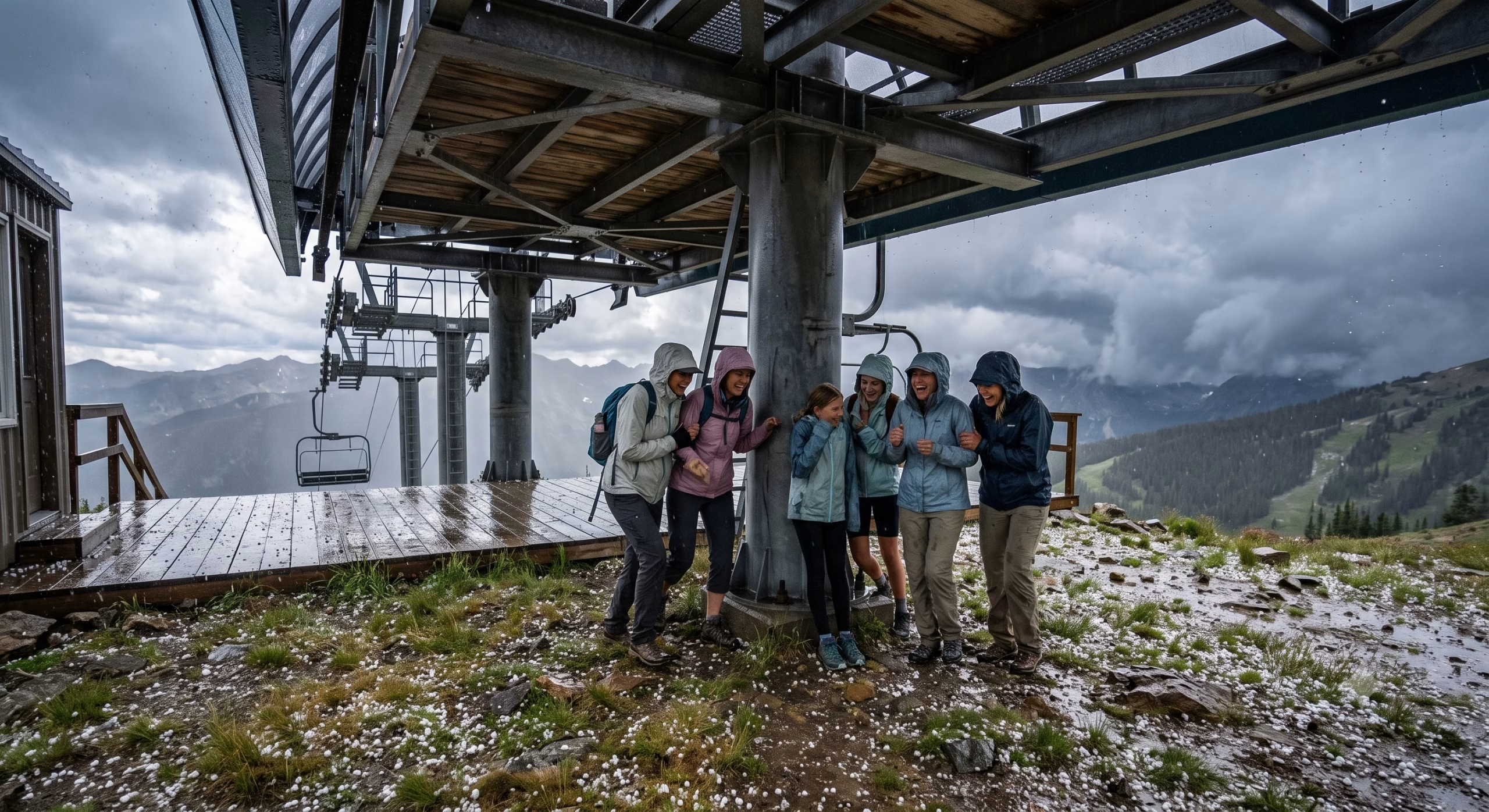
Summer: Hot, bright days often punctuated by dramatic afternoon monsoons in July and August.
-
Fall: The "Golden Season." Mild temperatures and crisp air make this the peak time for exploring.
-
Winter: The basin can be biting cold, but a light dusting of snow on the red mesas is a photographer's dream.
-
Whispers of the Ancients: 10,000 Years of History
The Galisteo Basin is widely considered one of the most significant archaeological regions in the United States.
The Earliest Inhabitants
Human history here began with the Paleo-Indians, who moved through the basin as early as 7,500 to 6,000 B.C., hunting mule deer and antelope. By 1,500 B.C., these nomadic groups began to settle, supplementing their diets with early farming.
The Rise of the Super Pueblos
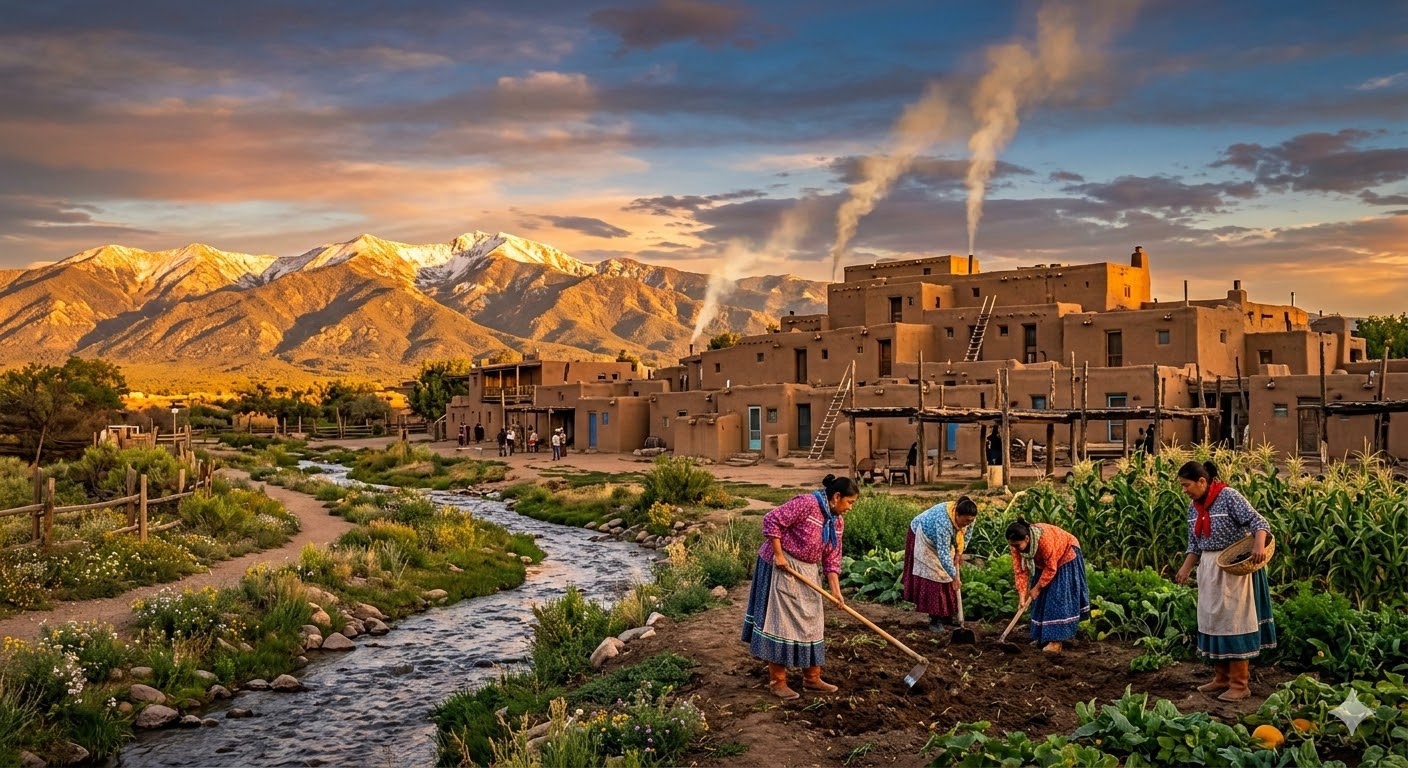
Between 1100 and 1300 A.D., a massive migration—possibly triggered by drought in Chaco Canyon—brought a surge of people to the Basin. This led to the creation of massive, multi-story "super pueblos" like San Cristóbal, San Lázaro, and Galisteo.
-
San Cristóbal Pueblo: At its height, this site was home to nearly 1,000 people and featured over 1,600 rooms and five ceremonial plazas.
-
Rock Art: The cliffs surrounding these ruins are "world-class" galleries of petroglyphs, featuring thousands of images of wildlife, celestial symbols, and human figures etched into the dark basalt.
Rivers and Arroyos: The Lifeline of the Basin
Water is the most precious resource in the high desert. The Galisteo River (or Galisteo Creek) is the primary watercourse, winding its way from the Sangre de Cristo foothills down to the Rio Grande. While it often appears as a dry, sandy bed, it is a perennial stream for part of its course and can turn into a raging torrent during the summer monsoons.
Modern Echoes: Lamy, Madrid, and the Movie Sets
Today, the Galisteo Basin is a patchwork of working ranches, artist colonies, and Hollywood history.
The Cinematic Basin
Because of its "bigness" and untouched vistas, the Basin has been a favorite of filmmakers for decades. The Cerro Pelon Ranch (formerly the Cook Movie Ranch) has hosted over thirty productions, including Silverado, Lonesome Dove, 3:10 to Yuma, and Thor. The iconic Western town set built for Silverado remains one of the most famous locations in the state.
The Villages of the Basin
-
Galisteo: A quiet, beautiful village of adobe homes and cottonwoods, Galisteo is home to a thriving community of artists and riders.
-
Lamy: Named after Archbishop Lamy, this tiny town serves as the Amtrak stop for Santa Fe. The historic train depot and the Lamy Junction ruins nearby offer a glimpse into the 19th-century railroad era.
-
Madrid: Once a booming coal mining town that went "ghost" in the mid-20th century, Madrid has reinvented itself as a colorful, quirky strip of galleries and cafes along the Turquoise Trail.
-
Santa Fe: Sitting just to the north, the "City Different" serves as the cultural anchor for the region, though the Basin feels worlds away from the downtown plaza.
Conclusion: A Landscape for the Soul
The Galisteo Basin is more than just a scenic drive; it is a reminder of the layers of time that make New Mexico unique. From the volcanic "frozen plumbing" of the Cerrillos Hills to the haunting beauty of the San Cristóbal ruins, it is a place that demands you slow down and listen.
Discover the Basin
Are you ready to experience the silence of the high plains?
-
Explore: Visit the Galisteo Basin Preserve for miles of hiking and mountain biking trails.
-
Respect: Remember that many ruin sites are on private land or protected—always practice "Leave No Trace" and respect all closures.
-
Capture: Grab your camera and head out at the "Golden Hour" to see why the Basin has inspired artists and filmmakers for over a century.
The wild heart of New Mexico is calling—see you in the Basin!
0 Comments