
The high desert has a voice, if you know how to listen.
It's not the voice you'd expect—not the howl of wind through canyon walls or the cry of a red-tailed hawk circling overhead. Sometimes it's quieter, more intimate. Sometimes it's the rhythmic creak and groan of an old windmill, its blades catching the breeze two hundred yards down a dusty trail from where you sit, cross-legged on a sun-warmed rock, breathing in the perfume of juniper and piñon.
This is how I spend some of my best mornings now, at the Galisteo Basin Preserve, about fifteen minutes southeast of our home in Santa Fe. It's a pilgrimage I make often, especially on those rare New Mexico days when the wind is gentle enough to coax music from metal rather than howl through it—when the air moves just enough to turn that weathered windmill into an orchestra of one.
Why We Chose Santa Fe
When Paulette and I decided to leave Casa Oso behind after seventeen memorable years at 9,500 feet in the mountains overlooking Angel Fire, the decision came down to one primary factor: access. Not just any access—year-round, easy access to the trails that have become as essential to my well-being as food and water. At our age, we needed places we could reach in all seasons, without worrying about whether a spring snowstorm would close the roads or whether ice on the trail might turn a peaceful hike into something dangerous.
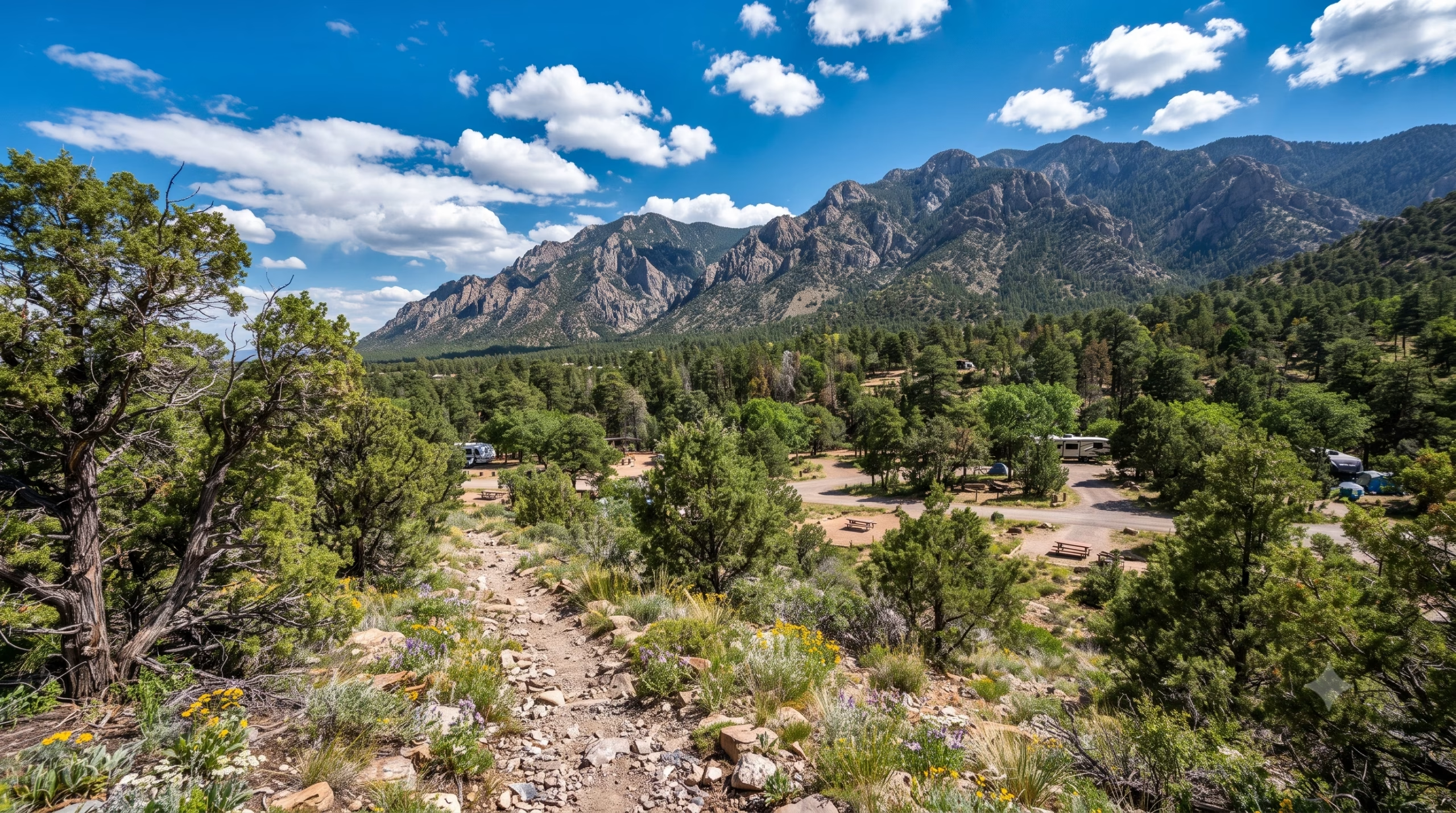
The Galisteo Basin Preserve checked every box. A short fifteen-minute drive from Casa Santa Fe, this sprawling 13,000-acre sanctuary offers dozens of trails winding through classic high desert terrain. No matter the season—whether January snow dusts the piñons or July heat shimmers off the red earth—the preserve remains accessible, inviting, healing.
The Healing Power of Juniper and Piñon
There's something primal about walking among juniper and piñon pine. Scientists might talk about phytoncides or the proven health benefits of forest bathing, but I don't need studies to tell me what my soul already knows. These trees heal.
Their fragrance alone is worth the drive. After a summer thunderstorm, when the rain has released the essential oils from a million juniper needles, the air becomes thick with a scent that's simultaneously sharp and sweet, ancient and immediate. In winter, after fresh snow weighs down the piñon branches, the cold somehow amplifies the resinous perfume until each breath feels like medicine going down.
I grew up among cattle and grass in the Kansas Flint Hills, but juniper and piñon speak a different language—the vocabulary of survival in a place where water is scarce and every living thing has learned to make do with less. These trees don't waste energy on rapid growth or unnecessary flourishes. They're gnarled, twisted, stubborn. They remind me that longevity isn't about softness; it's about adapting to where you are and making the best of it.
Walking through the Galisteo Basin Preserve feels like walking through a vast natural cathedral, where juniper and piñon are the columns holding up an impossibly blue ceiling. The ground beneath my boots is hard-packed caliche, dotted with volcanic rock and cryptobiotic soil crusts that took decades to form. I step carefully, staying on established trails, respecting the slow work of time.
The Cowboy Shack Trailhead
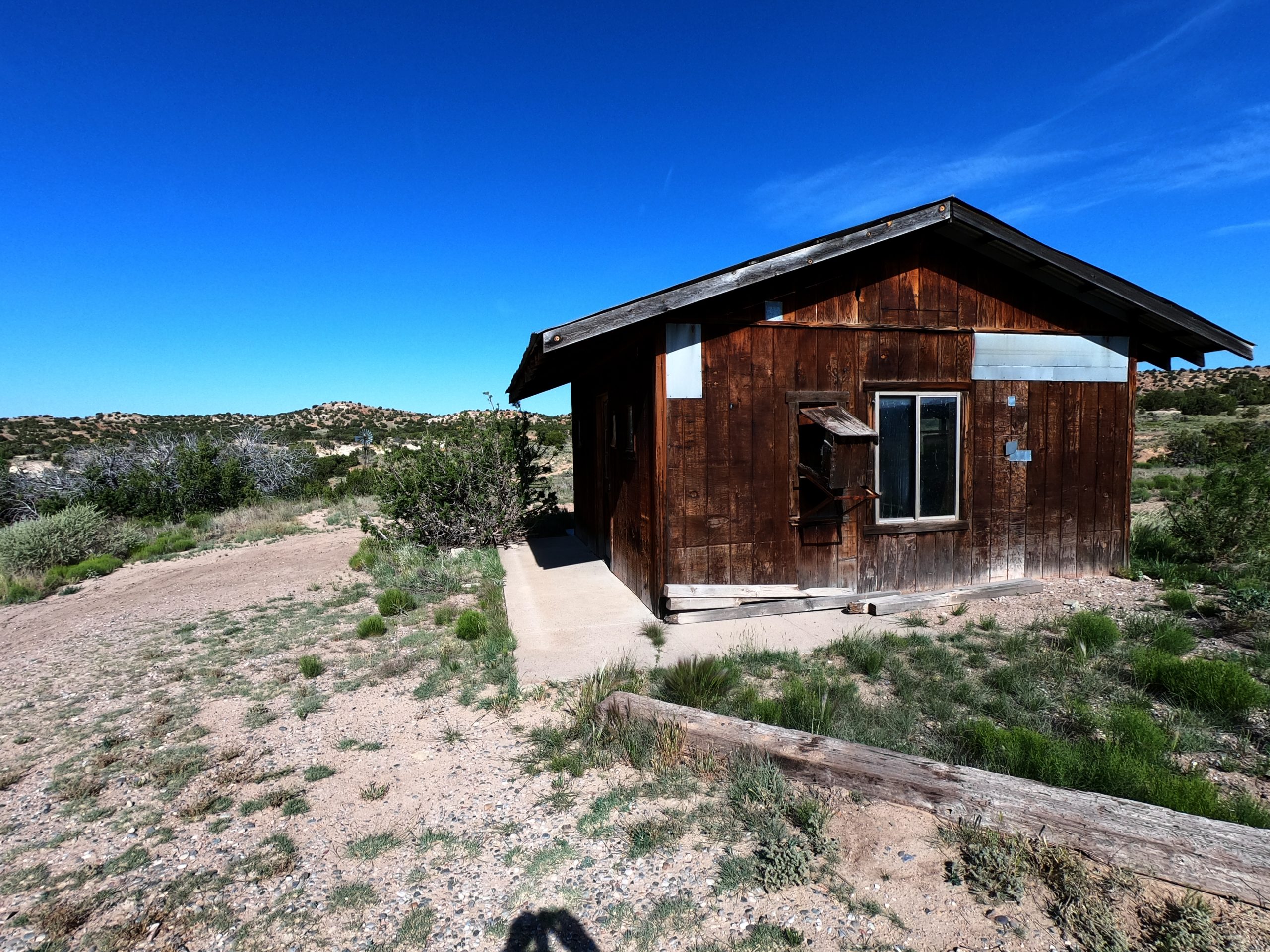
Most of my journeys into the preserve begin at the Cowboy Shack Trailhead, one of several access points scattered around the basin. The trailhead takes its name from an old structure that once served ranchers working this land—a reminder that before this was a preserve, it was working ranch country, much like the landscape I knew as a kid in Kansas.
The Cowboy Shack Trailhead sits at roughly 6,200 feet elevation, which means you're already a mile above sea level before you take your first step. The air is thinner here than in Houston, where I spent my early twenties working on aircraft and teaching others to fly. These days, I don't climb into cockpits anymore—I launch drones instead, sending my eyes skyward with DJI technology while my feet stay planted on solid ground.
From this trailhead, multiple paths branch out across the landscape like capillaries spreading from a heart. You can choose short loops that bring you back in under an hour, or commit to longer treks that take you deep into the basin, where the only sounds are wind, birdsong, and the crunch of your own footsteps.
The trails themselves are well-maintained but minimally developed—exactly how they should be. The Galisteo Basin Preserve isn't trying to be an amusement park. There are no paved paths, no handrails, no gift shops. Just dirt trails marked clearly enough that you won't get lost, but wild enough that you'll feel like you might.
The Windmill
Not far from the Cowboy Shack Trailhead—maybe a quarter mile down one of the main trails—stands the windmill.
It's not fancy. No historic marker explains its age or origin. Nobody's painted it picturesque colors or turned it into a photo op with Instagram-worthy props. It's just a working windmill, doing what windmills have done in arid country for more than a century: pulling water from deep underground and depositing it into a large metal trough where wildlife and, presumably, the occasional cow can drink.
The first time I encountered it, I didn't think much beyond simple appreciation for the engineering. Having worked construction for seventeen years with my company, Centaur Installations, I have a mechanic's appreciation for things that work—especially things that work without electricity, without computers, without anything except wind and physics and occasionally a little grease.
But on my second or third visit, I arrived on a morning when the breeze was just right. Not too strong, not too weak. The windmill's blades were turning slowly, almost meditatively, and with each revolution came a symphony of creaks, groans, and metallic squeals that transported me instantly back to childhood.
I was twelve again, sitting on the top rail of a corral fence in the Flint Hills, counting cattle as they filed past. The windmill in the north pasture made that same sound—an honest, unvarnished announcement of work being done. That creak meant water was rising. It meant the stock tank was filling. It meant everything was working the way it should.
Now, standing in the Galisteo Basin Preserve six decades later, I found myself drawn to that sound with an intensity that surprised me. I walked about two hundred yards up the trail from the windmill, found a comfortable rock with a view back down toward it, and simply sat.
The windmill creaked and groaned. The blades turned. Water dripped into the trough with a rhythmic plinking sound that carried farther than you'd expect in the desert quiet.
I sat there for an hour. Then another hour. Time bent the way it does when you're not checking your watch or your phone, when you're just breathing and listening and letting your mind wander where it wants to go.
The Basin Itself
The Galisteo Basin Preserve protects a unique landscape that has been home to human beings for thousands of years. Archaeological evidence suggests Ancestral Puebloan peoples lived and farmed here as early as 1200 CE. Later, Spanish colonists moved through, followed by Mexican ranchers, and eventually American settlers who recognized that while this might be desert, it wasn't barren.
The basin is roughly circular, surrounded by low mesas and volcanic formations that create a kind of natural amphitheater. The elevation ranges from about 5,800 feet at the lowest points to over 7,000 feet on some of the surrounding ridges. This variation in elevation creates microclimates and ecological diversity you wouldn't expect in what some people mistakenly call "empty" desert.
Walk these trails and you'll encounter not just juniper and piñon, but also chamisa, Apache plume, four-wing saltbush, and various species of prickly pear and cholla cactus. In spring, if the winter was wet enough, wildflowers explode across the landscape—purple asters, yellow snakeweed, red Indian paintbrush, and the delicate pink blooms of hedgehog cactus.
The wildlife is equally diverse. I've photographed mule deer, coyotes, jackrabbits, cottontails, and more bird species than I can count. Ravens and crows patrol the thermals overhead. Roadrunners dash between shrubs. Western bluebirds and mountain bluebirds flash their brilliant plumage against the desert browns and greens. If you're patient and lucky, you might spot a golden eagle or even a prairie falcon.
The preserve is managed by a partnership between the Trust for Public Land and the New Mexico Land Conservancy, organizations committed to protecting this landscape while keeping it accessible to the public. They've struck a careful balance—providing enough infrastructure that people can safely enjoy the land, but not so much that the wildness is compromised.
Capturing the Preserve from Above
My work documenting the wilderness and wildlife of the American Southwest has taken me to some spectacular places over the past several years. The mountains and deserts of Arizona, Utah, Colorado, and New Mexico offer endless subjects for both traditional photography and aerial videography.
The Galisteo Basin Preserve has become one of my favorite locations for drone work. From ground level, the preserve is beautiful—a carefully composed landscape of earth tones and textures. But from two hundred feet up, the patterns reveal themselves in ways that would make a landscape painter weep.
I typically fly a DJI drone (I rotate between a couple of models depending on wind conditions and what I'm trying to accomplish). The drone allows me to capture perspectives that would have been impossible during my years as a pilot. Back when I was flying that twin-engine Beechcraft Baron to construction sites across the country, I logged more than 2,600 hours, but I was always moving too fast and too high to capture the intimate details of landscape. The Baron's stall speed was around 70 knots—not exactly conducive to wildlife photography.
Drones changed everything. Now I can hover motionless above the windmill, watching its blades turn slowly in the breeze. I can climb to 400 feet and capture the way the trails weave through the basin like veins in a leaf. I can follow a wash carved by centuries of intermittent water flow, documenting how the landscape reshapes itself after every thunderstorm.
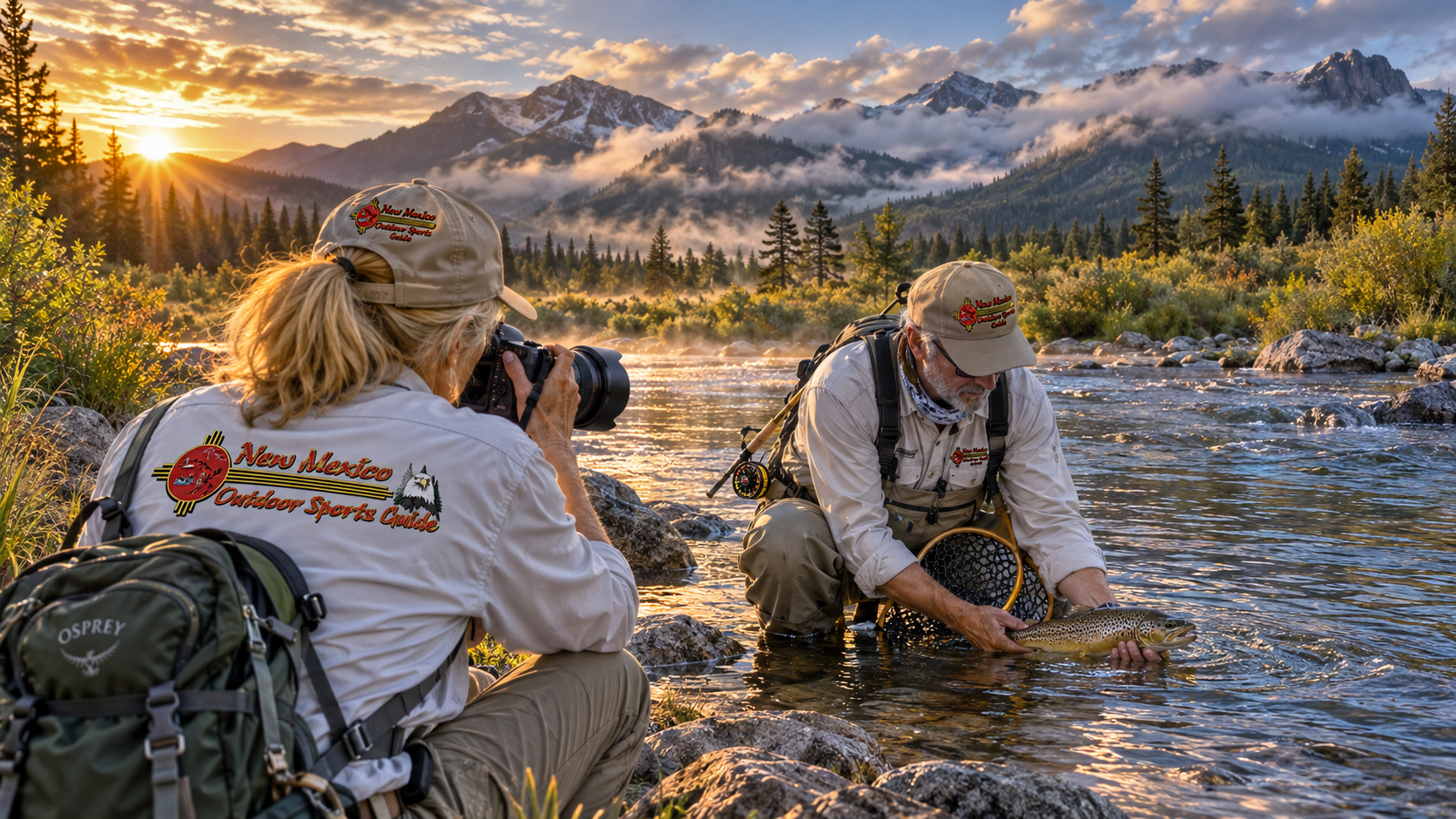
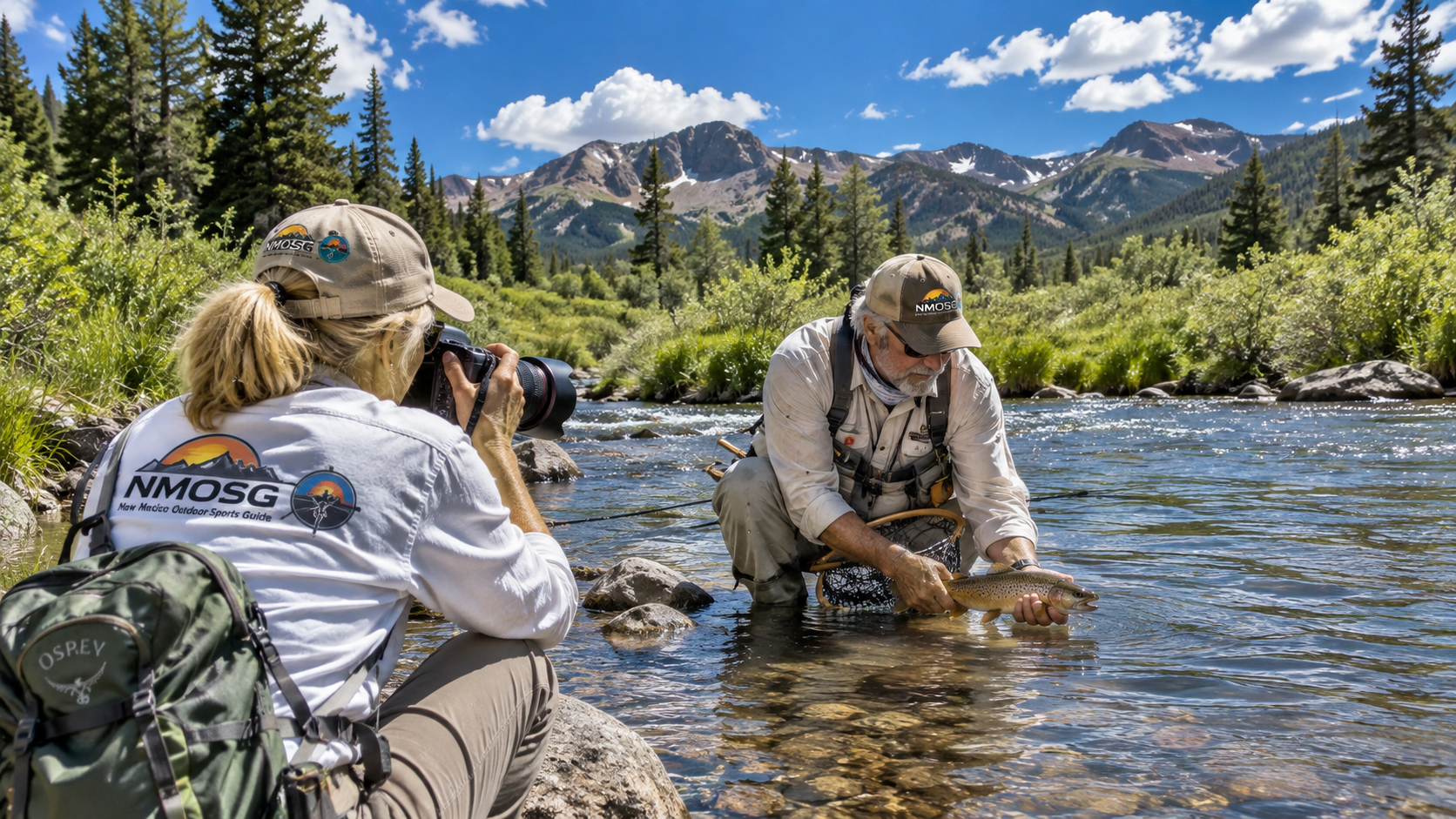
The footage and still images I capture at Galisteo Basin Preserve often end up in my work for the New Mexico Outdoor Sports Guide blog and YouTube channel. There's something about sharing these wild places that feels important—not to drive traffic or promote tourism, necessarily, but to remind people that these landscapes exist, that they're worth protecting, that they offer something essential we can't get from screens or cities or the constant noise of modern life.
The Rhythm of Return
I don't visit the Galisteo Basin Preserve on any set schedule. I'm retired now, an octogenarian who has the luxury of following his instincts rather than a calendar. Some weeks I'll go three or four times. Other weeks, if I'm down at Casa Codorniz on Lake Mohave chasing smallmouth bass, I won't visit at all.
But when I'm in Santa Fe, when the morning light is right and the wind is gentle, I find myself drawn back to that trail, to that rock two hundred yards from the windmill, to the sound of steel turning in the breeze.
Each visit is different. The light changes with the seasons—long and golden in winter when the sun stays low, harsh and direct in summer when it climbs straight overhead. The vegetation changes too. Chamisa explodes into yellow bloom in late summer. Piñon trees produce their precious nuts in good years, attracting scrub jays and other foragers. Snow transforms the entire basin into something quieter, softer, more introspective.
But the windmill remains constant. It was here before I arrived, and it'll be here long after I'm gone. There's comfort in that—in knowing that some things persist regardless of human drama or the passage of individual lives.
When I sit on my favorite rock and listen to it creak and groan, I'm not just hearing machinery. I'm hearing continuity. I'm hearing the same sounds my younger self heard in Kansas, the same sounds countless ranchers have heard across the American West, the same sounds that have marked working landscapes for generations.
Trail Details for Visitors
For those planning their own visit to the Galisteo Basin Preserve, here are some practical details worth knowing.
The preserve offers multiple access points, but the Cowboy Shack Trailhead is one of the most popular and accessible. From Santa Fe, take US-285 south toward Lamy, then turn east on County Road 42. Follow the signs to the preserve—the roads are generally well-maintained, though you'll want to check conditions after heavy rain or snow.
Parking is available at the trailhead, and while there's no entrance fee, donations to support the preserve's maintenance are welcome and appreciated. The preserve is open dawn to dusk year-round.
Trail difficulty ranges from easy to moderate. The terrain is relatively flat compared to mountain hiking, with elevation changes measured in hundreds of feet rather than thousands. However, the trails are rocky in places, and good footwear is essential. I've seen people attempt these trails in sandals—I don't recommend it.
The preserve's trails form interconnecting loops of varying lengths. You can do a short two-mile loop or string together multiple trails for a ten-mile day. Trail markers are generally clear, but carrying a map (available at the trailhead or online) is wise. Cell service is spotty in parts of the basin.
Water is crucial. This is high desert, and dehydration happens faster than you'd think, especially for visitors coming from lower elevations or more humid climates. I typically carry at least two liters of water for a morning hike, even in winter.
Sun protection is equally important. The New Mexico sun at 6,000-plus feet is fierce. Hat, sunscreen, sunglasses—consider them mandatory, not optional.
Wildlife is abundant but generally shy. I've never had an aggressive encounter in all my hikes here, but it's wise to give animals space, make noise on blind corners, and keep pets on leashes (if the preserve allows them—check current regulations).
The best times to visit, in my opinion, are early morning and late afternoon, especially in summer when midday heat can be oppressive. Winter hiking can be magical after a snowfall, but trails can be icy—bring traction devices if conditions warrant.
Why This Place Matters
The Galisteo Basin Preserve matters for reasons both ecological and personal.
Ecologically, it protects habitat that's increasingly under pressure as Santa Fe sprawls outward. The basin serves as a corridor for wildlife, a watershed for intermittent streams that eventually feed the Rio Grande, and a preserve for plant communities that have adapted to this specific combination of elevation, soil, and climate.
Personally—and perhaps more importantly for most of us who visit—it offers something increasingly rare: space for silence and reflection.
I've built a career out of constant motion and problem-solving. As a young man, I flew aircraft across the country, navigating weather and airspace with constant vigilance. I ran a construction company for seventeen years, managing schedules and budgets and crews and the thousand small crises that arise when you're installing laboratory equipment in working facilities. I taught myself computer programming, built websites, published magazines, fished hundreds of tournaments.
I've spent most of my life doing.
The Galisteo Basin Preserve gives me permission to stop doing and simply be. To sit on a rock and listen to an old windmill turn in the breeze. To watch a raven ride thermals overhead. To smell juniper and piñon after rain. To feel the sun on my face and the stone beneath me and the air in my lungs.
These aren't small things. In fact, as I've gotten older, I've come to believe they might be the most important things.
The Gift of Proximity
Living in Santa Fe means the Galisteo Basin Preserve is always there, always available. Fifteen minutes in the truck and I'm parking at the trailhead. Fifteen minutes more and I'm sitting on my rock, listening to my windmill, breathing my air.
This proximity is a gift. When we lived at Casa Oso, some of our favorite hiking required more planning—waiting for snow to melt, checking road conditions, committing to longer drives. The trails around Angel Fire were spectacular, but they weren't always accessible.
Here, accessibility is built in. A sudden urge to hike on a Tuesday morning? No problem. Need to clear my head after a frustrating day? The preserve is there. Want to test a new camera lens or drone setting? I can be at the trailhead before the decision fully forms.
This was exactly what we hoped for when we chose Santa Fe—and the Galisteo Basin Preserve has exceeded those hopes.
A Different Kind of Cathedral
I was raised in churches, the kind with pews and hymnals and sermons about salvation. I respect that tradition, but somewhere along the way, I found that the places where I feel most connected to something larger than myself are not buildings with walls and roofs.
They're places like this.
The Galisteo Basin Preserve is my cathedral now. The juniper and piñon are the columns. The windmill's creak is the hymn. The hard stone beneath me is the pew where I sit and contemplate questions that have no easy answers: What matters? What lasts? How should I spend whatever time remains?
The wind offers no answers, but somehow that's okay. Just being here, in this place that existed long before me and will exist long after, puts things in perspective. My worries shrink to their proper size. My gratitude expands to fill the space they vacated.
The Sound of Home
That windmill, creaking in the breeze two hundred yards down the trail, sounds like home.
Not the home where I currently sleep, though Casa Santa Fe is lovely. Not even Casa Oso, though I'll always treasure our years in that log cabin overlooking the Sangre de Cristos.
It sounds like the deeper home we carry inside us—the one built from memory and longing and all the places we've been and people we've been with. It sounds like childhood in the Flint Hills. It sounds like early mornings before the world wakes up. It sounds like the satisfaction of work well done, of water rising, of life being sustained by simple mechanisms doing what they were designed to do.
Every time I hear it, I'm grateful. Grateful I can still hike these trails. Grateful my knees still work well enough to sit cross-legged on rock. Grateful for the years that brought me here, to this specific place, at this specific time, when I'm old enough to appreciate the gift but young enough to walk the trails and breathe this air and listen to this windmill sing.
Come See for Yourself
If you're in Santa Fe, or if you're planning a visit, I encourage you to explore the Galisteo Basin Preserve. You don't have to be a serious hiker. You don't need expensive gear or wilderness skills. You just need a willingness to leave the pavement behind for a few hours and see where the trails take you.
Maybe you'll find the windmill. Maybe you'll sit where I sit and hear what I hear. Or maybe you'll discover your own special place—a particular bend in the trail, a distinctive rock formation, a view that speaks to something inside you.
The preserve is big enough for all of us to find what we need.
And if you happen to arrive on a morning when the breeze is gentle and the windmill is singing its rusty song, stay a while. Find a comfortable rock. Close your eyes and listen.
That creak and groan? That's not just machinery. That's the sound of the West, of persistence, of things that endure.
That's the sound of being exactly where you're supposed to be.
About the Author spent his early years working his family's cattle ranch in Kansas before pursuing a career in wildlife photography. Now retired and living in Santa Fe, New Mexico but wintering at Lake Mohave, Arizona he dedicates his time to documenting the wilderness and wildlife of the American Southwest, with a particular focus on the Mountains and Deserts of Arizona, Utah, Colorado and New Mexico. His work has been featured in New Mexico Outdoor Sports Guide blog and hundreds of NMOSG YouTube video publications, the Texas
SportsGuide and Black Bass magazines.



0 Comments