
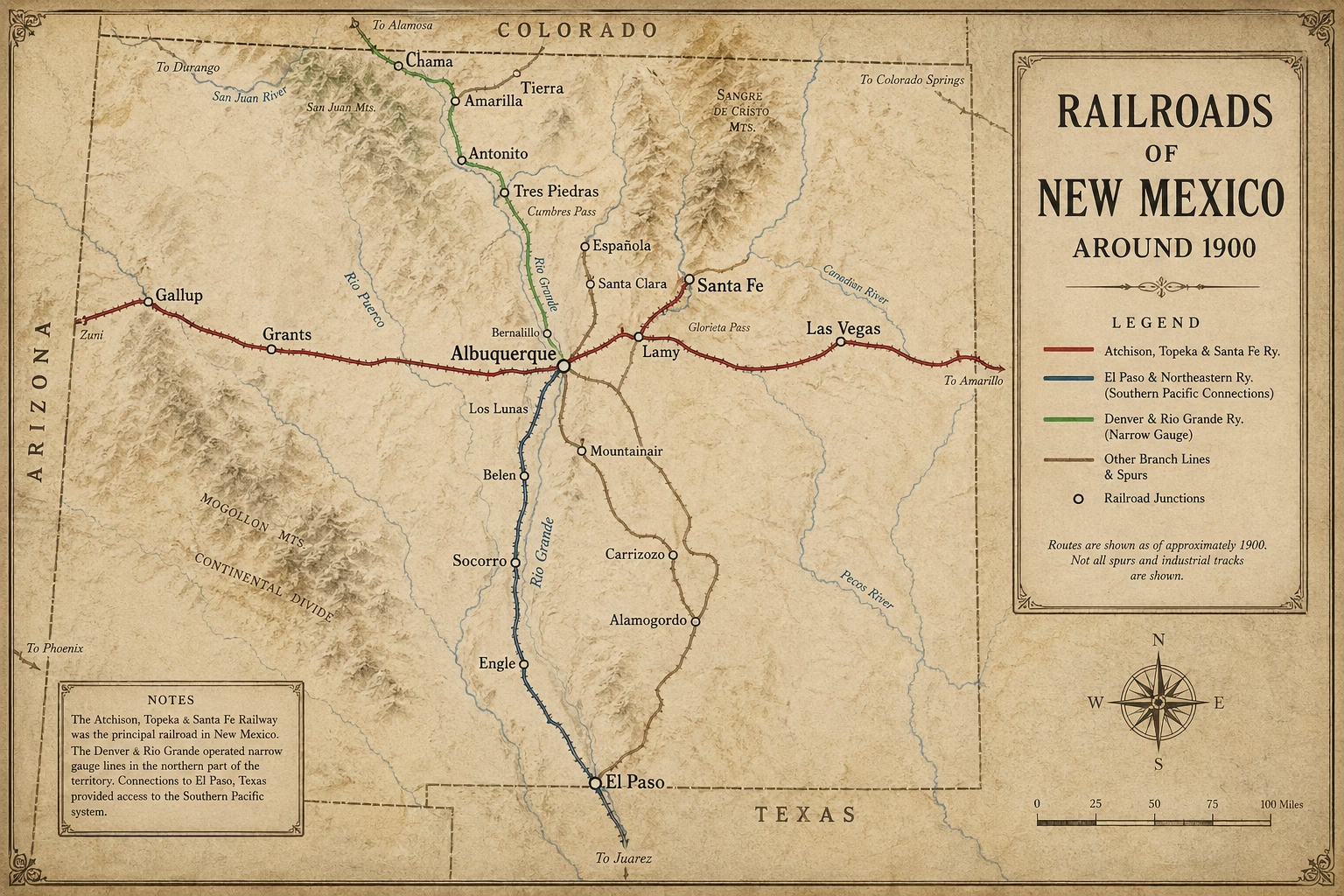
A Cattle Drive into Belen, Circa 1900
There’s a certain feel to the last day of a drive.
It isn’t the start, where everything’s fresh and the cattle are restless. And it isn’t the long middle stretch, where the days blur together in dust and distance. The last day carries something else. A kind of quiet knowing. The herd senses it. The men do too.
We were a few miles out from Belen when the sun came up over the low ridges to the east, laying that pale New Mexico light across the land. The Rio Grande valley opened ahead of us, greener than the country we’d come through, with a hint of water in the air you could almost taste.
And somewhere beyond that rise… the railroad.
Gathering the Herd
We’d started this drive weeks back, pushing cattle in from the eastern plains where the grass runs long when the rains are right. Not fancy stock, not show cattle. Working animals. Tough. Lean. The kind that could make the trip without falling apart.
There were four of us riding point and swing, one man bringing up the drag, and a cook who kept us fed better than we deserved. Horses were holding up well enough, though mine had that look about him that said he’d be glad to see the end of it.
You get to know a herd on a drive like that.
You learn which steers drift. Which ones push the line. Which ones need watching when the wind shifts or a coyote yips too close in the night. By the time you’re closing in on a railhead, those cattle aren’t just a number. They’re a responsibility you’ve carried mile by mile.
The Land Changes
As we worked west, the land began to soften.
The hard, open plains gave way to scattered brush, then to stretches of grass that held a little more color. We crossed dry arroyos and followed faint trails worn in by wagons and earlier drives. Every so often we’d come across another outfit headed the same direction, each man giving a nod that said more than words ever needed to.
“Railhead’s getting crowded,” one rider told us two days out.
“Better get there early if you want a clean load.”
That stayed with me.
The railroad might’ve made the drive shorter than the old days, but it brought its own kind of hurry. Timing mattered now. Schedules mattered. The world beyond the range was starting to press in.
First Sight of the Rails
We saw the smoke before we saw the town.
A thin, dark line rising against the morning sky, drifting slow on the breeze. Then came the sound. Faint at first. A whistle carried across the valley, long and low, echoing in a way that made the horses prick their ears.
The cattle noticed too.
They shifted, uneasy, not sure what to make of it. You could feel that ripple move through the herd like wind across tall grass.
“Easy now,” I said, more to myself than to them.
We topped a low rise and there it was.
The rail line running straight and true across the valley floor. A string of cars standing near the yard. Buildings clustered around the tracks. And men… more men than we’d seen in days.
We’d reached Belen.
The Rail Yard
If you’ve never brought cattle into a rail town around 1900, it’s something to see.
Dust hangs in the air, kicked up by hooves and boots alike. The smell is a mix of livestock, wood smoke, and coal. Wagons come and go. Men shout over one another, each with a job to do and not much patience for delay.
The yard itself is all business.
Stock pens built from heavy timber. Loading chutes angled just right to guide cattle into the cars. A line of boxcars and stock cars waiting on the siding, their doors open like they’re ready to swallow whatever comes their way.
And off to one side, the locomotive.
Steam rising. Metal alive with heat. A presence you can’t ignore.
That line belongs to the Atchison, Topeka and Santa Fe Railway, and it carries more than freight. It carries everything this country produces out into a wider world.
Holding the Herd
We pushed the cattle into a holding pen just outside the main yard, letting them settle before the final move.
That’s an important step.
Drive them too hard at the end and they’ll bunch up, panic, or break. Take your time, and they’ll flow where you need them to go.
We watered them first. Let them stand. Let the dust settle off their backs. The sun climbed higher, and the yard grew louder as more outfits came in.
You could hear bits of conversation drifting across:
“Where you bringing these from?”
“East of the Pecos.”
“Good weight on ’em.”
“Hope the buyers think so.”
That’s the other thing about a railhead. It’s where the work turns into money… or doesn’t.
The Push to the Chute
When our turn came, we moved quick but steady.
Two riders at the rear, one on each side, easing the herd toward the loading pens. The cattle felt the pressure and began to move, hooves clattering against the hard ground, heads low, eyes searching for a way out that wasn’t there.
“Keep ’em straight!” someone called.
We funneled them through the gate, into the narrower pen that led to the chute. From there, it’s a one-way path.
The first steer hesitated at the base of the ramp.
There’s always one.
He looked up at that wooden incline, at the dark opening of the stock car beyond, and you could see the question in him.
Then the pressure from behind answered it.
Up he went.
The rest followed.
Loading the Cars
Once they start, it becomes a rhythm.
Cattle moving up the chute. Hooves thudding on planks. The hollow sound of bodies stepping into the car. Men working the gates, counting, watching, making sure the load is right.
Not too many. Not too few.
Each car is a balance. Enough weight to make the trip worthwhile, but not so crowded that the cattle can’t stand the journey.
Inside the car, they settle into place, pressed close, breathing heavy, the smell of them filling the air. The door slides shut with a solid thud, and the latch drops into place.
One car done.
Then another.
And another.
The Moment It Changes
There’s a moment, standing there beside the track, when the last car is loaded and the work is done.
The herd you’ve ridden with for weeks is no longer yours to guide.
It belongs to the railroad now.
The locomotive gives a short blast of the whistle. Steam hisses. The couplers tighten one by one, that familiar chain reaction running down the line.
The train begins to move.
Slow at first. Then steady.
You stand there, hat in your hand or pushed back on your head, watching those cars roll past. Knowing that inside them are animals you’ve guarded, pushed, worried over, and brought safely to this point.
And just like that, they’re gone.
Headed east. Headed to markets you may never see.
After the Drive
The yard quiets some once the train pulls out.
Not silent, never that, but different. The urgency fades. The work shifts to something else.
We settled up with the buyer near the office, numbers scratched onto paper, a handshake sealing it in a way that felt as binding as any contract.
The cook was already talking about a hot meal and a real bed. One of the boys mentioned heading north for another job. Another talked about riding back east to pick up a fresh herd.
As for me, I just stood there a while longer.
Looking down the line where the train had gone.
What the Railroad Changed
Before the railroads, a drive like that might’ve gone all the way to Kansas. Months on the trail. Losses along the way. Uncertainty at every turn.
By 1900, places like Belen changed that.
You still had the drive. You still had the work. But the distance beyond the railhead collapsed into something manageable. The railroad took over where the trail ended.
It made the whole system possible on a different scale.
More cattle. More movement. More connection between the range and the rest of the country.
Riding Out
We left Belen the next morning.
No herd this time. Just horses, gear, and the kind of quiet that comes after a job well done.
The valley looked different heading out.
Maybe it always does.
You notice things you didn’t on the way in. The way the light hits the cottonwoods along the river. The way the land opens up again as you leave the tracks behind.
But you carry something with you.
The memory of that last push. The sound of the train. The feeling of watching weeks of work roll away on steel rails.
Standing There Today
If you find yourself in Belen now, the rails are still there.
Different trains. Different cargo. But the line still runs, straight and steady across the valley.
Stand near it long enough, and it’s not hard to imagine what it was like.
A herd coming in from the east.
Dust rising in the morning light.
Men on horseback guiding the last miles.
And a railroad waiting to carry it all away.
The End of the Trail… and the Beginning of Something Else
That’s the thing about a cattle drive ending at a railhead.
It isn’t really an ending.
It’s a handoff.
From hoof to rail. From open country to a network that stretches farther than any one rider ever could.
We rode those last miles into Belen knowing that.
And standing there, watching that train disappear into the distance, I had the sense that we were part of something bigger than just a drive.
We were part of a line that kept going.
Out across the country.
And into the future.

0 Comments