
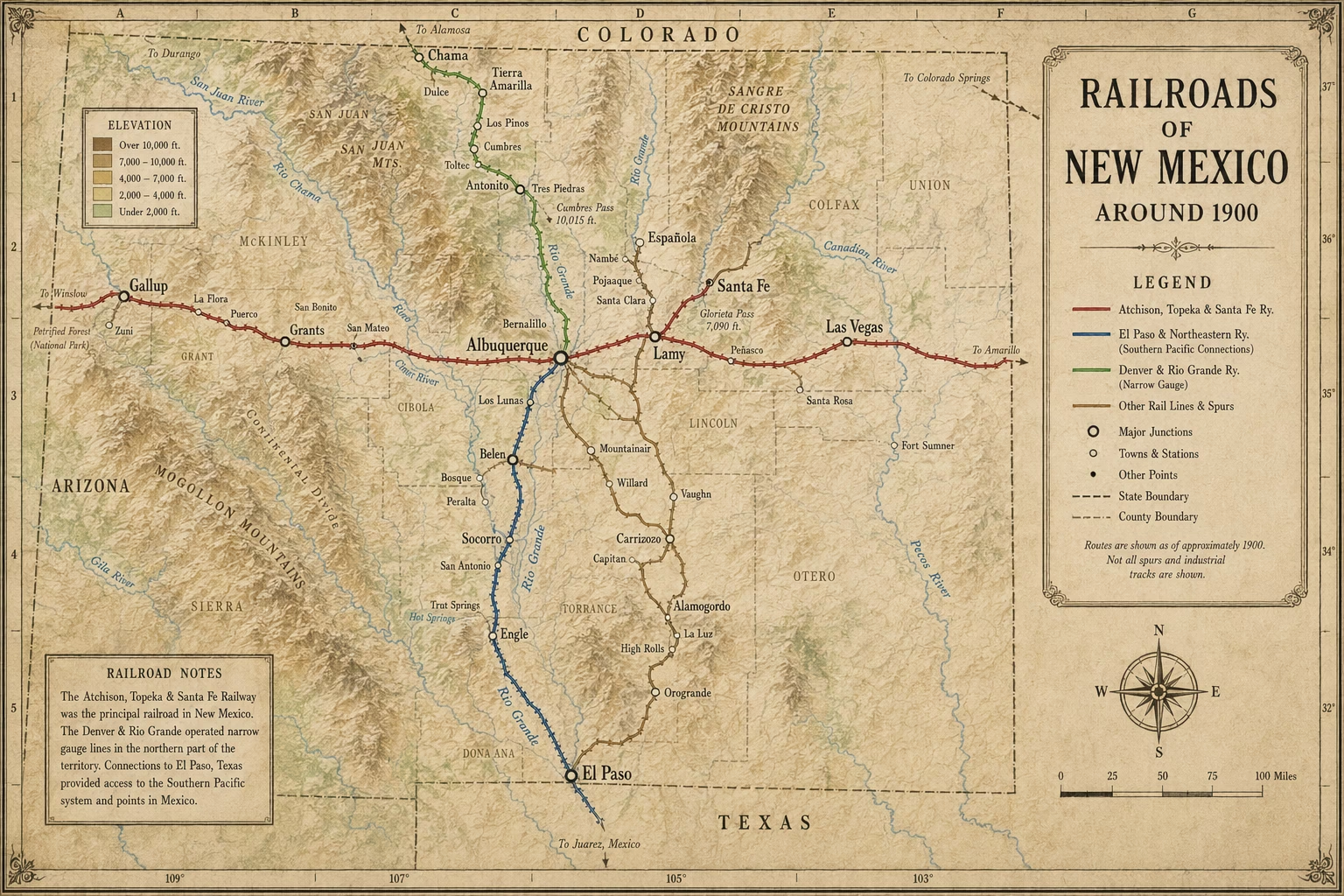
Timber, Steam, and the Long Pull out of Chama
There’s a certain hour in the mountains when the world hasn’t quite decided to wake up yet. The sky is a pale wash over the San Juans, the air is cold enough to sting your lungs just a little, and the smell of wood smoke hangs low like it belongs there.
That’s when the day begins in Chama.
Not with a clock. Not with a bell. But with a fire.
Before First Light
Down in the yard, the locomotive sits quiet for a moment, black and still, like a big animal at rest. Then a man steps up into the cab, and the ritual begins.
Coal first. Then kindling. Then the slow coaxing of flame into something that will carry weight up a mountain.
By the time the fire takes hold, the engine starts to breathe. A soft hiss at first, then a deeper exhale as steam begins to build. Iron warming, water turning, pressure rising. You can feel it in your boots before you hear it.
The crew gathers without much talk.
-
The engineer checks his gauges like a man reading the weather
-
The fireman feeds the flame, steady and patient
-
The brakemen move along the cars, couplers clanking in the quiet
Out beyond the yard, in the timber country, another crew is already at work.
In the Woods
Up near the high ridges north of town, where the spruce and fir stand thick and tall, the timber crew has been moving since before dawn.
Axes and crosscut saws bite into wood with a rhythm that carries across the trees. Two men on a saw, pulling in long, even strokes. Back and forth. Back and forth. No wasted motion. No hurry either. Just work.
When a tree starts to go, there’s a moment when everything stills.
Then comes the crack.
The fall.
And the ground takes it with a thud you feel in your chest.
Limbs are cut. Trunks are trimmed. The logs are dragged by horse teams or rolled by hand down toward the loading spur, where the narrow gauge cars wait like patient mules.
This isn’t fast work. It’s honest work.
And it all leads back to the railroad.
Loading the Day’s Work
By mid-morning, the first loads are ready.
Flatcars sit on the spur, their steel frames cold and ready. The logs are rolled up with peaveys and muscle, men calling out to one another in short, sharp bursts.
“Easy now… hold it… roll!”
A log settles into place with a heavy knock. Then another. And another.
Chains are pulled tight. Stakes are checked. The load has to hold, because the line back to Chama isn’t forgiving.
Not with the grades. Not with the curves.
Not with the mountains watching.
The Climb to Cumbres
Back in town, the locomotive has come alive.
Steam curls from the stack. The whistle sounds once, long and low, rolling across the valley like a morning prayer. The train eases forward, couplers tightening one by one, until the whole string of cars is moving.
The run out of Chama starts gentle enough.
Then it begins to climb.
This is narrow gauge country, built by the Denver and Rio Grande Western Railroad to go where standard lines couldn’t. The track narrows, the curves tighten, and the grade rises toward the high point at Cumbres Pass.
The engine works now.
You can hear it in the cadence of the exhaust… chuff… chuff… chuff… each stroke a little harder than the last. The fireman keeps feeding coal, sweat starting to bead even in the cool mountain air.
Below, the Rio Chama winds its way through the valley. Above, the peaks stand quiet and indifferent.
The train climbs anyway.
Meeting the Timber
Somewhere along that climb, the train meets the day’s work coming down.
Loaded cars from the spur are coupled in. The crew checks the chains again, tightens what needs tightening, and gives the signal.
Now the train carries the forest with it.
Fresh-cut timber, still smelling of sap and earth, rides behind the engine. Logs that stood for decades now beginning a different journey.
Down the mountain. Into town. Out into the wider world.
Over the Pass
At the top, near the high country around Antonito and the line that would one day be known as the Cumbres & Toltec Scenic Railroad, the air thins and the wind carries a sharper edge.
The engine pauses there, just for a moment.
Steam drifting. Crew catching a breath. The world spread out in every direction.
Then comes the other side.
The Descent
If the climb is work, the descent is discipline.
Brakes are set carefully. The engineer watches the line like a hawk. Too much speed here and the train will remind you who’s really in charge.
The cars groan and settle as gravity takes hold. The logs shift slightly, chains creaking under the strain. Every man on that crew knows his job, and he does it without needing to be told.
Down through cuts and across trestles, the train makes its way back toward Chama.
Back in Town
By late afternoon, the train rolls into the yard.
The same place it started, but not quite the same.
The logs are unloaded, sorted, stacked. Some will head to sawmills. Some will move on to mines. Some will travel farther than the men who cut them will ever go.
The crew moves a little slower now.
The fire is banked. The engine settles back into stillness. The tools are put away, not with ceremony, but with care.
Another day done.
The Rhythm of It All
What strikes you, if you spend time thinking about it, is the rhythm.
Not rushed. Not careless. Just steady.
-
Trees cut in the morning
-
Logs loaded by midday
-
Trains climbing and descending with the weight of it all
-
Evening settling over a town that depends on that work
It’s a rhythm that tied the forest to the railroad, and the railroad to the rest of the world.
What Remains
Today, if you stand in Chama and watch a steam engine ease out of the yard, you’re seeing a piece of that same story.
The stakes are different now. The cargo isn’t the same. But the sound… the smell… the feel of it… that hasn’t changed much at all.
Out in the woods, the old spurs are mostly gone. The camps have faded back into the trees. But if you know where to look, you can still find traces.
A cut in the hillside.
A line through the timber that doesn’t quite belong.
A sense that men worked here, hard and long, and then moved on.
The Legacy of the Narrow Gauge
The narrow gauge lines out of Chama weren’t built for comfort. They were built for purpose.
To bring timber out of the mountains.
To connect remote country to railheads and markets.
To make something useful out of a landscape that didn’t give up its resources easily.
And in doing so, they left behind something more than track.
They left behind a story.
A story of men and machines working together in a place that demanded respect. A story of mornings that started in the cold and ended in the quiet satisfaction of work done right.
Standing There Today
If you find yourself up that way, take a moment.
Stand near the tracks. Close your eyes if you want.
You might hear the wind in the trees. Maybe a distant engine if the timing’s right. And if you let your mind wander just a bit, you can almost see it…
A crew gathering in the half-light.
A locomotive coming to life.
A line of cars waiting for the day’s load.
And a narrow ribbon of steel leading out of Chama, carrying the work of the mountains down into the world.
That’s the story of the narrow gauge.
Not written in books first.
Written in timber, steam, and the long pull of a train climbing into the high country.



0 Comments