
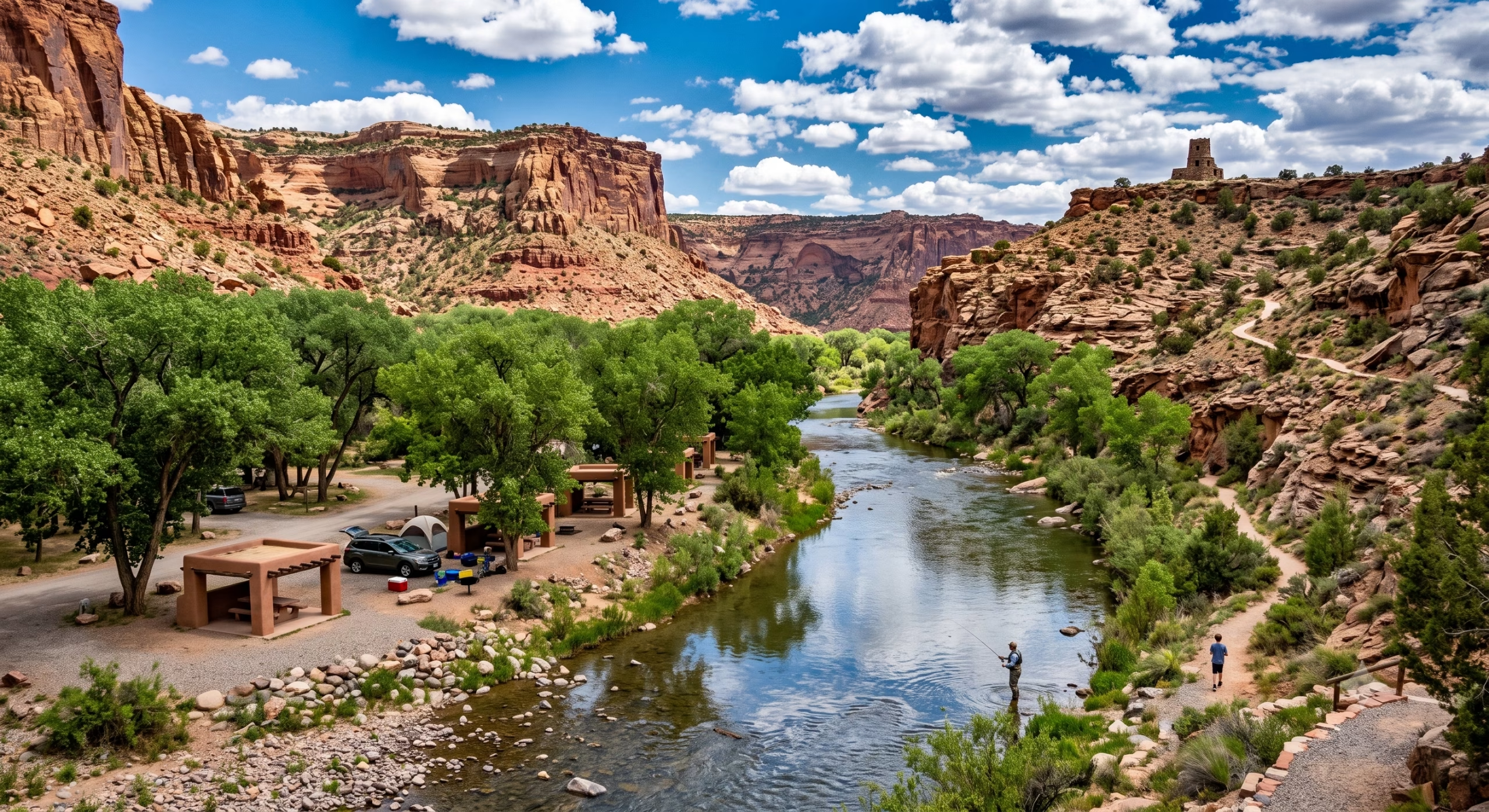
There is a quiet, timeless rhythm to Northern New Mexico that catches you completely off guard if you aren't paying attention. You can be driving down the interstate with the air conditioner humming and the radio playing, and then you take a turn down a winding two-lane ribbon of asphalt and suddenly step back fifty years. That is precisely what happens when you head south from Interstate 25 into the sandstone canyon of Villanueva State Park.
When summer rolls around—whether hosting family or heading out for a quiet midweek getaway—outdoor enthusiasts across New Mexico are drawn to the places where cool water, towering shade trees, and high-desert cliffs meet. Villanueva State Park is one of those legendary spots. Tucked neatly into a dramatic, red sandstone box canyon carved over eons by the Pecos River, this state park feels like a secret garden nestled inside the high desert. Tall, ancient Fremont cottonwoods form a cool green canopy overhead, while red and orange canyon walls soar hundreds of feet into the brilliant Southwestern sky.
Whether you are looking to cast a line into the cool currents of the Pecos River, camp under a blanket of high-desert stars, or simply introduce the next generation to the simple joys of a streamside picnic, Villanueva State Park offers an unforgettable Southwestern escape. In this comprehensive guide, we will explore everything you need to plan your ultimate trip: from detailed fishing strategies and tackle setups to camping amenities, seasonal weather, driving routes from across New Mexico, and local historic lodging.
Discovering Villanueva State Park and the Historical Pecos Valley
Located just two miles downstream from the historic, centuries-old village of Villanueva, Villanueva State Park occupies a uniquely sheltered pocket of the Pecos River Valley. Long before it became a beloved state park, this canyon served as a sanctuary and transit corridor for Native American tribes, Spanish colonial settlers, and early Southwestern ranchers. The adjacent village retains its traditional Spanish colonial charm, complete with adobe structures, narrow dirt lanes, and the historic Church of Our Lady of Guadalupe perched gracefully above the valley floor.
What makes Villanueva State Park so special for outdoor recreation enthusiasts and families alike is its intimate scale. Unlike massive, sprawling reservoirs or high-traffic national parks, Villanueva feels personal. The park is nestled tightly between vertical sandstone bluffs, creating a natural windbreak and a microclimate where shade is plentiful and the sound of flowing river water is ever-present.
The park is divided into distinct upper and lower sections. The lower section hugs the banks of the Pecos River, offering shaded picnic sites, riverfront camping, and easy water access. The upper section perches along the canyon hillside and mesa overlook, providing panoramic vistas of the winding Pecos Valley below.
Getting There: Driving Routes and Distances from Major New Mexico Cities
Part of the magic of visiting Villanueva State Park is the journey itself. Driving through the rolling pinon-juniper hills and descending into the Pecos River Canyon sets the stage for a memorable outdoor adventure. Here is how to navigate to the park from the major hubs in Northern and Central New Mexico.
1. From Santa Fe, New Mexico (Approx. 55 Miles | 1 Hour)
The drive from Santa Fe is quick, scenic, and straightforward:
- Take Interstate 25 South out of Santa Fe heading east toward Las Vegas, NM.
- Take Exit 323 for NM-3 South toward Encino/Villanueva.
- Follow NM-3 South for approximately 15 miles as it winds through scenic valleys and the historic village of Villanueva.
- Turn left onto Dodge Road (NM-274) and follow the signs 1.5 miles directly into the entrance of Villanueva State Park.
2. From Albuquerque, New Mexico (Approx. 95 Miles | 1 Hour 25 Minutes)
Travelers heading from Albuquerque have two delightful options:
- Option A (via I-40 East): Take I-40 East out of Albuquerque toward Moriarty and Clines Corners. Take Exit 219 at Clines Corners for NM-3 North. Follow NM-3 North for roughly 21 miles through the rolling grasslands until you reach the village of Villanueva, then turn right onto Dodge Road into Villanueva State Park.
- Option B (via I-25 North): Take I-25 North through Santa Fe, continuing toward Exit 323, then follow NM-3 South directly into the park.
3. From Taos, New Mexico (Approx. 112 Miles | 2 Hours 15 Minutes)
A beautiful high-country road trip connecting the Sangre de Cristo Mountains to the Pecos Valley:
- Take US-285 South / NM-68 South out of Taos heading toward Española and Santa Fe.
- Bypass Santa Fe on US-285 South / I-25 South heading toward Las Vegas, NM.
- Take Exit 323 off I-25 for NM-3 South and proceed 15 miles into the park.
4. From Chama, New Mexico (Approx. 182 Miles | 3 Hours 15 Minutes)
Connecting the green borders of Colorado down into the central Pecos basin:
- Take US-84 South from Chama through Abiquiu and Española.
- Merge onto I-25 South outside Santa Fe toward Las Vegas, NM.
- Take Exit 323 for NM-3 South and follow the winding canyon highway directly to Villanueva State Park.
Driving Distance & Route Summary Table
| Origin City | Distance (Miles) | Est. Drive Time | Primary Route Highlights |
|---|---|---|---|
| Santa Fe | 55 Miles | 1 Hour | I-25 South to Exit 323, NM-3 South |
| Albuquerque | 95 Miles | 1 Hour 25 Mins | I-40 East to Exit 219 (Clines Corners), NM-3 North |
| Taos | 112 Miles | 2 Hours 15 Mins | US-285 South to I-25 South, NM-3 South |
| Chama | 182 Miles | 3 Hours 15 Mins | US-84 South to I-25 South, NM-3 South |
Trout Fishing on the Pecos River at Villanueva State Park
For anglers across New Mexico, the Pecos River is legendary. While the upper Pecos Canyon near Tererro and Cowles gets heavy angling pressure during peak summer weekends, the stretch flowing through Villanueva State Park offers a more relaxed, accessible, and uniquely scenic trout fishing experience.
The river here meanders gently past sandstone boulders, deep canyon pools, undercut clay banks, and gravel riffles shaded by towering cottonwoods. It is an ideal setting for anglers of all skill levels, from experienced fly fishers working tight pocket water to young children catching their very first trout on a spinning rod off the bank.
Public Access Areas along the River
One of the biggest advantages of fishing at Villanueva State Park is the hassle-free public access. The entire river frontage within the park boundaries—stretching over a mile along both banks—is completely open to public fishing. Ample streamside parking, well-maintained footpaths, and footbridges make it exceptionally easy to walk the shoreline, scout deep holes, and move from pool to pool without worrying about private property boundaries.
Target Trout Species
The New Mexico Department of Game and Fish actively manages and stocks this section of the Pecos River. The primary species you will encounter include:
- Rainbow Trout (Oncorhynchus mykiss): Heavily stocked during the cooler months of autumn, winter, and spring. These hard-fighting fish are eager takers of both artificial lures and traditional baits.
- Brown Trout (Salmo trutta): Wild, stream-bred brown trout reside in the deeper canyon pools and shaded undercut banks year-round. They are more selective and cautious than stocked rainbows, rewarding stealthy anglers who cast flies or small lures close to structure during dawn and dusk.
Productive Water Temperatures and Best Time of Day
Trout are cold-water species whose feeding activity is heavily influenced by water temperature and light conditions:
- Productive Water Temps: The ideal water temperature window for active trout feeding on the Pecos River is between 48°F and 62°F. When water temperatures fall within this range, trout metabolism is high, and they feed aggressively on insect hatches and baitfish.
- Best Time of Day: During late spring and summer, the early morning hours (from first light until about 10:00 AM) and late afternoon into dusk (5:30 PM until sunset) are by far the most productive times. Early mornings offer cool water and low light, while late afternoons often trigger aquatic insect hatches. In late fall and winter, mid-day hours (11:00 AM to 3:00 PM) are best as the high-desert sun warms the water into the prime feeding zone.
Spinning Rod Strategy and Gear Selection
Spin-fishing on the Pecos River inside Villanueva State Park is exceptionally productive, especially for families and anglers who want to cover water quickly. Because the river here features a mix of narrow channels, medium pools, and overhanging vegetation, compact and responsive gear is essential.
1. Spinning Rods & Reels Setup
- Spinning Rods: A 5'6" to 6'6" light or ultra-light action graphite spinning rod is ideal. A light rod allows you to feel delicate bites from wild brown trout while casting lightweight lures with precision under overhanging cottonwood branches.
- Spinning Reels: Pair your rod with a 1000 to 2000 series spinning reel featuring a smooth, front-adjustable drag system to prevent light lines from snapping when a bigger fish bolts into the current.
- Spinning Line: Spool your reel with 4lb to 6lb monofilament or fluorocarbon line. Fluorocarbon is highly recommended in clear water conditions because it is virtually invisible underwater and offers excellent abrasion resistance against smooth river rocks.
2. Effective Spinning Lures & Baits
When target fishing along the Pecos banks, having a variety of proven lures and baits ensures success:
- Spinning Lures: Classic inline spinners like #0 or #1 Panther Martins (black body with yellow dots and gold blade, or yellow body with red dots), Mepps Aglia (#0 or #1 in silver or gold), and small 1/16 oz. Blue Fox Vibrax. Small 1/8 oz. gold or silver Kastmaster spoons are also lethal when retrieved slowly through deeper canyon pools.
- Spinning Bait: For stocked rainbow trout, floating PowerBait (chartreuse, rainbow, or garlic scented), salmon eggs, or natural earthworms rigged on a size 10 or 12 bait-holder hook with a small split shot suspended 12 to 18 inches above the hook work exceptionally well. Always check current New Mexico Department of Game and Fish regulations regarding bait restrictions.
Fly Fishing Strategy, Rods, and Patterns
For fly fishing enthusiasts, the Pecos River at Villanueva State Park offers a classic small-to-medium stream experience. Precise presentations, light tippets, and careful wading around logjams and sandstone ledge structures will earn you tight lines throughout the day.
1. Fly Rods, Reels, & Line Selection
- Fly Rods: An 8'6" to 9'0" 4-weight or 5-weight fly rod with a medium-fast action is the quintessential tool for this water. It provides enough delicate touch for short nymph presentations while keeping enough backbone to roll-cast under low-hanging trees.
- Fly Reels: A lightweight 4/5 weight fly reel equipped with a smooth disc drag or reliable click-and-pawl design to hold your backing and line.
- Fly Line: A standard weight-forward floating fly line (WF4F or WF5F) in a high-visibility color like moss green or willow. Pair this with a 9-foot 5X or 6X tapered monofilament or fluorocarbon leader.
2. Highly Productive Flies & Nymphs
Matching the local insect life in the Pecos River is straightforward if you keep these proven patterns in your fly box:
- Nymphs (Sub-Surface): Nymphing accounts for over 80% of trout caught in these waters. Key patterns include Beadhead Pheasant Tail Nymphs (sizes 14-18), Gold-Ribbed Hare's Ear (sizes 14-16), Zebra Midges (black or red, sizes 18-22), and Prince Nymphs (sizes 14-16). Fishing a two-nymph rig under a small yarn or rubber indicator is extremely effective in deep seams.
- Dry Flies (Surface): When aquatic insects hatch during late afternoons, switch to surface patterns such as Parachute Adams (sizes 16-20), Elk Hair Caddis (tan or olive, sizes 14-18), and Griffith's Gnat (sizes 18-22).
- Streamers: For larger wild brown trout hiding along undercut banks, swing or strip a size 8 or 10 Woolly Bugger (black, olive, or brown) through the tail-outs of deep pools.
Camping at Villanueva State Park: Camping Sites and Amenities
Camping at Villanueva State Park is one of the most rewarding state park experiences in New Mexico. The sound of the flowing Pecos River combined with the night sky away from city lights makes for a restful high-desert retreat.
Campground Layout & Site Options
The park offers roughly 36 developed campsites spread across two distinct settings:
- Lower Riverside Campground: Nestled directly along the Pecos River under giant cottonwood trees. These sites feature lush shade, water access just steps away, and custom adobe-style shelter pergolas built over individual picnic tables—a signature design touch unique to New Mexico State Parks.
- Upper Hillside Campground (El Pueblo Loop): Elevated on the canyon slope above the river, offering panoramic views of the sandstone cliffs and valley. These sites receive wonderful morning sun and cool evening breezes.
- RV Facilities & Hookups: Select campsites offer 30-amp electrical hookups alongside fresh water hookups, accommodating RVs and travel trailers. An RV dump station is available on-site during designated park operational hours.
- Tent Sites & Primitive Camping: Plenty of level, shaded tent pads equipped with fire rings, grill grates, and picnic pergolas are available for traditional tent campers.
Park Amenities & Recreational Facilities
- Restrooms & Hot Showers: Clean, modern restroom facilities equipped with hot showers and flush toilets are centrally located in the main campground area.
- Group Shelter: A large, historic adobe group day-use shelter complete with picnic tables and barbecue grills—perfect for family reunions, group outings, and club gatherings (reservations required).
- Hiking Trails:
- The River Trail: An easy, family-friendly trail that meanders flatly along the Pecos River banks.
- The View / Vista Trail: A moderate 1.5-mile loop trail that climbs up to the mesa rim, crossing footbridges and leading to a scenic lookout point featuring a stone lookout tower with breathtaking views of the entire canyon.
- Playground & Visitor Center: A fun playground area for kids is located near the lower sites, and the park visitor center features educational displays on local ecology, wildlife, and history.
Weather and Seasonal Guide
Understanding Northern New Mexico’s seasonal climate shifts ensures you pack the right clothing and gear for your visit to Villanueva State Park.
1. Spring (March through May)
Spring brings blooming wild willows, leafing cottonwoods, and crisp morning mountain air. High temperatures range from 55°F to 72°F, while nights remain cool (30°F to 42°F). Spring runoff from the upper Pecos snowpack can raise river levels in April, making early spring prime time for stocked rainbow trout before high water hits.
2. Summer (June through August)
Summer days feature warm high-desert sunshine with highs typically ranging from 82°F to 90°F. However, because the park sits in a shaded canyon at over 5,600 feet elevation, temperatures drop pleasantly into the upper 50s at night. July and August bring the historic Southwestern monsoon season, characterized by brief, dramatic afternoon thunderstorm showers that refresh the valley and cool the air.
3. Fall (September through November)
Fall is arguably the most spectacular season to visit Villanueva State Park. In October, the massive Fremont cottonwoods turn a brilliant golden-yellow against the fiery red sandstone cliffs. Daytime temperatures are mild and comfortable (60°F to 75°F), river flows stabilize into crystal-clear pools, and wild brown trout become highly active ahead of their winter spawn.
4. Winter (December through February)
Winter in the canyon is peaceful, quiet, and crisp. High temperatures average 45°F to 55°F under brilliant blue Southwestern skies, with nighttime lows dropping below freezing (20°F to 30°F). Light dustings of snow occasionally highlight the red rock canyon ledges, creating photographic magic. The state park remains open year-round for winter camping and cold-water trout fishing.
Nearby Historic Lodging and Contact Directory
If you prefer comfortable indoor lodging with modern amenities after a long day of outdoor adventure on the Pecos River, several exceptional historic options are available within a short drive of Villanueva State Park. Below is the complete contact directory for park headquarters and top local accommodations.
1. Villanueva State Park (Park Headquarters)
Your direct line for campground reservations, river condition updates, and park gate hours.
- Physical Address: 135 Dodge Road, Villanueva, NM 87583
- Phone Number: (575) 421-2957
- Email Address: adam.gallegos@emnrd.nm.gov
- Website: www.emnrd.nm.gov/spd/find-a-park/villanueva-state-park/
2. Pecos River Cabins (Pecos, New Mexico)
Charming, cozy riverside cabins located upstream in the village of Pecos, right on the banks of the Pecos River. Perfect for anglers and outdoor lovers.
- Physical Address: 20 River Cabin Road, Pecos, NM 87552
- Phone Number: (505) 757-8752
- Email Address: pecosrivercabins@gmail.com
- Website: www.pecosrivercabins.com
3. Historic Plaza Hotel (Las Vegas, New Mexico)
Known as the "Grand Hotel of New Mexico," this beautifully restored 1882 Victorian hotel overlooks the historic plaza in nearby Las Vegas, NM, featuring elegant dining and rich history.
- Physical Address: 230 Plaza Park, Las Vegas, NM 87701
- Phone Number: (505) 425-3591
- Email Address: info@plazahotellvnm.com
- Website: www.plazahotellvnm.com
4. Hotel Castañeda (Las Vegas, New Mexico)
A landmark 1898 Fred Harvey railroad hotel meticulously restored to its original glory along the Santa Fe railroad line, offering historic rooms and exceptional trackside dining.
- Physical Address: 524 Railroad Avenue, Las Vegas, NM 87701
- Phone Number: (505) 425-3591
- Email Address: info@castanedahotel.org
- Website: www.castanedahotel.org
Plan Your Trip to Villanueva State Park Today!
There is an old saying here in the Land of Enchantment that the best places aren't found on busy highway signs—they are discovered down quiet canyon roads where the river leads the way. Villanueva State Park is a shining example of everything that makes Northern New Mexico so unforgettable. From the towering red sandstone bluffs and shady cottonwood groves to the cool, winding currents of the Pecos River, it offers an authentic, soul-soothing Southwestern escape for families, anglers, and campers alike.
So pack your day packs, load up your spinning rods or fly gear, double-check your New Mexico fishing license, and hit NM-3 into the canyon. Whether you spend your day netting rainbow trout along the banks, hiking up to the mesa lookout tower, or sharing stories around a campfire under an adobe pergola, Villanueva State Park is waiting to welcome you.
Have you fished or camped at Villanueva State Park recently? What's your favorite spot along the Pecos River? Leave a comment below and share your adventure with our New Mexico Outdoor Sports Guide community! Don't forget to subscribe to our newsletter for the latest streamflow updates, trail guides, and family adventure reports across New Mexico. Tight lines and happy trails!
0 Comments