
There is a specific rhythm to the earth that you can only truly feel from the back of a good horse. It’s a rhythmic, creaking sway, a soft thud of hooves against sun-baked dirt, and a slow-rolling perspective that forces you to match paces with the landscape. Growing up as a boy on a working cattle ranch in the Kansas Flint Hills, that rhythm was the soundtrack of my youth. Back then, a saddle wasn't a recreational seat; it was an office, an outpost, and a way of life. Decades later, when my wife Paulette and I built our dream mountain-top log home at the Angel Fire Ski Resort—where we spent 17 spectacular years looking out over the Moreno Valley, watching the light change on Wheeler Peak and tracking elk herds near Eagle Nest Lake—the high country became our sanctuary. Now, as an octogenarian enjoying our splendid summers down in Santa Fe before escaping the heavy winter snows for the warm shores of Lake Mohave, Arizona, I find that my passion for the American Southwest hasn't dimmed one bit. If anything, my desire to capture this wild country through my camera lens and share it with the next generation has only grown stronger.
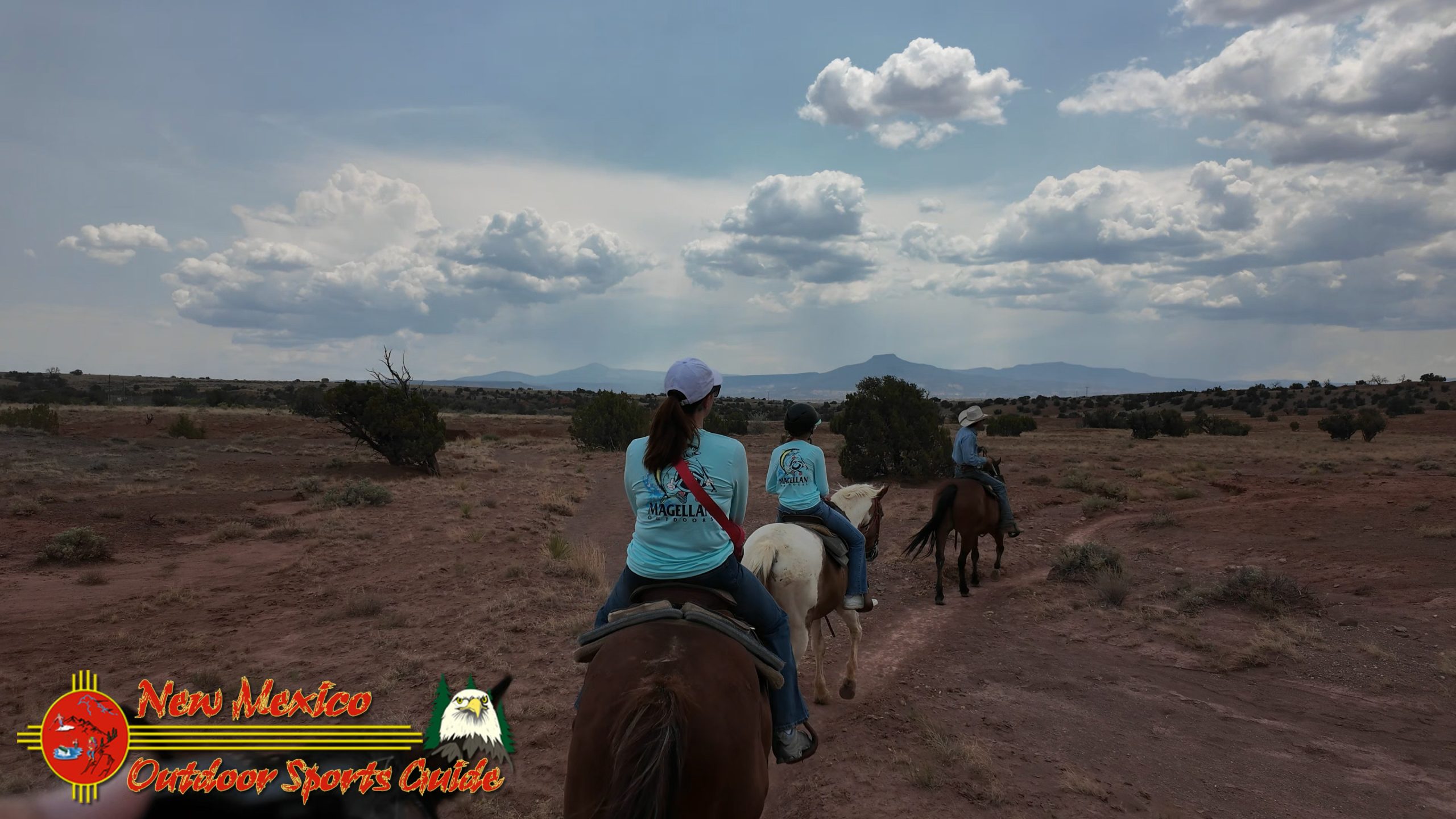
Every summer, our daughter Kelly and her two daughters, Adison and Sophie, make the journey up from Texas to visit us in New Mexico. It’s the undisputed highlight of our year. This particular summer carried a special weight of transition: Adison had just proudly graduated from Trinity University, stepping out into the wider world, while her younger sister, Sophie, was catching her breath on the edge of a big milestone of her own, about to start her first year of high school.
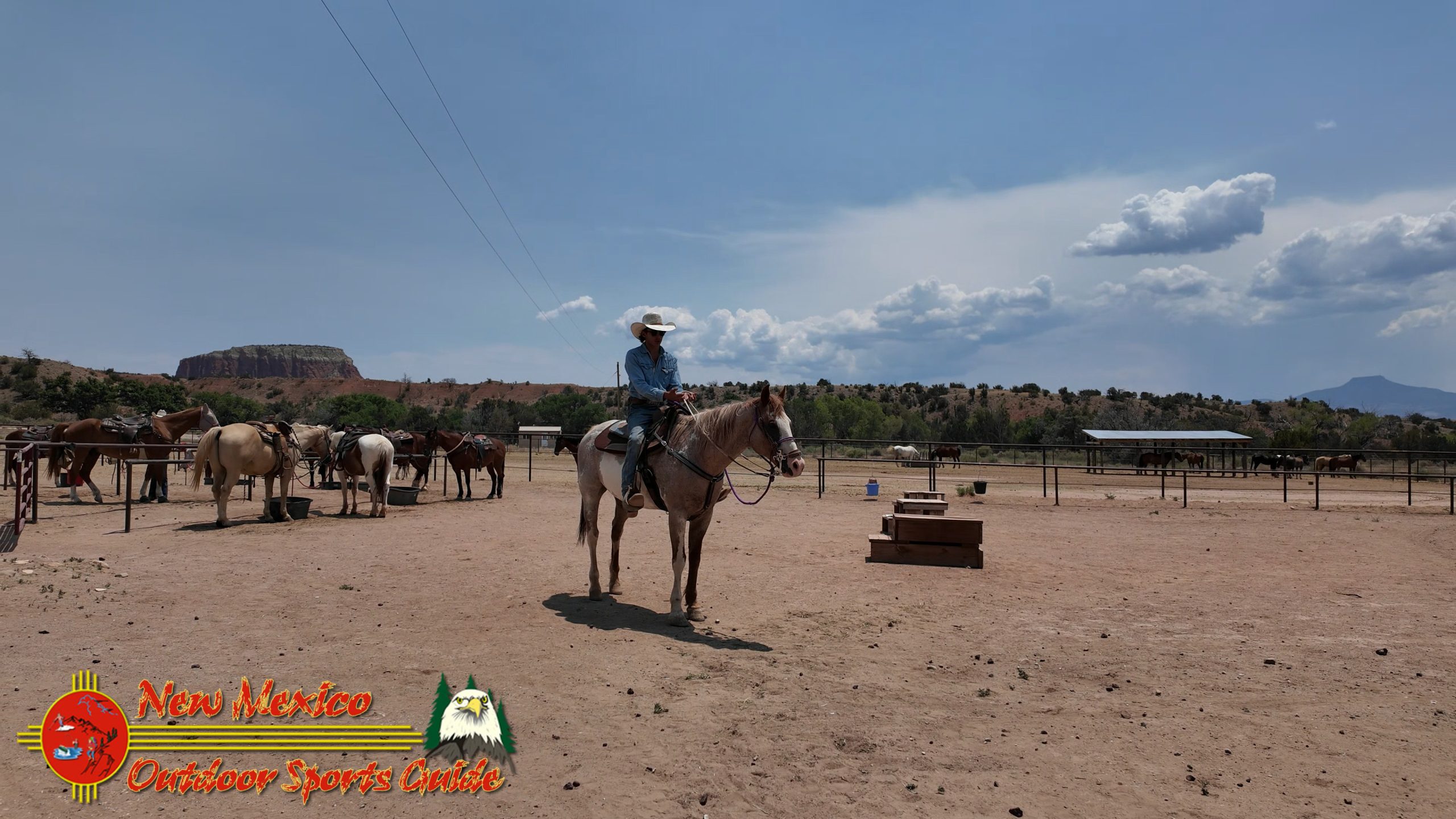
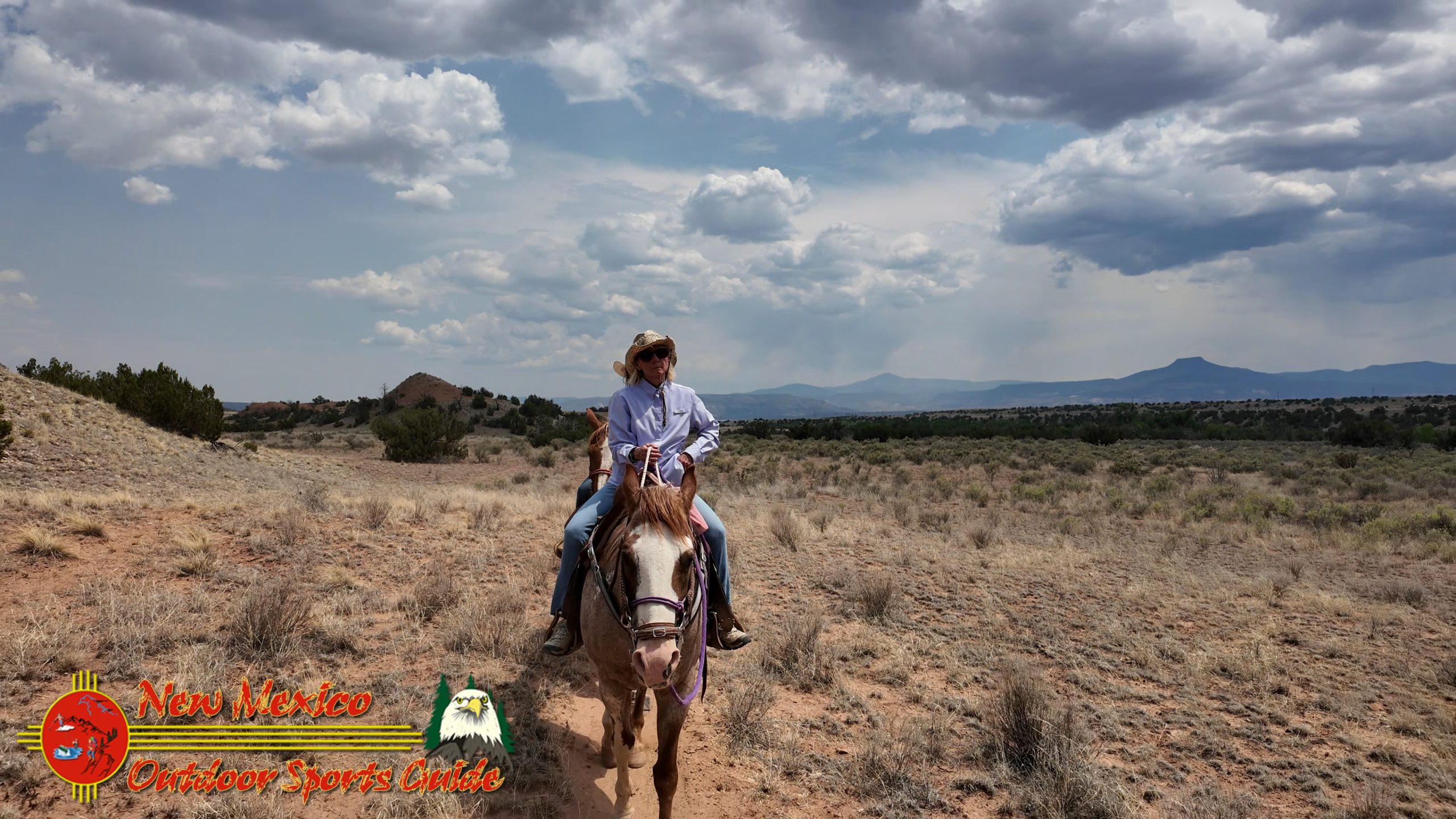
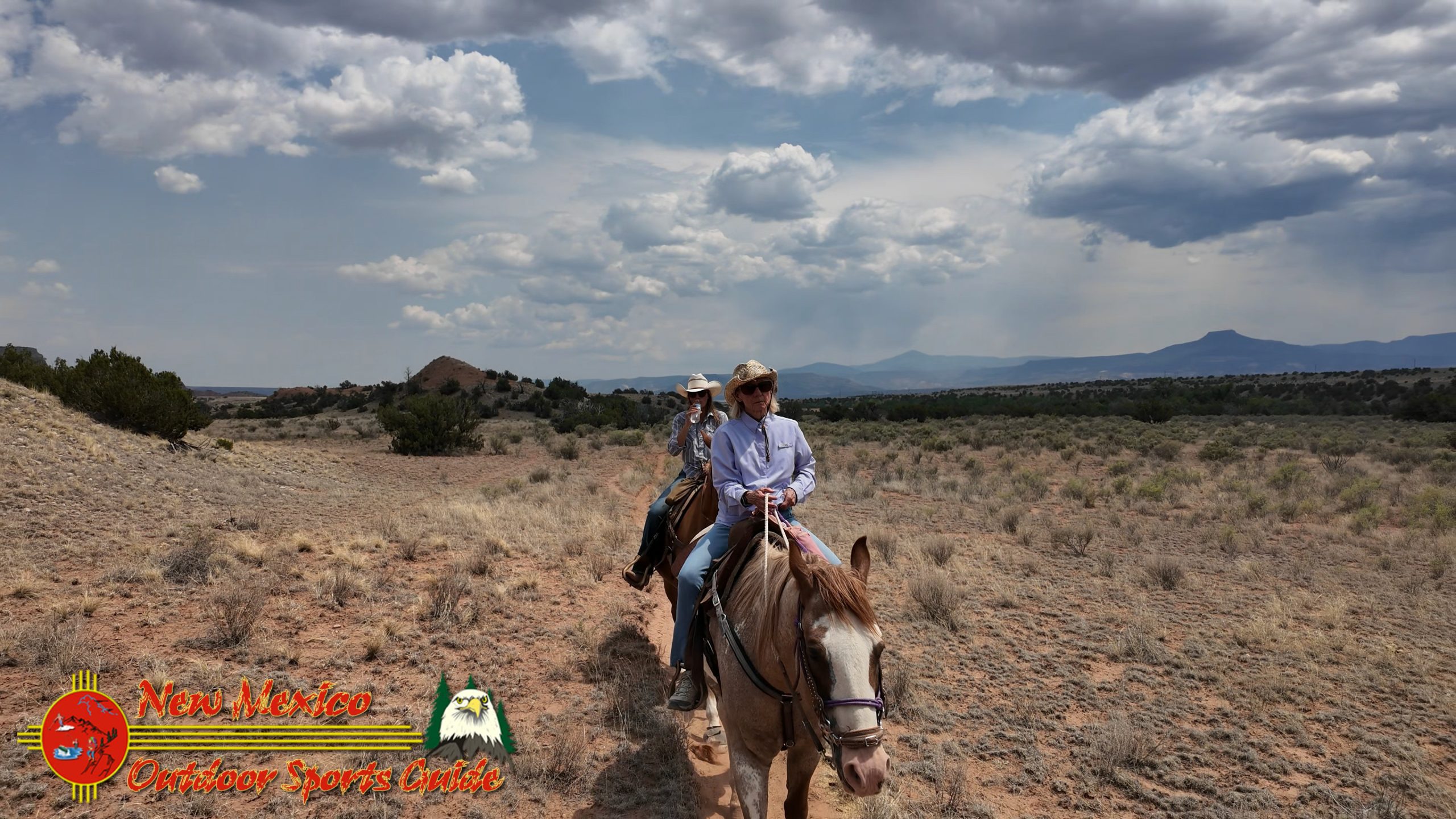
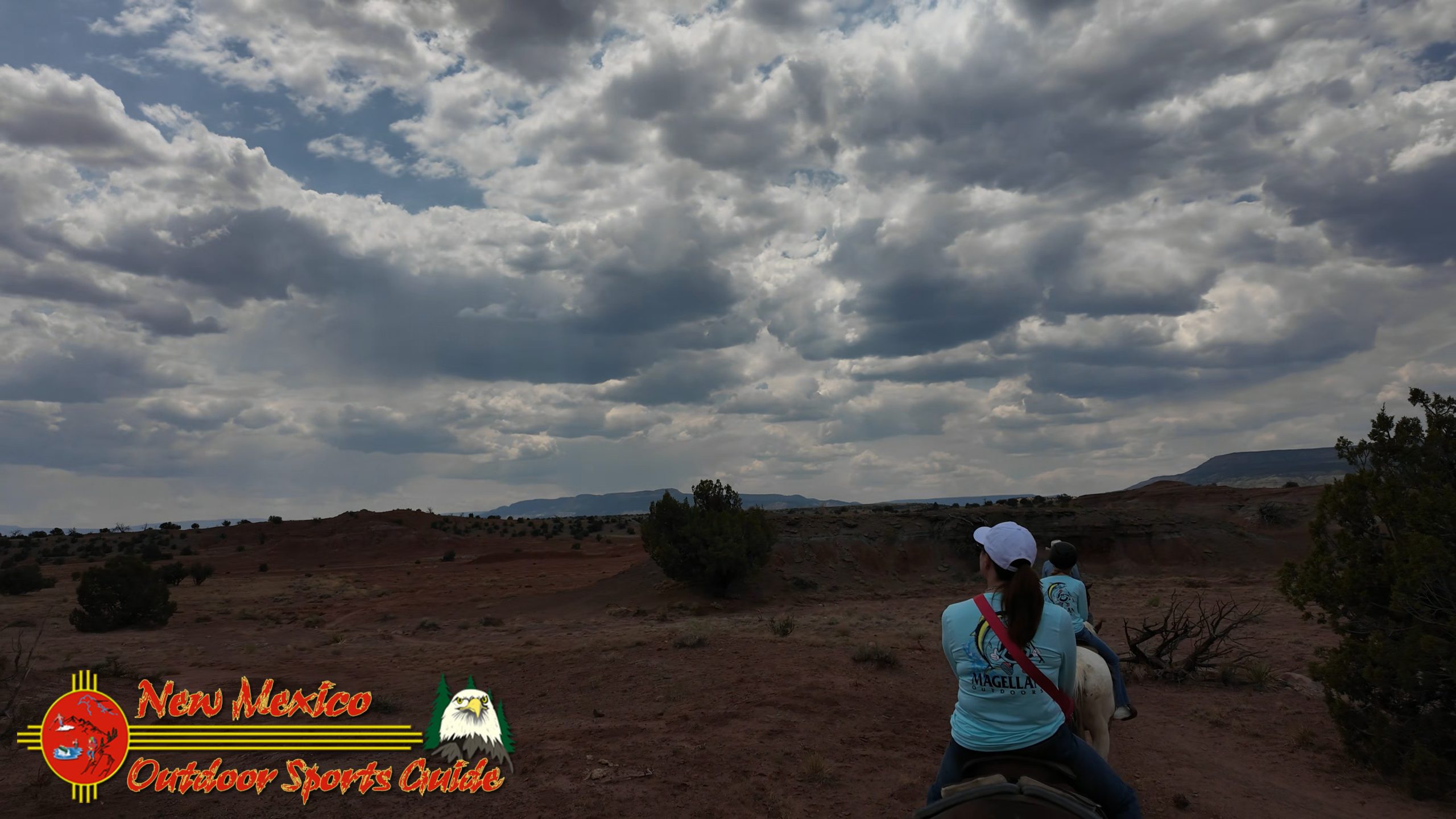
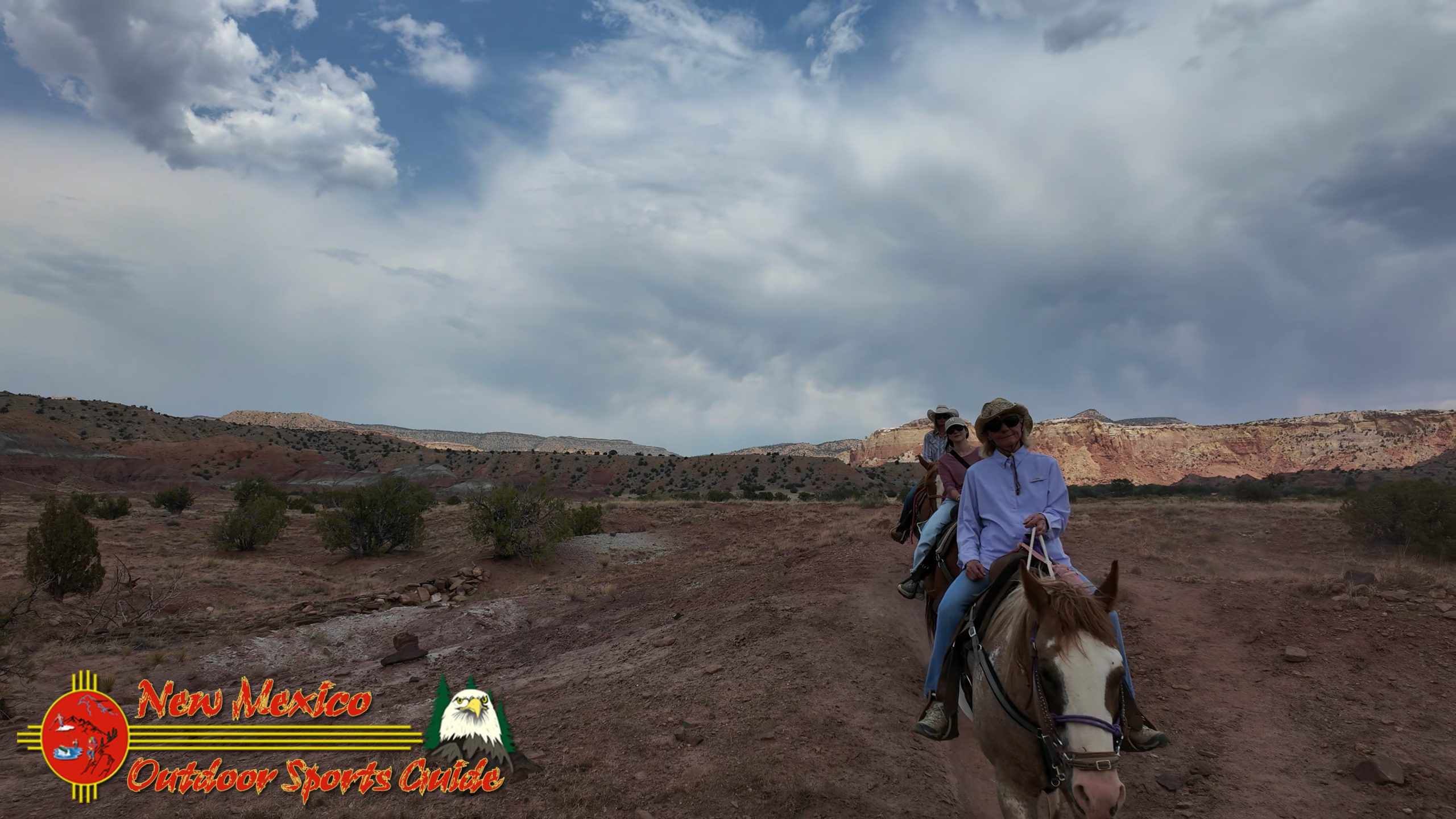
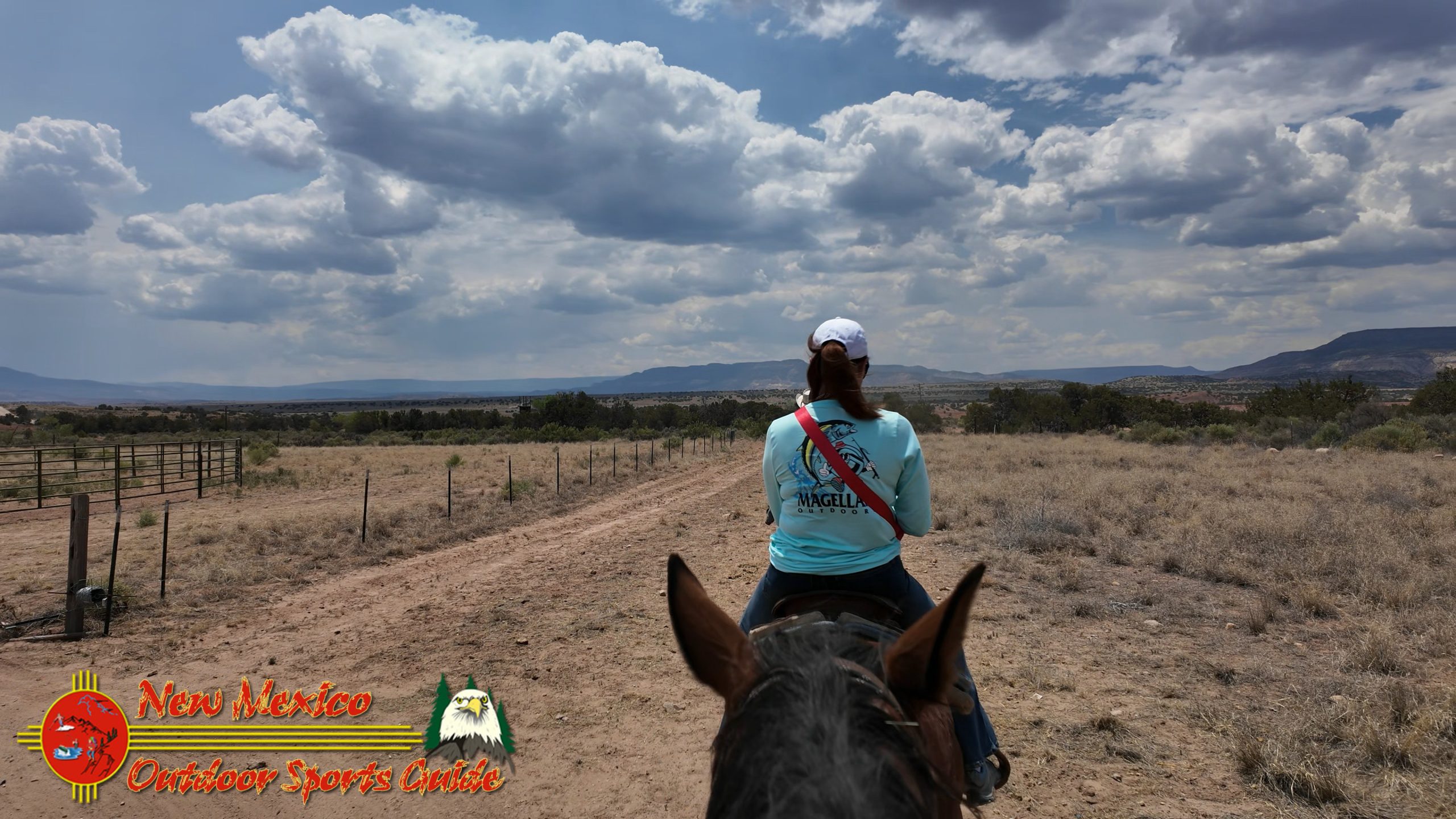
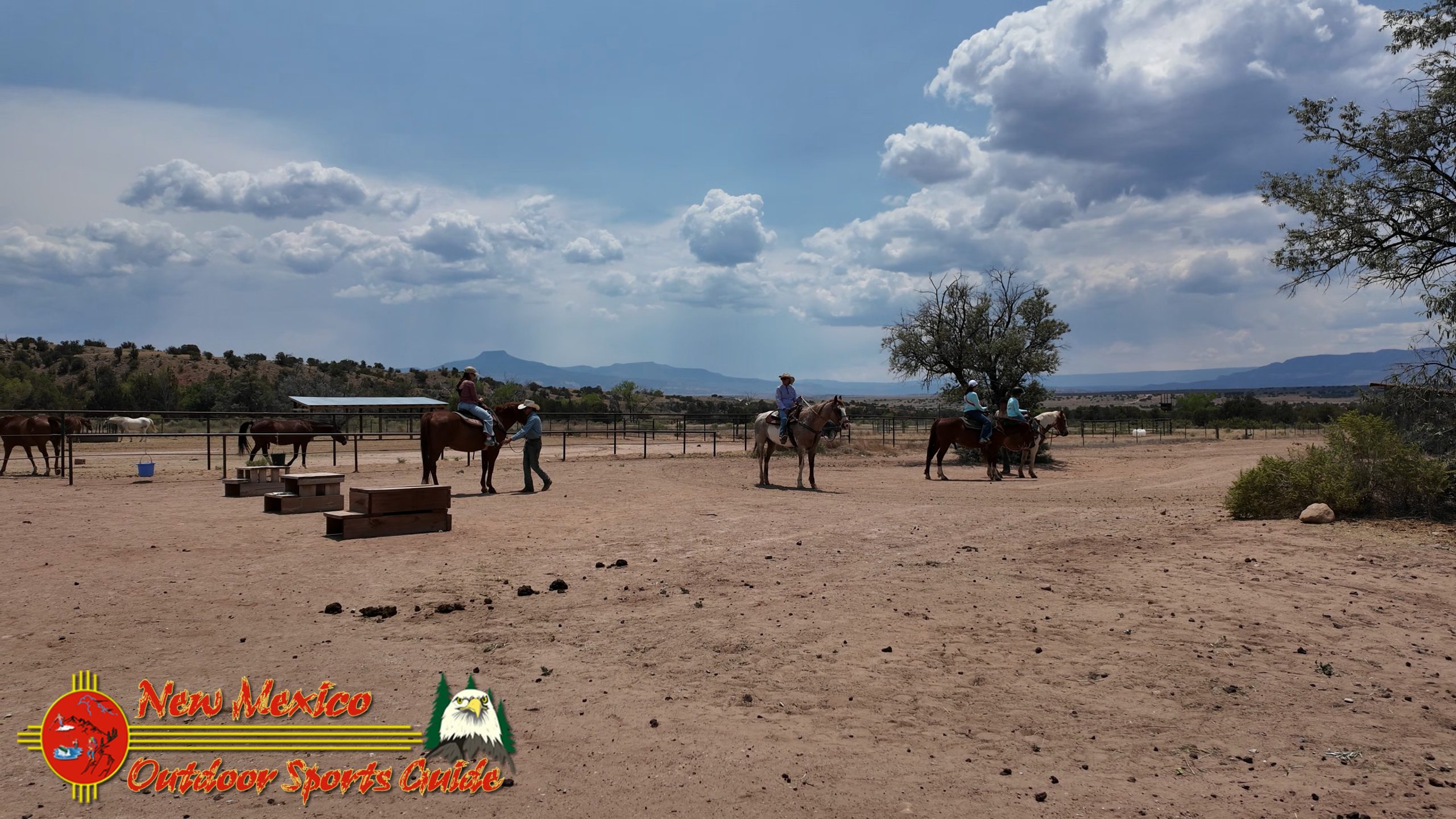
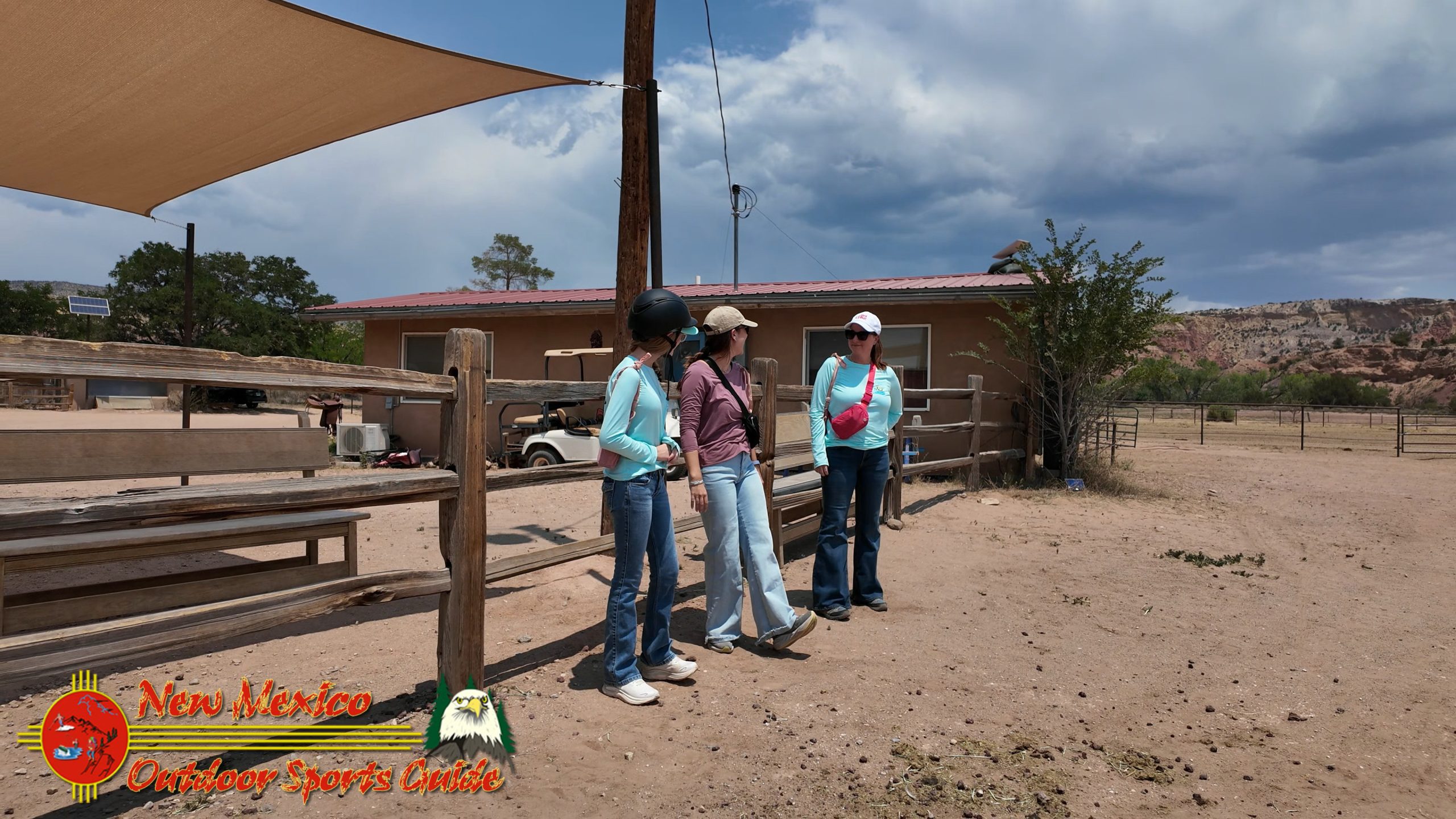
To mark these fleeting family moments, we’ve made it a tradition over the past few years to include a horseback riding excursion as one of our major family outings. There is simply no better way to detach from the frantic buzz of modern gadgets and connect with one another than on a trail. This year, we decided to book an afternoon ride at the legendary Ghost Ranch, located just outside of Abiquiu.
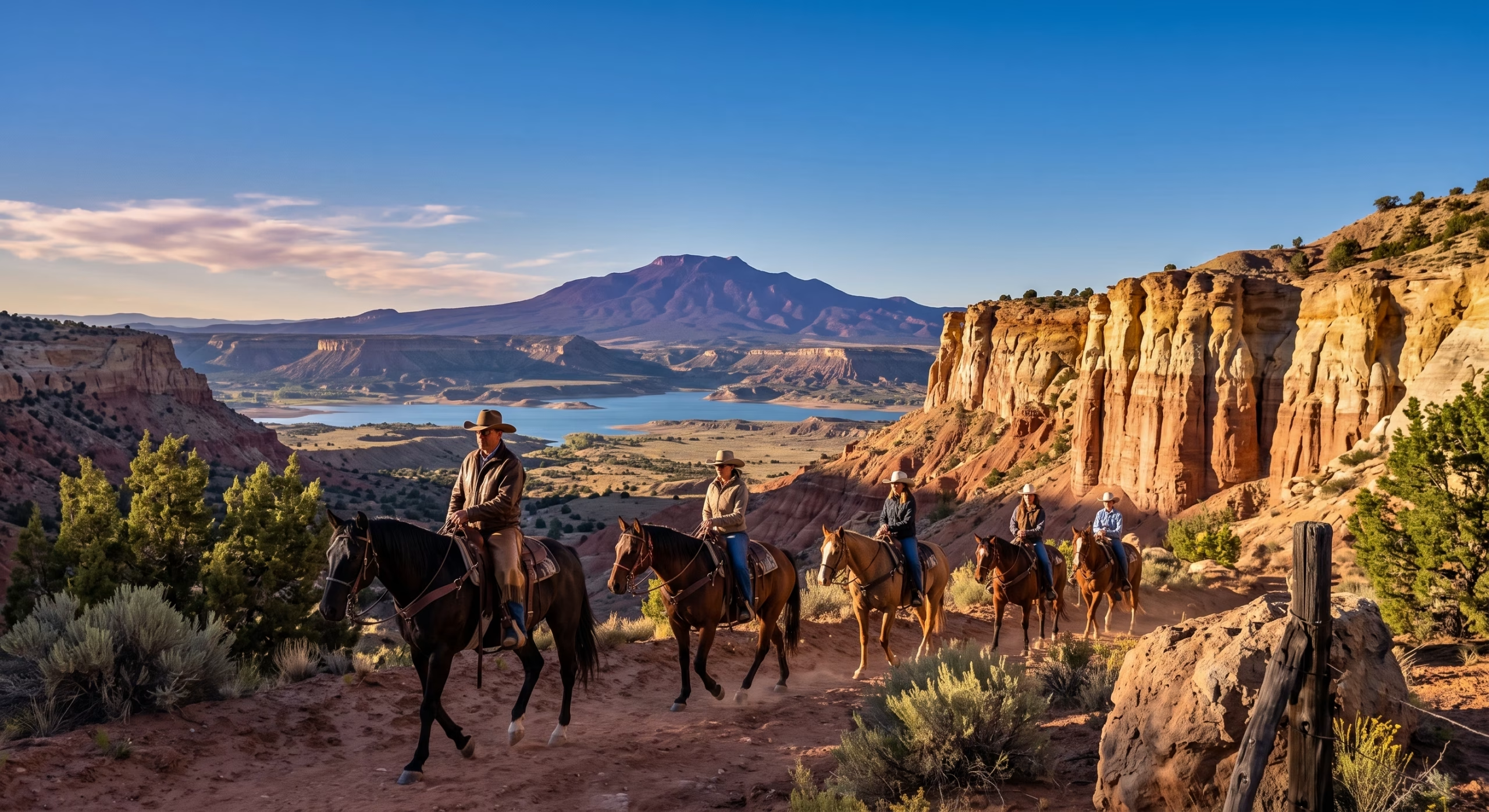
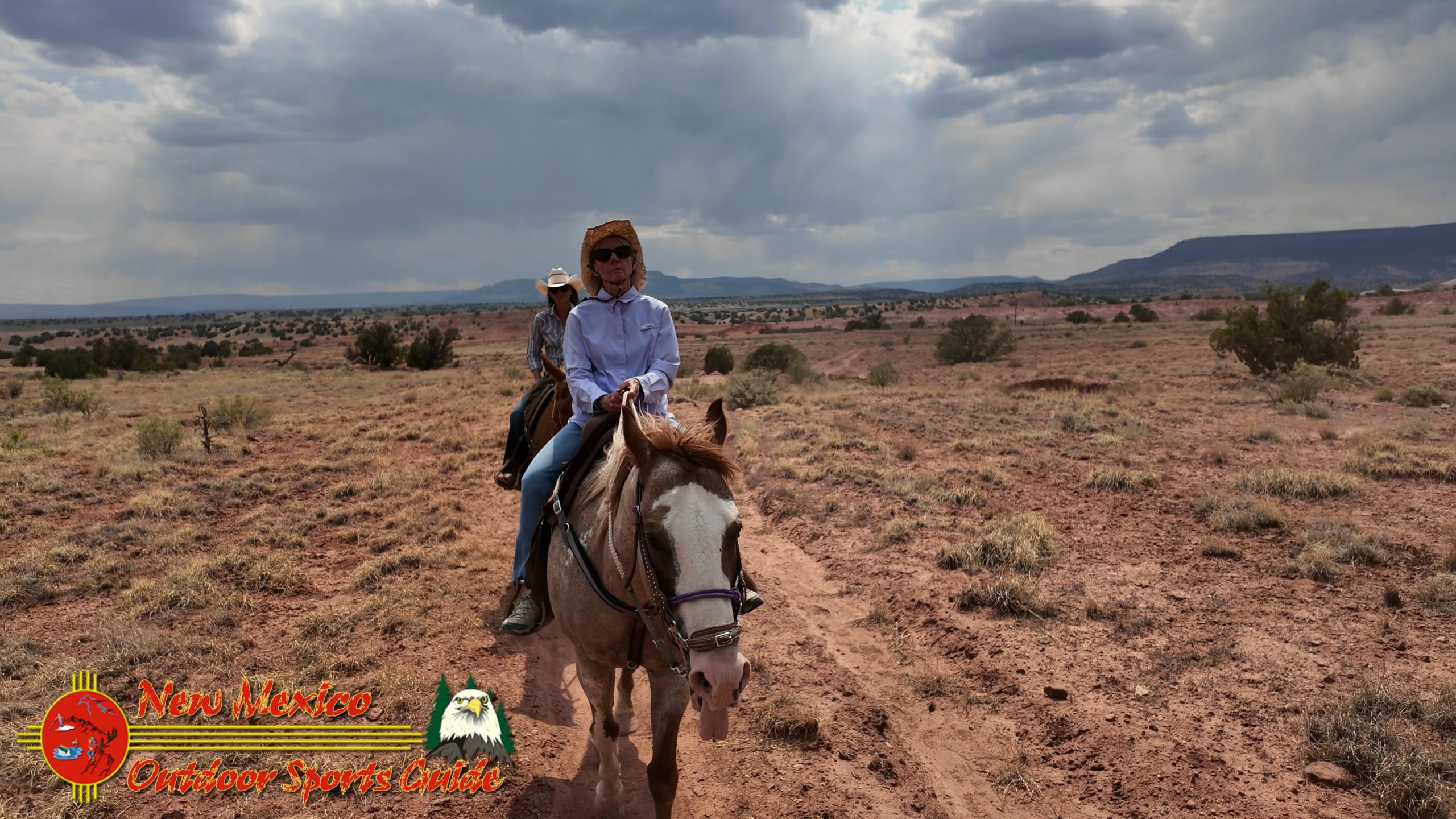
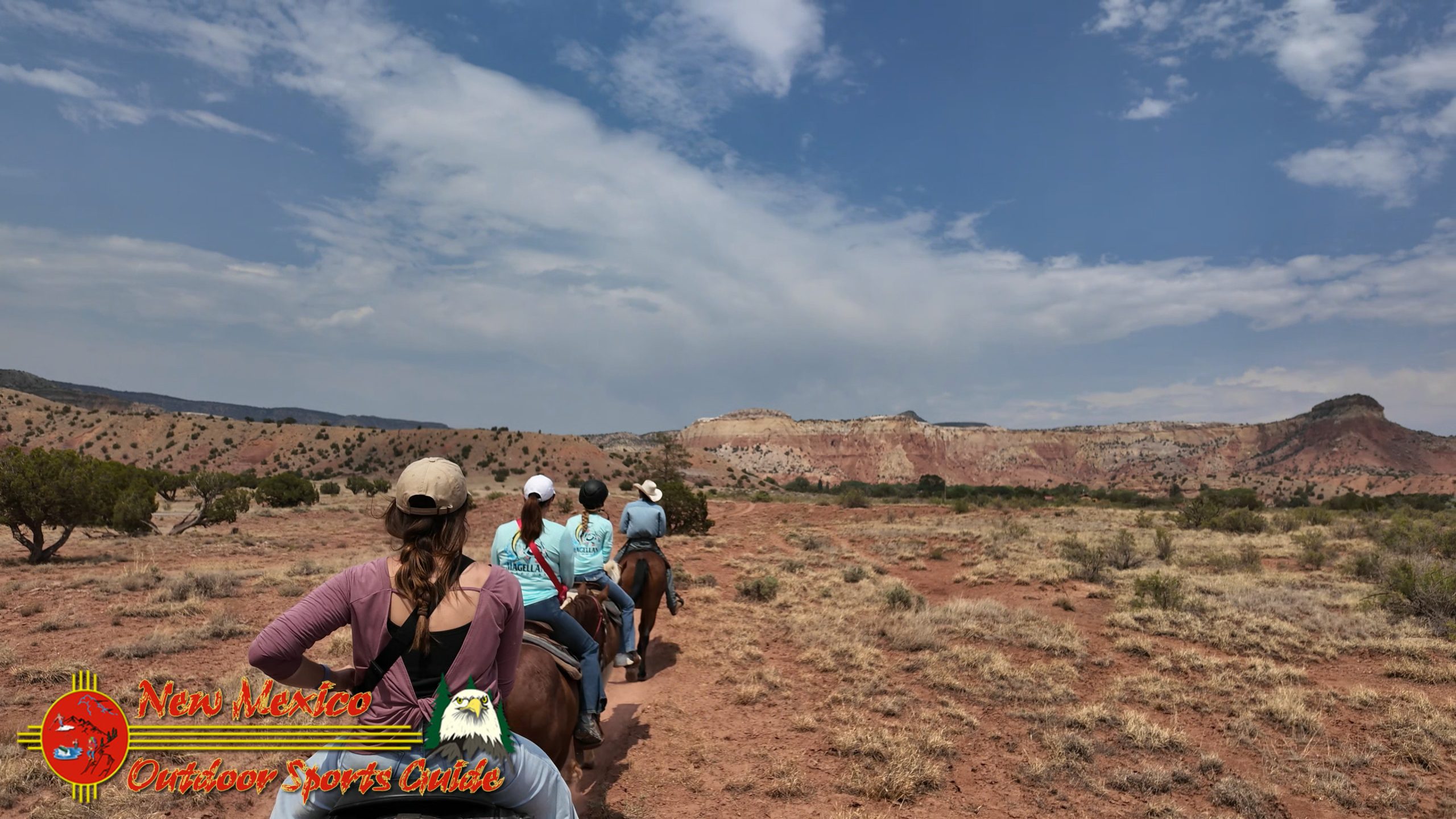
Over the years, Paulette and I have explored countless canyons, high valleys, and alpine rivers across the Land of Enchantment, but this excursion instantly cemented itself as one of our absolute favorites. The sheer visual majesty of the living museum landscape—the very same sweeping vistas, wind-carved amphitheaters, and stark, vibrant cliffs that inspired Georgia O’Keeffe’s most famous masterpieces—would have been more than enough to satisfy my photographer’s eye. However, what transformed this hour-and-a-half ride into something genuinely unforgettable was our lead wrangler, Pierce. A true old-school storyteller with a deep reverence for the land, Pierce possessed the rare gift of narrative spinning. As our small string of horses wound deeper into the colorful canyons, his voice echoed off the sandstone walls, bringing the enigmatic history of Rancho de los Brujos and the fiercely independent life of Georgia O’Keeffe into sharp, vivid focus.
The Haunting Roots of Rancho de los Brujos
As we swung into our saddles at the Ghost Ranch corrals and checked our stirrup lengths, the afternoon sun cast long, dramatic shadows against the towering yellow and red cliffs. Pierce turned back in his saddle, tipped his hat to the girls, and began to unspool the dark, fascinating history of the ground our horses were treading upon. Long before it was a sanctuary for artists, educators, and hikers, this isolated valley held a sinister reputation among the early Spanish settlers and local tribes, who knew it as Rancho de los Brujos—the Ranch of the Witches.
The origin of this ominous nickname is steeped in frontier folklore, cattle rustling, and the supernatural. In the 1800s, the valley was controlled by the notorious Archuleta brothers, a pair of brutal cattle thieves who utilized the labyrinthine canyons as a hidden stronghold to conceal stolen livestock. The geographical makeup of the box canyons provided the perfect natural corral; rustlers could drive hundreds of cattle into the recesses of the red cliffs, and from the valley entrance, they would completely vanish from sight.
To ensure that superstitious locals, lawmen, and rival ranchers stayed far away from their stolen booty, the Archuleta brothers devised a clever and terrifying psychological warfare campaign. They spread rumors throughout the Rio Chama valley that the canyon was cursed and heavily infested with malevolent spirits, shape-shifting witches (brujas), and the legendary Chindi—the vengeful ghosts of Navajo lore.
When travelers ventured too close to the canyon mouth at night, they reported hearing blood-curdling screams, unnatural howling, and the unsettling rattling of bones echoing through the dark rock formations. In reality, these terrifying noises were either the wind howling through the intricate network of narrow sandstone slot canyons or deliberate theatrical displays put on by the Archuleta gang. The brothers even went so far as to store their stolen gold and treasures in the hidden caves high up on the cliffs, ruthlessly murdering anyone who dared to spy on their operations.
The strategy worked brilliantly for years, embedding a deep-seated fear of the area into the regional consciousness. However, greed eventually did what the law could not. The brothers turned on one another in a deadly dispute over their buried loot. One brother murdered the other, only to be tracked down and hanged from a nearby cottonwood tree by a vengeful posse shortly thereafter. Though the rustlers were gone, the eerie name stuck, and the fear of the brujos lingered in the valley for generations. It wasn’t until later owners took over the property that the name was softened into the English translation we know today: Ghost Ranch. Sitting on my horse, listening to Pierce tell that tale while looking at my granddaughters' wide, captivated eyes, I could almost hear the faint echo of that old frontier drama in the wind.
Georgia O’Keeffe: The Spirit and the Stone
You cannot talk about Ghost Ranch without talking about Georgia O’Keeffe, and you cannot truly understand O’Keeffe without seeing the light hitting these cliffs. As our horses maintained a steady, purposeful walk along the dusty trail, Pierce pointed his gloved hand toward the unmistakable, flat-topped silhouette of Cerro Pedernal rising majestically in the distance.
"O’Keeffe used to say that if she painted that mountain enough times, God would give it to her," Pierce murmured, his voice full of respect for the legendary painter. "And in a way, she ended up owning it in the minds of everyone who sees it."
Born in Wisconsin and rising to immense fame in the bustling, avant-garde art world of New York City alongside her husband, the famed photographer Alfred Stieglitz, O’Keeffe was perpetually suffocated by the crowded concrete canyons of the East Coast. She first journeyed to New Mexico in 1929, and the moment she breathed the high-desert air and witnessed the unvarnished, raw geometry of the landscape, her soul found its true home. She was deeply drawn to the isolation, the stark clarity of the atmosphere, and the absolute silence of the desert.
In 1934, she discovered Ghost Ranch, which was then operating as an exclusive, high-end dude ranch catering to wealthy Easterners, scientists, and creatives. O’Keeffe was so utterly captivated by the terrain that she packed up her paints and moved into a small, spartan adobe house on the property called Rancho de los Tres Burros. For years, she split her time between New York and New Mexico, but following Stieglitz’s passing, she permanently relocated to the area, dividing her days between her home at Ghost Ranch and her beautifully restored adobe estate in the nearby village of Abiquiu.
O’Keeffe lived a fiercely independent, almost monastic life out here. She would wake before dawn, pack her beloved wooden sketching materials, and head out into the brutal midday heat, sometimes driving her customized Ford Model A sedan deep into the wilderness to use the backseat as a mobile studio. She didn't just paint the grand landscapes; she collected the bleached animal bones scattered across the sagebrush floor, holding them up against the brilliant blue sky to view the negative space. She taught the world that there was a profound, spiritual beauty in the discarded remnants of desert life.
As a fellow photographer who spent nearly two decades capturing the shifting light of northern New Mexico, I felt a deep, kinship with her artistic obsession. The way the shadows fall into the crevices of the badlands at 3:00 PM is a masterpiece in its own right, a constantly shifting canvas of high-contrast drama that demands your absolute presence.
A Geological Masterpiece and the Living Landscape
From a geological standpoint, riding through Ghost Ranch is akin to taking a slow-motion journey back through hundreds of millions of years of Earth's volatile history. The landscape is a towering, multi-layered cake of ancient sedimentary rock, chronicling a time when this vast, arid desert was actually a low-lying, tropical floodplain teeming with prehistoric life.
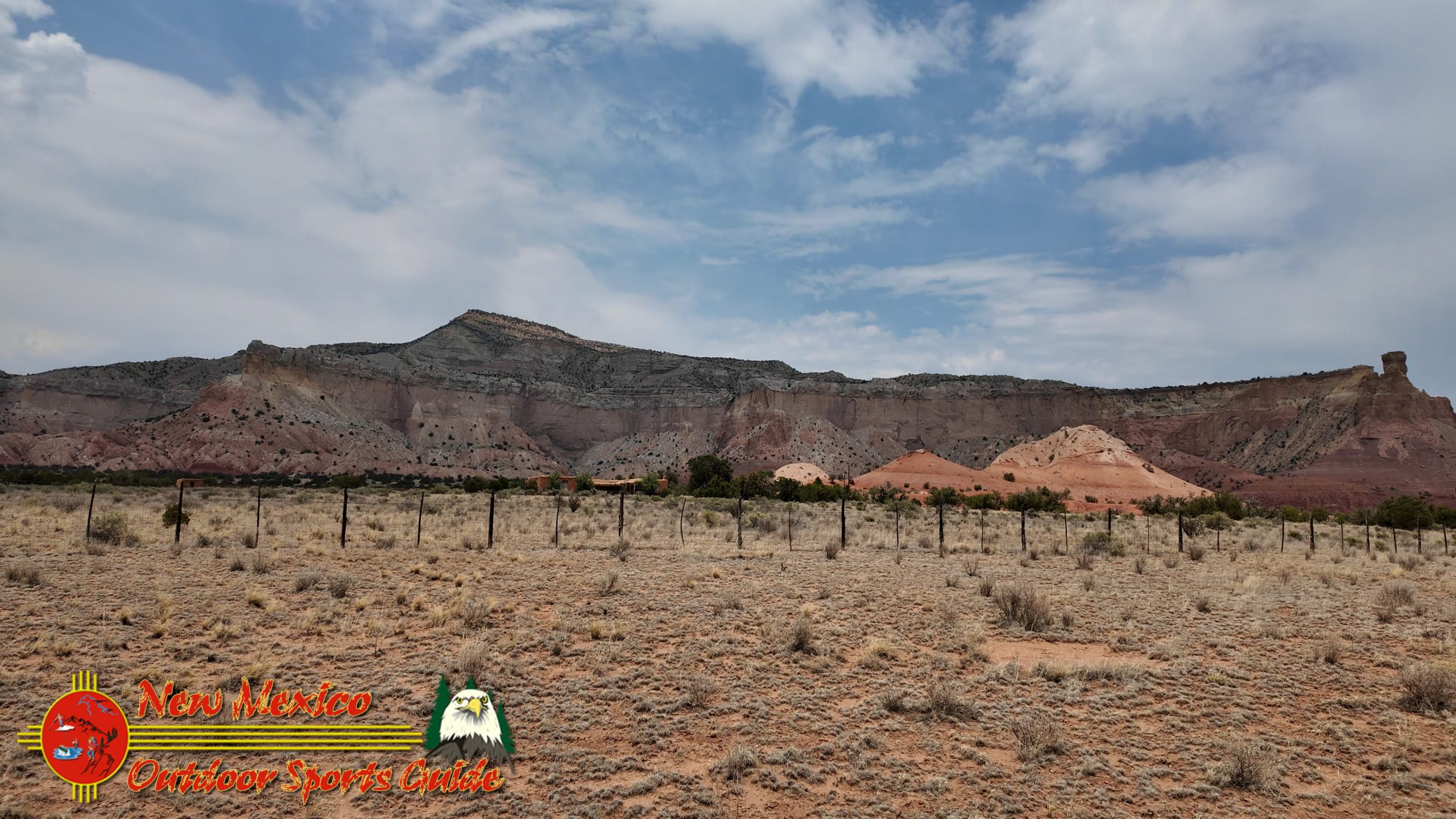
Pierce halted our string of horses at a magnificent overlook, allowing us to absorb the full, panoramic scope of the valley. The cliffs surrounding us were a breathtaking, psychedelic tapestry of color. The lowest visible layers consist of the deep brick-red mudstones and siltstones of the Chinle Formation, deposited by massive, ancient river systems during the Late Triassic period. Above the red mudstones sat the striking, brilliant yellow and creamy white sandstones of the Entrada Formation, representing ancient sand dunes that marched across the landscape during the Jurassic era. Capping the high mesas were the resilient, protective layers of the Morrison Formation and Todaxto limestone.
For an old ranch boy who appreciates good dirt, and a photographer who lives for texture, the erosion patterns on these cliffs are nothing short of spectacular. Millennia of fierce summer monsoons and brutal winter freeze-thaw cycles have carved the soft sandstone into intricate, fluted spires, deep amphitheaters, and razor-sharp ridges.
But the geology of Ghost Ranch holds an even deeper claim to fame: it is one of the most important paleontological sites on the face of the globe. In 1947, a legendary paleontologist named Edwin H. Colbert discovered an incredibly dense mass grave of dinosaurs down at the ranch's Whitaker Quarry. The site yielded hundreds of exceptionally preserved skeletons of Coelophysis, a sleek, agile, bipedal carnivore that was one of the earliest dinosaurs to roam North America during the Triassic period. Measuring about three feet tall and eight feet long, this little hunter is now proudly recognized as the official state fossil of New Mexico. Standing in the silent shadow of those ancient cliffs, knowing that our horses were walking over the footprints of creatures that ruled the earth 200 million years ago, brought a profound sense of humility to all of us, especially young Sophie and Adison.
Ghost Ranch Today: Preservation, Activities, and Accommodations
Today, the 21,000-acre wonderland of Ghost Ranch operates not as an exclusive playground for the wealthy, but as an open, welcoming non-profit education and retreat center owned and protected by the Presbyterian Church. It serves as a vibrant, living sanctuary where people from all walks of life, faiths, and backgrounds can escape the relentless noise of modern society to rest, create, and reflect.
The ranch offers an astonishingly diverse array of daily activities designed to get visitors out into the open air. For those who want to experience the landscape on foot, the property boasts several world-class hiking trails. The Chimney Rock Trail is a moderate, three-mile round-trip trek that climbs steadily up a scenic ridge, rewarding hikers with a breathtaking, birds-eye view of the entire valley floor and the dramatic rock formation that gives the trail its name. For the more adventurous, the Kitchen Mesa Trail challenges your lungs with a steep, exhilarating scramble up a hidden slot canyon, leading to a sprawling, high-altitude white gypsum plateau that feels like standing on the surface of the moon.
Beyond hiking and the exceptional horseback riding tours out of the ranch's stables, visitors can participate in guided Georgia O’Keeffe landscape tours, landscape photography workshops, pottery making, silversmithing, yoga retreats, and outdoor painting classes. The ranch also houses two fascinating, small-scale museums on-site: The Florence Hawley Ellis Museum of Anthropology, which showcases ancient Paleo-Indian artifacts discovered in the valley, and the Ruth Hall Museum of Paleontology, where you can stand face-to-face with the incredible Coelophysis fossil blocks excavated right on the property.
Accommodations at Ghost Ranch are intentionally kept simple, rustic, and wonderfully historic, allowing guests to fully unplug. There are no televisions or high-tech distractions in the rooms. Lodging options range from charming, historic adobe rooms with private bathrooms to shared-bath dormitory-style cabins that echo the classic dude-ranch era of the 1930s. For those who want to sleep directly under the canopy of the brilliant, unpolluted desert night sky, the ranch features a beautifully maintained campground and RV park, operational from mid-May through October, offering full hookups, coin-operated hot showers, and pitch-black night skies perfect for stargazing.
The Scenic Jewels of the Abiquiu Basin: Lake and River
As you make the journey out to Ghost Ranch, the landscape is profoundly shaped by two magnificent bodies of water that cut through the arid red rock country like liquid sapphires: Abiquiu Lake and the Rio Chama.
Abiquiu Lake is a spectacular, 5,200-acre reservoir created by a massive earth-fill retaining dam constructed by the U.S. Army Corps of Engineers. The contrast here is utterly cinematic: the sparkling, crystal-blue waters of the lake are framed by towering, fiery red sandstone cliffs and the distant, sweeping silhouette of Cerro Pedernal. It is a haven for outdoor recreation enthusiasts, offering exceptional opportunities for flat-water kayaking, paddleboarding, swimming, and boating. For anglers, the lake's deep, cool waters are highly renowned for producing some of the finest walleye and smallmouth bass fishing in northern New Mexico. Sitting on the shoreline with a camera as the early morning mist rises off the water's surface is an experience that will soothe any old fisherman's soul.
Feeding into the lake and carving its way directly through the heart of the basin is the historic Rio Chama, a major, major tributary of the Rio Grande. The Rio Chama is a river steeped in both ecological importance and raw, natural beauty. A designated National Wild and Scenic River, it snakes through deep, sandstone gorges that plunge over 1,500 feet down to the water's edge. The river offers a spectacular mix of gentle, meandering waters perfect for scenic float trips and thrilling, Class three whitewater rapids that challenge rafters during the spring runoff. The dense, vibrant green ribbon of cottonwood and willow trees that lines the river banks provides a critical, life-giving riparian habitat for local wildlife, including mule deer, golden eagles, and migrating waterfowl, serving as a stark, stunning contrast to the surrounding high-desert sagebrush.
Navigating the High Desert: Getting There and Seasonal Weather
Located roughly 60 miles north of our current summer home base in Santa Fe, getting to Ghost Ranch is an incredibly scenic, straightforward drive that takes you through some of the most historic and visually captivating terrain in the American Southwest.
Driving Directions
From the historic Santa Fe Plaza, you simply head North on US-84/285. You’ll drive past the ancient hills of Tesuque, the rolling badlands of Española, and continue following US-84 West as it breaks away toward the historic village of Abiquiu. The ranch entrance is clearly marked with its iconic, hand-painted wooden sign featuring an open-mouthed steer skull—a direct nod to O’Keeffe’s legacy—located at mile marker 224 on US Highway 84.
Weather and Seasons
Having lived in northern New Mexico for decades, I can tell you that every single season out here carries its own unique, unmistakable magic, but you must be prepared for the high-altitude desert climate.
-
Spring (April to May): A volatile but beautiful time of transition. The desert willows begin to bloom, and the air is incredibly crisp. Temperatures can fluctuate wildly, ranging from daytime highs in the low 70s to brisk, freezing nights. Wind is a constant companion during the spring months, stirring up dramatic dust devils across the mesas.
-
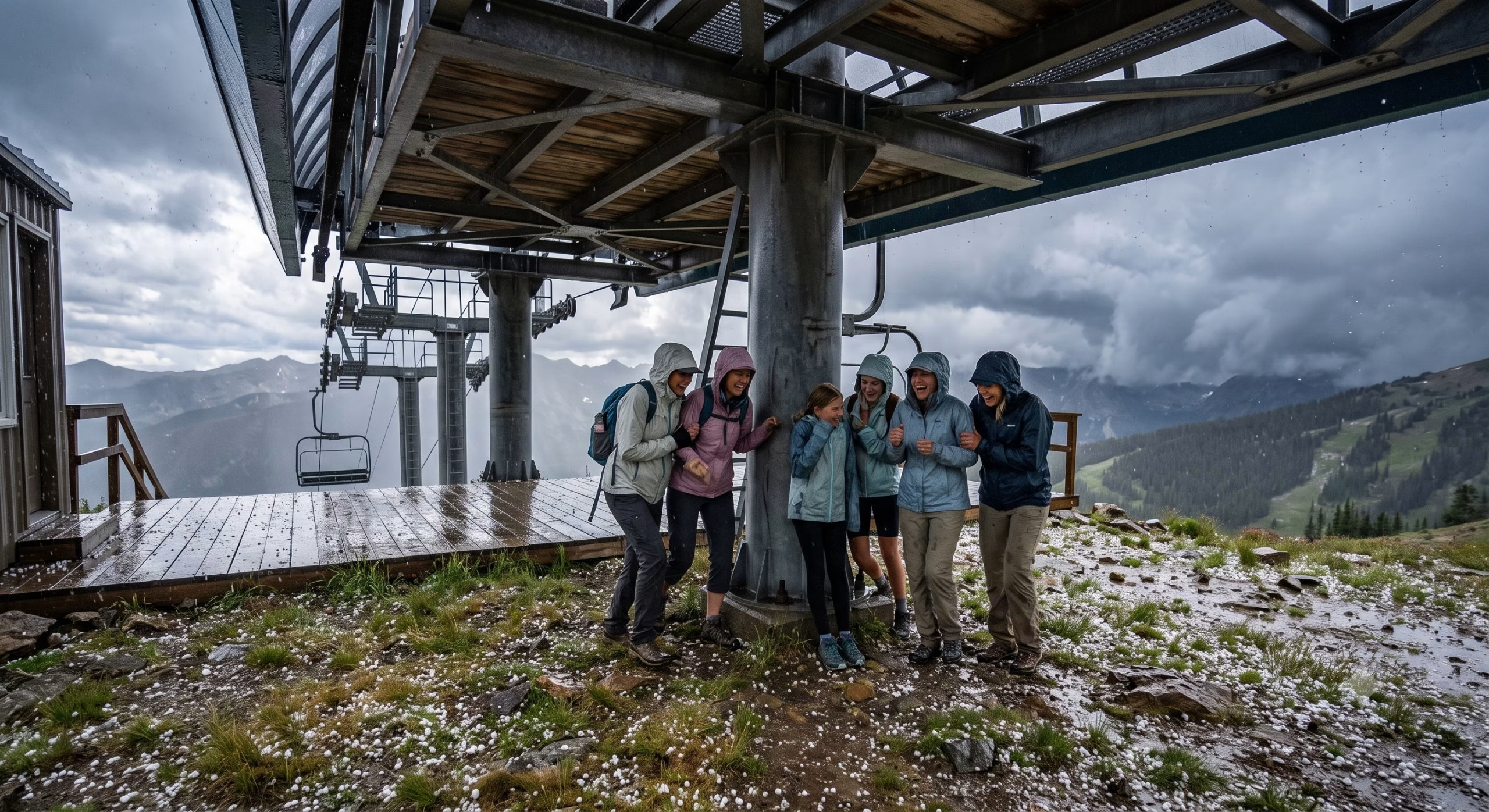
Summer (June to August): This is the time of our family visits, characterized by bright, hot, sun-drenched mornings with average daytime temperatures hovering in the upper 80s and low 90s. However, summer in New Mexico is defined by the dramatic monsoon season. By mid-afternoon, massive, towering anvil clouds build up over the high peaks, bringing sudden, violent, and spectacular thunderstorms that unleash torrential downpours and lightning displays before clearing out to leave crisp, cool evening air.
-
Autumn (September to October): In my personal opinion, this is the crown jewel of the high desert. The scorching summer heat breaks, replaced by endless, mild days in the 70s and perfectly clear, bright blue skies. The massive groves of cottonwood trees along the Rio Chama valley turn a brilliant, fiery molten gold, creating a breathtaking visual contrast against the ancient red and yellow sandstone cliffs.
-
Winter (November to March): The ranch takes on a silent, serene atmosphere. The crowds vanish completely, and a dusting of white snow will frequently blanket the red rock badlands, creating a high-contrast paradise for landscape photographers. Daytime highs average in the 40s, and nighttime temperatures drop deep into the teens.
A Perfect Ending Near the Santa Fe Plaza
By the time our hour-and-a-half horseback ride came to an end and we reluctantly slid down out of our saddles, the high-desert sun was beginning its slow, magnificent descent toward the western horizon, painting the cliffs of Ghost Ranch in deep shades of magenta, amber, and violet. My legs were a little stiff—a gentle reminder from my eighty-plus-year-old bones that I’m not quite the young Flint Hills cowboy I used to be—but my heart was absolutely full. Watching Adison and Sophie laugh and chat animatedly with their mother Kelly about Pierce’s tales of cattle rustlers and witches was worth every single mile on the odometer.
We loaded into the car, our clothes carrying that wonderful, earthy aroma of sun-warmed leather, trail dust, and horse sweat, and began the beautiful twilight drive back home to Santa Fe. As we cruised down the highway, watching the lights of the "City Different" begin to twinkle against the darkening backdrop of the Sangre de Cristo Mountains, our stomachs began to collective rumble, demanding proper sustenance.
To cap off what had already been a spectacular day, we decided to stop for a fitting family dinner at Bumble Bees Tacos, located just a short distance from the historic Santa Fe Plaza. For those who know the local culinary landscape, this humble, unpretentious spot is an absolute institution and one of my personal all-time favorites. There are no fancy, over-the-top tourist gimmicks here—just exceptionally fresh, authentic, and perfectly executed Southwestern comfort food.
We ordered up a massive, celebratory feast of crispy fish tacos, perfectly seasoned carne asada, and thick, fresh tortilla chips paired with their legendary, smoky house-made salsa. As we sat around the table, sharing stories from the trail, looking through the raw digital photos on the back of my camera, and enjoying the company of our beautiful family, I took a quiet moment to look across at Paulette and smile. From the rolling green ridges of the Kansas Flint Hills to the snow-capped majesty of Wheeler Peak, and down to the ancient, sun-baked red cliffs of Rancho de los Brujos, life has been an incredible, wild ride. And sharing the deep, timeless soul of the New Mexico outdoors with our granddaughters. Well, that is the greatest adventure of them all.
Until next time, friends—keep your eyes on the horizon, pack your camera, and I’ll see you out on the trail!
Plan Your Adventure to Ghost Ranch
-
Location: 280 Private Drive 1708, Abiquiu, NM 87510 (Mile Marker 224 on US-84)
-
Trail Rides: Guided horseback tours are available daily from the Ghost Ranch Stables, ranging from 1-hour scenic valley loops to advanced 2-hour sunset rides. Reservations are highly recommended well in advance.
-
Day Use: The ranch is open to the public for hiking and day use; a small conservation fee per person is requested at the Welcome Center to help maintain the historic trails and preserve the delicate ecosystem.
Pat is a writer, photographer, and videographer documenting the wilderness and wildlife of the American Southwest. His work focuses on the mountains, deserts, rivers, and trails of New Mexico, Arizona, Utah, and Colorado. He and his wife Paulette divide their time between Santa Fe, New Mexico and Lake Mohave, Arizona.
0 Comments