
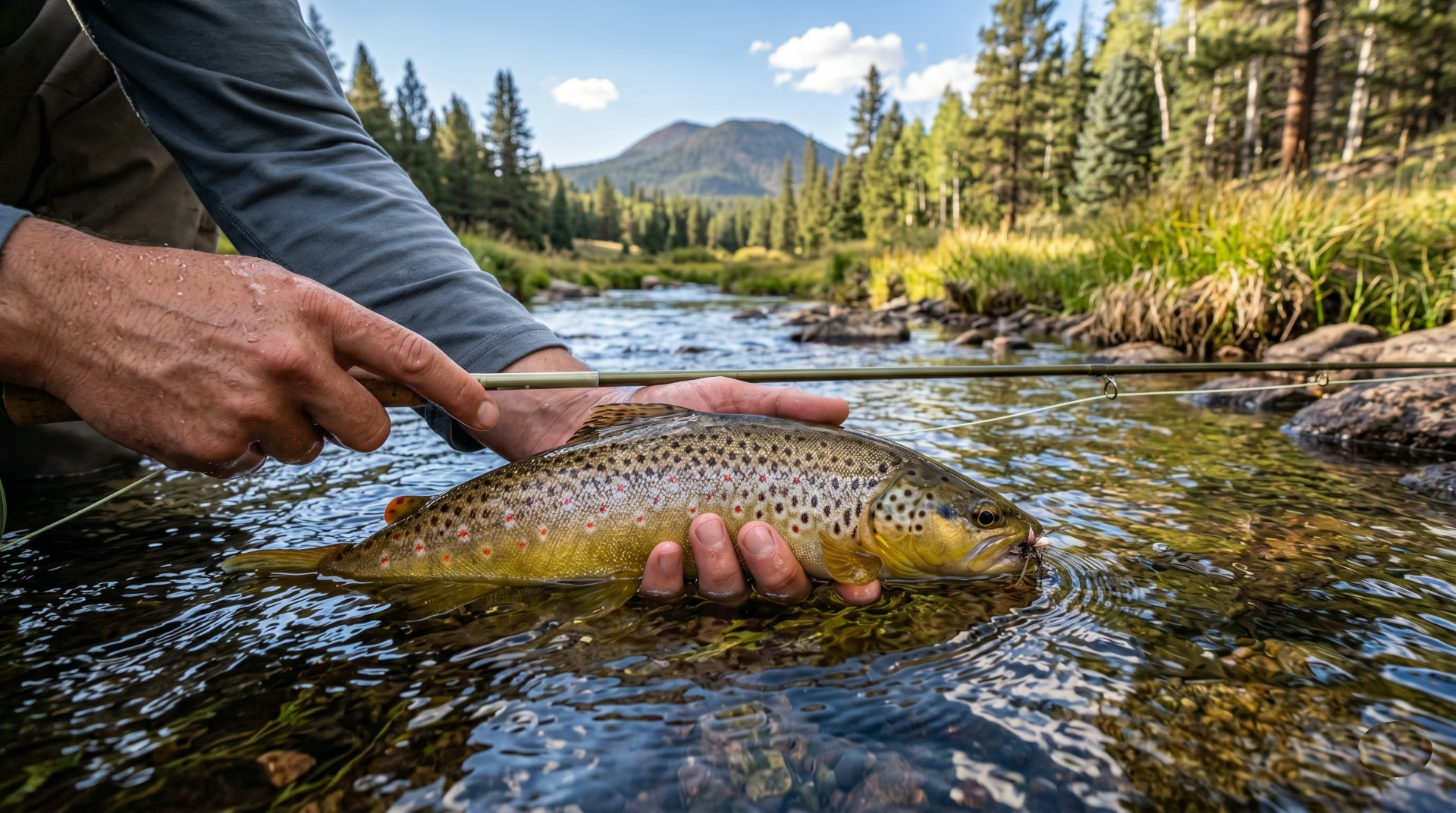
The Wet Hand Ritual: A Master Class in Mountain Stream Trout Catch and Release
There is a sacred moment in mountain stream fishing that happens just after the splash and just before the release. It’s that breathless heartbeat when a wild trout—perhaps a buttery Brown or a shimmering Rainbow—is cradled in your palm, its gills working rhythmically in the cold, oxygen-rich current
For those of us who have spent decades stalking the high-altitude meanders of the Valles Caldera or the technical pockets of the Guadalupe River, we know that a successful day on the water isn't measured by a cooler full of fish, but by how many healthy trout we watch swim away
Whether you’re casting a dry fly into a sun-dappled pool or working a small gold spinner through a deep run, understanding the best practices for handling these "wily and challenging" mountain residents is what separates a true angler from a mere fisherman
1. Why Mountain Trout Demand Extra Respect
Mountain streams are the ultimate "clean, cold, and clear" environments
-
Spooky Nature: In crystal-clear mountain water, trout are notoriously "spooky"
. The stress of being caught is magnified by the effort they must expend to hide and feed in high-altitude currents . -
The Slime Layer: A trout's first line of defense against disease and parasites is its protective mucus coating. Handling a fish with dry hands is like stripping away its immune system
. -
Catch and Release Mandates: In many pristine New Mexico waters, such as the headwaters of the East Fork of the Jemez, catch and release is not just a choice—it is a regulation designed to protect the delicate headwaters ecosystem
.
2. The Tool Kit: Gear for a Safe Release
The process of a safe release begins long before you hook the fish. It starts with the equipment you choose.
Hook Choice: Barbless is Best
The most significant impact you can have on a trout's survival is using barbless hooks.
-
Technical Waters: In the technical, brushy banks of the Jemez River, a barbed hook can become a nightmare to remove from a small, 8-to-12-inch wild Brown
. -
Ease of Removal: Barbless hooks slide out easily, minimizing tissue damage and reducing the time the fish spends out of the water.
Nets: The Rubber Revolution
If you use a net, ensure it has a rubberized, knotless mesh.
-
Protection: Traditional nylon nets act like sandpaper, removing the vital slime layer and splitting fins.
-
Tangle-Free: Rubber nets are also much friendlier to your fly or lure, preventing the "trout-net-hook" knot that often leads to prolonged handling.
The Right Rod for the Job
Using a rod that is too light for the fish can lead to "over-playing" them.
-
High Country Staples: A 3-weight or 4-weight fly rod is perfect for most mountain meanders
. -
Ultra-Light Spinning: If you prefer a spinning setup, a 5’6” to 6’0” ultra-light rod provides the finesse needed without turning every fight into a marathon
.
3. The Encounter: Fighting and Landing with Care
Success in catch and release is largely determined by the "fight time."
-
Land Them Quickly: The goal is to bring the trout to your hand or net as fast as possible. A long fight leads to lactic acid buildup, which can be fatal even if the fish swims away appearing healthy.
-
Keep Them in Their Element: Avoid "beaching" the fish on rocks or sand. In a mountain canyon like the Guadalupe Box, use the deep turquoise pools to your advantage by keeping the fish submerged while you prepare for unhooking
. -
Use Polarized Sunglasses: Not just for style—polarized glasses allow you to "see through" the New Mexico sun glare to track the fish and anticipate its moves, ensuring you can land it efficiently
.
4. The Handshake: Safe Handling Best Practices
Once the fish is at your side, follow the "Keep 'Em Wet" mantra.
The Golden Rule: Wet Your Hands
Never, under any circumstances, touch a trout with dry hands.
-
Moisture is Life: Dipping your hands in the cold stream water before touching the fish preserves the slime layer and prevents skin infections later
. -
Gentle Grip: Cradle the fish from underneath, just behind the head and before the tail. Avoid squeezing the stomach, as this can damage internal organs.
The Ten-Second Rule
If you must take the fish out of the water for a quick photo, keep it to ten seconds or less.
-
Oxygen Deprivation: A trout out of water is like a human holding their breath after a sprint.
-
The "Pat" Perspective: As an old hand like me will tell you, the best "photo" is often the memory of the fish's diamonds shimmering in the sun while it's still safely in the net
.
5. The Farewell: Reviving and Releasing
The final act is the most rewarding.
-
Point Head Upstream: Always release a fish with its head facing into the current. This forces oxygen-rich water over its gills, helping it recover faster
. -
Be Patient: Do not simply toss the fish back. Hold it gently in the current until you feel its strength return. You’ll know it’s ready when it gives a powerful kick and darts back toward the undercut banks or deep seams it calls home
. -
Check the Temperature: If the water temperature hits 70°F, it’s time to stop fishing
. High temps combined with the stress of a catch can be a death sentence for mountain trout .
Conclusion: Leaving a Legacy in the Water
Every time we release a trout with care, we are ensuring that the "silver pulse" of rivers like the Jemez and the Guadalupe continues for the next generation
Are you ready to test your skills and your stewardship on the water? Grab your barbless flies, double-check your fishing license, and head into the high country

0 Comments