
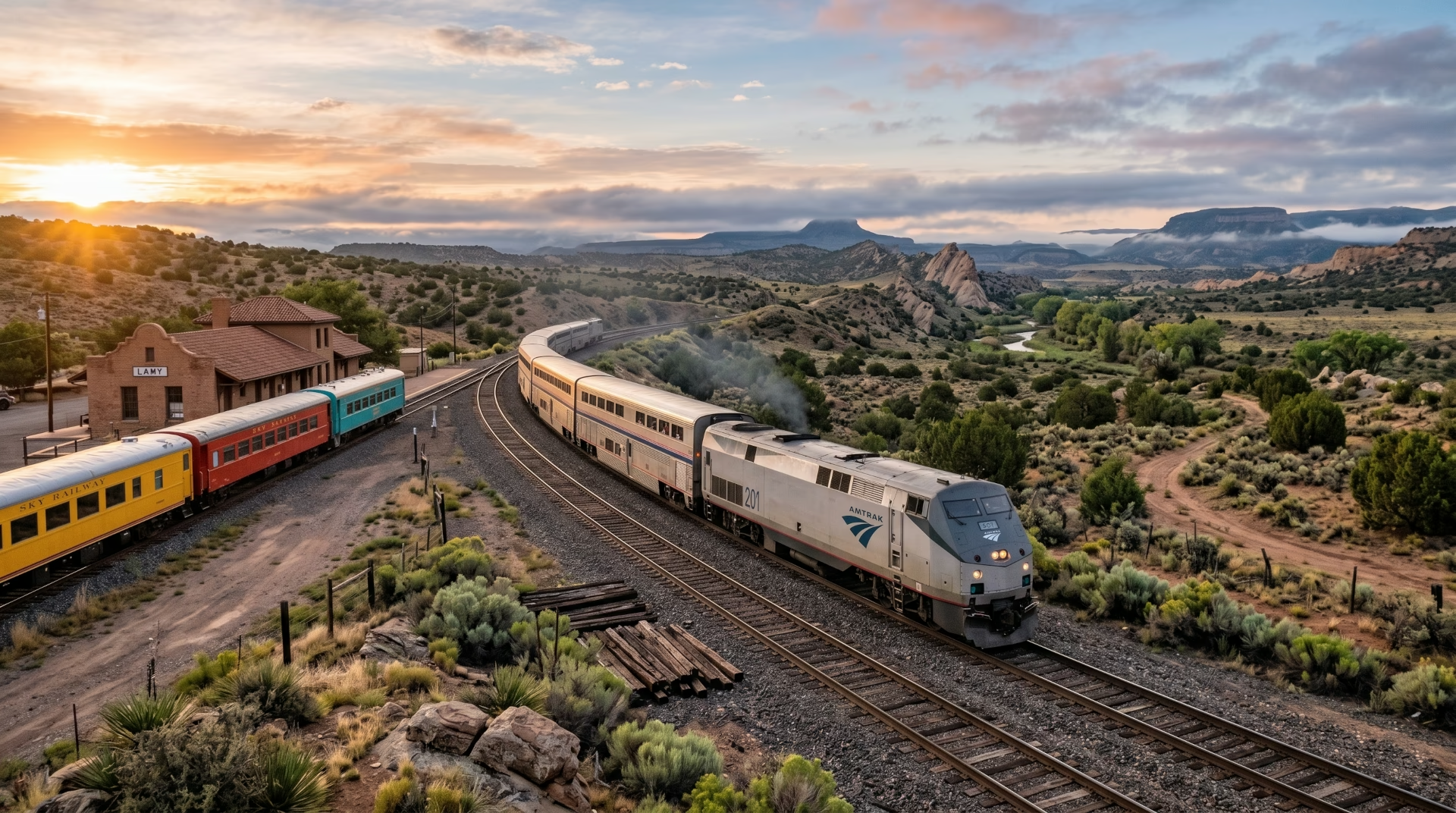
There is a specific rhythm to life in the high desert, and nowhere is it more palpable than from the window of a train car
For those looking to experience the Galisteo Basin Amtrak route, this particular stretch between Lamy and Albuquerque is the crown jewel of the journey
1. The Gateway: Lamy and the "City Different" Connection
The town of Lamy was born out of a 19th-century engineering paradox
-
The Lamy Depot: Built in 1909, this historic mission-style station remains a hub of activity
. Every traveler heading to Santa Fe by train must disembark here and take a smaller spur line—now famously home to the Sky Railway—to reach the downtown plaza . -
The Spirit of the Village: Lamy is a place that demands you slow down
. Whether you’re enjoying a drink at the legendary Legal Tender saloon or simply listening to the wind across the basin, the town serves as a quiet sentinel at the edge of the wilderness .
2. Into the Golden Bowl: Scenery of the Galisteo Basin
As the Southwest Chief heads west, it descends into the Galisteo Basin, a 470,000-acre geologic bowl that feels like a well-kept secret
A Geologic Drama
To ride through the basin is to travel over a volcanic battlefield
The Rivers of Life
In the high desert, water is a miracle
3. Ghost Towns and Gold Mines: Los Cerrillos
One of the most photogenic stops on the mental map of the Galisteo Basin is the village of Los Cerrillos
-
A Living Western: With its dirt streets and Territorial-style architecture, Cerrillos has served as a filming location for dozens of Hollywood productions
. -
Ancient Industry: The hills surrounding the town are pockmarked with over 2,000 historic mines, some of which were worked by Indigenous people for turquoise long before European contact
.
4. The Crossroads of Culture: Santo Domingo Trading Post
As the train nears the Rio Grande corridor, it passes through the lands of the Santo Domingo Pueblo (Kewa Pueblo)
Located at the crossing of the railroad tracks and the historic Route 66, the trading post was once a vital center of commerce for heishi shell jewelry, pottery, and turquoise
5. The Final Stretch: Following the Rio Grande to Albuquerque
The journey concludes as the tracks align with the Rio Grande, the lifeline of New Mexico
Traveling westbound is often recommended because it times the descent through the Galisteo Basin with the golden hour, allowing passengers to witness the desert sunset in all its cinematic glory
Conclusion: A Landscape for the Soul
The Galisteo Basin Amtrak route is more than just a transit line; it is a reminder of the layers of time that make the Southwest unique
Ride the Rails
Are you ready to see the "Iron Heart" of New Mexico for yourself?
-
Book the Chief: Reserve a seat on the Southwest Chief for the ultimate daylight crossing of the basin
. -
Explore Lamy: Take a day trip to the Lamy Depot and imagine the era when this was the busiest junction in the state
. -
Respect the Heritage: When visiting historical sites like Santo Domingo or Los Cerrillos, always honor the local traditions and land
.
The wild heart of New Mexico is calling—we'll see you in the Basin!
0 Comments