
Where Desert Waters Meet Desert Sky
The morning air bit sharp at thirty degrees when I found myself browsing through old video files at Casa Santa Fe, a welcome distraction from the chill that had settled over the high country. Somewhere in the digital archives, buried among hundreds of clips capturing the Southwest's wild beauty, I stumbled upon footage from December 2019—a reminder of why Paulette and I keep returning to the lower deserts when winter tightens its grip on New Mexico.
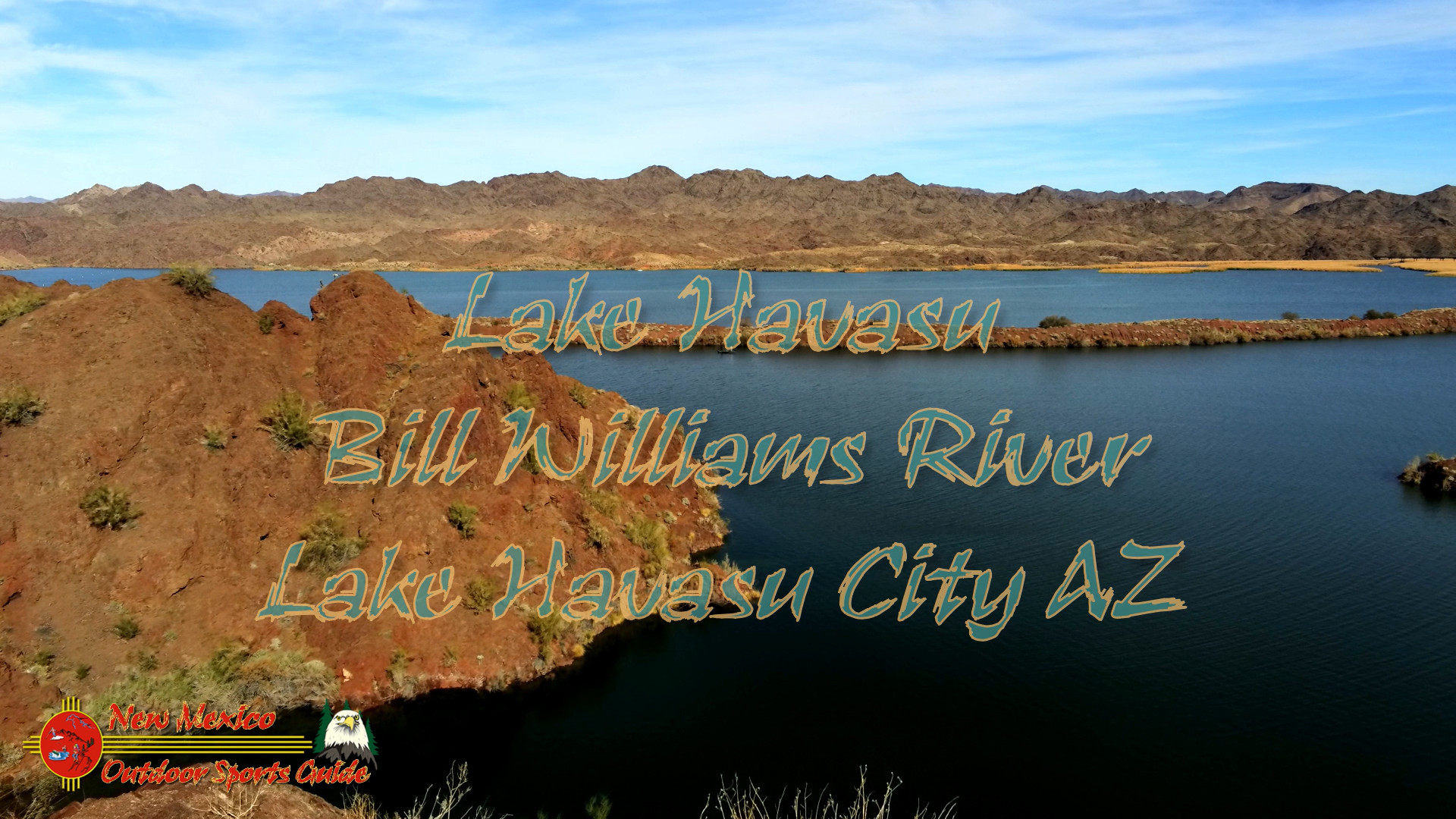
The video opened with a view that still takes my breath away: the Bill Williams River spreading wide as it surrenders to Lake Havasu, creating a wetland oasis in the parched Arizona landscape. Watching it again, I was transported back to that perfect December day when we'd driven down from Casa Codorniz for a nostalgic visit to the Parker Strip and Lake Havasu, retracing routes we'd first explored years earlier when we were still searching for our winter sanctuary.
A View Worth Stopping For
We'd spent the morning cruising the familiar shores of Lake Havasu, watching boats cut across the Colorado River-fed waters, reminiscing about our own bass fishing adventures in these parts. The day was wearing on as we headed back north, passing the Lake Havasu dam with its imposing concrete face holding back millions of gallons of Colorado River water. Just as we crested a ridge beyond the dam, the landscape opened up before us in a way that demanded attention.
There, stretching into the distance, lay the mouth of the Bill Williams River—a sprawling marshland where tawny grasses and emerald reeds painted patterns across shallow waters. The river itself seemed to dissolve into Lake Havasu rather than simply flow into it, creating an intricate delta that shifts and changes with the seasons and water levels. Behind this wetland tapestry rose a ridge of foothills, their rocky flanks catching the afternoon light in shades of rust and amber that only Arizona mountains can produce.
I pulled into a scenic overlook without hesitation. After thousands of hours viewing landscapes from the cockpit of a Beechcraft Baron, I'd developed an instinct for recognizing views worth capturing, and this was undeniably one of them. The sky cooperated beautifully—high cirrus clouds streaked across deep blue like brushstrokes on canvas, and the wind had settled to barely a whisper. Perfect conditions for drone work.
Taking Flight Over the Bill Williams
Setting up my drone on that mountainside launch site, I felt that familiar surge of anticipation I'd known countless times before takeoff in my flying days. Different machine, different altitude, but the same essential joy of gaining an eagle's perspective on the world below. I sent the drone out over Lake Havasu, guiding it toward the expansive marsh that marks the Bill Williams River National Wildlife Refuge.
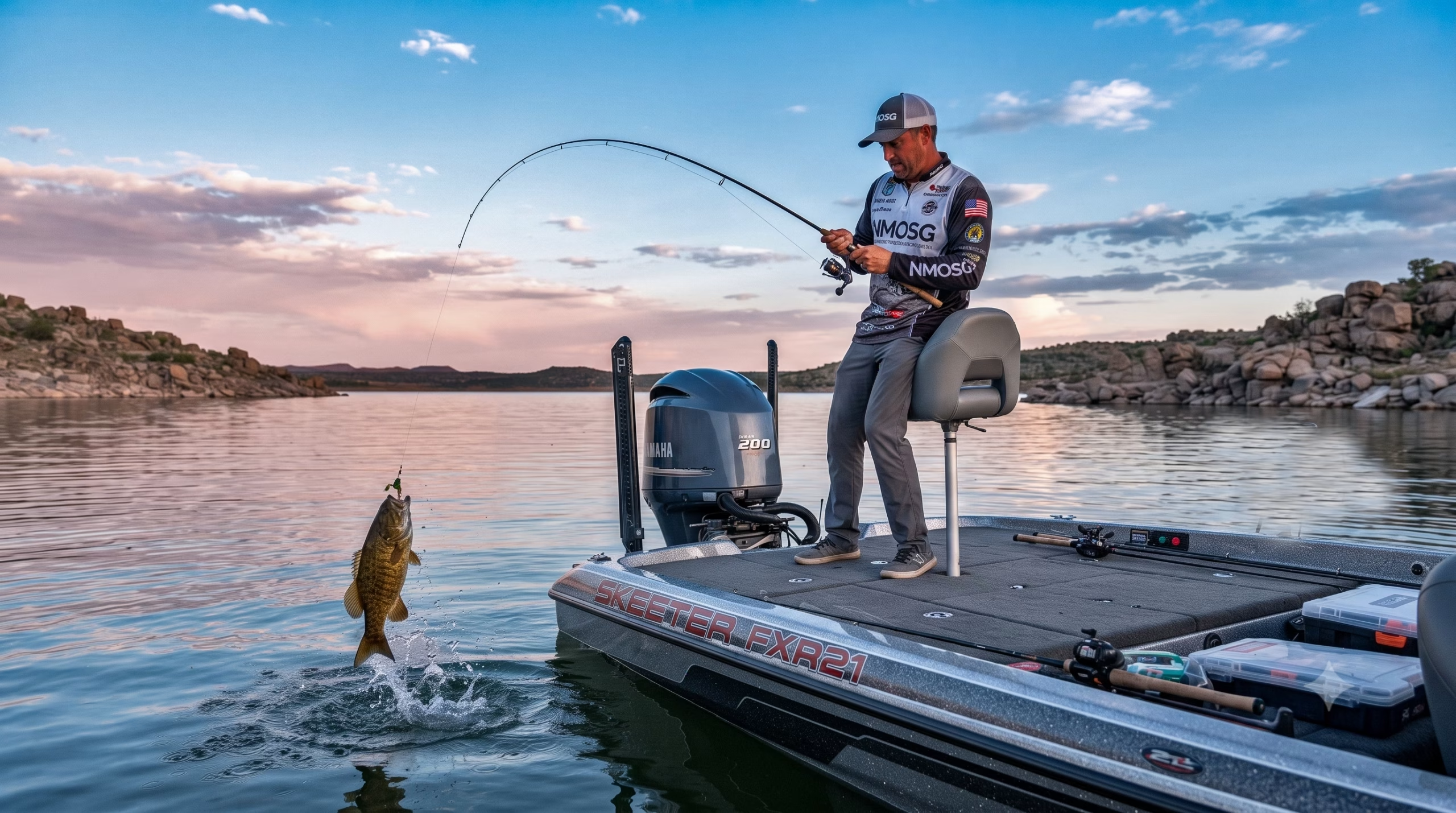
As the drone left the ridgeline, it passed over a bass boat working the southern cove of Lake Havasu—a solitary angler probably targeting the rocky points and submerged structure where largemouth and smallmouth bass like to ambush prey. That single boat sparked a flood of memories from the month Paulette and I had spent fishing the Colorado River at the Parker Strip and Lake Havasu on our exploration trip. Those were the days when we were still searching for our perfect winter escape, casting lures in the morning and scouting real estate in the afternoon. That trip eventually led us to Casa Codorniz on Lake Mohave, where we've settled into a winter rhythm that suits us perfectly.
The drone's camera captured the transition zone where the Bill Williams River meets Lake Havasu—a place where moving water becomes still, where desert riverine habitat blends with reservoir ecology. From above, you could see channels winding through the marshland, some deep enough to navigate by small boat, others mere ribbons of water threading between islands of vegetation. Waterfowl dotted the wetlands, dark specks against the tawny landscape that would reveal themselves as herons, egrets, ducks, and coots if you could zoom close enough.
The Bill Williams River: Desert Lifeline
The Bill Williams River itself begins its journey at the confluence of the Big Sandy River and Santa Maria River, flowing roughly thirty miles before reaching Lake Havasu. It drains about 5,000 square miles of west-central Arizona, carrying snowmelt and occasional desert rains from the mountains down to the Colorado River system. In a landscape where water defines life and death, the Bill Williams River creates a ribbon of green vitality through the brown desert.
What makes the Bill Williams River particularly remarkable is its status as one of the last relatively free-flowing tributaries of the lower Colorado River. While the Colorado itself has been dammed and diverted into one of the most controlled waterways in America, the Bill Williams maintains stretches of wild character. The Alamo Dam, built in 1968 about thirty miles upstream from Lake Havasu, regulates flow and prevents catastrophic flooding, but below the dam the river retains much of its natural character.
The riparian corridor along the Bill Williams River supports one of the largest remaining cottonwood-willow forests in Arizona. Cottonwoods need periodic flooding to regenerate, their seeds germinating on freshly deposited sandbars and moist sediments. The Bill Williams provides this critical flooding, creating habitat for an astonishing diversity of wildlife in a state where water is always precious and usually scarce.
The National Wildlife Refuge: Sanctuary in the Desert
As my drone approached closer to the marsh, I could see why the area received federal protection as the Bill Williams River National Wildlife Refuge. Established in 1941, the refuge encompasses about 6,105 acres along the lower Bill Williams River, from just below Alamo Dam to its confluence with the Colorado River at Lake Havasu. The refuge exists primarily to protect habitat for migratory birds following the Pacific Flyway, but it serves countless other species as well.
More than 350 species of birds have been documented at the Bill Williams River National Wildlife Refuge. During spring and fall migrations, the cottonwood-willow forests fill with warblers, vireos, flycatchers, and tanagers. Winter brings waterfowl by the thousands—mallards, gadwall, pintails, green-winged teal, and various diving ducks. Summer residents include the endangered southwestern willow flycatcher, a small songbird that nests in dense willow thickets and has become a symbol of the challenges facing riparian habitats throughout the Southwest.
The refuge also provides critical habitat for desert bighorn sheep, mule deer, coyotes, bobcats, and even the occasional mountain lion. The river itself hosts several native fish species, including the razorback sucker and bonytail, both endangered species that once thrived in the Colorado River system but now struggle to survive in altered habitats.
From my aerial perspective, the refuge appeared as an intricate patchwork of water, marsh, mudflat, and dense vegetation. Channels snaked through the landscape in meandering patterns that revealed the river's history—old courses abandoned and new ones carved during floods. The northern edge was defined by those rugged foothills, their slopes too steep and dry for anything but hardy desert shrubs and the occasional ironwood tree.
Crossing the River: The Bill Williams Memorial Bridge
Pushing the drone to the safe limit of its range, I captured footage of the Bill Williams Memorial Bridge carrying Highway 95 across the river. This modern structure connects Lake Havasu City to the north with the Parker Strip area to the south, replacing an earlier bridge that served travelers since the 1960s. The bridge offers motorists a brief but spectacular view of the wetlands, though few probably stop to truly appreciate the ecological treasure they're crossing.
The bridge itself bears the name of Bill Williams, the legendary mountain man for whom the river is named. William Sherley "Old Bill" Williams was an 1800s fur trapper, guide, and frontiersman who roamed throughout the Southwest. By all accounts he was an eccentric character—a skilled woodsman who spoke multiple Native American languages and could survive in country that killed lesser men. He was killed in 1849, but his name lives on in the river, the refuge, the mountain, and the small town of Williams, Arizona, further north.
Standing on that overlook, drone hovering in the distance, I thought about Old Bill Williams traversing this country when the only bridges were those made by nature—fallen logs across creeks, rock outcroppings spanning narrow canyons. He knew this landscape in its wildest state, when grizzly bears still roamed Arizona and wolves howled in the desert mountains. The country has changed enormously since his time, but the Bill Williams River still carries something of that wild character he would recognize.
Lake Havasu: Where the Colorado Pools
The Bill Williams River flows into Lake Havasu, a reservoir created in 1938 by the Parker Dam on the Colorado River. Lake Havasu extends about forty-five miles behind the dam, storing Colorado River water for delivery to Southern California via the Colorado River Aqueduct and to Arizona via the Central Arizona Project. It's a crucial component of the Southwest's water infrastructure, yet it's also become a recreational destination drawing boaters, anglers, and water enthusiasts from across the region.
Lake Havasu City, founded in 1964 by chainsaw magnate Robert McCulloch, sits on the Arizona shore about twenty miles north of where the Bill Williams enters the lake. McCulloch's most famous contribution to the city was purchasing London Bridge from the City of London in 1968 and having it dismantled, shipped to Arizona, and reassembled as a tourist attraction. The audacious project worked—London Bridge became one of Arizona's most visited attractions, and Lake Havasu City grew from a desert outpost into a thriving community.
The lake itself offers excellent fishing for striped bass, largemouth bass, smallmouth bass, channel catfish, and flathead catfish. The striped bass fishing in particular draws serious anglers who chase schools of stripers prowling the reservoir's depths. Paulette and I spent many pleasant hours fishing Lake Havasu during our exploration years, though we ultimately settled on Lake Mohave further north for our winter headquarters. Something about Mohave's clearer waters and the smallmouth bass that cruise its rocky shorelines spoke more directly to our preferences.
The Parker Strip: Colorado River Living
South of Lake Havasu, the Colorado River flows through an area known as the Parker Strip—a roughly sixteen-mile stretch between Headgate Dam and Parker Dam. This section of river has become famous for recreation, lined with resorts, RV parks, marinas, and private homes. The Parker Strip offers calmer waters than Lake Havasu, making it popular for water skiing, wakeboarding, and leisurely boat cruising.
When Paulette and I visited the Parker Strip on that December trip, we were revisiting a place that had factored into our decision-making process years earlier. We'd fished there, explored the area, talked to residents, and ultimately decided we wanted something a bit more remote and less developed. But the Parker Strip holds undeniable appeal—access to the Colorado River, reliably warm winters, and a community of fellow river enthusiasts.
The contrast between the Parker Strip's developed shoreline and the wild character of the Bill Williams River just a few miles north illustrates the ongoing tension in the Southwest between development and conservation, between exploiting water resources and protecting them. Both approaches have their place, but seeing the Bill Williams River National Wildlife Refuge from above reinforced my gratitude that some places remain protected, allowed to function as close to naturally as possible in this heavily modified landscape.
The Eagle's Eye: Drone Photography in the Southwest
As I guided the drone back toward my launch site, the return view revealed new perspectives. Havasu Springs Resort appeared on the south shore of Lake Havasu, its buildings and marina tucked at the foot of a classically rugged Arizona mountain ridge. The mountains wore that characteristic Southwest coloration—bands of red, brown, tan, and gray rock striped across their faces, with sparse vegetation clinging to any foothold that offered enough soil and moisture.
Aerial videography has become one of my great joys in documenting the Southwest's beauty. The technology has evolved remarkably since my flying days—these small drones carry sophisticated cameras and stabilization systems that would have seemed like science fiction when I was logging hours in the Baron. Yet the fundamental experience remains similar: seeing landscape from above reveals patterns, relationships, and beauty that ground-level views simply cannot match.
There's something about the eagle's eye perspective that resonates deeply with me, whether gained from a mountain summit, an aircraft cockpit, or a drone camera. Perhaps it comes from those years flying project sites across America, always observing how human development fits into the broader landscape. Perhaps it's simply an octogenarian's appreciation for perspective—the longer you live, the more you value seeing the big picture.
The Southwest is particularly rewarding for aerial photography. The landscape has such dramatic relief—deep canyons carved into plateau country, isolated mountain ranges rising from desert floors, rivers cutting green corridors through brown wilderness. The light in this high, dry country creates extraordinary clarity, especially in winter when the sun angles low and shadows define every ridge and wash.
Reflections from the Ridge
Watching that 2019 footage again in my Santa Fe study, coffee steaming beside the computer, I felt profound appreciation for the decision Paulette and I made to dedicate these later years to documenting the Southwest's wild places. After careers in aviation, construction, publishing, and web design—after building dream homes in Angel Fire and Santa Fe—we've arrived at a phase of life focused simply on witnessing and recording the beauty that surrounds us.
The Bill Williams River represents everything I value about the Southwest: water creating life in an arid land, wildlife thriving in protected habitats, landscapes that still convey something of the wilderness character that Old Bill Williams knew. When that drone's camera captured the marsh spreading into Lake Havasu, it recorded more than scenic beauty—it documented a functioning ecosystem, a place where natural processes still operate despite all the changes humans have imposed on the Colorado River system.
My boyhood on Kansas ranches taught me to read landscapes, to understand how water flows, where animals shelter, how weather patterns develop. Those lessons from the Flint Hills translate surprisingly well to the mountains and deserts of Arizona and New Mexico. The species differ, the precipitation totals vary dramatically, but the fundamental relationships between land, water, and life remain constant.
Now, dividing time between summers in Santa Fe's high country and winters at Lake Mohave, Paulette and I have found our rhythm. We hike the trails near Casa Santa Fe in summer, photograph wildflowers and wildlife, and occasionally ride the scenic railway just to watch the landscape roll past. Come winter, we retreat to Casa Codorniz and spend mornings on Lake Mohave chasing smallmouth bass, afternoons exploring off-road trails, and evenings editing photos and videos.
The Bill Williams River footage sits in our archives alongside hundreds of other clips—Wheeler Peak at sunrise, monsoon storms over the Moreno Valley, autumn aspens in the Sangre de Cristo Mountains, desert bighorn sheep in Arizona canyons. Each file represents a moment of connection with the Southwest's wild beauty, a visual memory preserved for our own reflection and shared with others through blogs and videos.
A Living Landscape
What strikes me most about the Bill Williams River is that it remains a living, dynamic system. The refuge managers allow the river to flood periodically, maintaining the cottonwood-willow forest that provides such critical habitat. The marshes expand and contract with seasonal water levels. Sandbars shift in floods, creating new topography for future cottonwoods to colonize. It's not completely wild—Alamo Dam controls the biggest floods, and Lake Havasu's levels are managed for water delivery to California and Arizona—but within those constraints, the river still behaves like a river.
This stands in stark contrast to much of the Colorado River system, which has been so thoroughly controlled that the river's mouth in the Gulf of California often runs dry. The Bill Williams River offers a glimpse of what the lower Colorado tributaries once were: ribbons of green vitality through the desert, supporting cottonwood forests and willow thickets, providing water and shelter for countless species.
From my ridge-top overlook that December day, I couldn't see all the ecological details—the endangered fish species, the nesting willow flycatchers, the complex interactions between native and invasive plant species. But the aerial footage captured the essential truth: this is a place where water, land, and life come together in patterns shaped by both natural processes and human stewardship.
Worth the Stop
As I wrap up this blog post, the temperature outside Casa Santa Fe has climbed into the forties and the winter sun angles through the window. In a few weeks, we'll pack up and head to Casa Codorniz for another winter on Lake Mohave. We'll probably drive past the Bill Williams River overlook again, and I suspect I'll pull over once more to launch the drone, to capture updated footage, to see how the marsh has changed in the intervening years.
The Bill Williams River deserves that attention. It deserves photographers and videographers documenting its beauty, naturalists studying its ecology, and advocates protecting its future. It deserves travelers pulling into that scenic overlook, stepping out of their vehicles, and taking a few moments to appreciate what they're seeing—not just another desert marsh, but a vital refuge for wildlife, a functioning ecosystem, and a reminder that even in our heavily engineered landscape, wild beauty persists.
For this octogenarian with a camera and a drone, the Bill Williams River represents the kind of place that makes documenting the Southwest endlessly rewarding. Every visit reveals something new, every flight captures different light and shadows, every season paints the marsh in different colors. As long as my hands can operate a drone controller and my eyes can judge exposure and composition, I'll keep returning to places like this, preserving their beauty in pixels and sharing their stories in words.
The boy from the Kansas Flint Hills never imagined he'd spend his eighties photographing Arizona wetlands from the air. But life's journey takes unexpected turns, and I'm grateful this particular path led to mornings browsing old footage, afternoons launching drones, and a deep appreciation for places like the Bill Williams River—where desert waters meet desert sky, and wild beauty endures.


0 Comments