
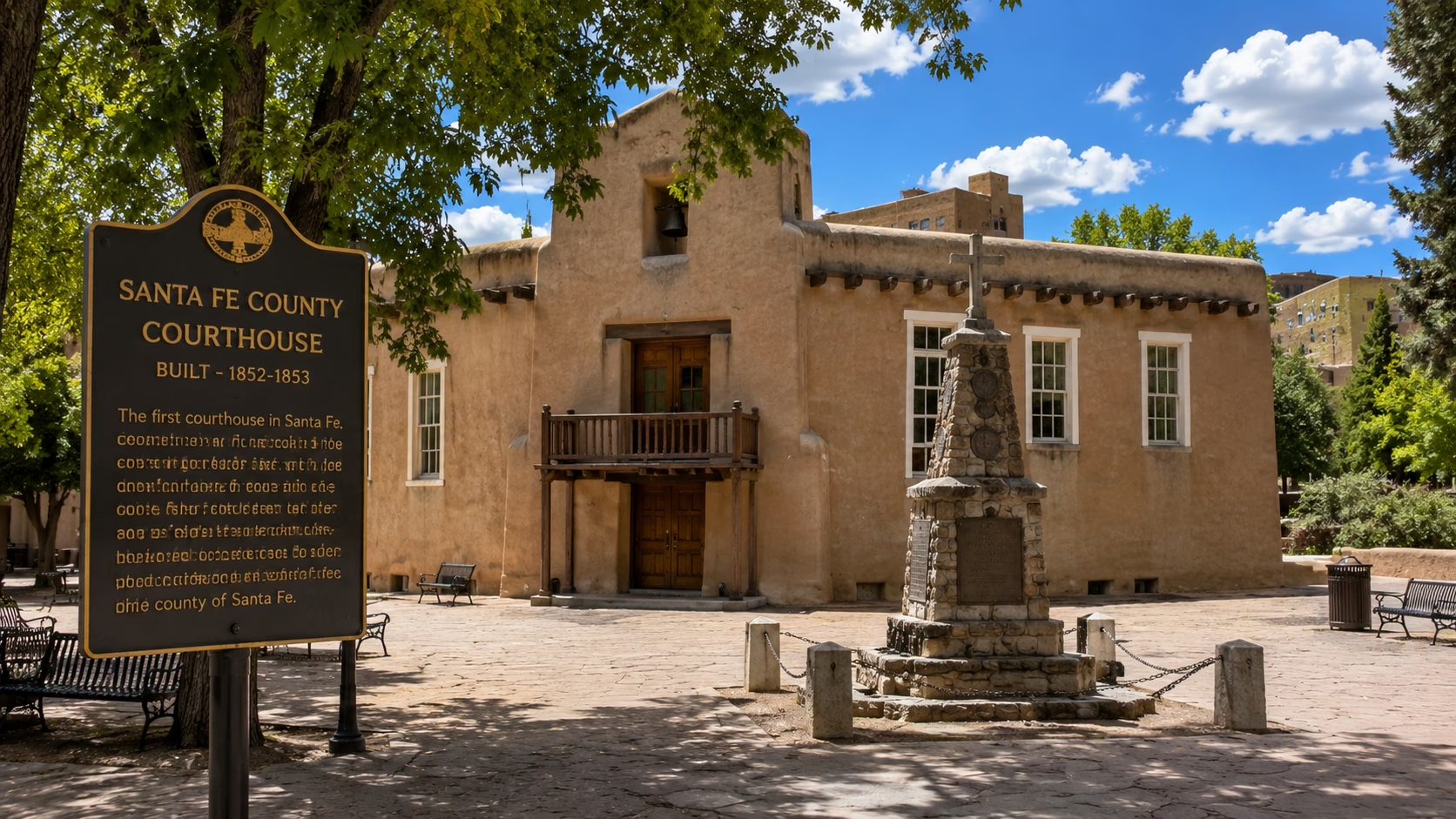
Remembering E. J. Vaughn and the Birth of Frontier Law in Territorial New Mexico
By Pat McCarty
There is something about old courthouses that has always fascinated me.
Perhaps it comes from growing up on ranches in the Kansas Flint Hills, where a man's reputation mattered every bit as much as the brand on his cattle. Out there, your word was your bond. Folks knew who you were, who your parents were, and whether you paid your debts and helped your neighbors when a blizzard buried the roads.
Justice wasn't always written neatly in law books.
Sometimes it rode horseback.
Sometimes it carried a Winchester.
And sometimes it wore a sheriff's badge.
Now, as an octogenarian spending my summers in Santa Fe and my winters beside Lake Mohave, I've found myself increasingly drawn to the stories of those who came before us. Walking the Plaza beneath cottonwood shade, photographing ancient adobe walls, or sitting quietly beneath the Sangre de Cristo Mountains, I often wonder what this city looked like nearly two centuries ago.
What did Santa Fe sound like?
Who kept the peace?
Who protected the citizens when New Mexico transformed from Mexican territory into part of the United States?
That curiosity eventually led me down an interesting historical rabbit hole.
I wanted to know who the first Sheriff of Santa Fe County truly was.
The answer wasn't as straightforward as I expected.
But the journey proved fascinating.
Santa Fe in 1846: A City Between Worlds
To understand the first sheriff, one must first understand the remarkable period in which he served.
In 1846, Santa Fe was unlike any American city.
The oldest capital city in the United States had already witnessed more than two centuries of Spanish rule, followed by twenty-five years under Mexican authority.
Adobe buildings lined narrow streets.
Church bells echoed through the Plaza.
Merchants traded goods arriving over the Santa Fe Trail.
Native American cultures, Hispanic traditions, mountain men, traders, soldiers, and adventurers all mingled within its dusty streets.
Then everything changed.
During the Mexican-American War, Brigadier General Stephen Watts Kearny marched into Santa Fe with the Army of the West.
On August 18, 1846, Kearny formally claimed New Mexico for the United States.
Remarkably, Santa Fe surrendered without bloodshed.
The American flag rose over the Palace of the Governors.
A new chapter began.
The Kearny Code
Kearny immediately faced a difficult challenge.
How do you govern a territory whose legal traditions were rooted in Spanish and Mexican systems?
His solution became known as the Kearny Code.
The code established:
-
Territorial courts
-
County governments
-
Judicial procedures
-
Property rights protections
-
Criminal laws
-
Administrative offices
Many historians consider it one of the most important legal foundations in New Mexico history.
It represented the bridge between the old world and the new.
Yet county records from those earliest days remain incomplete.
Some were never properly maintained.
Others disappeared during political turmoil.
The Taos Revolt of 1847 added further disruption.
As a result, identifying the first sheriff required careful examination of surviving records.
The First Documented Sheriff: E. J. Vaughn
After reviewing available historical sources, the earliest reliably documented Sheriff of Santa Fe County appears to have been E. J. Vaughn.
His name appears in surviving territorial records from 1848.
While it remains possible that another individual briefly served immediately following Kearny's occupation in 1846, no conclusive documentation has surfaced identifying that person.
Therefore, E. J. Vaughn deserves recognition as the first documented Sheriff of Santa Fe County under American territorial government.
For historians, documented evidence matters.
Legends make entertaining stories.
Records preserve truth.
Who Was E. J. Vaughn?
Unfortunately, history sometimes preserves positions more thoroughly than personalities.
Such appears to be the case with Sheriff Vaughn.
Compared with famous frontier sheriffs like Pat Garrett or Elfego Baca, relatively little biographical information survives regarding E. J. Vaughn.
What we do know provides valuable insight into both the man and the era.
Vaughn emerged during one of the most unstable periods in New Mexico history.
The territory had recently changed hands.
Political loyalties remained divided.
Language barriers complicated communication.
Legal systems were evolving.
Cultural traditions often collided.
Serving as sheriff under such circumstances demanded diplomacy, courage, and adaptability.
This was not a ceremonial office.
It was practical frontier law enforcement.
Duties of the Sheriff
Modern sheriffs oversee large departments with deputies, detention facilities, specialized divisions, computer systems, and communications networks.
Sheriff Vaughn's world looked very different.
His responsibilities likely included:
Maintaining Order
Santa Fe remained a bustling trade center.
Disputes were inevitable.
The sheriff enforced territorial laws while helping maintain public peace.
Serving Court Orders
Sheriffs acted as officers of the courts.
They delivered summonses, executed warrants, and enforced judicial rulings.
Managing the Jail
County jails were simple affairs.
The sheriff bore responsibility for prisoners awaiting trial.
Collecting Taxes and Fees
Early sheriffs often handled administrative duties modern law enforcement no longer performs.
Organizing Posses
When necessary, sheriffs summoned local citizens to assist in apprehending suspects.
The famous frontier posse system grew directly from necessity.
Distances were vast.
Resources were limited.
Neighbors helped neighbors.
Santa Fe's Reputation
Contrary to Hollywood portrayals, Santa Fe during Vaughn's tenure was not a nonstop gunfight.
It was, however, a frontier community experiencing rapid transformation.
Wagons rolled into town from Missouri.
Merchants established businesses.
Soldiers moved through the territory.
Political uncertainty lingered.
Cultural tensions occasionally surfaced.
Violence existed.
So did cooperation.
Hispanic families, Native communities, Anglo traders, and military personnel all shaped Santa Fe's identity.
Sheriff Vaughn found himself navigating this complicated landscape.
His reputation appears to have been one of competence and reliability.
Had he been ineffective, it is unlikely his name would have remained associated with the office during such turbulent times.
Life Beyond the Badge
One of the frustrations historians encounter involves the disappearance of ordinary lives from the written record.
Famous outlaws leave colorful stories.
Successful politicians leave speeches.
Frontier sheriffs often leave paperwork.
Unfortunately, surviving sources provide limited information regarding Vaughn's activities following his service as sheriff.
Whether he returned to private enterprise, entered another public office, pursued business opportunities, or relocated elsewhere remains uncertain.
The absence of evidence should not diminish his contribution.
Many of the people who built early New Mexico did so quietly.
Their reward wasn't fame.
It was helping create functioning communities.
Frontier Justice Versus Hollywood
Growing up in the Flint Hills, I learned that the West wasn't won by quick draws and saloon brawls.
It was built by ordinary people doing difficult work.
Ranchers.
Blacksmiths.
Teachers.
Merchants.
Lawmen.
Mothers raising children in isolated homesteads.
Hollywood often portrays sheriffs as fearless gunslingers facing down villains in dusty streets.
Reality proved far more complicated.
Sheriffs balanced law with common sense.
They knew the people they served.
Many disputes ended through conversation rather than confrontation.
Compromise frequently succeeded where violence failed.
That practical wisdom helped communities survive.
Walking Santa Fe Today
One of the pleasures Paulette and I have discovered since moving to Santa Fe is walking the city with fresh eyes.
We'll stroll beneath the cottonwoods near the Plaza.
Browse galleries.
Admire adobe architecture.
Pause outside the Palace of the Governors.
Listen to musicians beneath shaded portals.
Sometimes I imagine Sheriff Vaughn walking these same streets.
No automobiles.
No traffic lights.
No tourists carrying smartphones.
Only horses.
Wagons.
Merchants calling to customers.
Church bells marking the hours.
Children playing in dusty alleyways.
Mountain men trading beaver pelts.
Soldiers discussing rumors from Washington.
Santa Fe may have changed.
Its soul remains.
Why These Stories Matter
As photographers and storytellers, we preserve moments.
As historians, we preserve memory.
The first documented Sheriff of Santa Fe County will never achieve the fame of Billy the Kid or Wyatt Earp.
Yet his story deserves telling.
Because communities depend upon people willing to serve.
People willing to accept responsibility.
People willing to stand between order and chaos.
Without them, civilization struggles.
Sheriff Vaughn represented one small but essential thread in New Mexico's larger tapestry.
Lessons from the First Sheriff
Several lessons emerge from Vaughn's story.
History Isn't Always Neat
Records disappear.
Facts blur.
Researchers must distinguish between legend and evidence.
Ordinary People Shape Extraordinary Times
Not every important figure becomes famous.
Many quietly influence history through daily service.
Communities Require Trust
Whether on a Kansas ranch or territorial Santa Fe, relationships matter.
Reputation matters.
Integrity matters.
The Past Still Walks Beside Us
The buildings.
The streets.
The mountains.
They connect us to those who came before.
We are temporary caretakers.
The Sangre de Cristo Perspective
During our years at Casa Oso overlooking Moreno Valley from Angel Fire, I often watched storms roll across Wheeler Peak.
Winter snows buried Eagle Nest.
Summer monsoons painted rainbows over Bobcat Pass.
Those mountains teach patience.
Perspective.
Humility.
New Mexico has a way of doing that.
It reminds us that our individual lives occupy only brief moments within a much larger story.
Sheriff Vaughn experienced that same landscape.
Different roads.
Different circumstances.
The same mountains.
The same endless skies.
Final Thoughts on the First Sheriff of Santa Fe County New Mexico
History occasionally rewards persistence.
My search for the First Sheriff of Santa Fe County New Mexico led through territorial records, legal codes, conflicting references, and missing documentation.
While we cannot definitively identify every individual who may have temporarily performed sheriff duties immediately following American occupation in 1846, the historical evidence supports E. J. Vaughn as the earliest documented Sheriff of Santa Fe County.
He served during one of New Mexico's most consequential transitions.
He helped establish law and order within a newly organized American territory.
He performed his duties without fanfare.
And then, like so many frontier figures, he faded quietly into history.
Perhaps that's fitting.
Because the West wasn't built solely by legends.
It was built by dependable men and women whose names rarely appeared in headlines.
People who simply showed up and did the work.
As I sit today beneath Santa Fe skies, grateful for a life filled with mountains, rivers, trout streams, photography, and adventures shared with Paulette, I find comfort in remembering people like Sheriff Vaughn.
Their stories remind us that character matters.
Service matters.
Community matters.
And sometimes the most important figures in history aren't the loudest voices.
They're the steady hands who helped hold things together while a new world was finding its footing.
Sheriff E. J. Vaughn may not be widely remembered today.
But New Mexico owes him a quiet nod of gratitude.
He stood watch at the beginning.
And because he did, Santa Fe County took one more step toward becoming the remarkable place we know and love today.
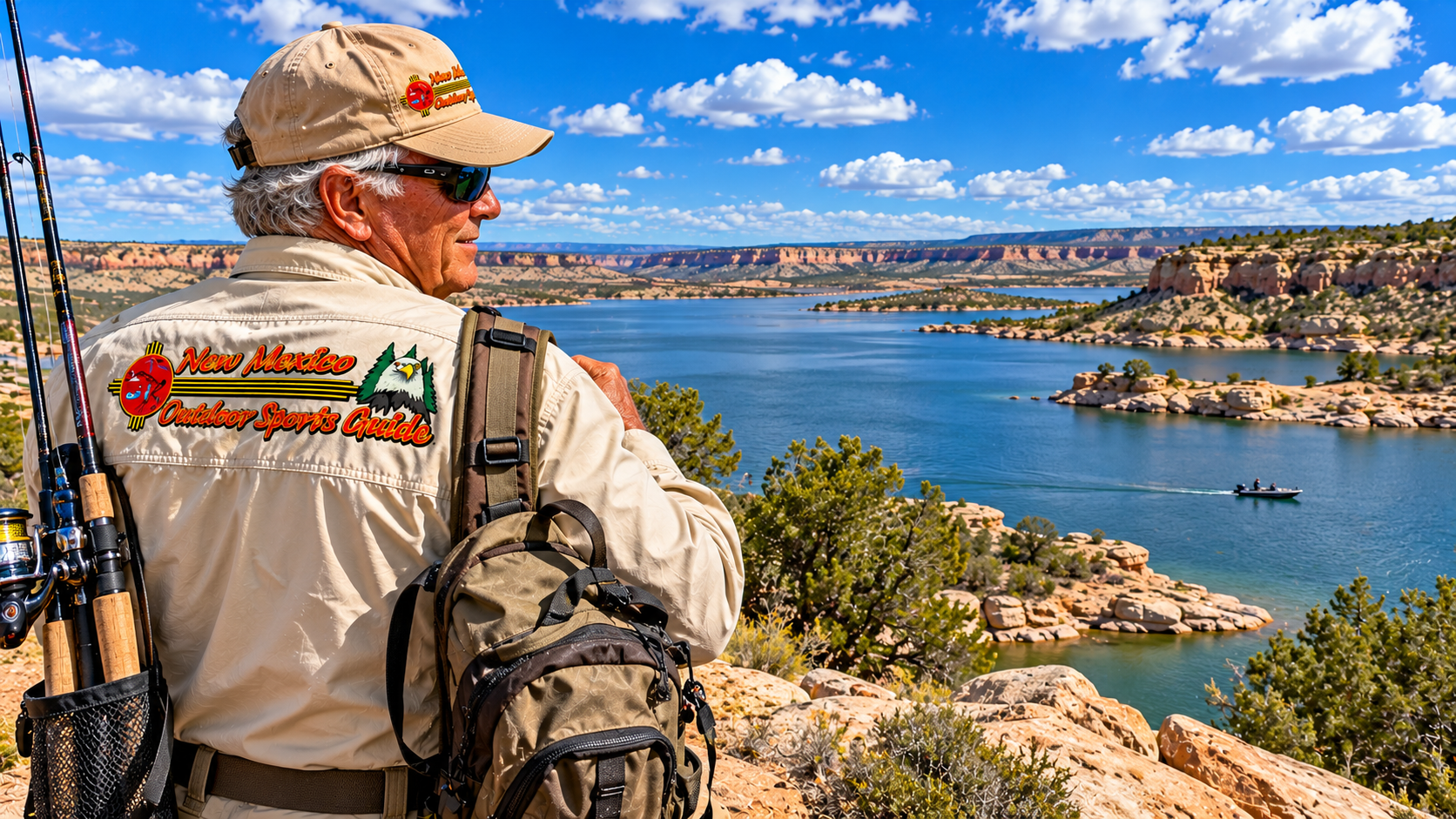
Pat is a writer, photographer, and videographer documenting the wilderness and wildlife of the American Southwest. His work focuses on the mountains, deserts, rivers, and trails of New Mexico, Arizona, Utah, and Colorado. He and his wife Paulette divide their time between Santa Fe, New Mexico and Lake Mohave, Arizona.
0 Comments