
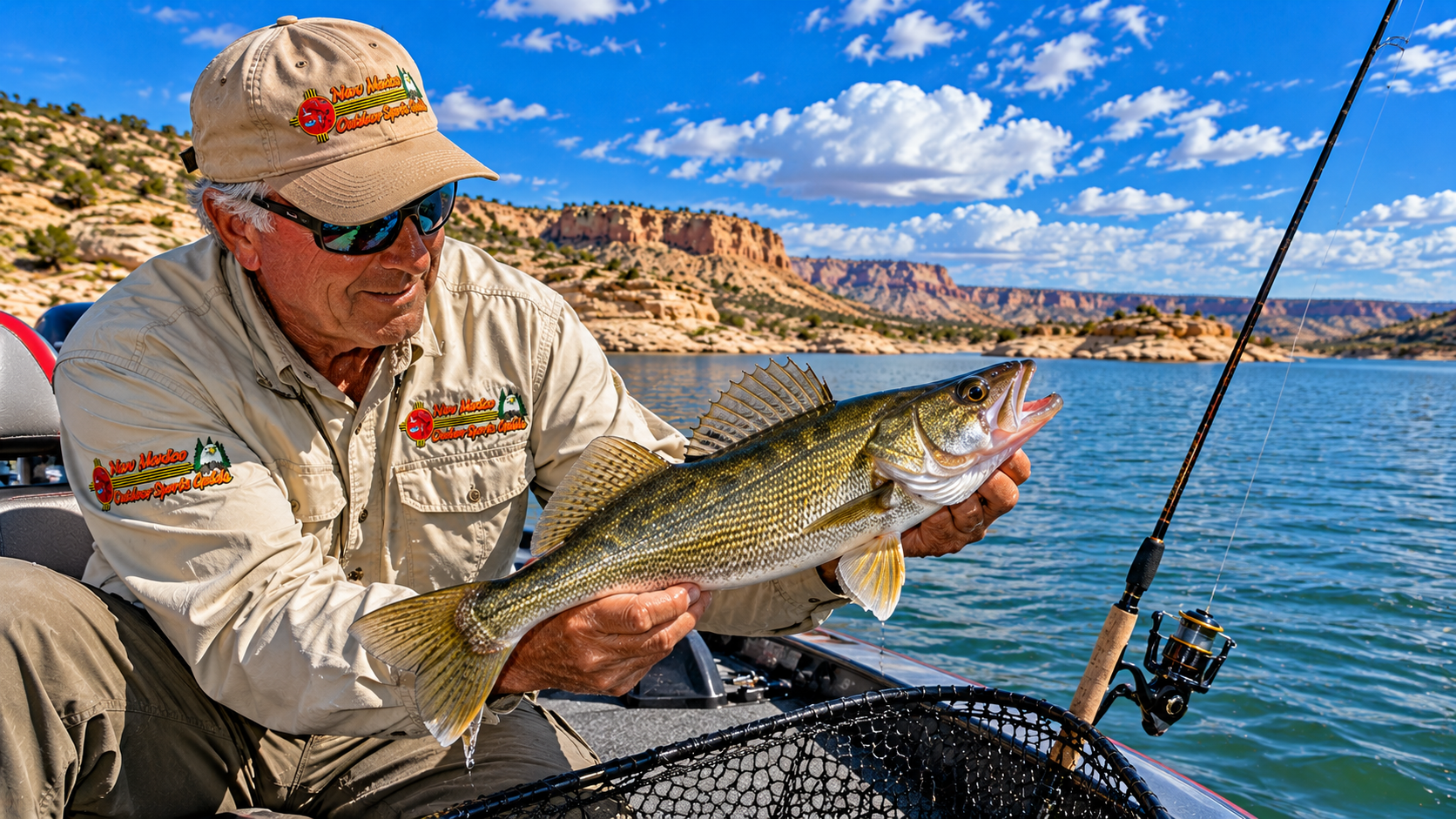
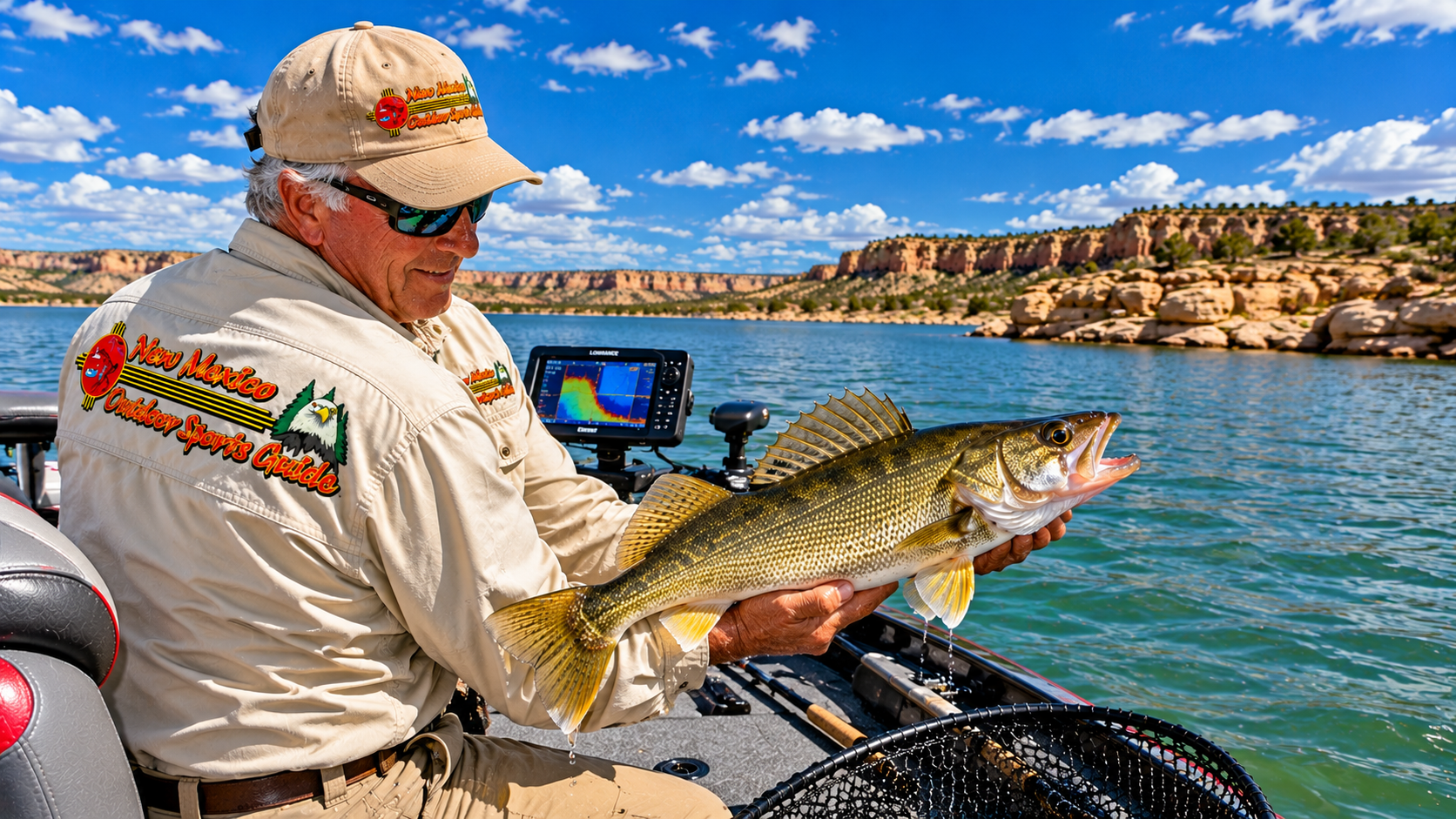
Conchas Lake New Mexico Walleye Fishing: Rocky Points, Deep Water and Golden-Eyed Predators
There's something about walleye fishing that appeals to the part of me that has spent a lifetime trying to figure out what fish are thinking.
Now, after more than eight decades on this earth and a good many of those years with a fishing rod in my hands, I've come to the conclusion that fish probably aren't doing nearly as much thinking as we give them credit for.
They're hungry.
They're comfortable.
Or they're neither.
Our job is to figure out which.
That's particularly true when it comes to Conchas Lake New Mexico Walleye Fishing, where a sprawling reservoir in northeastern New Mexico offers rocky points, submerged channels, sandstone shorelines and deep-water structure that can make walleye fishing an interesting challenge.
Conchas Lake is a very different place from the cold mountain streams Paulette and I enjoyed during our seventeen years at Casa Oso, our log home above Angel Fire.
There, our fishing excursions often involved mountain scenery, trout, cool mornings and the sound of running water.
Conchas is warmwater country.
The sky seems bigger.
The hills are drier.
The wind has more room to gather momentum.
And the fish have an entirely different personality.
After spending much of my earlier life guiding bass fishermen on Lake Conroe and Sam Rayburn, and competing in tournaments across Texas, I developed an appreciation for reservoirs that demand a little detective work.
Conchas is that kind of water.
Walleye don't always advertise their presence with a spectacular surface strike.
Sometimes the only indication that one has taken your lure is a slight increase in weight at the end of the line.
Other times there's a sharp tap, a moment of resistance and then the unmistakable feeling that something alive has decided to go in the opposite direction.
Either way, it's enough to keep an old fisherman interested.
And the scenery around Conchas Lake makes the experience even better.
Where Is Conchas Lake, New Mexico?
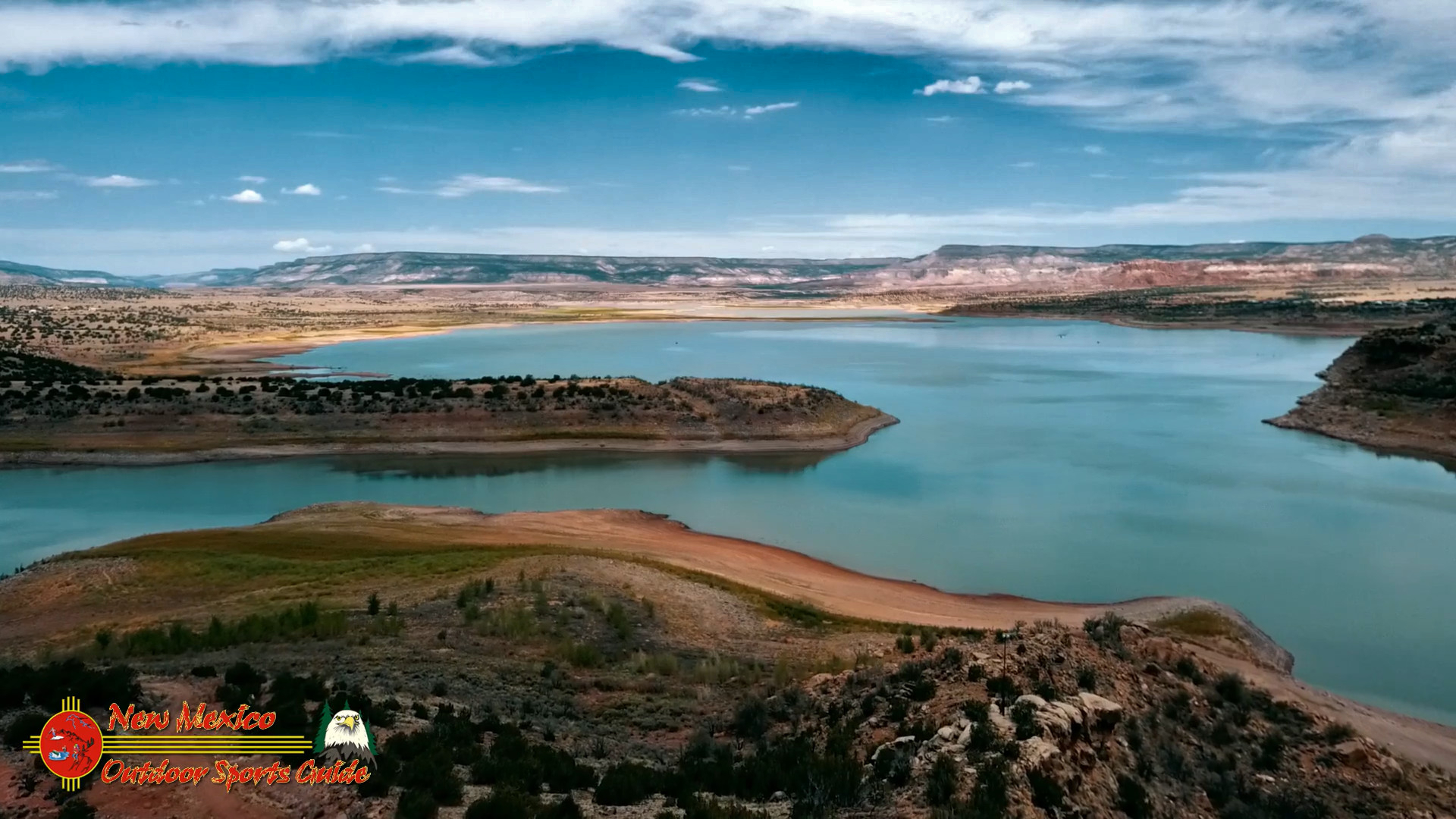
Conchas Lake lies in San Miguel County in northeastern New Mexico, northwest of Tucumcari and near the small community of Conchas Dam.
The reservoir occupies a landscape of sandstone cliffs, rocky mesas, open grasslands and scattered juniper.
It doesn't resemble the alpine lakes of the Sangre de Cristo Mountains.
And that's part of its appeal.
Conchas is a broad, branching reservoir where rocky shorelines give way to protected coves, river channels and open-water points.
Its water level changes with drought, rainfall, inflow and reservoir operations, so the lake's appearance and access conditions can vary considerably.
A shoreline that offered excellent fishing during high water may be completely exposed during a drought.
A submerged hump that once required a depth finder to locate may become an obvious island or navigation hazard.
That's why I consider a current lake map and recent water-level information essential equipment.
You can buy all the fishing lures in the world, but none will help if you're fishing a point that's been out of the water for three months.
How Was Conchas Lake Created?
Conchas Lake was formed by the construction of Conchas Dam, completed in 1939 by the U.S. Army Corps of Engineers.
The dam was built for flood control and water conservation, and the reservoir later became an important source of recreational opportunities for northeastern New Mexico.
The lake is part of the Canadian River watershed.
Its winding arms, rocky banks and changing depths create a variety of fish habitat.
For walleye anglers, that variety is especially interesting.
Walleye often relate to bottom contours, structural breaks, current and concentrations of baitfish.
A reservoir with numerous points, channel edges and changes in depth provides plenty of places to begin looking.
Of course, plenty of places to look also means plenty of places where the fish might not be.
That's where experience, patience and a good fish finder become valuable.
Which Major Rivers Feed Conchas Lake?
Two major rivers shape Conchas Lake.
The Canadian River is the principal river system, flowing through northeastern New Mexico and continuing east toward the Arkansas River drainage.
The Conchas River joins the Canadian River within the reservoir system.
These rivers influence water levels, clarity, sediment and seasonal conditions.
During periods of significant runoff, incoming water may create areas of current and stained water.
Those conditions can move baitfish and change the location of feeding predators.
Walleye sometimes use current seams, channel edges and structural transitions where forage becomes concentrated.
However, muddy water isn't automatically good fishing.
Heavy inflows can make certain areas difficult to fish, particularly when visibility drops dramatically or floating debris becomes a hazard.
I'd generally look for places where the water is somewhat clearer, current is manageable and nearby structure gives fish an opportunity to feed without constantly fighting the flow.
That's a principle I learned fishing reservoirs across Texas.
The fish don't necessarily want to be in the strongest current.
They often want to be close enough to take advantage of what it brings.
Why Is Conchas Lake Interesting for Walleye Fishing?
Walleye are fascinating fish.
They have large, light-sensitive eyes adapted for hunting under low-light conditions.
That doesn't mean they only feed at night.
It means they're well equipped to exploit conditions when prey may have difficulty seeing them.
Cloud cover, stained water, dawn, dusk and deeper structure can all influence walleye behavior.
At Conchas Lake, I'd concentrate on areas offering three important ingredients:
Suitable depth.
Access to forage.
And a structural feature that concentrates fish.
That might be a rocky point dropping into deeper water.
It might be a submerged hump beside a channel.
It might be a gravel-to-rock transition.
Or it might be a section of shoreline where wind has pushed baitfish into a feeding area.
The trick is identifying which combination matters on the day you're fishing.
And that can change with the season.
What Does New Mexico Game and Fish Say About Conchas Walleye?
The New Mexico Department of Wildlife provides some encouraging information about Conchas Lake's walleye fishery.
Its warmwater species guidance identifies Conchas and Ute lakes as historically important walleye waters. The Department also reports that Conchas should provide good walleye numbers and identifies April and May, following the spawn, as especially promising months.
That's a useful starting point.
It doesn't mean every April morning will produce a limit of fish, but it does suggest that spring deserves a prominent place on the fishing calendar.
The Department also recommends using a depth finder during summer, fishing a quarter-ounce jig with a yellow curly-tail grub, and trying shallow-running crankbaits near shore after dark where forage is present and deeper water is nearby.
Those are practical suggestions that fit nicely with my own experience fishing for structure-oriented species.
Before leaving home, I'd check the New Mexico weekly fishing reports for recent Conchas observations.
The recommendations below combine the Department's published walleye guidance with general reservoir-fishing techniques. They're not claims that I personally caught walleye at Conchas or that a particular location is producing fish this week.
What Spinning Rods and Reels Are Best for Conchas Walleye?
If I were packing the boat for a serious walleye trip, spinning tackle would dominate my rod locker.
Walleye often require relatively light presentations, careful depth control and enough sensitivity to detect subtle strikes.
My primary outfit would be a 6-foot-8-inch to 7-foot medium-light, fast-action graphite spinning rod paired with a smooth 2500-size reel.
I'd spool it with 8- or 10-pound braided line and attach a 6- to 10-pound fluorocarbon leader.
That combination provides excellent sensitivity and enough strength to handle a good fish.
For casting heavier jigs or crankbaits, I'd carry a 7-foot medium-power spinning rod and a 3000-size reel.
For vertical jigging, I'd consider a shorter, sensitive rod that makes it easier to maintain direct contact with the lure.
The reel doesn't need to be expensive, but it does need a reliable drag.
Walleye don't always make the spectacular runs associated with smallmouth bass, but a large fish can put a surprising bend in a light rod.
And I'd much rather let a smooth drag do its job than discover its shortcomings while a good fish is heading beneath the boat.
Which Spinning Lures Would I Use for Walleye?
Lead-head jigs and soft plastics
A simple lead-head jig is one of the most versatile walleye presentations ever invented.
I'd carry jigheads from 1/8 to 3/8 ounce, with a few heavier options for deeper water or strong wind.
My preferred soft plastics would include 3- to 4-inch curly-tail grubs, paddletail minnows and slender baitfish imitations.
Yellow and chartreuse are particularly worth trying because the Department specifically recommends a quarter-ounce jig with a yellow curly-tail grub.
I'd also carry pearl, white, smoke, silver and natural shad colors.
When fishing rocky bottom, I'd cast beyond the structure, allow the lure to sink and retrieve it with short lifts and pauses.
The important thing is maintaining contact with the bottom without constantly snagging.
That's easier said than done in rocky country.
Blade baits
Blade baits can be excellent when walleye are holding deeper or responding to vibration.
I'd use compact metal blades in natural silver, gold or baitfish patterns.
Cast them across deeper points or fish them vertically around structure.
A short lift followed by a controlled fall can trigger strikes.
I'd avoid exaggerated rod movements.
Sometimes a movement of only a few inches is enough.
Suspending jerkbaits
During cooler water conditions, suspending jerkbaits can be particularly interesting.
I'd select 3- to 5-inch minnow-shaped lures and work them with a twitch-pause retrieve.
The pause is often the important part.
Walleye may follow a lure and strike only when it stops.
The colder the water, the longer I'd experiment with those pauses.
Shallow-running crankbaits
For evening shoreline fishing, the Department recommends 5- to 7-inch shallow-running crankbaits in approximately 2 to 7 feet of water, particularly where perch or bluegill are present and deeper water is close by.
That's a technique I'd reserve for suitable conditions and safe shoreline access.
Fishing after dark requires additional care.
I'd carry a headlamp, spare batteries, a landing net and reliable footwear.
And I'd never wade into unfamiliar water simply because a promising fishing spot appears to be a few yards farther out.
Should I Use Live Bait for Walleye?
Live bait can be productive, particularly when walleye are reluctant to chase artificial lures.
Nightcrawlers are a traditional choice.
A crawler on a jighead or suitable bottom rig can be worked slowly along structural breaks.
Minnows may also be effective, but New Mexico has specific rules governing baitfish.
The Department lists fathead minnows, red shiners, white suckers and shad as approved live or dead baitfish species within the Canadian River drainage, subject to its other bait regulations.
I'd never assume that a baitfish purchased or caught elsewhere can legally be transported and used at Conchas.
Always verify the current rules, including restrictions on transporting live fish.
Personally, I'd begin with artificial lures.
They're convenient, versatile and well suited to the sort of exploratory fishing I enjoy.
But I'd keep nightcrawlers in mind if the fish seemed particularly uncooperative.
What Water Temperatures Are Most Productive for Walleye?
Water temperature helps determine where I'd look and how I'd present a lure.
These are approximate biological and fishing guidelines, not measured Conchas Lake conditions.
| Water temperature | General walleye behavior | My approach |
|---|---|---|
| Below 40°F | Cold-water feeding, often slower | Small jigs, slow retrieves, deeper structure |
| 40–50°F | Spawning and early spring movements | Rocky areas, nearby deeper water, careful presentations |
| 50–60°F | Productive postspawn feeding | Jigs, swimbaits, rocky points and channel edges |
| 60–70°F | Active feeding with changing depth preferences | Baitfish patterns, jigs and crankbaits |
| 70–80°F | Greater importance of comfortable depth and oxygen | Deeper breaks, suspended forage and low-light periods |
| Above 80°F | Fish may seek cooler, oxygenated water | Depth finder, deeper structure and favorable feeding windows |
Walleye can be caught outside these ranges.
And surface temperature doesn't tell us everything about the water column.
I'd use the thermometer as a clue, then let the fish finder and actual strikes guide my decisions.
What Is the Best Time of Day for Walleye Fishing?
Early morning would be my first choice.
I enjoy arriving before sunrise, preparing the boat in the quiet and watching the first light reach the sandstone cliffs.
Walleye often take advantage of low-light conditions.
Dawn and dusk can be particularly productive when fish move into shallower feeding areas.
Cloudy weather may extend those opportunities.
Wind can also improve fishing by breaking up surface light and moving forage.
However, I wouldn't assume that walleye stop feeding at midday.
During summer, fish may remain active in deeper water where light conditions are more comfortable.
That's when a depth finder becomes especially valuable.
If I located baitfish along a submerged point in 20 or 25 feet of water, I'd certainly investigate.
But I wouldn't choose that depth simply because someone on the Internet said that's where walleye always live.
Fish the conditions in front of you.
Not yesterday's fishing report from a different lake.
What Are the Four Seasons of Walleye Fishing at Conchas Lake?
Spring: March through May
Spring is the season I'd circle on my calendar.
Walleye move through spawning and postspawn patterns, and the Department of Wildlife identifies April and May as especially promising at Conchas.
I'd begin around rocky points, gravel banks, channel transitions and areas with access to deeper water.
A quarter-ounce jig and curly-tail grub would be one of my first presentations.
I'd also try small swimbaits and suspending jerkbaits.
Spring weather can be windy in northeastern New Mexico, so I'd plan fishing around safe boating conditions.
Summer: June through August
Summer calls for more attention to depth.
As the surface warms, walleye may move toward deeper structure and areas holding baitfish.
I'd search channel edges, submerged humps and main-lake points.
Vertical jigging, controlled swimbait presentations and blade baits can be useful.
Early morning and evening remain attractive, but deeper fish may be available during daylight.
Afternoon thunderstorms are another concern.
If lightning develops, I'd leave the water.
A walleye isn't worth becoming the tallest object on a lake during a thunderstorm.
Fall: September through November
Fall is another season I'd enjoy exploring.
Cooling water may bring walleye into more accessible feeding areas.
I'd watch for baitfish concentrations along points and rocky banks.
Jigs, swimbaits and crankbaits would all have a place in my tackle selection.
Fall also offers comfortable daytime temperatures and beautiful light for photography.
And I suspect Paulette would find plenty of reasons to keep her camera handy.
Winter: December through February
Winter walleye fishing can be productive, but it requires patience and careful attention to weather.
I'd concentrate on deeper structure, slow presentations and stable conditions.
A small jig worked vertically or a slowly retrieved blade bait could be worth trying.
I'd also dress for cold water, not simply the afternoon air temperature.
Cold-water immersion is dangerous even when the sunshine feels pleasant.
What Is the New Mexico Walleye Fishing Limit?
The 2026–2027 New Mexico fishing regulations specify a daily bag limit of five walleye and a general possession limit of twice the daily bag limit.
The 2026–2027 regulation booklet does not list a statewide walleye minimum length, although one Department webpage still displays an older 14-inch minimum. The booklet and the Department's published rule-change explanation support the removal of that length restriction.
Because those official sources are inconsistent, I'd verify the applicable rule with the Department before keeping a smaller fish.
Fishing licenses are generally required for anglers aged 12 and older, subject to exemptions.
New Mexico residents aged 70 and older can obtain a free fishing license, but must still have it issued.
For the current regulations, consult the 2026–2027 New Mexico Fishing Rules and Information.
Is it safe to eat walleye from Conchas Lake?
This deserves particular attention because walleye are prized table fish.
The Department's 2026–2027 fish-consumption advisory specifically lists Conchas Lake walleye and identifies mercury as the contaminant of concern.
The advisory provides different consumption recommendations depending on fish length, with more restrictive recommendations for larger fish.
Anyone planning to keep walleye for supper should consult the current fish-consumption advisory and the size-specific table in the fishing booklet.
That's particularly important for children and people who may be more vulnerable to mercury exposure.
For fish I'm releasing, I prefer a rubber landing net, wet hands and quick hook removal.
The fish should spend as little time out of the water as possible.
What Is the Record Walleye for Conchas Lake?
I couldn't verify an authoritative lake-specific walleye record for Conchas.
Rather than repeat an unsubstantiated trophy weight, I'll use the Department's official statewide record as the benchmark.
The published New Mexico state record is a 16-pound, 9-ounce walleye caught at Clayton Lake in 1989.
That's an impressive fish by anybody's standards.
But it isn't a Conchas Lake record.
For the latest official records and application requirements, visit the New Mexico Record Fish program.
And as I've learned from a lifetime of fishing, a record fish isn't necessarily the most memorable fish.
Sometimes a three-pound walleye caught on a beautiful morning is worth more to the fisherman than a much larger fish caught under less memorable circumstances.
Where Can the Public Fish at Conchas Lake?
Conchas Lake State Park provides several public recreation areas.
The official park map identifies the North Area, Cove Recreation Area, Central Recreation Area and Bell Point Campground.
There are also facilities associated with the U.S. Army Corps of Engineers.
For shore fishing, I'd investigate designated public shoreline access near rocky points and banks where deeper water is reasonably close.
For boat fishing, I'd use the lake's branching structure to explore different depths and habitats.
However, current water levels matter enormously.
Important October 2026 boat-ramp warning
The State Parks Division reports that both north high-water ramps are closed because of low water.
Its detailed notice identifies an open south-side Army Corps ramp and includes restrictions on launching trailered boats.
Before towing a boat to Conchas, call 575-868-2270 to confirm the currently usable ramp.
I'd also watch carefully for exposed rocks, shallow humps and unfamiliar obstructions.
A good fish finder helps locate walleye.
It doesn't replace safe navigation.
Can You Camp at Conchas Lake?
Yes.
Conchas Lake State Park offers developed campsites with various water and electrical hookups, along with primitive shoreline camping.
The park lists showers, restrooms, a dump station and reservable as well as non-reservable campsites.
For fishermen, camping close to the lake is especially convenient.
You can fish the evening bite, return for supper, sleep under the stars and be ready again before daylight.
I'd bring drinking water, sun protection, warm clothing and equipment secured against wind.
The park also lists Stage II fire restrictions, so campers should verify current restrictions before using campfires or cooking equipment.
Conchas Lake State Park
Address: 501 Bell Ranch Road, Conchas Dam, NM 88416
Phone: 575-868-2270
Email: ricarlos.glenn@emnrd.nm.gov
Website: Conchas Lake State Park
Where Can You Stay Near Conchas Lake and Tucumcari?
Conchas Dam is a small community with limited lodging.
Tucumcari offers a wider selection of motels, restaurants, fuel and supplies.
I'd arrange accommodations before leaving home, especially when traveling with a boat.
Conchas Lake Adobe Belle Resort
This historic resort near the dam offers furnished casita-style accommodations in a private setting.
Address: 500 Captain Kramer Lane, Conchas Dam, NM 88416
Phone: 575-868-0300
Email: adobebelleresort@gmail.com
Website and booking contact: Adobe Belle Resort tourism listing
The New Mexico Tourism Department describes two-bedroom furnished casitas and a gated historic property. Confirm current availability directly.
Historic Route 66 Motel, Tucumcari
Tucumcari's historic Route 66 corridor offers a little nostalgia to go with a fishing trip.
Address: 1620 East Route 66 Boulevard, Tucumcari, NM 88401
Phone: 575-461-1212
Email: rte66motel@rte66motel.com
Website: Historic Route 66 Motel
The motel advertises traditional rooms and suites in a midcentury-inspired setting.
Roadrunner Lodge Motel, Tucumcari
Another Route 66 option is the restored Roadrunner Lodge Motel.
Address: 1023 East Route 66 Boulevard, Tucumcari, NM 88401
Phone: 575-282-7866
Email: info@roadrunnerlodge.com
Website: Roadrunner Lodge Motel
The property offers vintage-inspired accommodations and lists its current contact information on its official website.
I'd favor staying at Conchas for maximum fishing time and Tucumcari for additional lodging and dining choices.
What Is Special About Tucumcari, New Mexico?
Tucumcari has a personality all its own.
Long before Interstate 40 carried travelers across northeastern New Mexico, Route 66 brought motorists through town on their way between Chicago and California.
The town became famous for its roadside motels, colorful signs, restaurants and the promise of a comfortable place to spend the night.
Today, its surviving Route 66 landmarks provide a wonderful glimpse into an earlier era of American travel.
I have always enjoyed that sort of history.
Perhaps that's natural for someone who spent so much of his life on the road and in the air.
From flying a Beechcraft Baron across the country to towing a bass boat toward another tournament, I've accumulated more than a few memories of unfamiliar towns, roadside restaurants and early departures.
Tucumcari feels like the sort of place where those memories belong.
For an angler visiting Conchas Lake, the town is also practical.
You can find fuel, food, conventional lodging and supplies before heading northwest toward the reservoir.
And after a long day of walleye fishing, a comfortable motel room and a good supper can sound awfully appealing.
What Wildlife Can You See Around Conchas Lake?
The reservoir's open water, shoreline habitat, grasslands and juniper-covered hills provide opportunities for wildlife watching.
The New Mexico State Parks Division identifies birding and wildlife viewing among the park's recreational activities.
Depending on season, visitors may encounter ducks, other waterfowl, shorebirds and raptors.
The surrounding plains and shrubland also provide habitat for mammals adapted to northeastern New Mexico's relatively dry environment.
I'd bring binoculars and a telephoto lens.
Early morning is particularly attractive for photography because the light is soft and the water may be calmer.
Paulette and I learned during our Casa Oso years that wildlife photography is often a matter of patience.
Find a promising location.
Remain quiet.
Watch.
And allow the animals to continue their ordinary activities.
Some of our most memorable wildlife encounters happened precisely because we weren't in a hurry.
How Do You Get to Conchas Lake from Albuquerque, Santa Fe, Taos and Chama?
Conchas Lake lies northwest of Tucumcari and can be reached through the NM 104 corridor.
The following distances and driving times are approximate planning estimates rather than live navigation measurements.
| Starting city | Approximate driving distance | Allow |
|---|---|---|
| Albuquerque | 185–205 miles | 3–3.5 hours |
| Santa Fe | 135–155 miles | 2.5–3 hours |
| Taos | 160–180 miles | 3–3.5 hours |
| Chama | 255–285 miles | 4.5–5.5 hours |
From Albuquerque
One practical route is Interstate 40 east toward Santa Rosa, US 84 north toward Las Vegas, then NM 104 east toward Conchas Dam.
I'd check the exact route before leaving, since conditions and starting locations can make alternatives preferable.
From Santa Fe
Take Interstate 25 toward Las Vegas, then NM 104 east toward Conchas Dam.
The drive offers a gradual transition from the mountains around Santa Fe to the open plains of northeastern New Mexico.
From Taos
A scenic approach is US 64 east through the Cimarron and Springer country, Interstate 25 south toward Las Vegas, then NM 104 east.
It's the sort of drive I would enjoy even without a fishing trip waiting at the end.
From Chama
Take US 84 south toward Española and Santa Fe, then Interstate 25 toward Las Vegas and NM 104 east.
Because of the distance, I'd consider an overnight stay.
From Tucumcari
Follow NM 104 northwest toward Conchas Dam and the appropriate recreation-area entrance.
Before traveling, consult NMRoads for road conditions and closures.
How Does Conchas Walleye Fishing Compare With Other New Mexico Waters?
One of the pleasures of fishing New Mexico is the extraordinary variety.
Conchas offers warmwater fishing among sandstone cliffs and open plains.
Farther north, the lakes and streams of the Sangre de Cristo Mountains provide a completely different experience.
For readers interested in exploring those contrasts, I've written about Conchas Lake State Park fishing and camping, including its bass, crappie and walleye opportunities.
My article about Conchas Lake New Mexico bass fishing explores another of the reservoir's attractions.
For high-country fishing, there's Eagle Nest Lake State Park fishing in the Moreno Valley.
And for those who enjoy cold mountain streams, Cimarron Canyon State Park trout fishing provides a different sort of angling adventure.
My guide to drivable New Mexico alpine lakes explores still more of the state's mountain waters.
Those five related articles offer a natural way to explore New Mexico's remarkable fishing diversity.
Why Conchas Lake New Mexico Walleye Fishing Appeals to an Old Fisherman
I've spent a great deal of my life chasing bass.
There were years when I knew the underwater structure of Lake Conroe almost as well as I knew the roads around our house.
I learned the seasonal movements of fish on Sam Rayburn.
I spent long days competing in tournaments on reservoirs scattered across Texas.
And I discovered that the most interesting part of fishing was often the challenge of understanding why fish were in one place rather than another.
Walleye fishing appeals to that same curiosity.
A submerged point.
A channel bend.
A school of baitfish.
A slight change in water temperature.
Each is another piece of the puzzle.
And Conchas Lake offers plenty of pieces.
I can imagine a beautiful spring morning there.
The sky is bright blue, with a few scattered clouds drifting above the sandstone cliffs.
The water is almost calm.
I've positioned the boat along a rocky point that drops into deeper water.
A quarter-ounce jig hangs beneath the rod tip.
I make a cast.
Let the lure settle.
Then begin working it slowly along the bottom.
A little lift.
A pause.
Another lift.
And suddenly the line feels heavier.
Not a spectacular strike.
Not a violent explosion.
Just that unmistakable sense that something has taken hold.
I raise the rod.
The tip bends.
And somewhere beneath the boat, a golden-eyed walleye begins its reluctant journey toward the surface.
That's the sort of moment that keeps a fisherman coming back.
Not the guarantee of catching fish.
The possibility.
And when the fishing is over, there's the remarkable scenery of northeastern New Mexico waiting to be enjoyed.
The sandstone cliffs.
The wide-open sky.
The quiet coves.
And perhaps a beautiful sunset before heading back toward Tucumcari.
Conchas Lake New Mexico Walleye Fishing offers the combination I've appreciated for more than half a century.
Interesting water.
A challenging fish.
Beautiful country.
And the promise that the next cast might be the one worth remembering.
That's more than enough reason for me.
settings. You can also style every aspect of this content in the module Design settings and even apply custom CSS to this text in the module Advanced settings.

0 Comments