
There are places in the West where a man can still hear his own thoughts. Not the noisy kind that rattle around like loose bolts in an old pickup, but the quiet kind… the kind that drift in slow as a leaf riding current. The Big Eddy on the Rio Chama is one of those places.
I found it the way most good places are found, by following a road that didn’t promise much and a river that didn’t need to. A dusty Forest Road, a ribbon of green cutting through sandstone country, and the sense that something just ahead might be worth slowing down for.
And it was.
The Big Eddy — Where the River Comes to Rest
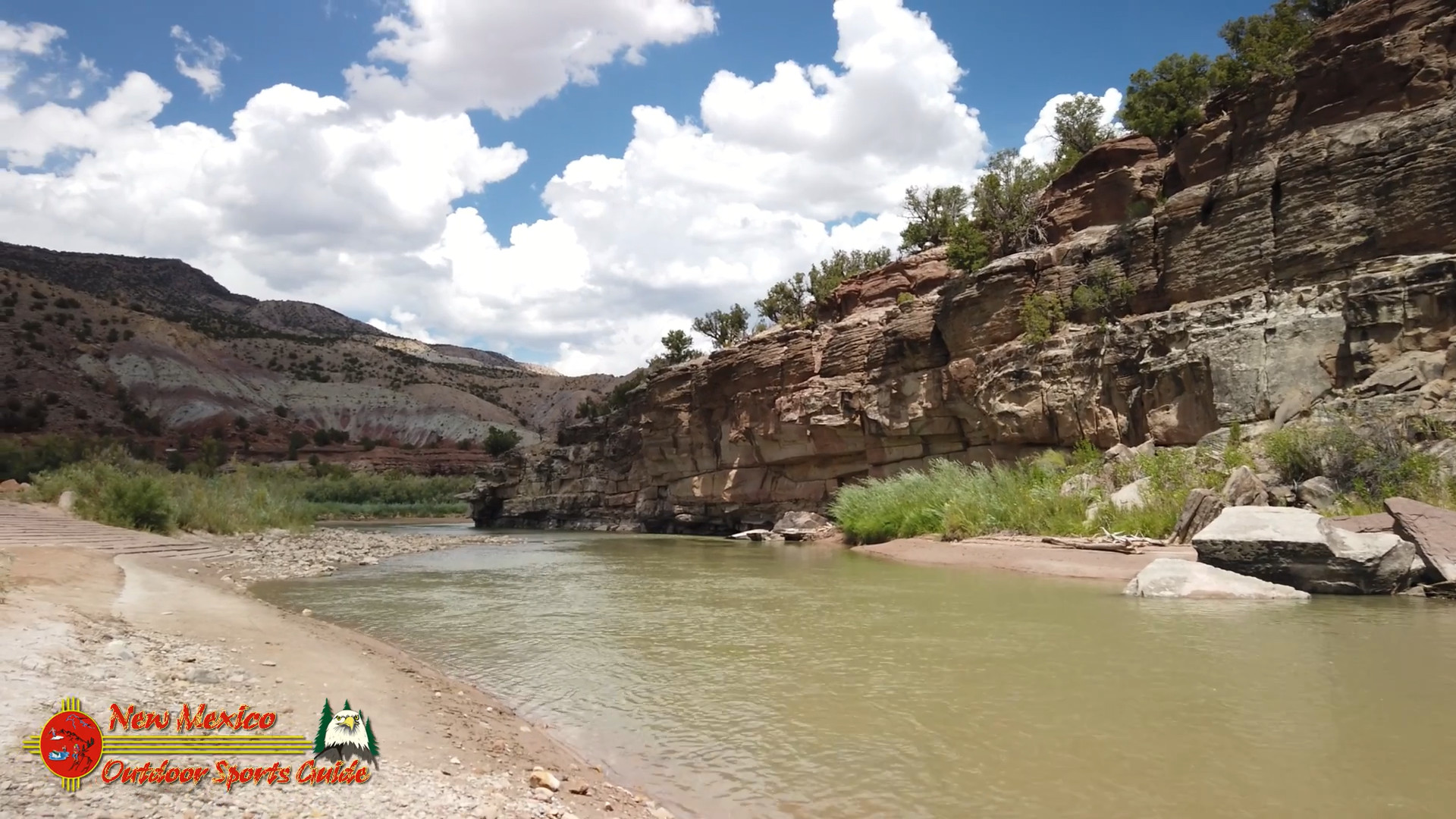
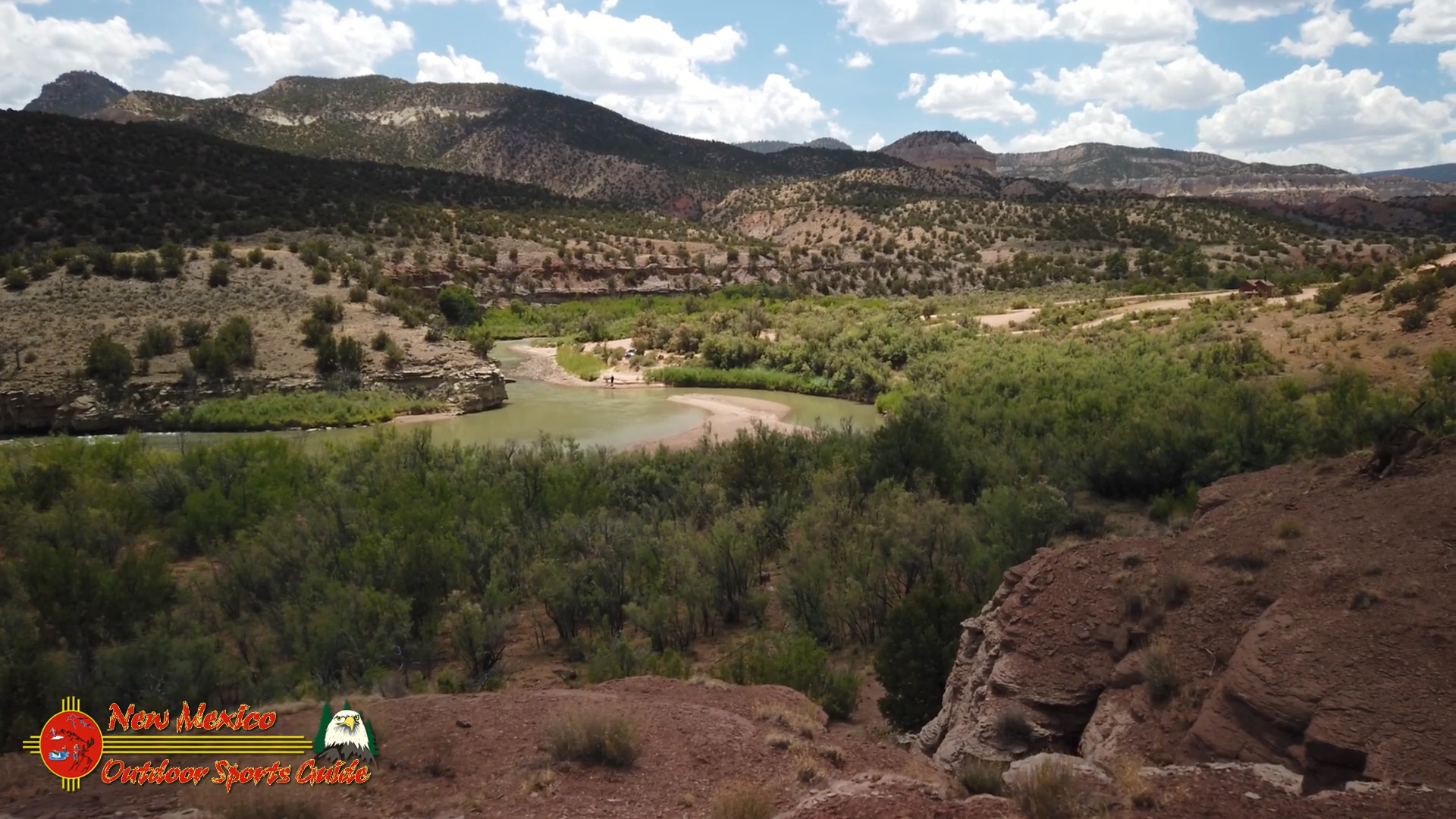
The Big Eddy isn’t dramatic at first glance. No roaring rapids, no postcard waterfall. Just a wide, slow bend in the river where the current loosens its belt and takes a breath.
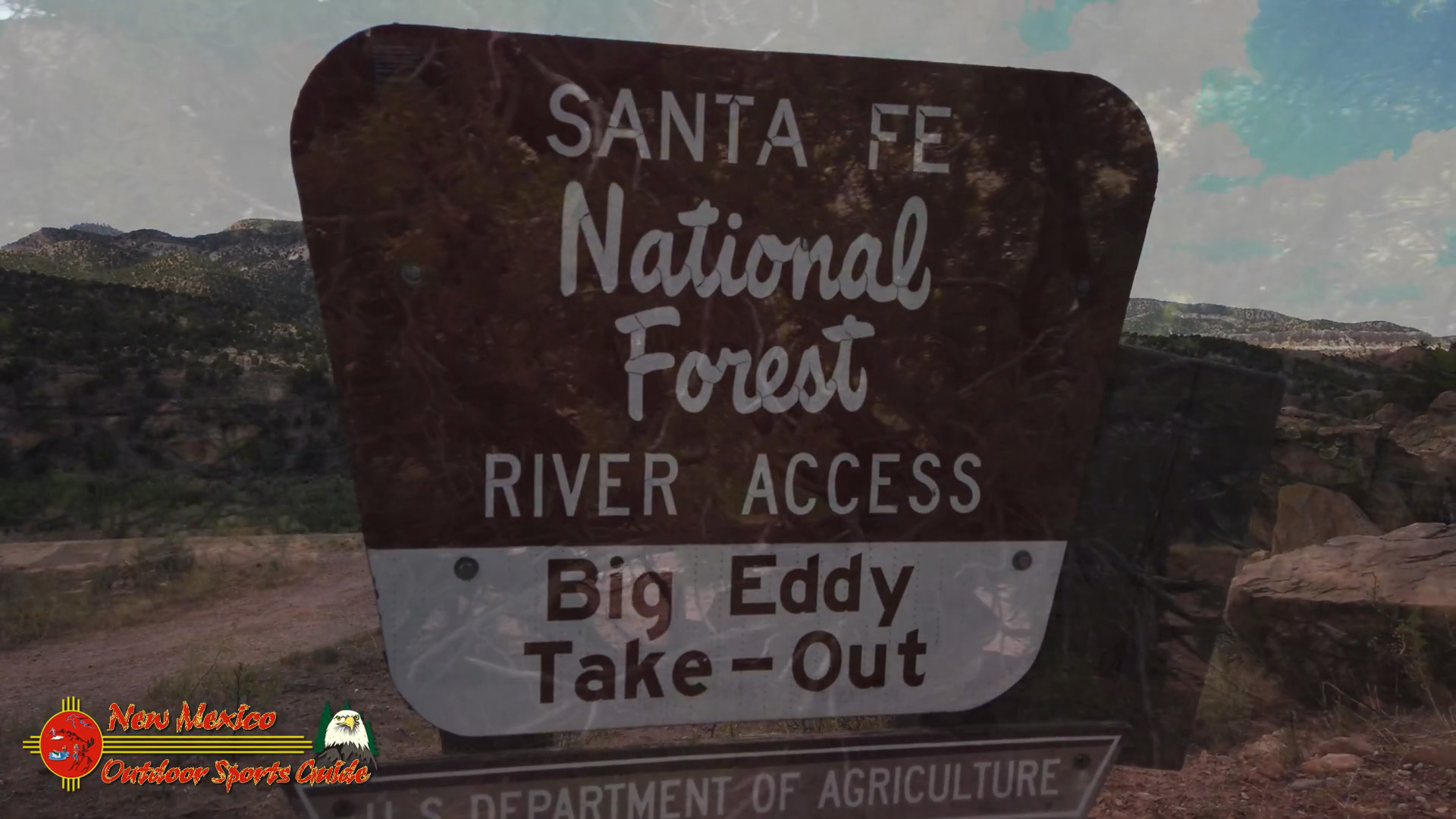
Located off Forest Road 151 along the Rio Chama, north of Abiquiu Lake, it serves as the takeout for floaters coming down the Wild and Scenic stretch of the river. Canoes, rafts, and drift boats slide quietly into the eddy, their journeys finished, their stories just beginning.
But for an angler… this is where things get interesting.
Because where current slows, trout gather. Where water deepens, patience pays. And where an eddy spins, life stacks up like cards in a gambler’s hand.
The Rio Chama — A River with a Long Memory
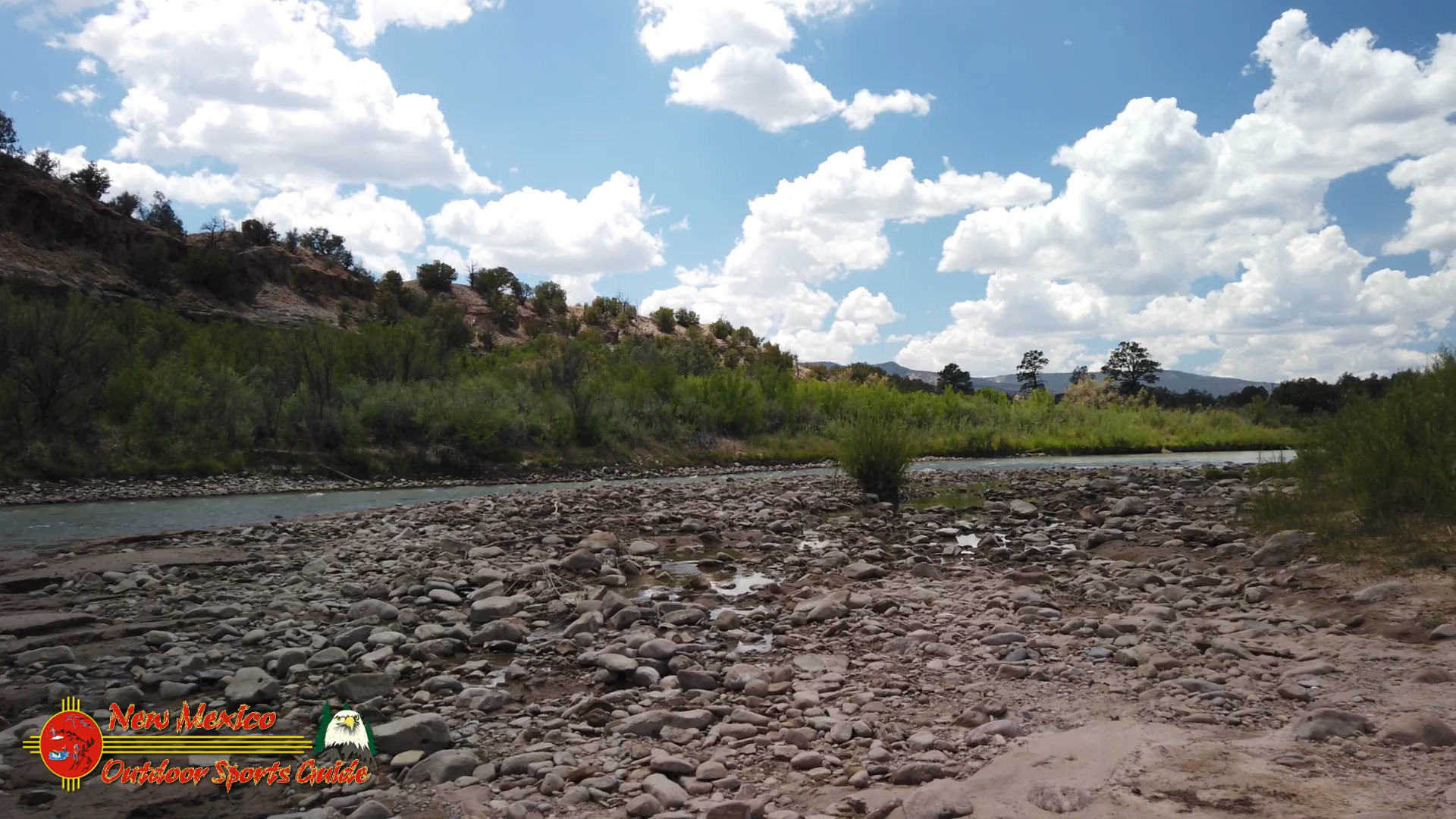
The Rio Chama is not a flashy river. It doesn’t show off. It works its way south from El Vado Dam through a canyon that looks like it was painted by a patient hand over a very long time.
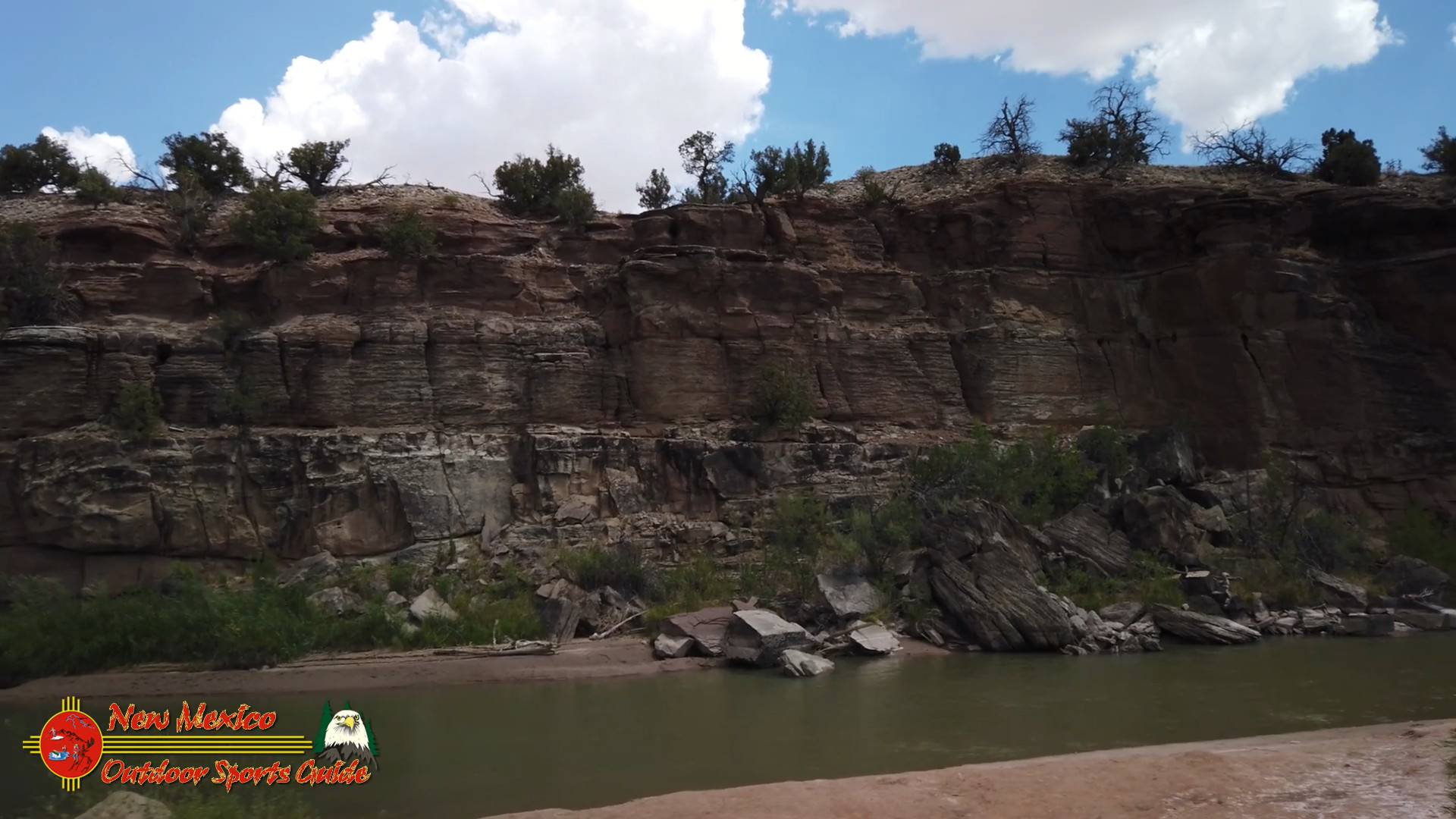
Sandstone walls rise up to 1,500 feet, layered in rust, cream, and ochre. Cottonwoods line the banks like sentinels. And the river itself, fed by snowmelt and controlled releases, flows with a steady rhythm that trout understand well.
Along the way, it gathers strength and character. The Rio Cebolla slips in from the east. The Rio Gallina joins from the west. Then the whole story settles into Abiquiu Lake, where the desert takes over and the canyon widens its shoulders.
But the stretch between El Vado and Abiquiu… that’s the sweet water.
That’s where trout grow old.
Trout in the Big Eddy — Browns That Didn’t Get Big by Being Careless
The Rio Chama is known for producing trout that have seen a few seasons. Browns especially. Thick-shouldered fish with spotted flanks and a habit of making you earn every inch of line.
You’ll also find rainbows here, bright and willing, and on rare occasions even kokanee salmon making a showing when conditions line up just right.
But it’s the brown trout that give this river its reputation.
They lie in wait along the seams. Tucked behind submerged rock. Suspended just inside the slow turn of the eddy where food drifts by like a conveyor belt they didn’t have to build.
These fish don’t rush.
They watch.
And if your presentation isn’t right, they’ll let it pass without so much as a tail flick.
Reading the Big Eddy — Where to Cast and Why It Matters
Fishing an eddy is a little like reading a slow conversation. You don’t interrupt. You listen first.
At Big Eddy, there are three primary zones worth your attention:
1. The Current Seam
Where fast water meets slow. This is the dinner table. Insects tumble in, stunned by current, and trout line up just inside the slack water to pick them off.
2. The Back Spin
The slow, circular water inside the eddy. Food collects here, and so do fish. Browns especially will hold deep in this rotating cushion, rising only when something worth the effort drifts by.
3. The Drop-Off
Most eddies have a deeper cut where current has carved out the bottom. That’s your holding water. Big trout sit there like old ranchers on a porch, watching everything come and go.
Gear That Feels Right in Your Hands
There’s no need to overcomplicate things out here. The river favors the steady hand and the simple setup.
Spinning Gear
-
Rod: 6’6” to 7’ light or ultralight spinning rod
-
Reel: Smooth drag spinning reel in the 1000–2500 range
-
Line: 4–6 lb monofilament or 6–10 lb braided with fluorocarbon leader
Effective Lures & Baits:
-
Inline spinners (silver, gold, black)
-
Small spoons in natural finishes
-
Trout magnets and soft plastics
-
Salmon eggs or PowerBait in deeper pockets
Cast upstream into the seam and let it drift naturally into the eddy. Most strikes come as the lure slows… right when everything looks easy.
Fly Fishing Setup
-
Rod: 4 to 6 weight fly rod
-
Reel: Balanced fly reel with smooth drag
-
Line: Floating line with 9–12 ft leader
Productive Flies:
-
Nymphs: Pheasant Tail, Hare’s Ear, Prince Nymph
-
Dry Flies: Elk Hair Caddis, Parachute Adams
-
Streamers: Woolly Bugger (olive, black), small sculpin patterns
If you’re fishing the Big Eddy, nymphing under an indicator is often the most reliable approach. Let the fly drift naturally through the seam and into the slow water. Mend your line gently. Keep things drag-free.
Because trout here notice everything.
Water Temperature — The Hidden Clock
Trout don’t carry watches, but they live by temperature.
-
Ideal Range: 50°F to 60°F
-
Below 45°F: Sluggish, deeper holding
-
Above 65°F: Stress increases, fishing slows
Tailwater releases from El Vado help stabilize temperatures, which is one reason this stretch fishes well year-round.
Still, mornings tend to be best in summer, while afternoons can shine in cooler months when the sun warms the water just enough to stir activity.
Best Time of Day — When the River Talks Back
Early morning feels like a handshake. Quiet, polite, full of promise.
Late afternoon feels like a story. Light softens, shadows stretch, and trout begin to rise with a little more confidence.
If I had to choose, I’d take the last two hours of daylight.
There’s something about canyon walls catching that golden light, the river turning to glass, and a brown trout finally making a mistake after ignoring you all day.
Seasons on the Chama — Four Different Rivers in One
Spring
Snowmelt and dam releases bring life back into the system. Flows can be higher, but trout feed aggressively.
Summer
Warm days, cool water below the dam. Early mornings and evenings are prime. Insects hatch steadily.
Fall
This is brown trout season. Pre-spawn fish turn territorial and aggressive. Streamers shine.
Winter
Quiet. Sparse. Beautiful in a stripped-down way. Fish deep, slow, and deliberate.
Camping and Staying Close to the Water
There’s something right about camping along this river. No hurry. No schedule. Just the sound of water and the occasional rustle of wind through cottonwoods.
Dispersed camping is available along Forest Road 151 near the river, and developed sites can be found closer to Abiquiu Lake.
Bring water. Bring respect for the land. And if you build a fire, keep it small and honest.
Getting There — Half the Journey Is the Road
From Santa Fe, head north toward Abiquiu, then follow the route toward the Chama River corridor and Forest Road 151.
The pavement gives way to gravel. The gravel gives way to dust. And somewhere along that transition, the world simplifies.
You won’t need GPS after a while.
Just follow the river.
Why the Big Eddy Stays With You
Fishing the Big Eddy on the Rio Chama isn’t about numbers. You might catch a few fish. You might catch one. You might get humbled entirely.
But that’s not really the point.
It’s about standing in a place where the river has slowed down long enough for you to notice things. The way current folds into itself. The way light moves across canyon walls. The way a trout rises without warning and disappears just as quietly.
It reminds you that not everything needs improving.
Some things just need visiting.
And if you sit there long enough, rod in hand, watching that slow turn of water… you may find yourself thinking less about the fish and more about the years behind you and the water ahead.
That’s a fair trade.
And one worth making again.
0 Comments